Compare commits
1
Commits
| Author | SHA1 | Date | |
|---|---|---|---|
  BFlatandClaude Opus 5.5 BFlatandClaude Opus 5.5
|
f95e320907 |
No files matched your search
@@ -46,7 +46,7 @@ jobs:
|
||||
}
|
||||
- name: XML, desktop entry, AppStream, Flatpak manifest
|
||||
run: |
|
||||
xmllint --noout packaging/windows/vectorcraft.wxs packaging/macos/*.plist* packaging/linux/*.xml*
|
||||
xmllint --noout packaging/windows/vectorcraft.wxs packaging/windows/vectorcraft.en-us.wxl packaging/macos/*.plist* packaging/linux/*.xml*
|
||||
# Windows Installer needs Icon ids ending in .ico or .exe, or shortcuts show a blank icon.
|
||||
if grep -oE '<Icon Id="[^"]*"' packaging/windows/vectorcraft.wxs | grep -vE '\.(ico|exe)"$'; then
|
||||
echo "::error::Icon Id must end in .ico or .exe"; exit 1
|
||||
|
||||
@@ -148,7 +148,9 @@ jobs:
|
||||
run: cargo xtask version set "$VECTORCRAFT_VERSION"
|
||||
- name: Install WiX
|
||||
shell: pwsh
|
||||
run: dotnet tool install --global wix --version 5.0.2
|
||||
run: |
|
||||
dotnet tool install --global wix --version 5.0.2
|
||||
wix extension add -g WixToolset.UI.wixext/5.0.2 WixToolset.Util.wixext/5.0.2
|
||||
- name: Build, sign, package
|
||||
shell: pwsh
|
||||
env:
|
||||
|
||||
@@ -1,7 +1,7 @@
|
||||
# Windows on ARM: package the ARM64 release the way release.yml does (cross-compiled on an x64
|
||||
# runner, unsigned here), then install that MSI on a Windows 11 ARM64 runner, check the installed
|
||||
# binaries are ARM64, run the CLI natively, and uninstall. (A native ARM64 `cargo test` job is left
|
||||
# out for now: PdfCraft saw an intermittent access violation in egui UI tests there.)
|
||||
# out for now: PrintCraft saw an intermittent access violation in egui UI tests there.)
|
||||
name: Windows ARM64
|
||||
|
||||
on:
|
||||
@@ -45,7 +45,9 @@ jobs:
|
||||
key: windows-arm64-package
|
||||
- name: Install WiX
|
||||
shell: pwsh
|
||||
run: dotnet tool install --global wix --version 5.0.2
|
||||
run: |
|
||||
dotnet tool install --global wix --version 5.0.2
|
||||
wix extension add -g WixToolset.UI.wixext/5.0.2 WixToolset.Util.wixext/5.0.2
|
||||
- name: Build and package (unsigned)
|
||||
shell: pwsh
|
||||
env:
|
||||
|
||||
@@ -1,43 +0,0 @@
|
||||
# Experimental, unsupported Windows 7 SP1 x64 portable build (docs/windows7.md). It runs by hand and
|
||||
# weekly, so ordinary PRs never wait on it, and the weekly run shows when a dependency update starts
|
||||
# importing a post-Windows-7 API. packaging/windows/windows7.ps1 does the work: it is the only build
|
||||
# that uses the patched vendor/windows-link. A modern Windows runner proves compilation and host
|
||||
# smoke tests only: run the checklist in docs/windows7.md on actual Windows 7 before claiming support.
|
||||
name: Windows 7 x64 compatibility
|
||||
|
||||
on:
|
||||
schedule:
|
||||
- cron: "23 5 * * 1" # weekly
|
||||
workflow_dispatch:
|
||||
|
||||
permissions:
|
||||
contents: read
|
||||
|
||||
env:
|
||||
CARGO_TERM_COLOR: always
|
||||
CARGO_INCREMENTAL: 0
|
||||
|
||||
jobs:
|
||||
build:
|
||||
runs-on: windows-2022
|
||||
timeout-minutes: 90
|
||||
steps:
|
||||
- uses: actions/checkout@11d5960a326750d5838078e36cf38b85af677262 # v4.4.0
|
||||
- uses: ilammy/msvc-dev-cmd@0b201ec74fa43914dc39ae48a89fd1d8cb592756 # v1.13.0
|
||||
with:
|
||||
arch: x64
|
||||
- uses: dtolnay/rust-toolchain@7e38f4b43b4db5c8dd498af069a4f6196df1d067 # master
|
||||
with:
|
||||
toolchain: nightly-2026-10-01
|
||||
components: rust-src
|
||||
- uses: Swatinem/rust-cache@6323deb102c322ba6fcbdcafc7e3dddab59af2b6 # v2.9.2
|
||||
with:
|
||||
key: windows7-x64
|
||||
- name: Build, check and test the portable package
|
||||
shell: pwsh
|
||||
run: ./packaging/windows/windows7.ps1 -Test
|
||||
- uses: actions/upload-artifact@ea165f8d65b6e75b540449e92b4886f43607fa02 # v4.6.2
|
||||
with:
|
||||
name: vectorcraft-windows7-x64-portable
|
||||
path: dist/release/vectorcraft-windows7-x64-portable.zip
|
||||
if-no-files-found: error
|
||||
@@ -1,6 +1,6 @@
|
||||
# VectorCraft — instructions for agents
|
||||
|
||||
VectorCraft is a clean-room, open-source, Rust-native vector illustration app targeting Adobe Illustrator parity (and beyond). It runs natively on macOS, Windows and Linux, and on the web via WASM. Siblings: `../photocraft` (Photoshop-class) and `../pdfcraft` (Acrobat-class); same conventions.
|
||||
VectorCraft is a clean-room, open-source, Rust-native vector illustration app targeting Adobe Illustrator parity (and beyond). It runs natively on macOS, Windows and Linux, and on the web via WASM. Siblings: `../photocraft` (Photoshop-class) and `../printcraft` (Acrobat-class); same conventions.
|
||||
|
||||
Formerly **DrawCraft** (renamed 2026-10-01): old `.drawcraft` files and `"format": "drawcraft"` headers still open (`vectorcraft_format::LEGACY_EXTENSION`), and preferences migrate from the old config folder. Keep those paths working; use the new name everywhere else.
|
||||
|
||||
|
||||
@@ -166,9 +166,7 @@ Generated-in-code art is original and has no file to list. This covers the defau
|
||||
| `assets/icons/dc-para-justify-left.svg` | VectorCraft contributors | Original work, drawn for VectorCraft | MIT OR Apache-2.0 | |
|
||||
| `assets/icons/dc-para-justify-right.svg` | VectorCraft contributors | Original work, drawn for VectorCraft | MIT OR Apache-2.0 | |
|
||||
| `assets/icons/dc-para-left.svg` | VectorCraft contributors | Original work, drawn for VectorCraft | MIT OR Apache-2.0 | |
|
||||
| `assets/icons/dc-para-ltr.svg` | VectorCraft contributors | Original work, drawn for VectorCraft | MIT OR Apache-2.0 | |
|
||||
| `assets/icons/dc-para-right.svg` | VectorCraft contributors | Original work, drawn for VectorCraft | MIT OR Apache-2.0 | |
|
||||
| `assets/icons/dc-para-rtl.svg` | VectorCraft contributors | Original work, drawn for VectorCraft | MIT OR Apache-2.0 | |
|
||||
| `assets/icons/dc-path-eraser.svg` | VectorCraft contributors | Original work, drawn for VectorCraft | MIT OR Apache-2.0 | |
|
||||
| `assets/icons/dc-pathfinder.svg` | VectorCraft contributors | Original work, drawn for VectorCraft | MIT OR Apache-2.0 | |
|
||||
| `assets/icons/dc-pen-add.svg` | VectorCraft contributors | Original work, drawn for VectorCraft | MIT OR Apache-2.0 | |
|
||||
@@ -316,7 +314,6 @@ Generated-in-code art is original and has no file to list. This covers the defau
|
||||
| `docs/images/shot-2-ribbons.png` | VectorCraft contributors | Screenshot of VectorCraft itself, editing `examples/ribbons.vectorcraft` | MIT OR Apache-2.0 | |
|
||||
| `docs/images/shot-3-sheet.png` | VectorCraft contributors | Screenshot of VectorCraft itself, editing `examples/feature-sheet.vectorcraft` | MIT OR Apache-2.0 | |
|
||||
| `docs/images/shot-4-bezier.png` | VectorCraft contributors | Screenshot of VectorCraft itself, editing `examples/feature-sheet.vectorcraft` | MIT OR Apache-2.0 | |
|
||||
| `docs/images/shot-5-perspective.png` | VectorCraft contributors | Screenshot of VectorCraft itself, editing `examples/perspective-city.vectorcraft` | MIT OR Apache-2.0 | |
|
||||
| `docs/images/art-neon-drive.png` | VectorCraft contributors | Rendered by VectorCraft from `examples/neon-drive.vectorcraft` | MIT OR Apache-2.0 | |
|
||||
| `docs/images/art-ribbons.png` | VectorCraft contributors | Rendered by VectorCraft from `examples/ribbons.vectorcraft` | MIT OR Apache-2.0 | |
|
||||
| `docs/images/art-pathfinder.png` | VectorCraft contributors | Rendered by VectorCraft from `examples/feature-sheet.vectorcraft` (artboard 1) | MIT OR Apache-2.0 | |
|
||||
@@ -326,4 +323,3 @@ Generated-in-code art is original and has no file to list. This covers the defau
|
||||
| `examples/neon-drive.vectorcraft` | VectorCraft contributors | Original artwork built through the VectorCraft command API | MIT OR Apache-2.0 | |
|
||||
| `examples/ribbons.vectorcraft` | VectorCraft contributors | Original artwork built through the VectorCraft command API | MIT OR Apache-2.0 | |
|
||||
| `examples/feature-sheet.vectorcraft` | VectorCraft contributors | Original artwork built through the VectorCraft command API | MIT OR Apache-2.0 | |
|
||||
| `examples/perspective-city.vectorcraft` | VectorCraft contributors | Original artwork built through the VectorCraft command API | MIT OR Apache-2.0 | |
|
||||
@@ -1,6 +1,6 @@
|
||||
# VectorCraft — instructions for agents
|
||||
|
||||
VectorCraft is a clean-room, open-source, Rust-native vector illustration app targeting Adobe Illustrator parity (and beyond). It runs natively on macOS, Windows and Linux, and on the web via WASM. Siblings: `../photocraft` (Photoshop-class) and `../pdfcraft` (Acrobat-class); same conventions.
|
||||
VectorCraft is a clean-room, open-source, Rust-native vector illustration app targeting Adobe Illustrator parity (and beyond). It runs natively on macOS, Windows and Linux, and on the web via WASM. Siblings: `../photocraft` (Photoshop-class) and `../printcraft` (Acrobat-class); same conventions.
|
||||
|
||||
Formerly **DrawCraft** (renamed 2026-10-01): old `.drawcraft` files and `"format": "drawcraft"` headers still open (`vectorcraft_format::LEGACY_EXTENSION`), and preferences migrate from the old config folder. Keep those paths working; use the new name everywhere else.
|
||||
|
||||
|
||||
Generated
-48
@@ -145,21 +145,6 @@ dependencies = [
|
||||
"zerocopy",
|
||||
]
|
||||
|
||||
[[package]]
|
||||
name = "alloc-no-stdlib"
|
||||
version = "2.0.4"
|
||||
source = "registry+https://github.com/rust-lang/crates.io-index"
|
||||
checksum = "cc7bb162ec39d46ab1ca8c77bf72e890535becd1751bb45f64c597edb4c8c6b3"
|
||||
|
||||
[[package]]
|
||||
name = "alloc-stdlib"
|
||||
version = "0.2.4"
|
||||
source = "registry+https://github.com/rust-lang/crates.io-index"
|
||||
checksum = "0e76a019e91224d279006ff972f1e984179a6e9feb050adba6ce8274aef23195"
|
||||
dependencies = [
|
||||
"alloc-no-stdlib",
|
||||
]
|
||||
|
||||
[[package]]
|
||||
name = "allocator-api2"
|
||||
version = "0.2.21"
|
||||
@@ -524,27 +509,6 @@ dependencies = [
|
||||
"piper",
|
||||
]
|
||||
|
||||
[[package]]
|
||||
name = "brotli"
|
||||
version = "8.0.4"
|
||||
source = "registry+https://github.com/rust-lang/crates.io-index"
|
||||
checksum = "5cc91aac060a7a1e25823bdccbfb6af1875b88f17c6daac97894eed8207166b3"
|
||||
dependencies = [
|
||||
"alloc-no-stdlib",
|
||||
"alloc-stdlib",
|
||||
"brotli-decompressor",
|
||||
]
|
||||
|
||||
[[package]]
|
||||
name = "brotli-decompressor"
|
||||
version = "5.0.3"
|
||||
source = "registry+https://github.com/rust-lang/crates.io-index"
|
||||
checksum = "3a32acac15fe1967bc3986b2a6347dffc965602354ea6f450ad07e8bfd253583"
|
||||
dependencies = [
|
||||
"alloc-no-stdlib",
|
||||
"alloc-stdlib",
|
||||
]
|
||||
|
||||
[[package]]
|
||||
name = "bumpalo"
|
||||
version = "3.20.3"
|
||||
@@ -952,7 +916,6 @@ dependencies = [
|
||||
"egui-wgpu",
|
||||
"egui-winit",
|
||||
"egui_glow",
|
||||
"glow",
|
||||
"glutin",
|
||||
"glutin-winit",
|
||||
"image",
|
||||
@@ -1687,7 +1650,6 @@ version = "0.1.0"
|
||||
source = "registry+https://github.com/rust-lang/crates.io-index"
|
||||
checksum = "24d285dc30731c8485de5fa732fbdf2b3affdf01e4da7c2135022ca6fa664bf6"
|
||||
dependencies = [
|
||||
"brotli",
|
||||
"hayro-postscript",
|
||||
]
|
||||
|
||||
@@ -4252,7 +4214,6 @@ name = "vectorcraft"
|
||||
version = "0.4.0"
|
||||
dependencies = [
|
||||
"arboard",
|
||||
"block2 0.6.2",
|
||||
"clipboard-win",
|
||||
"eframe",
|
||||
"egui",
|
||||
@@ -4261,7 +4222,6 @@ dependencies = [
|
||||
"muda",
|
||||
"objc2 0.6.4",
|
||||
"objc2-app-kit 0.3.2",
|
||||
"objc2-foundation 0.3.2",
|
||||
"rfd",
|
||||
"serde_json",
|
||||
"vectorcraft-engine",
|
||||
@@ -4332,16 +4292,13 @@ name = "vectorcraft-doc"
|
||||
version = "0.4.0"
|
||||
dependencies = [
|
||||
"image",
|
||||
"jpeg-encoder",
|
||||
"kurbo 0.13.1",
|
||||
"proptest",
|
||||
"serde",
|
||||
"serde_json",
|
||||
"thiserror 2.0.21",
|
||||
"tiff",
|
||||
"vectorcraft-color",
|
||||
"vectorcraft-geom",
|
||||
"zune-jpeg",
|
||||
]
|
||||
|
||||
[[package]]
|
||||
@@ -4487,7 +4444,6 @@ dependencies = [
|
||||
"hayro-interpret",
|
||||
"hayro-syntax",
|
||||
"image",
|
||||
"jpeg-encoder",
|
||||
"krilla",
|
||||
"kurbo 0.13.1",
|
||||
"log",
|
||||
@@ -4495,7 +4451,6 @@ dependencies = [
|
||||
"serde",
|
||||
"serde_json",
|
||||
"sha2",
|
||||
"skrifa 0.47.0",
|
||||
"smallvec",
|
||||
"thiserror 2.0.21",
|
||||
"vectorcraft-brush",
|
||||
@@ -4596,9 +4551,6 @@ dependencies = [
|
||||
"log",
|
||||
"skrifa 0.47.0",
|
||||
"subsetter",
|
||||
"unicode-bidi",
|
||||
"unicode-general-category",
|
||||
"unicode-script",
|
||||
"vectorcraft-doc",
|
||||
"vectorcraft-geom",
|
||||
"write-fonts",
|
||||
|
||||
@@ -62,10 +62,6 @@ linesweeper = "0.4"
|
||||
flate2 = { version = "1", default-features = false, features = ["rust_backend"] }
|
||||
jpeg-encoder = { version = "0.6", default-features = false, features = ["std"] }
|
||||
gif = { version = "0.14", default-features = false, features = ["std", "raii_no_panic"] }
|
||||
# CMYK image samples (vectorcraft-doc's cmyk module): the image crate's own TIFF and JPEG
|
||||
# decoders, read directly (the image crate converts CMYK to RGB).
|
||||
tiff = "0.11"
|
||||
zune-jpeg = "0.5"
|
||||
|
||||
# ui
|
||||
egui = "0.36"
|
||||
|
||||
@@ -30,45 +30,7 @@ based in part on the work of the Independent JPEG Group.
|
||||
WebAssembly plug-ins run in the wasmi interpreter (MIT OR Apache-2.0); its wasmparser dependency is
|
||||
under the Apache License 2.0 with the LLVM exception.
|
||||
|
||||
The experimental Windows 7 build (packaging/windows/windows7.ps1) compiles a modified copy of the
|
||||
windows-link crate 0.2.1 (vendor/windows-link; Microsoft, MIT OR Apache-2.0) that binds CoTaskMemFree
|
||||
through ole32.dll. Its license texts are in vendor/windows-link and ship in that build's ZIP; every
|
||||
other build uses the unmodified crate from crates.io.
|
||||
|
||||
Builds made with craft-fonts (the CRAFT_FONTS_DIR build option; all official releases) embed the
|
||||
fonts listed in https://github.com/storytold/craft-fonts/blob/main/ATTRIBUTION.md (BIZ UDPGothic,
|
||||
Shippori Mincho, BIZ UDMincho, Noto Sans CJK SC and Noto Sans Arabic in the current manifest;
|
||||
web builds BIZ UDPGothic Regular only) under the SIL
|
||||
fonts listed in https://github.com/storytold/craft-fonts/blob/main/ATTRIBUTION.md (today BIZ
|
||||
UDPGothic, Shippori Mincho and BIZ UDMincho; web builds BIZ UDPGothic Regular only) under the SIL
|
||||
Open Font License 1.1. Their license texts ship with the release packages as OFL-<family>.txt.
|
||||
|
||||
PDF import decodes CJK text with Adobe's CMap resources (https://github.com/adobe-type-tools/cmap-resources),
|
||||
compiled into the app through the hayro-cmap crate under the BSD 3-Clause License:
|
||||
|
||||
Copyright 1990-2023 Adobe. All rights reserved.
|
||||
|
||||
Redistribution and use in source and binary forms, with or without
|
||||
modification, are permitted provided that the following conditions are
|
||||
met:
|
||||
|
||||
Redistributions of source code must retain the above copyright notice,
|
||||
this list of conditions and the following disclaimer.
|
||||
|
||||
Redistributions in binary form must reproduce the above copyright
|
||||
notice, this list of conditions and the following disclaimer in the
|
||||
documentation and/or other materials provided with the distribution.
|
||||
|
||||
Neither the name of Adobe nor the names of its contributors may be
|
||||
used to endorse or promote products derived from this software without
|
||||
specific prior written permission.
|
||||
|
||||
THIS SOFTWARE IS PROVIDED BY THE COPYRIGHT HOLDERS AND CONTRIBUTORS
|
||||
"AS IS" AND ANY EXPRESS OR IMPLIED WARRANTIES, INCLUDING, BUT NOT
|
||||
LIMITED TO, THE IMPLIED WARRANTIES OF MERCHANTABILITY AND FITNESS FOR
|
||||
A PARTICULAR PURPOSE ARE DISCLAIMED. IN NO EVENT SHALL THE COPYRIGHT
|
||||
HOLDER OR CONTRIBUTORS BE LIABLE FOR ANY DIRECT, INDIRECT, INCIDENTAL,
|
||||
SPECIAL, EXEMPLARY, OR CONSEQUENTIAL DAMAGES (INCLUDING, BUT NOT
|
||||
LIMITED TO, PROCUREMENT OF SUBSTITUTE GOODS OR SERVICES; LOSS OF USE,
|
||||
DATA, OR PROFITS; OR BUSINESS INTERRUPTION) HOWEVER CAUSED AND ON ANY
|
||||
THEORY OF LIABILITY, WHETHER IN CONTRACT, STRICT LIABILITY, OR TORT
|
||||
(INCLUDING NEGLIGENCE OR OTHERWISE) ARISING IN ANY WAY OUT OF THE USE
|
||||
OF THIS SOFTWARE, EVEN IF ADVISED OF THE POSSIBILITY OF SUCH DAMAGE.
|
||||
@@ -40,7 +40,7 @@
|
||||
<br>
|
||||
|
||||
<p align="center">
|
||||
<img src="docs/images/shot-1-neon.png" alt="VectorCraft editing the Neon Drive poster: the title is selected, the Appearance panel shows the settings of its live Outer Glow, and the Properties panel shows its character settings" width="100%">
|
||||
<img src="docs/images/shot-1-neon.png" alt="VectorCraft editing the Neon Drive poster: the title is selected, the Appearance panel shows its live Outer Glow, and the Properties panel shows its character settings" width="100%">
|
||||
<br><sub><b>Neon Drive</b>: a Pathfinder-cut sun, live Outer Glow on the type and grid, and clipping masks · <code>examples/neon-drive.vectorcraft</code></sub>
|
||||
</p>
|
||||
|
||||
@@ -63,8 +63,8 @@
|
||||
<table>
|
||||
<tr>
|
||||
<td width="50%" valign="top">
|
||||
<img src="docs/images/shot-2-ribbons.png" alt="Three live blend ribbons clipped to the artboard, one selected with its key paths showing; the Layers panel lists the clip group, the blends and the selected blend's two key paths" width="100%">
|
||||
<p align="center"><sub><b>Live Blends and Layers</b>: editable key paths, smooth colour, every object a row</sub></p>
|
||||
<img src="docs/images/shot-2-ribbons.png" alt="Three live blend ribbons of 55 to 70 steps with smooth colour, clipped to the artboard, with the Layers panel open" width="100%">
|
||||
<p align="center"><sub><b>Live Blends</b>: editable key paths and smooth colour, clipped to the artboard</sub></p>
|
||||
</td>
|
||||
<td width="50%" valign="top">
|
||||
<img src="docs/images/shot-4-bezier.png" alt="Direct Selection tool showing anchor points and Bézier handles on a crescent built with Pathfinder, with the contextual task bar below it" width="100%">
|
||||
@@ -72,11 +72,7 @@
|
||||
</td>
|
||||
</tr>
|
||||
<tr>
|
||||
<td width="50%" valign="top">
|
||||
<img src="docs/images/shot-5-perspective.png" alt="Two lit building facades drawn on the left and right planes of a two-point perspective grid at sunset, with the Perspective Selection tool and the Plane Switching Widget" width="100%">
|
||||
<p align="center"><sub><b>Perspective Grid</b>: art attached to its planes stays editable in perspective · <code>examples/perspective-city.vectorcraft</code></sub></p>
|
||||
</td>
|
||||
<td width="50%" valign="top">
|
||||
<td colspan="2" valign="top">
|
||||
<img src="docs/images/shot-3-sheet.png" alt="Four artboards in the light UI theme: Pathfinder, Gradient Mesh, radial Repeat and Envelope Distort" width="100%">
|
||||
<p align="center"><sub><b>Multiple artboards, light theme</b>: Pathfinder · Gradient Mesh · live radial Repeat · Envelope Distort · <code>examples/feature-sheet.vectorcraft</code></sub></p>
|
||||
</td>
|
||||
@@ -176,19 +172,15 @@ claude mcp add vectorcraft -- /path/to/vectorcraft-cli mcp
|
||||
|
||||
The details are in [`docs/mcp.md`](docs/mcp.md) and [`docs/control-protocol.md`](docs/control-protocol.md).
|
||||
|
||||
For the experimental, unsupported 64-bit Windows 7 build, see [Windows 7 instructions](docs/windows7.md).
|
||||
|
||||
## Status
|
||||
|
||||
VectorCraft is under active development. [**ROADMAP.md**](ROADMAP.md) covers what ships today, the
|
||||
milestones, and honest time-to-parity estimates.
|
||||
|
||||
**Where we are (2026-10-07):** roughly 69–75% of Illustrator's features exist and work, and about 40–55% of
|
||||
**Where we are (2026-10-06):** roughly 69–75% of Illustrator's features exist and work, and about 40–55% of
|
||||
"a power user can't tell the difference". Everyday vector illustration is close to usable: drawing and path tools,
|
||||
Pathfinder and Shape Builder, paint, gradients, appearance and transparency, type with styles, threading and Hebrew/Arabic bidirectional layout, and
|
||||
files (SVG, PDF and PDF-compatible `.ai` with PDF/X, EPS, DXF, EMF/WMF, raster formats and PSD, Print, Package). The interface
|
||||
speaks English, Japanese, Traditional and Simplified Chinese and Spanish (and Czech and Brazilian Portuguese in the menus).
|
||||
The scores are
|
||||
Pathfinder and Shape Builder, paint, gradients, appearance and transparency, type with styles and threading, and
|
||||
files (SVG, PDF and PDF-compatible `.ai` with PDF/X, EPS, DXF, EMF/WMF, raster formats and PSD, Print, Package). The scores are
|
||||
self-assessed, so the [honest assessment](ROADMAP.md#honest-assessment-2026-10-05) explains how far to trust them.
|
||||
|
||||
**What's missing:**
|
||||
@@ -224,7 +216,7 @@ stand on its own.
|
||||
| <img src="https://raw.githubusercontent.com/storytold/vectorcraft/main/assets/app-icon/hicolor/64x64/apps/ai.storyteller.vectorcraft.png" alt="" width="32" height="32"> | **VectorCraft** | **Vector illustration · you are here** | [GitHub](https://github.com/storytold/vectorcraft) | [Website](https://getartcraft.com/apps/vectorcraft) |
|
||||
| <img src="https://raw.githubusercontent.com/storytold/filmcraft/main/assets/app-icon/hicolor/64x64/apps/ai.storyteller.filmcraft.png" alt="" width="32" height="32"> | **FilmCraft** | Video editing, color and sound | [GitHub](https://github.com/storytold/filmcraft) | [Website](https://getartcraft.com/apps/filmcraft) |
|
||||
| <img src="https://raw.githubusercontent.com/storytold/lightcraft/main/assets/app-icon/hicolor/64x64/apps/ai.storyteller.lightcraft.png" alt="" width="32" height="32"> | **LightCraft** | Photo library and raw development | [GitHub](https://github.com/storytold/lightcraft) | [Website](https://getartcraft.com/apps/lightcraft) |
|
||||
| <img src="https://raw.githubusercontent.com/storytold/pdfcraft/main/assets/app-icon/hicolor/64x64/apps/ai.storyteller.pdfcraft.png" alt="" width="32" height="32"> | **PdfCraft** | Reading, organizing and protecting PDFs | [GitHub](https://github.com/storytold/pdfcraft) | [Website](https://getartcraft.com/apps/pdfcraft) |
|
||||
| <img src="https://raw.githubusercontent.com/storytold/printcraft/main/assets/app-icon/hicolor/64x64/apps/ai.storyteller.printcraft.png" alt="" width="32" height="32"> | **PrintCraft** | Reading, organizing and protecting PDFs | [GitHub](https://github.com/storytold/printcraft) | [Website](https://getartcraft.com/apps/printcraft) |
|
||||
| <img src="https://raw.githubusercontent.com/storytold/effectcraft/main/assets/app-icon/hicolor/64x64/apps/ai.storyteller.effectcraft.png" alt="" width="32" height="32"> | **EffectCraft** | Motion graphics and visual effects | [GitHub](https://github.com/storytold/effectcraft) | [Website](https://getartcraft.com/apps/effectcraft) |
|
||||
| <img src="https://raw.githubusercontent.com/storytold/designcraft/main/assets/app-icon/hicolor/64x64/apps/ai.storyteller.designcraft.png" alt="" width="32" height="32"> | **DesignCraft** | Page layout and publishing | [GitHub](https://github.com/storytold/designcraft) | [Website](https://getartcraft.com/apps/designcraft) |
|
||||
|
||||
@@ -252,10 +244,6 @@ And [**ArtCraft**](https://getartcraft.com/) itself, our AI image and video stud
|
||||
<a href="https://getartcraft.com/apps/vectorcraft">VectorCraft</a>
|
||||
</p>
|
||||
|
||||
## Star history
|
||||
|
||||
[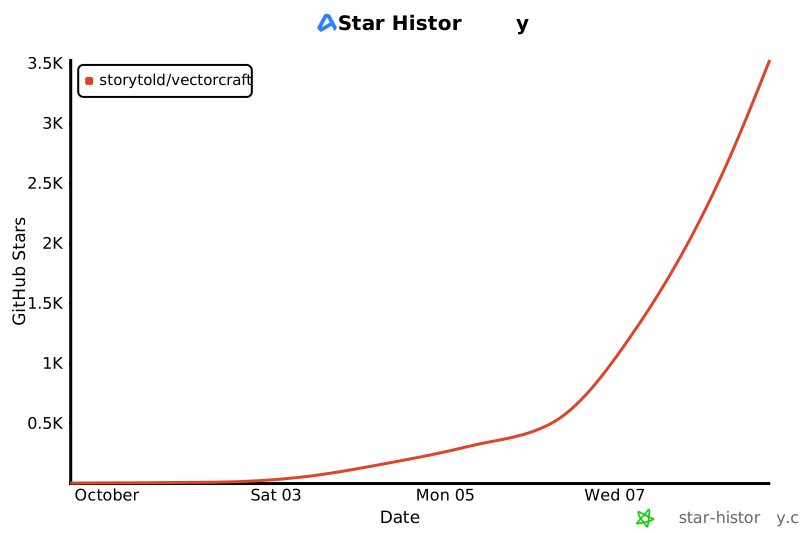](https://www.star-history.com/?repos=storytold%2Fvectorcraft&type=date&legend=top-left)
|
||||
|
||||
## License and credits
|
||||
|
||||
VectorCraft is dual-licensed under [MIT](LICENSE-MIT) or [Apache-2.0](LICENSE-APACHE), at your option.
|
||||
@@ -263,8 +251,8 @@ Copyright (c) 2026 ArtCraft Team and the VectorCraft contributors. Required noti
|
||||
|
||||
Bundled fonts, icons, images and other assets keep their own open licenses; each one is listed
|
||||
with its author, source and license in [ASSETS.md](ASSETS.md). Release builds also embed the
|
||||
fonts of [craft-fonts](https://github.com/storytold/craft-fonts/blob/main/ATTRIBUTION.md) (Japanese,
|
||||
Simplified Chinese and Arabic faces; SIL Open Font License 1.1).
|
||||
Japanese fonts of [craft-fonts](https://github.com/storytold/craft-fonts/blob/main/ATTRIBUTION.md)
|
||||
(SIL Open Font License 1.1).
|
||||
|
||||
The app icon (an engraved dragon on VectorCraft red, `#e8573f`) is the owner's original artwork; its
|
||||
palette and files are in [`assets/app-icon/`](assets/app-icon/README.md).
|
||||
|
||||
+40
-47
@@ -4,7 +4,7 @@ VectorCraft is a clean-room, open-source, pure-Rust reimplementation of the Adob
|
||||
|
||||
This file tracks **how far we are and what's left**. Time estimates are wall-clock hours of continuous Claude Opus 5.5 agent work (including builds and the CI gate), given both for **one agent** and for **4–6 parallel agents** on disjoint crates. They are counted from the remaining work (see [Parity estimate](#parity-estimate)), calibrated against measured throughput, and updated as work lands.
|
||||
|
||||
_Last updated: 2026-10-08 (after M4.14–M4.98, M8.1–M8.20, M14.4–M14.7, the MCP prompts, resource templates, completions and logging, the 2026-10-07 issue fixes, the Layers panel rework and the 2026-10-08 community contributions: Pen and shape-tool modifiers, path editing, Layers, Artboards, Swatches/Brushes and dialogs, Japanese composition and PDF text, Hebrew/Arabic type, interface languages (Spanish among them), the font menu, saved selections, MCP and EPS, the missing-font export warning (#319), open paths in the Shape Builder (#374), PDF/`.ai` import keeping strokes live and hidden and nested layers (#372), per-corner Live Corners (#381) and SVG type opening at the size it draws at (#396); see [Honest assessment](#honest-assessment-2026-10-05))._
|
||||
_Last updated: 2026-10-07 (after M4.14–M4.98, M8.1–M8.20, M14.4–M14.7, the MCP prompts, resource templates, completions and logging, the 2026-10-07 issue fixes and the Layers panel rework; see [Honest assessment](#honest-assessment-2026-10-05))._
|
||||
|
||||
## Where we are
|
||||
|
||||
@@ -33,16 +33,16 @@ since 2026-10-01.
|
||||
|
||||
| Dimension | Estimate | Evidence and what's missing |
|
||||
|---|---|---|
|
||||
| **Breadth:** menus, tools and panels exist | ~90% | 13 menu items still stubbed; every tool implemented except Touch Type; 51 panel modules |
|
||||
| **Breadth:** menus, tools and panels exist | ~90% | 16 menu items still stubbed; every tool implemented except Touch Type; 51 panel modules |
|
||||
| **Depth:** each feature behaves like Illustrator | ~69–75% | Strong: paint, appearance and colour (M3), Pathfinder and booleans, selection, drawing, files (M4). Weak: advanced type (~45%), brushes and symbols (in progress), raster effects (~20%) |
|
||||
| **Large missing subsystems** | 0–20% | 3D & Materials (0%), Photoshop-style raster effects and the Effect Gallery (~1 of ~56 filters), SVG Filters, CJK composition (vertical type with kinsoku, tate-chu-yoko and the font's vertical metrics; ruby, mojikumi and proportional vertical metrics open), Variables (data merge), scripting |
|
||||
| **Large missing subsystems** | 0–20% | 3D & Materials (0%), Photoshop-style raster effects and the Effect Gallery (~1 of ~56 filters), SVG Filters, CJK composition (vertical type with kinsoku and tate-chu-yoko; ruby, mojikumi and vertical metrics open), Variables (data merge), scripting |
|
||||
| **Interaction fidelity:** modifiers, cursors, small behaviours | ~30–40% | The dedicated pass hasn't started, and there has been no side-by-side session with Illustrator yet. A power user notices this first |
|
||||
| **Look & feel** | ~75–80% | Measured against Illustrator 2026 screenshots (2026-10-02); the panels added since haven't been re-measured |
|
||||
| **File interop** | ~85% | SVG/SVGZ, PDF and PDF-compatible `.ai`, EPS, DXF, EMF/WMF, raster formats, PSD export, Place and Links, Package, Print, clipboard flavours. Native `.ai` private data is out of scope by design; DWG has no open spec |
|
||||
| **Bundled content:** brush, symbol, style and swatch libraries | ~30% | Ours are original and generated in code, and far fewer than Illustrator ships; brush and symbol libraries are still missing |
|
||||
| **Performance** | unverified | Multithreaded, off-thread rendering and caches are in place. The last budget run (2026-10-01, loaded machine) measured 290 ms for a 50k-path fit against a 16 ms budget. Re-run `vectorcraft-cli perf` on an idle machine |
|
||||
| **Robustness** | good, new | ~2,840 tests, property tests, no panics in shipped code (lints, the `guard` safety net, import fuzzing), Data Recovery. Missing: a corpus of real-world files, Windows/Linux/browser QA |
|
||||
| **Platforms and 1.0 polish** | ~60% | The macOS app and the web build work, and Finder opens every readable format with the macOS app (#295, #354); hybrid-graphics laptops render on the power-saving GPU by default (#306); web drops land in the document they were dropped on (#359); a web page that loses its WebGPU device or WebGL context restarts its graphics with the same documents (#369); Windows/Linux packaging and accessibility are pending; an experimental, unsupported Windows 7 x64 OpenGL build exists (community-contributed, not verified by maintainers) |
|
||||
| **Platforms and 1.0 polish** | ~60% | The macOS app and the web build work; hybrid-graphics laptops render on the power-saving GPU by default (#306); Windows/Linux packaging and accessibility are pending |
|
||||
| **Agent automation** | beyond Illustrator | Every command, gesture and dialog is drivable over MCP, the CLI and the control channel |
|
||||
|
||||
### Where we're lacking (in priority order)
|
||||
@@ -58,13 +58,12 @@ Ordered by how much each gap blocks someone from switching. Sizes are one-agent
|
||||
3. **3D and Materials:** Extrude & Bevel, Revolve, Inflate and Rotate with lighting and materials, using a software
|
||||
renderer in its own crate (layering allows it below L6), with output in SVG/PDF as rasters or projected vectors.
|
||||
The largest single gap. 50–80 h.
|
||||
4. **Advanced type:** CJK composition for vertical type (ruby, mojikumi, proportional vertical metrics, manual
|
||||
4. **Advanced type:** CJK composition for vertical type (ruby, mojikumi, vertical font metrics, manual
|
||||
tate-chu-yoko), Optical Margin Alignment, the composer/hyphenation options, tab leaders, a
|
||||
spell-check dictionary (open licence), Touch Type and Snap to Glyph. Vertical point, area and path type have
|
||||
initial support. 35–48 h across type core and advanced.
|
||||
5. **Brushes, symbols and libraries:** brush options depth; original brush, symbol and graphic-style libraries
|
||||
generated in code (never Adobe's); dynamic symbols; Start Global Edit; brushes driven by pen tilt, bearing and
|
||||
barrel rotation (6D art pens, #372), which needs tablet input beyond pressure on every platform. 20–32 h.
|
||||
generated in code (never Adobe's); dynamic symbols; Start Global Edit. 14–22 h.
|
||||
6. **Automation:** Variables (data merge), a scripting surface over the command registry, batch. 8–12 h.
|
||||
7. **Views and windows:** multiple windows and arrange, Consolidate All Windows, video
|
||||
rulers. 15–25 h.
|
||||
@@ -90,48 +89,42 @@ grade by behaviour against `plan/illustrator/`, not by whether a menu item exist
|
||||
- Actions panel (record/playback, persisted), generic parameter dialogs for every "…" command.
|
||||
- JSON-lines control channel with real egui pointer and keyboard injection.
|
||||
- MCP server with 25 tools (drawing, text, effects, Pathfinder, transforms, graphs, text wrap, export, screenshots, any command), attached to the running app or headless. Tool descriptions and replies agree with the engine: format lists come from its format table, `save_file` says it keeps the document's own format, `inspect_document` reports the paint type's characters show, and selection exports report the encoder's warnings.
|
||||
- MCP protocol: five prompts (`prompts/list` / `prompts/get`: poster, icon set, recolour, trace-and-style, export set), `completion/complete` for prompt arguments and template variables read from the live catalogues (formats, effect ids, command ids, trace presets, swatch and object ids), four resource templates (`vectorcraft://object/{id}`, `//command/{id}`, `//effect/{id}`, `//swatch/{name}`) so an agent reads one thing instead of the whole document, and `logging/setLevel` with `notifications/message`. `window.panel` ids are case-insensitive (display labels work too), `vectorcraft://object/{id}` reads through `document.node {summary: true}` (the same reply bytes from one lookup instead of summarizing the whole document: a leaf read on a 2,000-object document drops from ~20 ms to ~0.06 ms), and the CLI sweeps the protocol surface over stdio against the compiled binary. `docs/mcp.md` has a Protocol section covering the capability table and what is deliberately absent (subscriptions, progress, cancellation, sampling, elicitation, Streamable HTTP — all of which need the transport to interleave reads).
|
||||
- MCP protocol: five prompts (`prompts/list` / `prompts/get`: poster, icon set, recolour, trace-and-style, export set), `completion/complete` for prompt arguments and template variables read from the live catalogues (formats, effect ids, command ids, trace presets, swatch and object ids), four resource templates (`vectorcraft://object/{id}`, `//command/{id}`, `//effect/{id}`, `//swatch/{name}`) so an agent reads one thing instead of the whole document, and `logging/setLevel` with `notifications/message`. `docs/mcp.md` has a Protocol section covering the capability table and what is deliberately absent (subscriptions, progress, cancellation, sampling, elicitation, Streamable HTTP — all of which need the transport to interleave reads).
|
||||
- Headless CLI (`vectorcraft-cli run`, `convert`, `info`, `bench`, `perf`, `mcp`).
|
||||
- Actions panel that records and plays back commands.
|
||||
- **UI:** Illustrator 2026 layout restyled to measured values:
|
||||
- Medium Dark theme, categorized and Advanced toolbars, 35 pt document tabs, 33 pt panel tabs.
|
||||
- Hint bar, contextual task bar, 19 dock panels with ≡ menus.
|
||||
- The dock's double arrow collapses Properties, Layers and Libraries to icons at the top of the icon column, popping out like the other icon panels, and expands them again (`window.collapseDock`, kept with the preferences and in saved workspaces). The icon column's own arrow (expanding the icon panels into a full column) is not done.
|
||||
- Localised UI: menus (in-window and native), panels, dialogs, toolbar and Preferences read from per-language catalogs (`crates/ui-egui/src/i18n`, see `docs/development.md`); Traditional Chinese (Taiwan), Simplified Chinese (mainland), Japanese and Spanish ship complete, and Czech and Brazilian Portuguese cover every menu label (and more), with system-locale detection on macOS, Windows and Linux, a VectorCraft ▸ Language menu and a Language preference. Names are never translated (fonts and their styles, layers, artboards, saved presets, user libraries, custom workspaces, recent files, plug-ins).
|
||||
- Localised UI: menus (in-window and native), panels, dialogs, toolbar and Preferences read from per-language catalogs (`crates/ui-egui/src/i18n`, see `docs/development.md`); Traditional Chinese (Taiwan) ships complete, and Czech and Japanese cover every menu label, with system-locale detection on macOS, Windows and Linux, a VectorCraft ▸ Language menu and a Language preference. Names are never translated (fonts and their styles, layers, artboards, saved presets, user libraries, custom workspaces, recent files, plug-ins).
|
||||
- Native macOS menu bar, vector tool cursors, a ⌘K command palette, middle-button panning with any tool.
|
||||
- macOS: Finder opens every format File › Open reads with VectorCraft (double-click, Open With, a drop on the Dock icon, `open -a`), at launch or while it runs; the release and `cargo xtask bundle` apps share one `Info.plist` that declares those document types, owning only VectorCraft's own formats.
|
||||
- A canvas context menu: right-click selects the object under the pointer and lists what applies to the selection (Undo/Redo, clipboard, group, isolation, join, Remove Anchor Points when anchors are selected, masks, compound paths, guides, Transform, Arrange, Select, Export Selection), or the view commands on empty canvas.
|
||||
- A canvas context menu: right-click selects the object under the pointer and lists what applies to the selection (Undo/Redo, clipboard, group, isolation, join, masks, compound paths, guides, Transform, Arrange, Select, Export Selection), or the view commands on empty canvas.
|
||||
- Save / Don't Save / Cancel before closing or quitting with unsaved documents (tabs, Close, Close All, Quit, window close).
|
||||
- Four brightness themes, persistent preferences.
|
||||
- Dialogs open with their first field focused and its value selected: type a value and press Enter (Move, Rotate, Scale…). Number fields in panels and dialogs step with Up/Down (Shift: ten, Ctrl/Cmd: a tenth of their unit), applied at once.
|
||||
- Tab shows and hides the panels (in the Type tool it types a tab) without moving the keyboard focus onto a field, so the next shortcut or letter still works; in dialogs and panel fields it moves between fields.
|
||||
- Cmd/Ctrl+A follows the keyboard: in a panel, dialog or search field it selects the field's text, while the Type tool edits it selects all of that text (also `select.all` over MCP), and only otherwise every object. On macOS the menu bar's Select All, Cut, Copy and Paste (keys or clicks) act on a focused field too. Not yet: Select All across threaded frames (one frame's text is selected).
|
||||
- On Windows and Linux the app bar is the window's title bar (its own minimize, maximize and close buttons, drag to move, edges to resize), with the dragon app icon as the brand mark; dialogs and menus size to their content. As on a native menu bar, once one menu is open, moving the pointer onto another title opens that one.
|
||||
- **Tools:**
|
||||
- **Selection:** Selection, Direct/Group Selection, Magic Wand, Lasso. Dragging a path segment with Direct Selection bends it when it's curved (its anchors stay) and moves its two anchors when it's straight, one undo step; the fill, Shift or Alt still pick the whole path (Alt-drag copies it).
|
||||
- **Saved selections:** Select ▸ Save Selection… asks for a name and keeps the selection in the document (saved with the file, undoable, up to 25); each one is listed at the bottom of the Select menu and a click selects its objects again; Edit Selection… lists them to rename or delete, applied together on OK. A file's saved selections are capped and checked against its objects when it opens. Not yet: Update Selection and the Layers panel's saved-selection menu.
|
||||
- **Drawing:** Pen, Curvature, anchor tools, Pencil, Paintbrush, Blob Brush, Smooth, Path Eraser, Join. Direction handles dragged with Direct Selection or the Anchor Point tool snap to smart guides, and Shift keeps them at 45° steps from their anchor.
|
||||
- **Shapes:** all shape tools (including Flare) and the line, arc, spiral and grid tools. Space held while dragging out a shape, line, arc, spiral or grid moves it at its current size. While a grid is dragged out, Up/Down change its rows (concentric dividers) and Left/Right its columns (radial dividers).
|
||||
- **Selection:** Selection, Direct/Group Selection, Magic Wand, Lasso.
|
||||
- **Drawing:** Pen, Curvature, anchor tools, Pencil, Paintbrush, Blob Brush, Smooth, Path Eraser, Join.
|
||||
- **Shapes:** all shape tools (including Flare) and the line, arc, spiral and grid tools.
|
||||
- **Cutting:** Eraser, Scissors, Knife, Mirror & Cut, Line Cut and Rectangle Cut (real geometry, compound paths keep their holes).
|
||||
- **Transform:** Rotate, Reflect, Scale, Shear (click or Alt-click snaps the reference point to anchors and centres; Alt-click opens the tool's dialog, and a drag with Alt down at the release, from the press or pressed mid-drag, transforms a copy), Reshape, Free Transform (free and perspective distort and shear, switched by the keys held during a handle drag).
|
||||
- **Live Corners:** drag a live rectangle's corner widgets (Selection or Direct Selection) to round all corners, with a radius readout; with Direct Selection, select corner anchors to show and round just those corners (#381). Each corner keeps its own radius and kind (Round, Inverted Round, Chamfer): Alt-click a widget to cycle the kind, double-click it for the Corners dialog, and the Properties and Transform radius fields set the selected corners (`object.setLiveShape {corners, radius, kind}`). Corners stay circular when the rectangle is scaled unevenly or along its own sides when rotated (the radius keeps its size, or scales by the mean scale with Scale Corners on); only a shear distorts them.
|
||||
- **Pen:** Alt pressed in the middle of dragging out an anchor splits its handles and keeps the curve already shaped into it (only the outgoing handle follows the pointer); Space held while dragging out an anchor moves it, handles and all. Clicking the last anchor of the path being drawn retracts its outgoing handle (convert cursor), and dragging from it pulls out a new one on its own. Auto Add/Delete: over a selected path, a click on a segment adds an anchor and a click on an anchor deletes it (add and delete cursors); Shift held, or Preferences › General › Disable Auto Add/Delete, starts a new path instead.
|
||||
- **Transform:** Rotate, Reflect, Scale, Shear (click or Alt-click snaps the reference point to anchors and centres), Reshape, Free Transform (free and perspective distort and shear, switched by the keys held during a handle drag).
|
||||
- **Live Corners:** drag a live rectangle's corner widgets (Selection or Direct Selection) to round all corners, with a radius readout. Corners stay circular when the rectangle is scaled unevenly or along its own sides when rotated (the radius keeps its size, or scales by the mean scale with Scale Corners on); only a shear distorts them.
|
||||
- **Graphs:** Column, Stacked Column, Bar, Stacked Bar, Line, Area, Scatter, Pie and Radar graph tools with Graph Data and Graph Type.
|
||||
- **Other:** Eyedropper, Gradient annotator, Artboard (Alt-drag duplicates an artboard, and its art with Move/Copy Artwork with Artboard on), Measure, Type, Hand, Zoom, Rotate View.
|
||||
- **Other:** Eyedropper, Gradient annotator, Artboard, Measure, Type, Hand, Zoom, Rotate View.
|
||||
- **Editing type:** double-clicking type with a selection tool switches to the Type tool with the caret where it was clicked.
|
||||
- **Temporary tools:** Cmd with any other tool drags with the selection tool used last (Selection, Direct Selection or Group Selection). Held Space pans and Cmd+Space zooms (Cmd+Alt+Space out) whatever the tool.
|
||||
- **Panel drag and drop:** art dragged off the canvas onto the Symbols panel becomes a symbol, onto the Swatches panel a pattern swatch and onto the Brushes panel an Art brush; a symbol dragged onto the canvas places an instance where it is dropped, and a brush dragged onto a path is applied to it.
|
||||
- **Tool double-clicks:** double-clicking a tool's button opens its options: Hand fits the artboard in the window, Zoom shows 100 %, Rotate, Scale, Reflect and Shear open their Object › Transform dialogs, the Selection, Direct Selection and Group Selection tools the Move dialog (Enter opens these seven tools' dialogs too), Gradient, Eyedropper, Blend and the Liquify tools their panels or options.
|
||||
- **Layers panel:** every layer, sublayer, group and object is a clickable row at any depth: a click highlights it and makes its layer current (new art goes there), Shift-click a range, Ctrl/Cmd-click toggles. Sublayers are no longer treated as objects: clicks, marquees, Select All and the Select menu take the art inside them, and each sublayer selects in its own colour. Selection squares on rows with selected art (click selects a row's art, Shift adds or removes; dragging the square moves the selection to another row, Alt copies), the eye and lock on every row with drag-down-the-column (one undo step), Ctrl/Cmd-click an eye for per-layer Outline, Alt-click an eye or lock to hide or lock the other layers (again: show or unlock them all), triangles with Alt to open or close everything inside, drag and drop rows above, below or into layers and groups with a drop line (Alt copies, the trash deletes), inline rename, Delete key on highlighted rows. Buttons and the full panel menu: New Layer/Sublayer (Alt: options, Ctrl: on top), Duplicate, Delete, Options for Selection, clipping mask, isolation, Locate Object, Merge Selected, Flatten Artwork, Collect in New Layer, Release to Layers (Sequence and Build), Reverse Order, Template, Hide/Outline/Lock Others and Show/Preview/Unlock All, Paste Remembers Layers, Panel Options (row size, thumbnails per kind, Show Layers Only). Layer Options: name, colour (presets or custom), Template, Lock, Show, Print, Preview (outline drawing and clicking) and Dim Images to %. Every operation is a command (`layer.move`, `layer.highlight`, `layer.merge`…) with validation against cycles and invalid nesting.
|
||||
- **Drawing aids:** Smart Guides and snapping (moving, and resizing by the bounding-box handles: the dragged edges align with the other objects; the Artboard tool snaps artboards, and their bleed, to other artboards, bleeds and art, the grid or whole pixels while moving, copying and resizing them, and the Transform panel shows and edits the active artboard's X/Y/W/H), guides dragged out of the rulers, and Draw Normal / Behind / Inside modes.
|
||||
- **Views:** the status bar's artboard navigator (first, previous, next, last; `view.goToArtboard`) goes to an artboard and fits it, and Fit Artboard in Window and Actual Size show the navigator's artboard. The Artboards panel highlights that active artboard: clicking a row makes it active (the Artboard tool's too, while it is chosen) as does clicking an artboard with the Artboard tool, double-clicking its number also fits it in the window and double-clicking its name renames it.
|
||||
- **Panel drag and drop:** art dragged off the canvas onto the Symbols panel becomes a symbol, and a symbol dragged onto the canvas places an instance where it is dropped.
|
||||
- **Tool double-clicks:** double-clicking a tool's button opens its options: Hand fits the artboard in the window, Zoom shows 100 %, Rotate, Scale, Reflect and Shear open their Object › Transform dialogs, Gradient, Eyedropper, Blend and the Liquify tools their panels or options.
|
||||
- **Layers panel:** every layer, sublayer, group and object is a clickable row at any depth: a click highlights it and makes its layer current (new art goes there), Shift-click a range, Ctrl/Cmd-click toggles. Sublayers are no longer treated as objects: clicks, marquees, Select All and the Select menu take the art inside them, and each sublayer selects in its own colour. Selection squares on rows with selected art (click selects a row's art, Shift adds or removes; dragging the square moves the selection to another row, Alt copies), the eye and lock on every row with drag-down-the-column (one undo step), Ctrl/Cmd-click an eye for per-layer Outline, triangles with Alt to open or close everything inside, drag and drop rows above, below or into layers and groups with a drop line (Alt copies, the trash deletes), inline rename, Delete key on highlighted rows. Buttons and the full panel menu: New Layer/Sublayer (Alt: options, Ctrl: on top), Duplicate, Delete, Options for Selection, clipping mask, isolation, Locate Object, Merge Selected, Flatten Artwork, Collect in New Layer, Release to Layers (Sequence and Build), Reverse Order, Template, Hide/Outline/Lock Others and Show/Preview/Unlock All, Paste Remembers Layers, Panel Options (row size, thumbnails per kind, Show Layers Only). Layer Options: name, colour (presets or custom), Template, Lock, Show, Print, Preview (outline drawing and clicking) and Dim Images to %. Every operation is a command (`layer.move`, `layer.highlight`, `layer.merge`…) with validation against cycles and invalid nesting.
|
||||
- **Drawing aids:** Smart Guides and snapping, guides dragged out of the rulers, and Draw Normal / Behind / Inside modes.
|
||||
- **Views:** the status bar's artboard navigator (first, previous, next, last; `view.goToArtboard`) goes to an artboard and fits it, and Fit Artboard in Window and Actual Size show the navigator's artboard.
|
||||
- **Geometry and effects:**
|
||||
- Pathfinder (10 exact curve booleans), Offset, Outline Stroke, Simplify, Clean Up, Split Into Grid, Divide Objects Below. Object › Path › Remove Anchor Points (`path.removeAnchors`) removes the direct-selected anchors without opening their paths (the Delete key still deletes them with their segments): the neighbours keep their handle directions and their facing handles are refitted so one cubic follows the two old segments, and straight sides stay straight. The Delete Anchor Point tool uses the same refit. The Control bar, the contextual task bar, the Properties quick actions and the canvas context menu offer it when anchors are selected.
|
||||
- Pathfinder (10 exact curve booleans), Offset, Outline Stroke, Simplify, Clean Up, Split Into Grid, Divide Objects Below.
|
||||
- Live effects with previewing dialogs: Distort & Transform, Path, Convert to Shape, 15 Warp styles, Round Corners, Scribble, Effect → Pathfinder (all 10 operations, live on groups; several loose objects are grouped first, in one undo step), Color Adjustments (Brightness/Contrast, Curves, Levels, Hue/Saturation, Shift to Color, Temperature/Tint, on vectors, live type and embedded images), and raster drop shadow, glows and feather. SVG and PDF export keep live effects (geometry baked; SVG raster effects as filters).
|
||||
- **Type:** Text Wrap, Type on a Path effects (Rainbow/Skew/3D Ribbon/Stair Step/Gravity), Character and Paragraph Styles (override-preserving redefine), Area Type Options (rows/columns/inset/first baseline), threaded text across any closed shapes, Fit Headline. Area type resizes like Illustrator's type areas: a bounding-box handle drag (Selection tool) or Area Type Options Width/Height size the frame and the text reflows at its size (threads too); Direct Selection drags a frame corner or edge (`text.reshapeArea`). Point type still scales. Variable fonts list every named instance as a style of their family (Figtree Light to Black and their italics, Bahnschrift, Segoe UI Variable), and the instance chosen is shaped, drawn, outlined and measured at its axis settings; PDF and SVG embed it as that instance. Variation axis sliders are not done. Hebrew and Arabic are laid out right to left with the Unicode bidirectional algorithm (embedded Latin and numbers keep their direction, lines put in visual order after wrapping) in point, area and path type, with caret, selection and arrow keys in visual order; each paragraph's direction comes from its first strong character unless Paragraph Direction sets it (Paragraph panel with Show Indic Options, `text.setFormat {direction}`), and new type aligns to the start of its direction. SVG export outlines right-to-left text.
|
||||
- **Interface languages, vertical type:** VectorCraft ▸ Language (or Preferences ▸ User Interface) picks Automatic (the system locale) or a registered language, persisted as `interfaceLanguage`. Translations come from per-language catalogs (`i18n/*.tsv`): Traditional and Simplified Chinese, Japanese and Spanish (neutral international Spanish, for every `es-*` locale) cover the whole interface, Czech and Brazilian Portuguese every menu label, Brazilian Portuguese the shell's `tl!` literals too (tested); untranslated text stays English. Japanese and Chinese glyphs come from the craft-fonts build input (release builds) or the installed fonts, Czech and Spanish ones from the bundled UI fonts. The Basic toolbar's Type button holds Vertical Type in its flyout. Vertical Type, Vertical Area Type and Vertical Type on a Path create vertical text (columns right to left, upright CJK glyphs and marks with `vert` alternates, Latin and longer numbers on their side, two- and three-digit numbers set as tate-chu-yoko in one em of the column (kept whole when justified), upright glyphs centred on the column (tracked or justified too), point type's anchor on the first column's centre line); kinsoku (the strict set) applies to horizontal and vertical Japanese, and justified Japanese lines spread their room between characters (not inside Latin words); Paragraph panel › Mojikumi Set (shown with Preferences › Type › Show East Asian Options, `text.setFormat {mojikumi}`): None or Line-end Punctuation Half Width (new type's default, as in Illustrator; older documents and imported text keep None) shares one half-em space between consecutive punctuation, sets a closing mark ending a line half width, and puts a quarter em between Japanese and Latin letters or digits; Paragraph panel menu › Top-to-Top / Bottom-to-Bottom Leading measures leading from em box top to top (area type's first line touches the frame) or from baseline to baseline; Type ▸ Type Orientation switches existing text; caret, selection, hit testing and arrow keys follow the writing direction. Vertical text exports to PDF as real text and to SVG as outlines.
|
||||
- **Type:** Text Wrap, Type on a Path effects (Rainbow/Skew/3D Ribbon/Stair Step/Gravity), Character and Paragraph Styles (override-preserving redefine), Area Type Options (rows/columns/inset/first baseline), threaded text across any closed shapes, Fit Headline. Area type resizes like Illustrator's type areas: a bounding-box handle drag (Selection tool) or Area Type Options Width/Height size the frame and the text reflows at its size (threads too); Direct Selection drags a frame corner or edge (`text.reshapeArea`). Point type still scales. Variable fonts list every named instance as a style of their family (Figtree Light to Black and their italics, Bahnschrift, Segoe UI Variable), and the instance chosen is shaped, drawn, outlined and measured at its axis settings; PDF and SVG embed it as that instance. Variation axis sliders are not done.
|
||||
- **Interface languages, vertical type:** VectorCraft ▸ Language (or Preferences ▸ User Interface) picks Automatic (the system locale) or a registered language, persisted as `interfaceLanguage`. Translations come from per-language catalogs (`i18n/*.tsv`): Traditional Chinese covers the whole interface, Czech and Japanese every menu label (tested); untranslated text stays English. Japanese and Chinese glyphs come from the craft-fonts build input (release builds) or the installed fonts, Czech ones from the bundled UI fonts. Vertical Type, Vertical Area Type and Vertical Type on a Path create vertical text (columns right to left, upright CJK glyphs and marks with `vert` alternates, Latin and longer numbers on their side, two- and three-digit numbers set as tate-chu-yoko in one em of the column (kept whole when justified), upright glyphs centred on the column (tracked or justified too), point type's anchor on the first column's centre line); kinsoku (the strict set) applies to horizontal and vertical Japanese; Type ▸ Type Orientation switches existing text; caret, selection, hit testing and arrow keys follow the writing direction. Vertical text exports to PDF as real text and to SVG as outlines.
|
||||
- **Transparency:** opacity masks (clip/invert/disable/link), exported as SVG `<mask>` and PDF soft masks.
|
||||
- **Advanced art:** live Blends (steps/distance/smooth colour, editable spine, anchor-targeted Blend tool, faithful interpolation, knockout), Envelope Distort (warp/mesh/top object, Reset, full Envelope Options, mesh handles, Edit Contents; type, images, symbols, gradients, patterns and appearance distorted everywhere), Liquify tools with options and pen pressure, Puppet Warp with rotating pins, Perspective Grid with presets, movable planes and projected type (choosing a perspective tool shows the grid; Hide Grid hides it with the tool still chosen), Gradient Mesh, Shape Builder (stroke-only open paths and lines cut the regions they cross and enclose regions of their own; Alt deletes their pieces; filled open paths count as closed), Live Paint (every path an edge, open lines included), Image Trace (12 presets), pattern swatches with pattern editing mode, live Repeat (radial/grid/mirror).
|
||||
- **Advanced art:** live Blends (steps/distance/smooth colour, editable spine, anchor-targeted Blend tool, faithful interpolation, knockout), Envelope Distort (warp/mesh/top object, Reset, full Envelope Options, mesh handles, Edit Contents; type, images, symbols, gradients, patterns and appearance distorted everywhere), Liquify tools with options and pen pressure, Puppet Warp with rotating pins, Perspective Grid with presets, movable planes and projected type, Gradient Mesh, Shape Builder, Live Paint (every path an edge, open lines included), Image Trace (12 presets), pattern swatches with pattern editing mode, live Repeat (radial/grid/mirror).
|
||||
- **Paint and appearance (M3):**
|
||||
- **Swatches:** names follow the colour model and are unique; Swatch Options (process/spot, Global, Gray/RGB/HSB/CMYK/Web, live preview); editing a global or spot swatch recolours every linked fill, stroke and text run in one undo step; multi-select and delete with confirmation; New Swatch and New Color Group dialogs (a group from the selected artwork's colours); swatches in colour groups convert, separate and count like any other. The Swatches panel selects ranges and whole groups, has a find field, and drags swatches to reorder, regroup or paint art; Add Used Colors, Select All Unused, Merge, Ungroup and Sort by Kind; a CMYK document keeps applied colours in CMYK. Swatch libraries: nine generated colour libraries and five gradient libraries in a library panel, saved and loaded as `.vcswatches`, `.gpl` or CSS. Tints of global and spot colours ("Name 40%") stay linked and separate as a percentage of their plate. Spot colours can be defined in Lab (Spot Colors options). A built-in [Registration] swatch prints on every plate.
|
||||
- **Colour:** a Color Picker (colour field, H/S/B/R/G/B channel slider, HSB/RGB/Lab/CMYK fields, hex, web-only snapping, out-of-gamut correction); the Color panel follows each colour's own model and Alt-click paints the other proxy; proxies look through groups and show "?" for mixed paint; Invert, Complement, Apply Last Color (`,`) and Apply Last Gradient (`.`) keep the colour model; every paint command feeds the recent colours. The Color Guide has 21 harmony rules, Steps and Variation options and Limit to Library. Adjust Color Balance (its Global mode shifts tints) and Saturate preview live; Edit Colors and Recolor also reach meshes, images and patterns. Recolor Artwork has colour reduction, five recolour methods, presets, Limit to Library, a colour-wheel Edit tab and Edit Color Group; a local Color Themes panel saves five-colour themes. Fill/Stroke chips open swatch and mixer popovers, panels have their shortcuts, and Eyedropper Options pick up and apply chosen attributes (Alt and Shift+Alt, image pixels). Fills and strokes can overprint (Attributes panel, Overprint Black options), and CMYK documents blend in inks on screen, in PDF and when flattening.
|
||||
@@ -143,14 +136,14 @@ grade by behaviour against `plan/illustrator/`, not by whether a menu item exist
|
||||
- **Graphic styles:** styles keep opacity and blend mode, capture groups and type, apply on top with Alt, and link to the objects using them; Redefine, Break Link, Graphic Style Options, Select All Unused, Sort by Name, and Select > Same Graphic Style / Appearance Attribute. The panel has list and thumbnail views with rendered previews, merge, reorder and drag and drop, plus a Control bar Style picker; six generated style libraries save and load as `.vcstyles`.
|
||||
- **Neutral wording:** labels, MCP tool text, docs and packaging use neutral names, and `cargo xtask brands` (part of `cargo xtask ci`) fails on vendor names.
|
||||
- **Colour, type and file workflows:** Recolor Artwork (dialog with harmonies), Edit Colors, Find & Replace, Change Case, Smart Punctuation, Guides, Lock/Hide Above, Transform Each, Rasterize.
|
||||
- **Fonts:** a font is found by any of its names (family and style in every language of its name table, legacy family/style pairs, PostScript name), so documents from other apps open with the font they name; Find Font and `text.fonts` say for each font whether it was found exactly, by another name, substituted or missing, and how many glyphs are missing. PDF and `.ai` import brings Japanese text back as live type: CID fonts without a ToUnicode map read through the standard CMaps, vertical columns (WMode 1) as vertical type, letter spacing as tracking; a glyph is live type only when the installed font (in the closest style of its family) draws the same glyph, and text in a font that isn't installed comes in as live type shown in the fallback font until the font is installed (exports that draw it — PDF, EPS, EMF/WMF, raster, SVG outlines or embedded fonts — warn that they wrote the fallback font; `textAs: outlines` keeps the PDF's embedded glyphs).
|
||||
- **Fonts:** a font is found by any of its names (family and style in every language of its name table, legacy family/style pairs, PostScript name), so documents from other apps open with the font they name; Find Font and `text.fonts` say for each font whether it was found exactly, by another name, substituted or missing, and how many glyphs are missing.
|
||||
- **Files (M4):**
|
||||
- `.vectorcraft` (lossless JSON, compressed, atomic saves, save down to v1), Save As with a format chooser, Save a Copy, Revert, templates, Data Recovery after a crash (browser tabs hold their copies with Web Locks too, so a background tab's copies are never taken for a crash's, and a tab repairs copies another removed when it resumes: #367), background save and export.
|
||||
- SVG/SVGZ in and out with SVG Options, Preserve Editing, symbols, filters, rich text and physical units (SVG type under a transform or `viewBox` scale opens at the size it draws at, the scale moved into its size, leading, baseline shift and strokes, a stretch, skew or rotation kept as its transform: #396); PDF and PDF-compatible `.ai` in and out (layers, with hidden ones kept hidden with their art and nested ones as sublayers; strokes kept live, a fill and a stroke of one outline as one object; masks, editable text with type set along a curve coming back as type on a path, each artboard's art on its own page only, an `.ai`'s white page under its layers left out rather than coming in as art, spot colours, presets, security, marks and bleed, ICC output intents, raster effects, subset fonts, PDF/X, PDF layers, overprint, page thumbnails, fast web view, PDF 1.3). CMYK images keep their ink amounts from PDF import (and from placed CMYK TIFFs) to PDF export: a CMYK JPEG passes through unchanged, others stay CMYK (DeviceCMYK, or ICC-based CMYK in PDF/X-3/X-4) unless the Output settings convert them; the canvas shows them through the working CMYK profile (#320).
|
||||
- EPS and DXF in and out, EMF/WMF in and out; PNG (with PNG-8), JPEG, WebP, GIF, TIFF, BMP, Targa and layered PSD export. EPS import runs Illustrator's AGM/CoolType prologs (resource categories, `resourceforall`, `clipsave`/`cliprestore`, subarrays and substrings that share storage, the standard dictionaries in `systemdict`, `dictstack`, `internaldict`, executable filters, `cshow`, metadata skipped with `flushfile`), so Illustrator 30 EPS files open as vectors, and falls back to its palette TIFF preview. DXF TEXT justified Fit or Aligned spans its two points (stretched, or scaled as a whole).
|
||||
- `.vectorcraft` (lossless JSON, compressed, atomic saves, save down to v1), Save As with a format chooser, Save a Copy, Revert, templates, Data Recovery after a crash, background save and export.
|
||||
- SVG/SVGZ in and out with SVG Options, Preserve Editing, symbols, filters, rich text and physical units; PDF and PDF-compatible `.ai` in and out (layers, masks, editable text with type set along a curve coming back as type on a path, each artboard's art on its own page only, spot colours, presets, security, marks and bleed, ICC output intents, raster effects, subset fonts, PDF/X, PDF layers, overprint, page thumbnails, fast web view, PDF 1.3).
|
||||
- EPS and DXF in and out, EMF/WMF in and out; PNG (with PNG-8), JPEG, WebP, GIF, TIFF, BMP, Targa and layered PSD export. EPS import runs Illustrator's AGM/CoolType prologs (resource categories, `resourceforall`, `clipsave`/`cliprestore`, subarrays and substrings that share storage) and falls back to its palette TIFF preview. DXF TEXT justified Fit or Aligned spans its two points (stretched, or scaled as a whole).
|
||||
- Place and the Links panel, Package, File Info, Print with print presets, PostScript output and print tiling, slices and Save for Web, Export for Screens and Asset Export, CSS Properties, PNG/PDF/SVG/text clipboard flavours.
|
||||
- **Performance:** 20k shapes + 1k texts render in 27 ms per full-retina frame (7.8 ms zoomed), 7× faster than the first version. The UI thread never blocks. The web build is 7.1 MB gzipped.
|
||||
- **Graphics processor:** the canvas is rasterized on the CPU and the GPU only composites it, so the desktop app asks for the power-saving GPU by default (the integrated one on hybrid-graphics laptops, where presenting from the discrete GPU made the window flicker, #306). Preferences › Performance › Graphics Processor (`gpuPreference`) or `WGPU_POWER_PREF` picks the discrete one; Help › About and `ui.inspect` name the adapter in use. When the browser drops the page's WebGPU device or WebGL context, the web build writes recovery copies, starts again on new graphics with the same app and uploads its textures again; if it can't, it removes the stale canvas and says to reload, which offers the copies back. The desktop app writes the copies and says to restart (#369).
|
||||
- **Graphics processor:** the canvas is rasterized on the CPU and the GPU only composites it, so the desktop app asks for the power-saving GPU by default (the integrated one on hybrid-graphics laptops, where presenting from the discrete GPU made the window flicker, #306). Preferences › Performance › Graphics Processor (`gpuPreference`) or `WGPU_POWER_PREF` picks the discrete one; Help › About and `ui.inspect` name the adapter in use.
|
||||
- **Tests and robustness:** ~2,840 automated tests: model-based property tests, a junk-parameter sweep over every command, import fuzzing (SVG, PDF, libraries), golden renders, and MCP end-to-end tests over stdio. Shipped code never panics (workspace lints and a rollback safety net; see `docs/development.md`).
|
||||
|
||||
## Milestones and estimates
|
||||
@@ -159,19 +152,19 @@ grade by behaviour against `plan/illustrator/`, not by whether a menu item exist
|
||||
|---|---|---|---|
|
||||
| M0 | Skeleton + vertical slice | ✅ done | — |
|
||||
| M1 | Selection, transform, layers, MCP | ✅ mostly done (transform reference point snaps to anchors/centres; rotated objects keep a rotated bounding box and their angle; Free Transform, Scale and Reflect along a rotated box pending) | 4–6 |
|
||||
| M2 | Drawing tools + smart guides | ✅ mostly done (Flare, Reshape, Live Corners widget dragging and per-corner radii and kinds landed; Shaper, the remaining Pen modifier nuances) | 15–20 |
|
||||
| M2 | Drawing tools + smart guides | ✅ mostly done (Flare, Reshape, Live Corners widget dragging landed; Shaper, Pen modifier nuances) | 15–20 |
|
||||
| M3 | Paint & appearance (swatches, color, gradient, stroke, appearance, transparency, styles) | ✅ done (M3.7–M3.98): swatches, groups, libraries, tints, Lab spots and Registration; Color Picker, Color panel, Color Guide, Color Themes, Edit Colors and Recolor Artwork; gradients that follow every transform, the annotator, linked stops, freeform gradients, focal points, gradients on strokes and Expand; stroke geometry, arrowheads, dashes fitted to corners, stroke on type, width profiles and the Width tool, Scale Strokes and preview bounds; Appearance targeting, container appearance, target circles, Expand Appearance; knockout, isolation, blend accuracy, CMYK blending, overprint, Attributes, masks and clipping, Flatten Transparency; graphic styles, links and libraries. Left: freeform and mixed spot/process gradients export as stops or process colours to SVG/PDF; confirm the Scale Strokes & Effects default | 4–8 |
|
||||
| M4 | Files (native, SVG, PDF, raster, Export for Screens, clipboard interop) | ✅ done (M4.14–M4.98 on 2026-10-05): Save As/Save a Copy/Revert/templates, Data Recovery and background save, SVG import and export fidelity (units, text, symbols, filters, SVGZ, Preserve Editing, SVG Options), PDF import (colours, layers, masks, editable text, security) and export (presets, marks, bleed, ICC and output intent, raster effects, subset fonts, PDF/X-1a, X-3 and X-4, PDF layers, overprint, page thumbnails, fast web view, PDF 1.3), Place and Links, Package, EPS and DXF in and out, EMF/WMF, TIFF/BMP/Targa/PSD/GIF/PNG-8 export, Print and print presets, slices, Save for Web, Asset Export, clipboard flavours, File Info. Left: DWG (use DXF), PSD placement as layers, overprint read back from PDF, polish | 3–6 |
|
||||
| M5 | Performance | 🟡 background render + caches + MT done; `vectorcraft-cli bench` and `vectorcraft-cli perf` (budget suite); file format v2 opens 3× faster (50k paths: 722 → 244 ms); raster effects (glows, shadows, blur, feather) no longer force the whole frame single-threaded (filtered offscreen per effect, verified equal to the single-threaded reference); effect-heavy demos need a clean-machine benchmark; dirty-region rendering, GPU backend spike pending | 15–25 |
|
||||
| M6 | Path operations (Pathfinder, Shape Builder, offset…) | ✅ mostly done (Boolean precision on almost-horizontal edges fixed and the property tests made deterministic; Shape Builder gap detection, large-offset bug open) | 3–6 |
|
||||
| M7 | Type (point/area/path, editing, styles, OpenType, threading, glyphs) | 🟡 Character/Paragraph Styles, Area Type Options (with Width/Height), type areas resized by their handles and reshaped with Direct Selection, threaded text, Fit Headline, Glyphs, OpenType panel, Find Font, installed system fonts in every font menu (searchable; the Character and Properties menus show each family's sample of the selected text, preview it live under the pointer or ↑/↓, filter by script and kind, list a family's styles, and star favourites) and found by name on open/import, variable fonts' named instances as styles, CJK names in the UI, input methods (marked text in place, candidate window at the caret; Japanese IME), Text Wrap (offset, invert, both sides of an object; follows edits), Type on a Path effects, tab stops + Tabs panel, Hebrew/Arabic bidirectional text and Paragraph Direction done; tab leaders, spell check, vertical type pending | 45–60 |
|
||||
| M6 | Path operations (Pathfinder, Shape Builder, offset…) | ✅ mostly done (Boolean precision on almost-horizontal edges fixed and the property tests made deterministic; Shape Builder edge erase, large-offset bug open) | 3–6 |
|
||||
| M7 | Type (point/area/path, editing, styles, OpenType, threading, glyphs) | 🟡 Character/Paragraph Styles, Area Type Options (with Width/Height), type areas resized by their handles and reshaped with Direct Selection, threaded text, Fit Headline, Glyphs, OpenType panel, Find Font, installed system fonts in every font menu (searchable) and found by name on open/import, variable fonts' named instances as styles, CJK names in the UI, input methods (marked text in place, candidate window at the caret; Japanese IME), Text Wrap (offset, invert, both sides of an object; follows edits), Type on a Path effects, tab stops + Tabs panel done; tab leaders, spell check, vertical type pending | 45–60 |
|
||||
| M8 | Transform & distort (Puppet Warp, Liquify tools, Envelopes, Blends, Perspective Grid) | ✅ done (M8.1–M8.20 on 2026-10-06, fidelity pass): Liquify Tool Options with one shared brush, pen pressure, hold-to-apply, a safe scope and incremental strokes; tool options that last; Puppet Warp rotation, multi-select, Control bar and a rest-shape session that follows Undo; Width tool on compound paths; Envelope dialogs with preview, Reset with Warp/Mesh, full Envelope Options, type/images/symbols/appearance/gradients/patterns distorted on canvas and in every export, warps that keep their frame, Edit Contents, mesh handles and Control bar; Blend Options, anchor-targeted Blend tool, editable spine, keys picked on the canvas, faithful interpolation and knockout; Perspective Grid with Define Grid, presets, lock/snap/rulers, widgets, the 1–4 plane switch, movable planes, Perspective Selection scale/copy/perpendicular/Transform Again, and type and symbols truly projected with Edit Text. Left: Anti-Alias and Preserve Shape output, warp-envelope point editing, brush interpolation in blends, Free Transform/Scale/Reflect along a rotated box | 2–4 |
|
||||
| M9 | Live effects (+ 3D & Materials) | 🟡 2D effects done incl. Effect → Pathfinder and Color Adjustments; SVG Filters, Document Raster Effects Settings, 3D pending | 86–135 |
|
||||
| M10 | Brushes, symbols, patterns, Repeat | 🟡 pattern swatches (5 tile types, Pattern Options, editing mode, SVG `<pattern>`/PDF export) and live Repeat (radial/grid/mirror) done; brushes/symbols in progress | 23–37 |
|
||||
| M11 | Artboards & views (artboard panel/tool, Trim View, middle-button pan, print tiling and the status bar's artboard navigator done; multiple windows, presentation polish) | 🟡 | 15–25 |
|
||||
| M12 | Advanced color & art (CMYK/ICC, separations, Gradient Mesh, Live Paint, Image Trace, Graphs) | 🟡 Gradient Mesh, Live Paint, Image Trace (12 presets, 18 ms/1k² image), Recolor Artwork, colour management (ICC, soft proofing, separations preview), Graphs (all 9 tools, Graph Data/Type, regenerate in place) done; graph Design/Column/Marker designs pending | 6–10 |
|
||||
| M13 | Automation (Actions ✅ record/playback, persisted; variables, scripting, batch) | 🟡 | 18–27 |
|
||||
| M14 | 1.0 polish (preferences, shortcut editor, workspaces, accessibility, packaging for all OSes) | 🟡 Preferences, shortcut editor (chords with Shift and a punctuation key fire as typed), workspaces, a custom title bar on Windows/Linux with a Home button, content-sized dialogs and menus that scroll when longer than the window done; an experimental, unsupported Windows 7 x64 portable OpenGL build (not verified by maintainers); accessibility and broader Windows/Linux packaging/QA pending | 18–28 |
|
||||
| M14 | 1.0 polish (preferences, shortcut editor, workspaces, accessibility, packaging for all OSes) | 🟡 Preferences, shortcut editor (chords with Shift and a punctuation key fire as typed), workspaces, a custom title bar on Windows/Linux with a Home button, content-sized dialogs and menus that scroll when longer than the window done; accessibility, Windows/Linux packaging pending | 18–28 |
|
||||
| — | Interaction fidelity pass (every tool's modifiers, Properties panel per context, isolation, nuance) | ⬜ | 60–90 |
|
||||
| — | Hardening at scale (big-file corpus, fuzzing, cross-platform + browser QA) | 🟡 | 50–80 |
|
||||
| | **Total to full parity** (one agent; re-derived from the [Parity estimate](#parity-estimate) table) | | **~320–500** |
|
||||
@@ -191,22 +184,22 @@ about 1–1.5 agent-hours each, so the other rows (estimated on the older scale)
|
||||
| Area | Weight | Done | Missing (main items) | One agent (h) |
|
||||
|---|---:|---:|---|---:|
|
||||
| Selection, transform & align tools | 6 | 85% | Free Transform/Scale/Reflect along a rotated box, Start Global Edit, transform nuances (the rotated persistent bounding box is done) | 4–6 |
|
||||
| Drawing tools | 7 | 85% | Shaper Groups (merge/punch overlapping shapes), pencil and the remaining pen modifier nuances, Touch Type, Live Corners on plain paths and polygons (and Relative rounding) | 10–15 |
|
||||
| Path operations, Pathfinder, Shape Builder, Live Paint | 5 | 86% | Live Paint gap options, Shape Builder gap detection and options | 3–6 |
|
||||
| Drawing tools | 7 | 85% | Shaper Groups (merge/punch overlapping shapes), pen/pencil modifier nuances, Touch Type | 10–15 |
|
||||
| Path operations, Pathfinder, Shape Builder, Live Paint | 5 | 86% | Live Paint gap options, Shape Builder edge cases | 3–6 |
|
||||
| Colour, swatches, gradients, patterns, mesh, recolor | 7 | 96% | freeform and mixed spot/process gradients in SVG/PDF (exported as stops or process colours), pattern fills in Expand | 2–4 |
|
||||
| Strokes, brushes, width profiles | 5 | 88% | brush options depth, brush libraries (generated in code), brushes driven by pen tilt, bearing and barrel rotation (6D art pens) | 12–20 |
|
||||
| Strokes, brushes, width profiles | 5 | 88% | brush options depth, brush libraries (generated in code) | 6–10 |
|
||||
| Appearance, transparency, graphic styles, masks | 5 | 98% | raster effect reach in preview bounds (flattener presets apply in PDF, EPS and print) | 1–2 |
|
||||
| Live vector effects | 5 | 85% | Outline Object, Pathfinder Hard/Soft Mix and Trap, SVG Filters | 6–10 |
|
||||
| Raster effects (Effect Gallery, Document Raster Effects Settings) | 4 | 20% | ~55 Photoshop-style filters (Artistic, Brush Strokes, Distort, Pixelate, Sketch, Stylize, Texture, Video) and the Effect Gallery; Document Raster Effects Settings and raster effects in PDF are done | 28–42 |
|
||||
| 3D and Materials | 4 | 0% | Extrude & Bevel, Revolve, Inflate, Rotate, lighting, materials (software renderer) | 50–80 |
|
||||
| Type core | 9 | 79% | Middle Eastern features beyond bidi layout and Paragraph Direction (Character Direction, digit types, kashidas, the Middle Eastern composers, editable bidirectional SVG text, a split caret where directions meet); composer/hyphenation options, Optical Margin Alignment, hidden characters, Transform Again after a type-area resize (it scales the type), partial selection of type-area anchors by marquee | 15–20 |
|
||||
| Type advanced | 4 | 50% | CJK composition for vertical type (ruby, mojikumi beyond Line-end Punctuation Half Width — hanging punctuation, line-start brackets, kinsoku sets and the Mojikumi Settings dialog —, proportional vertical metrics, manual tate-chu-yoko), variable font axis sliders (named instances are styles), tab leaders, spell check (open dictionary), Touch Type, Retype; vertical point/area/path type and Type Orientation have initial support | 20–28 |
|
||||
| Type core | 9 | 78% | composer/hyphenation options, Optical Margin Alignment, hidden characters, Transform Again after a type-area resize (it scales the type), partial selection of type-area anchors by marquee | 15–20 |
|
||||
| Type advanced | 4 | 48% | CJK composition for vertical type (ruby, mojikumi, vertical metrics, manual tate-chu-yoko), variable font axis sliders (named instances are styles), tab leaders, spell check (open dictionary), Touch Type, Retype; vertical point/area/path type and Type Orientation have initial support | 20–28 |
|
||||
| Symbols, blends, envelopes, Repeat, perspective | 5 | 88% | symbol libraries (original), dynamic symbols, envelope Anti-Alias/Preserve Shape output and warp point editing, brush interpolation in blends (M8 fidelity pass done) | 5–8 |
|
||||
| Image Trace, graphs, image tools | 3 | 70% | graph Design/Column/Marker, Create Object Mosaic, Crop Image polish (Vector Halftone is done) | 6–10 |
|
||||
| Layers, artboards, document setup | 5 | 82% | Layers panel: a confirmation before deleting layers that hold art, Collect for Export, row context menus, the Layer Options dialog for several rows with mixed values, Paste Remembers Layers for sublayers, drag-scrolling a long panel while dragging rows; artboard presets/rearrange polish (Document Setup, New Document and the rest of the Layers panel are done) | 4–7 |
|
||||
| View & navigation | 3 | 70% | New View/Edit Views, multiple windows/arrange, Snap to Pixel/Glyph (print tiling is done) | 9–14 |
|
||||
| Guides, grids, smart guides, snapping, rulers | 3 | 75% | global/video rulers, smart-guide preference depth, ruler-drag modifiers (Shift snaps to ticks, Alt swaps orientation) and dragging existing guides | 4–8 |
|
||||
| File formats | 6 | 85% | DWG (no open spec: DXF instead), PSD placement as layers, Illustrator EPS checked against more real files (two Illustrator 30 files open as vectors so far), the remaining fidelity polish; EPS, DXF, EMF/WMF, TIFF, BMP, Targa, PSD export, SVGZ, PDF security, PDF/X, PDF layers and presets are done | 6–10 |
|
||||
| File formats | 6 | 85% | DWG (no open spec: DXF instead), PSD placement as layers, Illustrator EPS checked against real files (only reduced repros so far), the remaining fidelity polish; EPS, DXF, EMF/WMF, TIFF, BMP, Targa, PSD export, SVGZ, PDF security, PDF/X, PDF layers and presets are done | 6–10 |
|
||||
| Export for Screens, Asset Export, slices, Save for Web | 3 | 85% | polish only (all four are done) | 2–4 |
|
||||
| Print, colour management, separations, flattener | 3 | 80% | print preview fidelity (flattener presets in PDF and print, overprint in PDF and composite print, Print dialog, presets, PostScript, marks, separations, Print Tiling, print overprint/flattener/bitmap options and printer profile are done) | 1–2 |
|
||||
| Automation | 3 | 60% | Variables (data merge), scripting surface, batch | 8–12 |
|
||||
@@ -221,7 +214,7 @@ With 4–6 agents working on disjoint crates (as the layering allows) the wall-c
|
||||
(integration, review and shared files such as `menus.rs` serialize some work): **~55–95 h** to feature parity,
|
||||
**~80–145 h** to full parity.
|
||||
|
||||
_Inventories (2026-10-07):_ 13 menu items still stubbed (`todo(…)` in `crates/ui-egui/src/menus.rs`); every tool
|
||||
_Inventories (2026-10-05):_ 16 menu items still stubbed (`todo(…)` in `crates/ui-egui/src/menus.rs`); every tool
|
||||
implemented except Touch Type; 51 panel modules; Illustrator-style live
|
||||
effects ~44/54, Photoshop-style raster effects ~1/56, 3D 0/5; ~2,840 tests; ~221k lines of Rust.
|
||||
|
||||
|
||||
@@ -83,119 +83,6 @@ fn mcp_headless_over_stdio() {
|
||||
assert_eq!(replies[3]["result"]["content"][0]["type"], "image");
|
||||
}
|
||||
|
||||
/// End-to-end protocol sweep over stdio against the compiled binary. The in-process
|
||||
/// tests drive `Server::handle_line` directly, so the binary's own wiring (argument
|
||||
/// parsing, logger install, stdout pollution, notification order) is untested: this
|
||||
/// drives the real `mcp --headless` process through prompts, completions, resource
|
||||
/// templates, logging and the error taxonomy instead.
|
||||
#[test]
|
||||
fn mcp_protocol_over_stdio() {
|
||||
use std::io::{BufRead, BufReader};
|
||||
let mut child =
|
||||
Command::new(BIN).args(["mcp", "--headless"]).stdin(Stdio::piped()).stdout(Stdio::piped()).stderr(Stdio::piped()).spawn().unwrap();
|
||||
let mut stdin = child.stdin.take().unwrap();
|
||||
let mut lines = BufReader::new(child.stdout.take().unwrap()).lines();
|
||||
let mut notes = vec![];
|
||||
|
||||
fn send(stdin: &mut std::process::ChildStdin, v: Value) {
|
||||
writeln!(stdin, "{v}").unwrap();
|
||||
}
|
||||
// Next reply with this id; notifications (no id) are stashed for later.
|
||||
fn recv(lines: &mut std::io::Lines<BufReader<std::process::ChildStdout>>, notes: &mut Vec<Value>, id: u64) -> Value {
|
||||
loop {
|
||||
let line = lines.next().unwrap().unwrap();
|
||||
let v: Value = serde_json::from_str(&line).unwrap();
|
||||
assert_eq!(v["jsonrpc"], "2.0", "{v}");
|
||||
if v.get("id").and_then(|i| i.as_u64()) == Some(id) {
|
||||
return v;
|
||||
}
|
||||
notes.push(v);
|
||||
}
|
||||
}
|
||||
|
||||
send(
|
||||
&mut stdin,
|
||||
json!({"jsonrpc":"2.0","id":1,"method":"initialize","params":{"protocolVersion":"2025-06-18","capabilities":{},"clientInfo":{"name":"test","version":"0"}}}),
|
||||
);
|
||||
let r = recv(&mut lines, &mut notes, 1);
|
||||
assert_eq!(r["result"]["serverInfo"]["name"], "vectorcraft");
|
||||
assert!(r["result"]["capabilities"]["prompts"].is_object(), "{r}");
|
||||
send(&mut stdin, json!({"jsonrpc":"2.0","method":"notifications/initialized"}));
|
||||
|
||||
send(&mut stdin, json!({"jsonrpc":"2.0","id":2,"method":"prompts/list","params":{}}));
|
||||
let r = recv(&mut lines, &mut notes, 2);
|
||||
assert!(r["result"]["prompts"].as_array().is_some_and(|p| !p.is_empty()), "{r}");
|
||||
send(&mut stdin, json!({"jsonrpc":"2.0","id":3,"method":"prompts/get","params":{"name":"poster","arguments":{"brief":"a jazz festival"}}}));
|
||||
let r = recv(&mut lines, &mut notes, 3);
|
||||
assert!(r["result"]["messages"][0]["content"]["text"].as_str().is_some_and(|t| t.contains("a jazz festival")), "{r}");
|
||||
|
||||
send(
|
||||
&mut stdin,
|
||||
json!({"jsonrpc":"2.0","id":4,"method":"completion/complete","params":{"ref":{"type":"ref/prompt","name":"export-set"},"argument":{"name":"formats","value":"sv"}}}),
|
||||
);
|
||||
let r = recv(&mut lines, &mut notes, 4);
|
||||
assert!(r["result"]["completion"]["values"].as_array().is_some_and(|v| v.contains(&json!("svg"))), "{r}");
|
||||
|
||||
send(&mut stdin, json!({"jsonrpc":"2.0","id":5,"method":"resources/list","params":{}}));
|
||||
assert!(recv(&mut lines, &mut notes, 5)["result"]["resources"].as_array().is_some_and(|v| v.len() == 2));
|
||||
send(&mut stdin, json!({"jsonrpc":"2.0","id":6,"method":"resources/templates/list","params":{}}));
|
||||
assert!(recv(&mut lines, &mut notes, 6)["result"]["resourceTemplates"].as_array().is_some_and(|v| v.len() >= 4));
|
||||
|
||||
send(
|
||||
&mut stdin,
|
||||
json!({"jsonrpc":"2.0","id":7,"method":"tools/call","params":{"name":"draw_shape","arguments":{"shape":"rectangle","x":10,"y":10,"width":60,"height":40}}}),
|
||||
);
|
||||
let r = recv(&mut lines, &mut notes, 7);
|
||||
assert_eq!(r["result"]["isError"], false, "{r}");
|
||||
let id: i64 = serde_json::from_str::<Value>(r["result"]["content"][0]["text"].as_str().unwrap()).unwrap()["id"].as_i64().unwrap();
|
||||
|
||||
send(&mut stdin, json!({"jsonrpc":"2.0","id":8,"method":"resources/read","params":{"uri": format!("vectorcraft://object/{id}")}}));
|
||||
let r = recv(&mut lines, &mut notes, 8);
|
||||
let body: Value = serde_json::from_str(r["result"]["contents"][0]["text"].as_str().unwrap()).unwrap();
|
||||
assert_eq!(body["id"].as_i64(), Some(id), "{body}");
|
||||
|
||||
// Unknown resources (-32002) and bad template values (-32602) stay apart.
|
||||
send(&mut stdin, json!({"jsonrpc":"2.0","id":9,"method":"resources/read","params":{"uri":"vectorcraft://nope" }}));
|
||||
assert_eq!(recv(&mut lines, &mut notes, 9)["error"]["code"], -32002);
|
||||
send(&mut stdin, json!({"jsonrpc":"2.0","id":10,"method":"resources/read","params":{"uri":"vectorcraft://object/"}}));
|
||||
assert_eq!(recv(&mut lines, &mut notes, 10)["error"]["code"], -32602);
|
||||
|
||||
// The binary installed its logger: records arrive as notifications/message, and only
|
||||
// after the client asked for them.
|
||||
send(&mut stdin, json!({"jsonrpc":"2.0","id":11,"method":"logging/setLevel","params":{"level":"debug"}}));
|
||||
assert!(recv(&mut lines, &mut notes, 11).get("error").is_none());
|
||||
send(&mut stdin, json!({"jsonrpc":"2.0","id":12,"method":"tools/list","params":{}}));
|
||||
assert!(recv(&mut lines, &mut notes, 12)["result"]["tools"].as_array().is_some_and(|v| !v.is_empty()));
|
||||
|
||||
// Malformed input is a parse error, and the server keeps serving afterwards.
|
||||
stdin.write_all(b"{not json\n").unwrap();
|
||||
let parse_err: Value = loop {
|
||||
let line = lines.next().unwrap().unwrap();
|
||||
let v: Value = serde_json::from_str(&line).unwrap();
|
||||
if v.get("error").is_some() {
|
||||
break v;
|
||||
}
|
||||
notes.push(v);
|
||||
};
|
||||
assert_eq!(parse_err["error"]["code"], -32700);
|
||||
assert!(parse_err["id"].is_null(), "{parse_err}");
|
||||
send(&mut stdin, json!({"jsonrpc":"2.0","id":13,"method":"ping","params":{}}));
|
||||
assert!(recv(&mut lines, &mut notes, 13).get("error").is_none());
|
||||
drop(stdin);
|
||||
// Drain whatever the debug window queued; every line off the protocol stream parses.
|
||||
for line in lines.by_ref() {
|
||||
let line = line.unwrap();
|
||||
let v: Value = serde_json::from_str(&line).unwrap();
|
||||
assert_eq!(v["jsonrpc"], "2.0", "{v}");
|
||||
notes.push(v);
|
||||
}
|
||||
let out = child.wait_with_output().unwrap();
|
||||
assert!(out.status.success());
|
||||
assert!(!String::from_utf8_lossy(&out.stderr).contains("panicked"));
|
||||
let messages = notes.iter().filter(|n| n["method"] == "notifications/message").count();
|
||||
assert!(messages > 0, "no log records after logging/setLevel: {notes:?}");
|
||||
}
|
||||
|
||||
/// `vectorcraft-cli commands | head -1` panicked with "failed printing to
|
||||
/// stdout: Broken pipe (os error 32)" and exit status 101.
|
||||
#[test]
|
||||
|
||||
@@ -27,4 +27,4 @@ rfd = { workspace = true }
|
||||
wasm-bindgen = "0.2"
|
||||
wasm-bindgen-futures = "0.4"
|
||||
js-sys = "0.3"
|
||||
web-sys = { version = "0.3", features = ["Window", "Document", "Element", "HtmlElement", "HtmlCanvasElement", "HtmlIFrameElement", "HtmlAnchorElement", "Blob", "BlobPropertyBag", "Url", "Location", "CssStyleDeclaration", "Event", "EventTarget", "MouseEvent", "DragEvent", "Storage", "Navigator"] }
|
||||
web-sys = { version = "0.3", features = ["Window", "Document", "Element", "HtmlElement", "HtmlCanvasElement", "HtmlIFrameElement", "HtmlAnchorElement", "Blob", "BlobPropertyBag", "Url", "Location", "CssStyleDeclaration", "Event", "EventTarget", "MouseEvent", "DragEvent", "Storage"] }
|
||||
@@ -1,122 +0,0 @@
|
||||
//! The browser's Web Locks (`navigator.locks`), which tell Data Recovery whether another tab still
|
||||
//! runs ([`vectorcraft_engine::cmd::recovery::RecoveryStore::announce`]). A tab holds a lock named
|
||||
//! after its recovery area for as long as it lives; the browser releases it only when the tab is
|
||||
//! gone (closed, crashed or reloaded), not while its timers are paused in the background, which a
|
||||
//! heartbeat can't tell apart.
|
||||
//!
|
||||
//! web-sys has Web Locks only as an unstable API, so they are reached through `js_sys::Reflect`.
|
||||
//! Pages that aren't secure (plain `http://` other than localhost) and older browsers have none:
|
||||
//! heartbeats alone decide there.
|
||||
|
||||
use std::cell::RefCell;
|
||||
use std::collections::{BTreeMap, BTreeSet};
|
||||
use std::sync::{Arc, Mutex};
|
||||
|
||||
use js_sys::{Function, Promise, Reflect};
|
||||
use vectorcraft_engine::cmd::recovery::Hold;
|
||||
use wasm_bindgen::JsCast as _;
|
||||
use wasm_bindgen::JsValue;
|
||||
use wasm_bindgen::closure::Closure;
|
||||
|
||||
/// How often the snapshot of the locks held is refreshed (ms).
|
||||
const REFRESH_MS: i32 = 10_000;
|
||||
/// How old a snapshot may be and still be trusted (ms). A lock asked for after the snapshot was
|
||||
/// taken comes with a heartbeat, which stays fresh for at least three minutes, so anything under
|
||||
/// that is safe; an older snapshot counts every area as held.
|
||||
const FRESH_MS: f64 = 60_000.0;
|
||||
|
||||
thread_local! {
|
||||
/// What releases each lock this tab holds, by name: it resolves the promise the lock is held
|
||||
/// by (wasm runs on one thread).
|
||||
static RELEASE: RefCell<BTreeMap<String, Function>> = const { RefCell::new(BTreeMap::new()) };
|
||||
}
|
||||
|
||||
/// The locks of the page, named `<prefix><area>`.
|
||||
#[derive(Clone)]
|
||||
pub struct WebLocks {
|
||||
prefix: &'static str,
|
||||
/// The areas whose locks were held at the last snapshot, and when it was asked for (ms since
|
||||
/// the epoch). `navigator.locks.query()` is asynchronous, so the snapshot is refreshed every
|
||||
/// [`REFRESH_MS`] and read from here.
|
||||
seen: Arc<Mutex<(f64, BTreeSet<String>)>>,
|
||||
}
|
||||
|
||||
/// `navigator.locks`, if the browser has it here.
|
||||
fn manager() -> Option<JsValue> {
|
||||
let locks = Reflect::get(&web_sys::window()?.navigator(), &"locks".into()).ok()?;
|
||||
locks.is_object().then_some(locks)
|
||||
}
|
||||
|
||||
/// Method `name` of `obj`.
|
||||
fn method(obj: &JsValue, name: &str) -> Option<Function> {
|
||||
Reflect::get(obj, &name.into()).ok()?.dyn_into().ok()
|
||||
}
|
||||
|
||||
impl WebLocks {
|
||||
/// The page's Web Locks with a first snapshot of them, kept fresh from then on; `None` when
|
||||
/// the browser has none or won't say which are held (heartbeats alone decide then).
|
||||
pub async fn start(prefix: &'static str) -> Option<Self> {
|
||||
let locks = Self { prefix, seen: Arc::new(Mutex::new((f64::NEG_INFINITY, BTreeSet::new()))) };
|
||||
locks.refresh().await?;
|
||||
let again = locks.clone();
|
||||
let tick = Closure::<dyn FnMut()>::new(move || {
|
||||
let locks = again.clone();
|
||||
wasm_bindgen_futures::spawn_local(async move {
|
||||
// A failed refresh leaves the snapshot to age, and every area counts as held.
|
||||
let _ = locks.refresh().await;
|
||||
});
|
||||
});
|
||||
web_sys::window()?.set_interval_with_callback_and_timeout_and_arguments_0(tick.as_ref().unchecked_ref(), REFRESH_MS).ok()?;
|
||||
// The timer lives as long as the page.
|
||||
tick.forget();
|
||||
Some(locks)
|
||||
}
|
||||
|
||||
/// Take a new snapshot of the locks held.
|
||||
async fn refresh(&self) -> Option<()> {
|
||||
let m = manager()?;
|
||||
let asked = js_sys::Date::now();
|
||||
let query: Promise = method(&m, "query")?.call0(&m).ok()?.dyn_into().ok()?;
|
||||
let snapshot = wasm_bindgen_futures::JsFuture::from(query).await.ok()?;
|
||||
let held = js_sys::Array::from(&Reflect::get(&snapshot, &"held".into()).ok()?);
|
||||
let areas = held
|
||||
.iter()
|
||||
.filter_map(|l| Reflect::get(&l, &"name".into()).ok()?.as_string())
|
||||
.filter_map(|n| n.strip_prefix(self.prefix).map(str::to_string))
|
||||
.collect();
|
||||
*self.seen.lock().unwrap_or_else(|e| e.into_inner()) = (asked, areas);
|
||||
Some(())
|
||||
}
|
||||
|
||||
/// Does a tab hold `area`'s lock? Yes when the last snapshot is too old to tell.
|
||||
pub fn held(&self, area: &str) -> bool {
|
||||
let seen = self.seen.lock().unwrap_or_else(|e| e.into_inner());
|
||||
js_sys::Date::now() - seen.0 > FRESH_MS || seen.1.contains(area)
|
||||
}
|
||||
|
||||
/// Hold `area`'s lock until the returned hold is dropped (or the page goes).
|
||||
pub fn hold(&self, area: &str) -> Option<Hold> {
|
||||
let m = manager()?;
|
||||
let name = format!("{}{area}", self.prefix);
|
||||
// The lock is held until this promise resolves: when the hold is dropped.
|
||||
let mut release = None;
|
||||
let until = Promise::new(&mut |resolve, _| release = Some(resolve));
|
||||
let release = release?;
|
||||
let granted = Closure::once_into_js(move |_lock: JsValue| until);
|
||||
method(&m, "request")?.call2(&m, &name.clone().into(), &granted).ok()?;
|
||||
RELEASE.with(|r| r.borrow_mut().insert(name.clone(), release));
|
||||
Some(Box::new(LockHold(name)))
|
||||
}
|
||||
}
|
||||
|
||||
/// A lock this tab holds (by name), released when dropped.
|
||||
struct LockHold(String);
|
||||
|
||||
impl Drop for LockHold {
|
||||
fn drop(&mut self) {
|
||||
if let Some(resolve) = RELEASE.with(|r| r.borrow_mut().remove(&self.0)) {
|
||||
// Resolving can't fail in a way worth reporting: the lock goes with the page anyway.
|
||||
let _ = resolve.call0(&JsValue::NULL);
|
||||
}
|
||||
}
|
||||
}
|
||||
@@ -13,8 +13,6 @@
|
||||
//!
|
||||
//! URL query flag: `?webgl` forces the WebGL2 backend instead of WebGPU.
|
||||
|
||||
#[cfg(target_arch = "wasm32")]
|
||||
mod locks;
|
||||
#[cfg(target_arch = "wasm32")]
|
||||
mod web;
|
||||
|
||||
|
||||
+59
-238
@@ -1,21 +1,17 @@
|
||||
//! The browser shell: web `Services`, drag-and-drop, the eframe web runner, and starting again
|
||||
//! with new graphics when the page loses them (#369).
|
||||
//! The browser shell: web `Services`, drag-and-drop, and the eframe web runner.
|
||||
|
||||
use std::cell::{Cell, RefCell};
|
||||
use std::cell::Cell;
|
||||
use std::rc::Rc;
|
||||
use std::sync::{Arc, Mutex};
|
||||
|
||||
use vectorcraft_engine::Session;
|
||||
use vectorcraft_engine::cmd::fileio;
|
||||
use vectorcraft_engine::cmd::recovery::{self, Hold, RecoveryStore};
|
||||
use vectorcraft_ui_egui::graphics::GraphicsLoss;
|
||||
use vectorcraft_engine::cmd::recovery::RecoveryStore;
|
||||
use vectorcraft_ui_egui::place::{DropTarget, PlaceArrival, PlaceInbox};
|
||||
use vectorcraft_ui_egui::print::{PrintJob, PrintService, Printer};
|
||||
use vectorcraft_ui_egui::{Services, VectorcraftApp};
|
||||
use wasm_bindgen::JsCast as _;
|
||||
|
||||
use crate::locks::WebLocks;
|
||||
|
||||
type Inbox = Arc<Mutex<Vec<(String, Vec<u8>)>>>;
|
||||
|
||||
/// Where the pointer was over the canvas during the last file drag (CSS px from its top-left) and
|
||||
@@ -25,123 +21,56 @@ type DragPos = Rc<Cell<Option<(f32, f32, bool)>>>;
|
||||
const CANVAS_ID: &str = "vectorcraft_canvas";
|
||||
const LOADING_ID: &str = "vectorcraft_loading";
|
||||
|
||||
/// How many times the page starts again with new graphics after losing them before it gives up
|
||||
/// (a GPU that keeps failing).
|
||||
const MAX_RESTARTS: u32 = 3;
|
||||
|
||||
/// What the page keeps while the app runs, across graphics restarts.
|
||||
#[derive(Clone)]
|
||||
struct Host {
|
||||
runner: eframe::WebRunner,
|
||||
inbox: Inbox,
|
||||
place_inbox: PlaceInbox,
|
||||
drag: DragPos,
|
||||
/// The page's Web Locks for Data Recovery, started once before the first frame: a graphics
|
||||
/// restart keeps them, so the tab stays the owner of its recovery area.
|
||||
locks: Option<WebLocks>,
|
||||
/// Graphics restarts so far.
|
||||
restarts: u32,
|
||||
}
|
||||
|
||||
pub fn start() {
|
||||
eframe::WebLogger::init(log::LevelFilter::Info).ok();
|
||||
let Some(canvas) = element(CANVAS_ID).and_then(|e| e.dyn_into::<web_sys::HtmlCanvasElement>().ok()) else {
|
||||
log::error!("missing <canvas id=\"{CANVAS_ID}\">");
|
||||
return;
|
||||
};
|
||||
wasm_bindgen_futures::spawn_local(async move {
|
||||
// Before the first frame, which looks for copies a crash left behind.
|
||||
let locks = WebLocks::start(RECOVERY_PREFIX).await;
|
||||
let host = Host {
|
||||
runner: eframe::WebRunner::new(),
|
||||
inbox: Arc::default(),
|
||||
place_inbox: Arc::default(),
|
||||
drag: DragPos::default(),
|
||||
locks,
|
||||
restarts: 0,
|
||||
wasm_bindgen_futures::spawn_local(async {
|
||||
let Some(document) = web_sys::window().and_then(|w| w.document()) else {
|
||||
log::error!("no document");
|
||||
return;
|
||||
};
|
||||
run(host, canvas, None).await;
|
||||
});
|
||||
}
|
||||
|
||||
/// An app whose graphics were lost, on its way to new ones.
|
||||
struct Moving {
|
||||
app: VectorcraftApp,
|
||||
/// Its unsaved changes are kept in recovery copies ([`VectorcraftApp::graphics_lost`]).
|
||||
kept: bool,
|
||||
}
|
||||
|
||||
/// Run the app on `canvas`: the `moving` one when starting again after losing the graphics, else
|
||||
/// a new one.
|
||||
async fn run(host: Host, canvas: web_sys::HtmlCanvasElement, moving: Option<Moving>) {
|
||||
track_drag(&canvas, &host.drag);
|
||||
let kept = moving.as_ref().map(|m| m.kept);
|
||||
// The app until the new runner takes it (still here if starting fails before).
|
||||
let slot = Rc::new(RefCell::new(moving.map(|m| m.app)));
|
||||
let (runner, taken, page) = (host.runner.clone(), slot.clone(), canvas.clone());
|
||||
let result = runner
|
||||
.start(
|
||||
canvas,
|
||||
web_options(),
|
||||
Box::new(move |cc| {
|
||||
let ctx = &cc.egui_ctx;
|
||||
let loss = GraphicsLoss::default();
|
||||
watch_canvas(&page, &loss, ctx);
|
||||
if let Some(rs) = &cc.wgpu_render_state {
|
||||
log::info!("vectorcraft-web: wgpu backend {:?}", rs.adapter.get_info().backend);
|
||||
let (loss, ctx) = (loss.clone(), ctx.clone());
|
||||
rs.device.set_device_lost_callback(move |reason, msg| loss.report(&ctx, format!("{reason:?}: {msg}")));
|
||||
}
|
||||
let services = services(host.inbox.clone(), host.place_inbox.clone(), ctx.clone(), host.locks.clone());
|
||||
let app = match taken.borrow_mut().take() {
|
||||
Some(mut app) => {
|
||||
// The old services asked the old context for frames.
|
||||
app.services = services;
|
||||
app.status("The graphics were lost and have been restarted");
|
||||
app
|
||||
let Some(canvas) = document.get_element_by_id(CANVAS_ID).and_then(|e| e.dyn_into::<web_sys::HtmlCanvasElement>().ok()) else {
|
||||
log::error!("missing <canvas id=\"{CANVAS_ID}\">");
|
||||
return;
|
||||
};
|
||||
let drag = track_drag(&canvas);
|
||||
let mut options = eframe::WebOptions::default();
|
||||
if query().contains("webgl")
|
||||
&& let eframe::egui_wgpu::WgpuSetup::CreateNew(create) = &mut options.wgpu_options.wgpu_setup
|
||||
{
|
||||
create.instance_descriptor.backends = eframe::wgpu::Backends::GL;
|
||||
}
|
||||
let result = eframe::WebRunner::new()
|
||||
.start(
|
||||
canvas,
|
||||
options,
|
||||
Box::new(move |cc| {
|
||||
if let Some(rs) = &cc.wgpu_render_state {
|
||||
log::info!("vectorcraft-web: wgpu backend {:?}", rs.adapter.get_info().backend);
|
||||
}
|
||||
None => VectorcraftApp::new(Session::new(), services),
|
||||
};
|
||||
Ok(Box::new(WebShell { app: Some(app), host, canvas: page, loss }))
|
||||
}),
|
||||
)
|
||||
.await;
|
||||
match (result, kept) {
|
||||
(Ok(()), _) => {
|
||||
if let Some(el) = element(LOADING_ID) {
|
||||
el.remove();
|
||||
let inbox: Inbox = Arc::default();
|
||||
let place_inbox: PlaceInbox = Arc::default();
|
||||
let app = VectorcraftApp::new(Session::new(), services(inbox.clone(), place_inbox.clone(), cc.egui_ctx.clone()));
|
||||
Ok(Box::new(WebShell { app, inbox, place_inbox, drag }))
|
||||
}),
|
||||
)
|
||||
.await;
|
||||
if let Some(el) = document.get_element_by_id(LOADING_ID) {
|
||||
match result {
|
||||
Ok(()) => el.remove(),
|
||||
Err(e) => el.set_inner_html(&format!("<p>VectorCraft failed to start: {e:?}</p><p>A browser with WebGPU or WebGL2 is required.</p>")),
|
||||
}
|
||||
}
|
||||
(Err(e), None) => notice(&[&format!("VectorCraft failed to start: {}", js_err(e)), "A browser with WebGPU or WebGL2 is required."]),
|
||||
(Err(e), Some(kept)) => {
|
||||
log::error!("vectorcraft-web: couldn't restart the graphics: {}", js_err(e));
|
||||
give_up(slot.borrow_mut().take(), kept);
|
||||
}
|
||||
}
|
||||
}
|
||||
|
||||
/// The runner's options: wgpu (WebGPU where available, else WebGL2; `?webgl` forces WebGL2).
|
||||
fn web_options() -> eframe::WebOptions {
|
||||
let mut options = eframe::WebOptions::default();
|
||||
if query().contains("webgl")
|
||||
&& let eframe::egui_wgpu::WgpuSetup::CreateNew(create) = &mut options.wgpu_options.wgpu_setup
|
||||
{
|
||||
create.instance_descriptor.backends = eframe::wgpu::Backends::GL;
|
||||
}
|
||||
options
|
||||
});
|
||||
}
|
||||
|
||||
fn query() -> String {
|
||||
web_sys::window().and_then(|w| w.location().search().ok()).unwrap_or_default()
|
||||
}
|
||||
|
||||
fn element(id: &str) -> Option<web_sys::Element> {
|
||||
web_sys::window()?.document()?.get_element_by_id(id)
|
||||
}
|
||||
|
||||
/// Follow file drags over `canvas` into `pos`: drag events carry the pointer position, which egui
|
||||
/// doesn't get during a drag.
|
||||
fn track_drag(canvas: &web_sys::HtmlCanvasElement, pos: &DragPos) {
|
||||
/// Follow file drags over the canvas: drag events carry the pointer position, which egui doesn't
|
||||
/// get during a drag.
|
||||
fn track_drag(canvas: &web_sys::HtmlCanvasElement) -> DragPos {
|
||||
let pos = DragPos::default();
|
||||
let p = pos.clone();
|
||||
let on_drag = wasm_bindgen::closure::Closure::<dyn FnMut(web_sys::DragEvent)>::new(move |e: web_sys::DragEvent| {
|
||||
p.set(Some((e.offset_x() as f32, e.offset_y() as f32, e.shift_key())));
|
||||
@@ -151,130 +80,36 @@ fn track_drag(canvas: &web_sys::HtmlCanvasElement, pos: &DragPos) {
|
||||
log::error!("couldn't follow {kind} events: {e:?}");
|
||||
}
|
||||
}
|
||||
// The listener lives as long as the canvas.
|
||||
// The listener lives as long as the page.
|
||||
on_drag.forget();
|
||||
}
|
||||
|
||||
/// Report the loss of `canvas`'s WebGL context to `loss` (WebGPU devices report theirs through
|
||||
/// wgpu).
|
||||
fn watch_canvas(canvas: &web_sys::HtmlCanvasElement, loss: &GraphicsLoss, ctx: &egui::Context) {
|
||||
let (loss, ctx) = (loss.clone(), ctx.clone());
|
||||
let on_lost = wasm_bindgen::closure::Closure::<dyn FnMut(web_sys::Event)>::new(move |_: web_sys::Event| {
|
||||
loss.report(&ctx, "the WebGL context was lost");
|
||||
});
|
||||
if let Err(e) = canvas.add_event_listener_with_callback("webglcontextlost", on_lost.as_ref().unchecked_ref()) {
|
||||
log::error!("couldn't watch for a lost WebGL context: {e:?}");
|
||||
}
|
||||
// The listener lives as long as the canvas.
|
||||
on_lost.forget();
|
||||
}
|
||||
|
||||
/// A new canvas in place of `old`, whose graphics were lost (a canvas whose WebGL context is lost
|
||||
/// can't get another).
|
||||
fn fresh_canvas(old: &web_sys::HtmlCanvasElement) -> Result<web_sys::HtmlCanvasElement, String> {
|
||||
let new: web_sys::HtmlCanvasElement = old.clone_node().map_err(js_err)?.dyn_into().map_err(|_| "not a canvas")?;
|
||||
old.replace_with_with_node_1(&new).map_err(js_err)?;
|
||||
Ok(new)
|
||||
}
|
||||
|
||||
/// The graphics are lost for good: the dead canvas goes (it would show a stale picture), the app
|
||||
/// (if still here) lets go of its recovery copies so the reloaded page offers them at once, and
|
||||
/// the page says what to do.
|
||||
fn give_up(app: Option<VectorcraftApp>, kept: bool) {
|
||||
if let Some(mut app) = app {
|
||||
recovery::leave(&mut app.session);
|
||||
}
|
||||
if let Some(canvas) = element(CANVAS_ID) {
|
||||
canvas.remove();
|
||||
}
|
||||
notice(&[
|
||||
"The graphics were lost and couldn't be restarted.",
|
||||
if kept {
|
||||
"Your unsaved changes are kept in this browser: reload the page to get them back."
|
||||
} else {
|
||||
"Reload the page to go on (changes not saved yet may be lost)."
|
||||
},
|
||||
]);
|
||||
}
|
||||
|
||||
/// Show `lines` in the middle of the page (where the loading message was).
|
||||
fn notice(lines: &[&str]) {
|
||||
let Some(document) = web_sys::window().and_then(|w| w.document()) else { return };
|
||||
let el = match document.get_element_by_id(LOADING_ID) {
|
||||
Some(el) => el,
|
||||
None => {
|
||||
let Ok(el) = document.create_element("div") else { return };
|
||||
el.set_id(LOADING_ID);
|
||||
let Some(body) = document.body() else { return };
|
||||
if let Err(e) = body.append_child(&el) {
|
||||
log::error!("couldn't show a message: {e:?}");
|
||||
}
|
||||
el
|
||||
}
|
||||
};
|
||||
el.set_text_content(None);
|
||||
for line in lines {
|
||||
if let Ok(p) = document.create_element("p") {
|
||||
p.set_text_content(Some(line));
|
||||
// Best effort: the log has the message too.
|
||||
el.append_child(&p).ok();
|
||||
}
|
||||
}
|
||||
pos
|
||||
}
|
||||
|
||||
/// Wraps the app to read dropped files asynchronously (browsers can't read them synchronously)
|
||||
/// and feed them through the inboxes: placed where they were dropped on the canvas, else opened.
|
||||
/// When the graphics are lost it hands the app to a new runner on a new canvas.
|
||||
struct WebShell {
|
||||
/// `None` once handed on.
|
||||
app: Option<VectorcraftApp>,
|
||||
host: Host,
|
||||
canvas: web_sys::HtmlCanvasElement,
|
||||
loss: GraphicsLoss,
|
||||
}
|
||||
|
||||
impl WebShell {
|
||||
/// The graphics were lost (`why`): keep recovery copies, then start again on a new canvas
|
||||
/// with the same app once this frame is over (the runner is busy with it until then).
|
||||
fn restart(&mut self, why: &str) {
|
||||
let Some(mut app) = self.app.take() else { return };
|
||||
let kept = app.graphics_lost(why);
|
||||
let mut host = self.host.clone();
|
||||
host.restarts += 1;
|
||||
let canvas =
|
||||
if host.restarts > MAX_RESTARTS { Err(format!("the graphics were lost {MAX_RESTARTS} times")) } else { fresh_canvas(&self.canvas) };
|
||||
match canvas {
|
||||
Ok(canvas) => wasm_bindgen_futures::spawn_local(run(host, canvas, Some(Moving { app, kept }))),
|
||||
Err(e) => {
|
||||
log::error!("vectorcraft-web: giving up on the graphics: {e}");
|
||||
let runner = host.runner;
|
||||
wasm_bindgen_futures::spawn_local(async move { runner.destroy() });
|
||||
give_up(Some(app), kept);
|
||||
}
|
||||
}
|
||||
}
|
||||
app: VectorcraftApp,
|
||||
inbox: Inbox,
|
||||
place_inbox: PlaceInbox,
|
||||
drag: DragPos,
|
||||
}
|
||||
|
||||
impl eframe::App for WebShell {
|
||||
fn logic(&mut self, ctx: &egui::Context, _frame: &mut eframe::Frame) {
|
||||
if let Some(why) = self.loss.take() {
|
||||
self.restart(&why);
|
||||
}
|
||||
let Some(app) = &mut self.app else { return };
|
||||
let dropped = ctx.input_mut(|i| std::mem::take(&mut i.raw.dropped_files));
|
||||
if !dropped.is_empty() {
|
||||
let at = self.host.drag.take();
|
||||
let at = self.drag.take();
|
||||
let z = ctx.zoom_factor();
|
||||
let target = app.drop_target(at.map(|(x, y, _)| egui::pos2(x / z, y / z)), at.is_some_and(|a| a.2));
|
||||
let target = self.app.drop_target(at.map(|(x, y, _)| egui::pos2(x / z, y / z)), at.is_some_and(|a| a.2));
|
||||
for f in dropped {
|
||||
let (inbox, place_inbox, ctx) = (self.host.inbox.clone(), self.host.place_inbox.clone(), ctx.clone());
|
||||
let (inbox, place_inbox, ctx) = (self.inbox.clone(), self.place_inbox.clone(), ctx.clone());
|
||||
wasm_bindgen_futures::spawn_local(async move {
|
||||
let name = f.path().file_name().map(|n| n.to_string_lossy().to_string()).unwrap_or_else(|| "dropped".into());
|
||||
match f.bytes_async().await {
|
||||
Ok(bytes) => {
|
||||
match target {
|
||||
DropTarget::Place(d) => {
|
||||
place_inbox.lock().unwrap_or_else(|e| e.into_inner()).push(PlaceArrival { name, bytes, drop: Some(d) })
|
||||
DropTarget::Place { at, embed } => {
|
||||
place_inbox.lock().unwrap_or_else(|e| e.into_inner()).push(PlaceArrival { name, bytes, drop: Some((at, embed)) })
|
||||
}
|
||||
DropTarget::Open => inbox.lock().unwrap_or_else(|e| e.into_inner()).push((name, bytes)),
|
||||
}
|
||||
@@ -285,23 +120,19 @@ impl eframe::App for WebShell {
|
||||
});
|
||||
}
|
||||
}
|
||||
app.logic(ctx);
|
||||
self.app.logic(ctx);
|
||||
}
|
||||
|
||||
fn raw_input_hook(&mut self, _ctx: &egui::Context, raw: &mut egui::RawInput) {
|
||||
if let Some(app) = &mut self.app {
|
||||
app.raw_input_hook(raw);
|
||||
}
|
||||
self.app.raw_input_hook(raw);
|
||||
}
|
||||
|
||||
fn ui(&mut self, ui: &mut egui::Ui, _frame: &mut eframe::Frame) {
|
||||
if let Some(app) = &mut self.app {
|
||||
app.ui(ui);
|
||||
}
|
||||
self.app.ui(ui);
|
||||
}
|
||||
}
|
||||
|
||||
fn services(inbox: Inbox, place_inbox: PlaceInbox, ctx: egui::Context, locks: Option<WebLocks>) -> Services {
|
||||
fn services(inbox: Inbox, place_inbox: PlaceInbox, ctx: egui::Context) -> Services {
|
||||
let open_inbox = inbox.clone();
|
||||
let picked = place_inbox.clone();
|
||||
let place_ctx = ctx.clone();
|
||||
@@ -343,7 +174,7 @@ fn services(inbox: Inbox, place_inbox: PlaceInbox, ctx: egui::Context, locks: Op
|
||||
}
|
||||
})),
|
||||
inbox: Some(inbox),
|
||||
recovery_store: Some(Arc::new(BrowserStore { locks })),
|
||||
recovery_store: Some(Arc::new(BrowserStore)),
|
||||
// File → Print: the browser's print dialog.
|
||||
print: Some(Box::new(BrowserPrint)),
|
||||
..Default::default()
|
||||
@@ -352,12 +183,8 @@ fn services(inbox: Inbox, place_inbox: PlaceInbox, ctx: egui::Context, locks: Op
|
||||
|
||||
/// Data Recovery's store on the web: the browser's local storage (kept across visits and shared by
|
||||
/// the site's tabs), each entry as base64 under [`RECOVERY_PREFIX`]`<area>/<name>`. It has no
|
||||
/// locks: each tab holds its area with a heartbeat, judged by the browser's clock, and with a Web
|
||||
/// Lock named after it where the browser has them (`locks`), which a tab whose timers are paused
|
||||
/// in the background keeps.
|
||||
struct BrowserStore {
|
||||
locks: Option<WebLocks>,
|
||||
}
|
||||
/// locks: each tab holds its area with a heartbeat, judged by the browser's clock.
|
||||
struct BrowserStore;
|
||||
|
||||
const RECOVERY_PREFIX: &str = "vectorcraft-recovery/";
|
||||
|
||||
@@ -393,12 +220,6 @@ impl RecoveryStore for BrowserStore {
|
||||
fn now(&self) -> Option<i64> {
|
||||
Some((js_sys::Date::now() / 1000.0) as i64)
|
||||
}
|
||||
fn announce(&self, area: &str) -> Option<Hold> {
|
||||
self.locks.as_ref()?.hold(area)
|
||||
}
|
||||
fn announced(&self, area: &str) -> Option<bool> {
|
||||
self.locks.as_ref().map(|l| l.held(area))
|
||||
}
|
||||
}
|
||||
|
||||
/// Trigger a browser download of `bytes` named after the last component of `path`.
|
||||
|
||||
@@ -9,17 +9,10 @@ default-run = "vectorcraft"
|
||||
[lints]
|
||||
workspace = true
|
||||
|
||||
[features]
|
||||
default = ["wgpu", "accessibility"]
|
||||
wgpu = ["eframe/wgpu"]
|
||||
accessibility = ["eframe/accesskit"]
|
||||
# Build with --no-default-features --features windows7 and the win7 Rust target.
|
||||
windows7 = ["eframe/glow"]
|
||||
|
||||
[dependencies]
|
||||
vectorcraft-engine = { workspace = true }
|
||||
vectorcraft-ui-egui = { workspace = true }
|
||||
eframe = { workspace = true, features = ["default_fonts", "wayland", "x11"] }
|
||||
eframe = { workspace = true, features = ["default_fonts", "wgpu", "accesskit", "wayland", "x11"] }
|
||||
egui = { workspace = true }
|
||||
serde_json = { workspace = true }
|
||||
log = { workspace = true }
|
||||
@@ -38,10 +31,7 @@ clipboard-win = { workspace = true }
|
||||
[target.'cfg(target_os = "macos")'.dependencies]
|
||||
muda = { version = "0.21", default-features = false }
|
||||
objc2 = "0.6"
|
||||
objc2-app-kit = { version = "0.3", default-features = false, features = ["std", "NSApplication", "NSResponder", "NSTextInputContext"] }
|
||||
# Files opened from Finder and the Dock (src/open_documents.rs); both already come with winit, muda and rfd.
|
||||
objc2-foundation = { version = "0.3", default-features = false, features = ["std", "block2", "NSArray", "NSNotification", "NSOperation", "NSString", "NSURL"] }
|
||||
block2 = "0.6"
|
||||
objc2-app-kit = { version = "0.3", default-features = false, features = ["std", "NSTextInputContext"] }
|
||||
|
||||
[build-dependencies]
|
||||
# Icon + VERSIONINFO for vectorcraft.exe; build.rs only uses it when targeting Windows.
|
||||
|
||||
+25
-126
@@ -7,98 +7,48 @@
|
||||
//! See `vectorcraft_ui_egui::control` for the methods.
|
||||
#![cfg_attr(all(target_os = "windows", not(debug_assertions)), windows_subsystem = "windows")]
|
||||
|
||||
#[cfg(all(feature = "windows7", any(feature = "wgpu", feature = "accessibility")))]
|
||||
compile_error!("windows7 requires --no-default-features (wgpu and accessibility must be disabled)");
|
||||
#[cfg(all(windows, feature = "windows7", not(target_vendor = "win7")))]
|
||||
compile_error!("windows7 requires --target x86_64-win7-windows-msvc; the ordinary Windows target still imports newer APIs");
|
||||
#[cfg(all(target_vendor = "win7", not(feature = "windows7")))]
|
||||
compile_error!("the win7 target requires --no-default-features --features windows7");
|
||||
|
||||
mod clipboard;
|
||||
mod control_server;
|
||||
#[cfg(target_os = "macos")]
|
||||
mod native_menu;
|
||||
#[cfg(target_os = "macos")]
|
||||
mod open_documents;
|
||||
mod printing;
|
||||
mod window;
|
||||
|
||||
use vectorcraft_engine::Session;
|
||||
use vectorcraft_engine::cmd::fileio;
|
||||
use vectorcraft_ui_egui::graphics::GraphicsLoss;
|
||||
use vectorcraft_ui_egui::{FilePick, Services, VectorcraftApp};
|
||||
|
||||
struct App {
|
||||
app: VectorcraftApp,
|
||||
/// Reported by wgpu when the window's graphics device is lost (a driver reset).
|
||||
graphics_loss: GraphicsLoss,
|
||||
/// The graphics device was lost and the unsaved changes are kept for Data Recovery.
|
||||
graphics_lost: bool,
|
||||
#[cfg(target_os = "macos")]
|
||||
menu: Option<native_menu::NativeMenu>,
|
||||
}
|
||||
struct App(VectorcraftApp, #[cfg(target_os = "macos")] Option<native_menu::NativeMenu>);
|
||||
|
||||
impl eframe::App for App {
|
||||
fn logic(&mut self, ctx: &egui::Context, _frame: &mut eframe::Frame) {
|
||||
if let Some(why) = self.graphics_loss.take() {
|
||||
// eframe can't give a window a new device: the user saves and starts again.
|
||||
self.graphics_lost = self.app.graphics_lost(&why);
|
||||
self.app.status(if self.graphics_lost {
|
||||
"The graphics device was lost: unsaved changes are kept for Data Recovery. Save your documents and restart VectorCraft"
|
||||
} else {
|
||||
"The graphics device was lost: save your documents and restart VectorCraft"
|
||||
});
|
||||
}
|
||||
if self.graphics_lost && ctx.input(|i| i.viewport().close_requested()) {
|
||||
// The window can't show the Save Changes question: it closes, and the next launch
|
||||
// offers the changes back.
|
||||
vectorcraft_ui_egui::background::wait_all(&mut self.app);
|
||||
return;
|
||||
}
|
||||
#[cfg(target_os = "macos")]
|
||||
{
|
||||
if self.menu.is_none() && std::env::var_os("VECTORCRAFT_NO_NATIVE_MENU").is_none() {
|
||||
self.menu = Some(native_menu::NativeMenu::install(&mut self.app));
|
||||
if self.1.is_none() && std::env::var_os("VECTORCRAFT_NO_NATIVE_MENU").is_none() {
|
||||
self.1 = Some(native_menu::NativeMenu::install(&mut self.0));
|
||||
}
|
||||
if let Some(m) = &mut self.menu {
|
||||
m.poll(&mut self.app, ctx);
|
||||
if let Some(m) = &mut self.1 {
|
||||
m.poll(&mut self.0);
|
||||
}
|
||||
open_files(&mut self.app, open_documents::take());
|
||||
}
|
||||
self.app.logic(ctx);
|
||||
window::track(ctx, &mut self.app.ui.window);
|
||||
if self.app.ui.status == "quit" {
|
||||
self.0.logic(ctx);
|
||||
window::track(ctx, &mut self.0.ui.window);
|
||||
if self.0.ui.status == "quit" {
|
||||
ctx.send_viewport_cmd(egui::ViewportCommand::Close);
|
||||
}
|
||||
}
|
||||
fn raw_input_hook(&mut self, _ctx: &egui::Context, raw: &mut egui::RawInput) {
|
||||
self.app.raw_input_hook(raw);
|
||||
self.0.raw_input_hook(raw);
|
||||
}
|
||||
fn ui(&mut self, ui: &mut egui::Ui, _frame: &mut eframe::Frame) {
|
||||
self.app.ui(ui);
|
||||
self.0.ui(ui);
|
||||
#[cfg(target_os = "macos")]
|
||||
if self.app.take_ime_discard() {
|
||||
if self.0.take_ime_discard() {
|
||||
discard_marked_text();
|
||||
}
|
||||
}
|
||||
#[cfg(not(feature = "windows7"))]
|
||||
fn on_exit(&mut self) {
|
||||
save_prefs(&self.app);
|
||||
}
|
||||
#[cfg(feature = "windows7")]
|
||||
fn on_exit(&mut self, _gl: Option<&eframe::glow::Context>) {
|
||||
save_prefs(&self.app);
|
||||
}
|
||||
}
|
||||
|
||||
/// Open files handed to the app (command line, macOS Finder and Dock) as documents. A file that
|
||||
/// can't be opened is reported in the status bar and on stderr; the others still open.
|
||||
fn open_files(app: &mut VectorcraftApp, files: Vec<String>) {
|
||||
for f in files {
|
||||
if let Err(e) = vectorcraft_ui_egui::io::open_path(app, &f) {
|
||||
eprintln!("vectorcraft: {f}: {e}");
|
||||
app.status(format!("Couldn't open {}: {e}", fileio::file_name(&f)));
|
||||
}
|
||||
save_prefs(&self.0);
|
||||
}
|
||||
}
|
||||
|
||||
@@ -298,7 +248,6 @@ fn app_icon() -> egui::IconData {
|
||||
/// integrated GPU of a hybrid-graphics laptop does easily, while presenting frames rendered on the
|
||||
/// discrete GPU through the integrated one made the window flicker on some laptops. With a single
|
||||
/// GPU both preferences pick it.
|
||||
#[cfg(feature = "wgpu")]
|
||||
fn power_preference(pref: Option<&str>, env: Option<eframe::wgpu::PowerPreference>) -> eframe::wgpu::PowerPreference {
|
||||
use eframe::wgpu::PowerPreference;
|
||||
match (env, pref) {
|
||||
@@ -309,7 +258,6 @@ fn power_preference(pref: Option<&str>, env: Option<eframe::wgpu::PowerPreferenc
|
||||
}
|
||||
|
||||
/// "name (backend, kind)" of the adapter the window renders with, for Help › About and bug reports.
|
||||
#[cfg(feature = "wgpu")]
|
||||
fn adapter_summary(info: &eframe::wgpu::AdapterInfo) -> String {
|
||||
format!("{} ({:?}, {:?})", info.name.trim(), info.backend, info.device_type)
|
||||
}
|
||||
@@ -335,11 +283,9 @@ fn main() -> eframe::Result {
|
||||
}
|
||||
let saved = read_prefs();
|
||||
let saved_window = saved.as_ref().and_then(|ui| ui.window);
|
||||
#[cfg(feature = "wgpu")]
|
||||
let gpu_pref = saved.as_ref().and_then(|ui| ui.engine_prefs.get("gpuPreference")).and_then(serde_json::Value::as_str);
|
||||
#[cfg(feature = "wgpu")]
|
||||
let power = power_preference(gpu_pref, eframe::wgpu::PowerPreference::from_env());
|
||||
let options = eframe::NativeOptions {
|
||||
let mut options = eframe::NativeOptions {
|
||||
viewport: egui::ViewportBuilder::default()
|
||||
.with_title("VectorCraft")
|
||||
.with_inner_size(window::DEFAULT_SIZE)
|
||||
@@ -351,21 +297,11 @@ fn main() -> eframe::Result {
|
||||
.with_title_shown(false)
|
||||
.with_icon(app_icon())
|
||||
.with_app_id("ai.storyteller.vectorcraft"),
|
||||
#[cfg(feature = "windows7")]
|
||||
renderer: eframe::Renderer::Glow,
|
||||
..Default::default()
|
||||
};
|
||||
#[cfg(feature = "wgpu")]
|
||||
let options = {
|
||||
let mut options = options;
|
||||
if let eframe::egui_wgpu::WgpuSetup::CreateNew(create) = &mut options.wgpu_options.wgpu_setup {
|
||||
create.power_preference = power;
|
||||
}
|
||||
options
|
||||
};
|
||||
// Files opened from Finder and the Dock arrive as events, not arguments.
|
||||
#[cfg(target_os = "macos")]
|
||||
open_documents::install();
|
||||
if let eframe::egui_wgpu::WgpuSetup::CreateNew(create) = &mut options.wgpu_options.wgpu_setup {
|
||||
create.power_preference = power;
|
||||
}
|
||||
eframe::run_native(
|
||||
"VectorCraft",
|
||||
options,
|
||||
@@ -387,18 +323,10 @@ fn main() -> eframe::Result {
|
||||
let recovery = prefs_path().and_then(|p| Some(p.parent()?.join("Data Recovery").to_string_lossy().to_string()));
|
||||
app.session.recovery.set_default_folder(recovery);
|
||||
}
|
||||
let graphics_loss = GraphicsLoss::default();
|
||||
#[cfg(feature = "wgpu")]
|
||||
if let Some(rs) = &cc.wgpu_render_state {
|
||||
let summary = adapter_summary(&rs.adapter.get_info());
|
||||
log::info!("vectorcraft: rendering with {summary} (power preference {power:?})");
|
||||
app.graphics_adapter = Some(summary);
|
||||
let (loss, ctx) = (graphics_loss.clone(), cc.egui_ctx.clone());
|
||||
rs.device.set_device_lost_callback(move |reason, msg| loss.report(&ctx, format!("{reason:?}: {msg}")));
|
||||
}
|
||||
#[cfg(feature = "windows7")]
|
||||
{
|
||||
app.graphics_adapter = Some("OpenGL (Windows 7 compatibility)".into());
|
||||
}
|
||||
app.integrated_titlebar = cfg!(target_os = "macos");
|
||||
app.custom_titlebar = CUSTOM_TITLEBAR;
|
||||
@@ -406,21 +334,21 @@ fn main() -> eframe::Result {
|
||||
let rx = control_server::start(port, cc.egui_ctx.clone());
|
||||
app = app.with_control(rx);
|
||||
}
|
||||
#[cfg(target_os = "macos")]
|
||||
open_documents::set_ui(&cc.egui_ctx);
|
||||
open_files(&mut app, files);
|
||||
Ok(Box::new(App {
|
||||
for f in files {
|
||||
if let Err(e) = vectorcraft_ui_egui::io::open_path(&mut app, &f) {
|
||||
eprintln!("vectorcraft: {f}: {e}");
|
||||
}
|
||||
}
|
||||
Ok(Box::new(App(
|
||||
app,
|
||||
graphics_loss,
|
||||
graphics_lost: false,
|
||||
#[cfg(target_os = "macos")]
|
||||
menu: None,
|
||||
}))
|
||||
None,
|
||||
)))
|
||||
}),
|
||||
)
|
||||
}
|
||||
|
||||
#[cfg(all(test, feature = "wgpu"))]
|
||||
#[cfg(test)]
|
||||
mod tests {
|
||||
use super::*;
|
||||
use eframe::wgpu::PowerPreference;
|
||||
@@ -439,35 +367,6 @@ mod tests {
|
||||
assert_eq!(power_preference(None, Some(PowerPreference::None)), PowerPreference::None);
|
||||
}
|
||||
|
||||
/// The file extensions the macOS bundle declares: its document types and its own exported type.
|
||||
fn plist_extensions(plist: &str) -> Vec<&str> {
|
||||
["<key>CFBundleTypeExtensions</key>", "<key>public.filename-extension</key>"]
|
||||
.iter()
|
||||
.flat_map(|key| plist.split(key).skip(1))
|
||||
.filter_map(|rest| rest.split("</array>").next())
|
||||
.flat_map(|array| array.split("<string>").skip(1))
|
||||
.filter_map(|s| s.split("</string>").next())
|
||||
.collect()
|
||||
}
|
||||
|
||||
/// Finder offers the app for every file File › Open reads (#295, #354), takes over no other
|
||||
/// app's files, and hands them to the app rather than to AppKit's document machinery.
|
||||
#[test]
|
||||
fn the_macos_bundle_opens_every_readable_format() {
|
||||
let plist = include_str!("../../../packaging/macos/Info.plist.in");
|
||||
let declared = plist_extensions(plist);
|
||||
for e in fileio::OPEN_EXTS {
|
||||
assert!(declared.contains(e), "Info.plist.in doesn't declare .{e}");
|
||||
}
|
||||
for e in &declared {
|
||||
assert!(fileio::OPEN_EXTS.contains(e), "Info.plist.in declares .{e}, which the app doesn't open");
|
||||
}
|
||||
assert!(!plist.contains("<key>NSDocumentClass</key>"), "not an NSDocument app: AppKit would refuse the files");
|
||||
let types = plist.matches("<key>CFBundleTypeName</key>").count();
|
||||
assert!(types > 1 && plist.matches("<key>LSHandlerRank</key>").count() == types, "every document type has a rank");
|
||||
assert_eq!(plist.matches("<string>Owner</string>").count(), 2, "only VectorCraft documents and templates are owned");
|
||||
}
|
||||
|
||||
/// The preference the engine saves is the one the app reads back before the window opens.
|
||||
#[test]
|
||||
fn the_saved_engine_preference_is_found() {
|
||||
|
||||
@@ -33,7 +33,7 @@ pub struct NativeMenu {
|
||||
}
|
||||
|
||||
/// Accelerator for a shortcut like "Cmd+Shift+]" (modifier-less shortcuts stay in the app so they
|
||||
/// don't steal keys from text fields; a focused field still gets Cmd+A/X/C/V, see [`NativeMenu::poll`]).
|
||||
/// don't steal keys from text fields).
|
||||
fn accel(sc: &str) -> Option<Accelerator> {
|
||||
if !(sc.contains("Cmd") || sc.contains("Ctrl") || sc.contains("Alt") || sc.starts_with('F')) {
|
||||
return None;
|
||||
@@ -72,13 +72,12 @@ impl NativeMenu {
|
||||
}
|
||||
}
|
||||
|
||||
/// Dispatch chosen items (a focused text field takes Select All and the clipboard) and refresh
|
||||
/// state.
|
||||
pub fn poll(&mut self, app: &mut VectorcraftApp, ctx: &egui::Context) {
|
||||
/// Dispatch clicked items and refresh state.
|
||||
pub fn poll(&mut self, app: &mut VectorcraftApp) {
|
||||
while let Ok(ev) = MenuEvent::receiver().try_recv() {
|
||||
if let Some((cmd, params, _, _)) = self.items.get(ev.id.as_ref()) {
|
||||
let p = if params.is_null() { serde_json::json!({}) } else { params.clone() };
|
||||
menus::invoke_from_system_menu(app, ctx, cmd, p);
|
||||
menus::invoke(app, cmd, p);
|
||||
}
|
||||
}
|
||||
let now = vectorcraft_ui_egui::now_ms();
|
||||
|
||||
@@ -1,105 +0,0 @@
|
||||
//! macOS: files opened from Finder (double-click, Open With, a drop on the Dock icon) or with
|
||||
//! `open -a VectorCraft file`.
|
||||
//!
|
||||
//! macOS doesn't pass these on the command line: AppKit hands them to the application delegate's
|
||||
//! `application:openURLs:`, and when the delegate has no such method it asks `NSDocumentController`,
|
||||
//! which fails with "VectorCraft cannot open files in the … format" because VectorCraft isn't an
|
||||
//! `NSDocument` app. winit 0.30's delegate doesn't implement the method, so [`install`] adds it to
|
||||
//! the delegate's class when the app is about to finish launching: after winit set the delegate and
|
||||
//! before AppKit delivers the files the app was launched with. The handler queues the paths and
|
||||
//! wakes the UI, which opens them with [`take`] like files named on the command line.
|
||||
//!
|
||||
//! Adding a method to another crate's Objective-C class has no safe API, hence the scoped
|
||||
//! `unsafe_code` allowance (winit overrides `sendEvent:` on `NSApplication` the same way).
|
||||
#![allow(unsafe_code)]
|
||||
|
||||
use std::ptr::NonNull;
|
||||
use std::sync::{Mutex, OnceLock, PoisonError};
|
||||
|
||||
use block2::RcBlock;
|
||||
use objc2::MainThreadMarker;
|
||||
use objc2::runtime::{AnyObject, Imp, Sel};
|
||||
use objc2::sel;
|
||||
use objc2_app_kit::{NSApplication, NSApplicationWillFinishLaunchingNotification};
|
||||
use objc2_foundation::{NSArray, NSNotification, NSNotificationCenter, NSURL};
|
||||
|
||||
/// Paths that arrived and haven't been opened yet.
|
||||
static PENDING: Mutex<Vec<String>> = Mutex::new(Vec::new());
|
||||
/// The UI to wake when files arrive (unset until the window exists; the first frame opens them).
|
||||
static UI: OnceLock<egui::Context> = OnceLock::new();
|
||||
|
||||
/// Handle open-document events from now on. Call before the event loop runs.
|
||||
pub fn install() {
|
||||
let block = RcBlock::new(|_: NonNull<NSNotification>| add_open_urls_method());
|
||||
// SAFETY: the name is AppKit's notification constant; no object or queue filter, so the block
|
||||
// runs on the posting thread (AppKit posts it on the main thread). The notification center
|
||||
// keeps the registration (and the block) for the life of the app.
|
||||
unsafe {
|
||||
NSNotificationCenter::defaultCenter().addObserverForName_object_queue_usingBlock(
|
||||
Some(NSApplicationWillFinishLaunchingNotification),
|
||||
None,
|
||||
None,
|
||||
&block,
|
||||
);
|
||||
}
|
||||
}
|
||||
|
||||
/// Wake `ctx` when files arrive while the app runs.
|
||||
pub fn set_ui(ctx: &egui::Context) {
|
||||
// Set once; a second call would hand over the same context.
|
||||
let _ = UI.set(ctx.clone());
|
||||
}
|
||||
|
||||
/// The paths that arrived since the last call.
|
||||
pub fn take() -> Vec<String> {
|
||||
std::mem::take(&mut *PENDING.lock().unwrap_or_else(PoisonError::into_inner))
|
||||
}
|
||||
|
||||
/// `application:openURLs:` on the application delegate's class.
|
||||
fn add_open_urls_method() {
|
||||
let Some(mtm) = MainThreadMarker::new() else { return };
|
||||
let Some(delegate) = NSApplication::sharedApplication(mtm).delegate() else {
|
||||
log::warn!("vectorcraft: no application delegate; files opened from Finder won't open");
|
||||
return;
|
||||
};
|
||||
let class = AsRef::<AnyObject>::as_ref(&*delegate).class();
|
||||
let handler: extern "C-unwind" fn(&AnyObject, Sel, &AnyObject, &NSArray<NSURL>) = open_urls;
|
||||
// SAFETY: `Imp` is the untyped form of a method implementation; the Objective-C runtime calls
|
||||
// it with the arguments the type encoding declares, which match `open_urls`: no return value
|
||||
// (`v`), the receiver (`@`), the selector (`:`), the application (`@`) and the URL array (`@`).
|
||||
let added = unsafe {
|
||||
let imp = std::mem::transmute::<extern "C-unwind" fn(&AnyObject, Sel, &AnyObject, &NSArray<NSURL>), Imp>(handler);
|
||||
objc2::ffi::class_addMethod(std::ptr::from_ref(class).cast_mut(), sel!(application:openURLs:), imp, c"v@:@@".as_ptr())
|
||||
};
|
||||
if !added.as_bool() {
|
||||
log::warn!("vectorcraft: the application delegate already handles open-document events");
|
||||
}
|
||||
}
|
||||
|
||||
/// Queue the files among `urls` and wake the UI. Never panics: it runs inside AppKit.
|
||||
extern "C-unwind" fn open_urls(_delegate: &AnyObject, _cmd: Sel, _app: &AnyObject, urls: &NSArray<NSURL>) {
|
||||
let paths = urls.iter().filter_map(|u| u.to_file_path()).map(|p| p.to_string_lossy().into_owned());
|
||||
PENDING.lock().unwrap_or_else(PoisonError::into_inner).extend(paths);
|
||||
if let Some(ctx) = UI.get() {
|
||||
ctx.request_repaint();
|
||||
}
|
||||
}
|
||||
|
||||
#[cfg(test)]
|
||||
mod tests {
|
||||
use objc2::runtime::NSObject;
|
||||
use objc2_foundation::NSString;
|
||||
|
||||
use super::*;
|
||||
|
||||
/// Files queue until the UI takes them; URLs that aren't files are left out.
|
||||
#[test]
|
||||
fn opened_files_wait_for_the_ui() {
|
||||
let web = NSURL::URLWithString(&NSString::from_str("https://example.com/a.svg")).unwrap();
|
||||
let urls = NSArray::from_retained_slice(&[NSURL::from_file_path("/tmp/a b.pdf").unwrap(), web, NSURL::from_file_path("/tmp/c.ai").unwrap()]);
|
||||
let any = NSObject::new();
|
||||
open_urls(&any, sel!(application:openURLs:), &any, &urls);
|
||||
assert_eq!(take(), ["/tmp/a b.pdf", "/tmp/c.ai"]);
|
||||
assert!(take().is_empty());
|
||||
}
|
||||
}
|
||||
@@ -156,9 +156,6 @@ mod system {
|
||||
}
|
||||
|
||||
pub fn printers() -> Vec<Printer> {
|
||||
#[cfg(feature = "windows7")]
|
||||
let script = "Get-WmiObject Win32_Printer | ForEach-Object { \"$($_.Default)`t$($_.Name)\" }";
|
||||
#[cfg(not(feature = "windows7"))]
|
||||
let script = "Get-CimInstance Win32_Printer | ForEach-Object { \"$($_.Default)`t$($_.Name)\" }";
|
||||
output(&mut powershell(script)).map(|t| windows_printers(&t)).unwrap_or_default()
|
||||
}
|
||||
@@ -177,19 +174,7 @@ mod system {
|
||||
}
|
||||
|
||||
pub fn setup(_printer: Option<&str>) -> Result<(), String> {
|
||||
#[cfg(feature = "windows7")]
|
||||
let mut command = {
|
||||
let mut command = Command::new("control.exe");
|
||||
command.arg("printers");
|
||||
command
|
||||
};
|
||||
#[cfg(not(feature = "windows7"))]
|
||||
let mut command = {
|
||||
let mut command = Command::new("explorer");
|
||||
command.arg("ms-settings:printers");
|
||||
command
|
||||
};
|
||||
command.spawn().map(|_| ()).map_err(|e| e.to_string())
|
||||
Command::new("explorer").arg("ms-settings:printers").spawn().map(|_| ()).map_err(|e| e.to_string())
|
||||
}
|
||||
}
|
||||
|
||||
|
||||

@@ -1 +0,0 @@
|
||||
<svg xmlns="http://www.w3.org/2000/svg" width="24" height="24" viewBox="0 0 24 24" fill="none" stroke="currentColor" stroke-width="1.5" stroke-linecap="butt" stroke-linejoin="miter"><path d="M11 3V14" /><path d="M14 3V14" /><path d="M16 3H9.5a3 3 0 0 0 0 6H11" /><path d="M4 19H20" /><path d="M17 16L20 19L17 22" /></svg>
|
||||
|
Before Width: | Height: | Size: 322 B |

@@ -1 +0,0 @@
|
||||
<svg xmlns="http://www.w3.org/2000/svg" width="24" height="24" viewBox="0 0 24 24" fill="none" stroke="currentColor" stroke-width="1.5" stroke-linecap="butt" stroke-linejoin="miter"><path d="M13 3V14" /><path d="M10 3V14" /><path d="M8 3H14.5a3 3 0 0 1 0 6H13" /><path d="M20 19H4" /><path d="M7 16L4 19L7 22" /></svg>
|
||||
|
Before Width: | Height: | Size: 319 B |
@@ -662,60 +662,6 @@ impl ProofLut {
|
||||
}
|
||||
}
|
||||
|
||||
/// A 17⁴ CMYK → four values lookup table with quadrilinear interpolation: ink amounts to a
|
||||
/// colour (XYZ, RGB, or CMYK in another space).
|
||||
pub struct CmykLut {
|
||||
data: Vec<[f32; 4]>,
|
||||
}
|
||||
|
||||
impl CmykLut {
|
||||
pub fn build(f: impl Fn([f32; 4]) -> [f32; 4]) -> Self {
|
||||
let s = (LUT_N - 1) as f32;
|
||||
let mut data = Vec::with_capacity(LUT_N.pow(4));
|
||||
for c in 0..LUT_N {
|
||||
for m in 0..LUT_N {
|
||||
for y in 0..LUT_N {
|
||||
for k in 0..LUT_N {
|
||||
data.push(f([c, m, y, k].map(|i| i as f32 / s)));
|
||||
}
|
||||
}
|
||||
}
|
||||
}
|
||||
Self { data }
|
||||
}
|
||||
|
||||
pub fn apply(&self, inks: [f32; 4]) -> [f32; 4] {
|
||||
const STRIDE: [usize; 4] = [LUT_N * LUT_N * LUT_N, LUT_N * LUT_N, LUT_N, 1];
|
||||
let p = inks.map(|v| v.clamp(0.0, 1.0) * (LUT_N - 1) as f32);
|
||||
let i = p.map(|v| (v as usize).min(LUT_N - 2));
|
||||
let base: usize = (0..4).map(|d| i[d] * STRIDE[d]).sum();
|
||||
let mut out = [0.0f32; 4];
|
||||
for corner in 0..16 {
|
||||
let (mut w, mut at) = (1.0f32, base);
|
||||
for d in 0..4 {
|
||||
let t = p[d] - i[d] as f32;
|
||||
if corner >> d & 1 == 1 {
|
||||
w *= t;
|
||||
at += STRIDE[d];
|
||||
} else {
|
||||
w *= 1.0 - t;
|
||||
}
|
||||
}
|
||||
if w > 0.0 {
|
||||
for (o, v) in out.iter_mut().zip(self.data[at]) {
|
||||
*o += w * v;
|
||||
}
|
||||
}
|
||||
}
|
||||
out
|
||||
}
|
||||
|
||||
/// [`Self::apply`] to 8-bit ink amounts, for 8-bit values.
|
||||
pub fn apply8(&self, inks: [u8; 4]) -> [u8; 4] {
|
||||
self.apply(inks.map(|v| v as f32 / 255.0)).map(|v| (v.clamp(0.0, 1.0) * 255.0).round() as u8)
|
||||
}
|
||||
}
|
||||
|
||||
// ---------- the active (process-wide) settings ----------
|
||||
|
||||
static ACTIVE: RwLock<Option<Arc<Cms>>> = RwLock::new(None);
|
||||
|
||||
@@ -13,12 +13,9 @@ vectorcraft-geom = { workspace = true }
|
||||
vectorcraft-color = { workspace = true }
|
||||
kurbo = { workspace = true }
|
||||
image = { workspace = true }
|
||||
tiff = { workspace = true }
|
||||
zune-jpeg = { workspace = true }
|
||||
serde = { workspace = true }
|
||||
serde_json = { workspace = true }
|
||||
thiserror = { workspace = true }
|
||||
|
||||
[dev-dependencies]
|
||||
jpeg-encoder = { workspace = true }
|
||||
proptest = { workspace = true }
|
||||
@@ -1,188 +0,0 @@
|
||||
//! CMYK images: the ink amounts of image blobs that hold CMYK samples.
|
||||
//!
|
||||
//! Two encodings hold them: a four-component JPEG, whose samples are stored inverted with Adobe's
|
||||
//! marker (the convention JPEG readers and PDF writers take a CMYK JPEG to follow), and a CMYK
|
||||
//! TIFF (8 or 16 bits, chunky, ink amounts as they are). [`ImageBlob::cmyk_tiff`] writes the
|
||||
//! latter, Deflate-compressed. Every other image decodes to RGB(A) only.
|
||||
|
||||
use std::io::Cursor;
|
||||
|
||||
use zune_jpeg::zune_core::bytestream::ZCursor;
|
||||
use zune_jpeg::zune_core::colorspace::ColorSpace;
|
||||
use zune_jpeg::zune_core::options::DecoderOptions;
|
||||
|
||||
use crate::ImageBlob;
|
||||
|
||||
/// Most pixels a CMYK image is decoded with (256 MB of samples): larger ones decode as RGB.
|
||||
pub const MAX_CMYK_PIXELS: u64 = 1 << 26;
|
||||
|
||||
/// The ink amounts of a CMYK image: C, M, Y and K bytes per pixel, 0 is no ink.
|
||||
#[derive(Clone, Debug, PartialEq)]
|
||||
pub struct Inks {
|
||||
pub width: u32,
|
||||
pub height: u32,
|
||||
pub data: Vec<u8>,
|
||||
}
|
||||
|
||||
impl Inks {
|
||||
/// `data` as a `width` × `height` image; `None` when it doesn't hold that many pixels, the
|
||||
/// image is empty or it has more than [`MAX_CMYK_PIXELS`].
|
||||
pub fn new(width: u32, height: u32, data: Vec<u8>) -> Option<Self> {
|
||||
let n = pixels(width, height)?;
|
||||
(data.len() as u64 == n * 4).then_some(Self { width, height, data })
|
||||
}
|
||||
}
|
||||
|
||||
/// `width` × `height` when it is a CMYK image's size: not empty, at most [`MAX_CMYK_PIXELS`].
|
||||
fn pixels(width: u32, height: u32) -> Option<u64> {
|
||||
let n = width as u64 * height as u64;
|
||||
(n > 0 && n <= MAX_CMYK_PIXELS).then_some(n)
|
||||
}
|
||||
|
||||
/// The number of colour components of JPEG `bytes` (its frame header); `None` when they aren't a
|
||||
/// JPEG.
|
||||
pub fn jpeg_components(bytes: &[u8]) -> Option<usize> {
|
||||
if !bytes.starts_with(&[0xFF, 0xD8]) {
|
||||
return None;
|
||||
}
|
||||
let mut d = zune_jpeg::JpegDecoder::new_with_options(ZCursor::new(bytes), DecoderOptions::default());
|
||||
d.decode_headers().ok()?;
|
||||
Some(d.info()?.components as usize)
|
||||
}
|
||||
|
||||
fn is_tiff(bytes: &[u8]) -> bool {
|
||||
bytes.starts_with(b"II*\0") || bytes.starts_with(b"MM\0*")
|
||||
}
|
||||
|
||||
/// The colour type of TIFF `bytes` and its decoder.
|
||||
fn tiff(bytes: &[u8]) -> Option<(tiff::ColorType, tiff::decoder::Decoder<Cursor<&[u8]>>)> {
|
||||
if !is_tiff(bytes) {
|
||||
return None;
|
||||
}
|
||||
let mut d = tiff::decoder::Decoder::new(Cursor::new(bytes)).ok()?;
|
||||
Some((d.colortype().ok()?, d))
|
||||
}
|
||||
|
||||
impl ImageBlob {
|
||||
/// A CMYK TIFF of ink amounts `inks` (Deflate-compressed); `None` when it can't be written.
|
||||
pub fn cmyk_tiff(inks: &Inks) -> Option<Self> {
|
||||
use tiff::encoder::{Compression, TiffEncoder, colortype::CMYK8, compression::DeflateLevel};
|
||||
let mut out = Cursor::new(Vec::new());
|
||||
TiffEncoder::new(&mut out)
|
||||
.ok()?
|
||||
.with_compression(Compression::Deflate(DeflateLevel::Balanced))
|
||||
.write_image::<CMYK8>(inks.width, inks.height, &inks.data)
|
||||
.ok()?;
|
||||
Some(Self::new("image/tiff", out.into_inner()))
|
||||
}
|
||||
|
||||
/// Does the image hold CMYK samples (a four-component JPEG or a CMYK TIFF)? Reads only its
|
||||
/// header.
|
||||
pub fn is_cmyk(&self) -> bool {
|
||||
jpeg_components(&self.bytes) == Some(4) || tiff(&self.bytes).is_some_and(|(t, _)| matches!(t, tiff::ColorType::CMYK(8 | 16)))
|
||||
}
|
||||
|
||||
/// The ink amounts of a CMYK image; `None` for other images, and ones that can't be decoded
|
||||
/// or are larger than [`MAX_CMYK_PIXELS`].
|
||||
pub fn cmyk(&self) -> Option<Inks> {
|
||||
let bytes = self.bytes.as_slice();
|
||||
if bytes.starts_with(&[0xFF, 0xD8]) { jpeg_inks(bytes) } else { tiff_inks(bytes) }
|
||||
}
|
||||
}
|
||||
|
||||
/// The ink amounts of a four-component JPEG (its samples inverted back; YCCK converted to CMYK
|
||||
/// first, as JPEG readers do).
|
||||
fn jpeg_inks(bytes: &[u8]) -> Option<Inks> {
|
||||
let mut d = zune_jpeg::JpegDecoder::new_with_options(ZCursor::new(bytes), DecoderOptions::default());
|
||||
d.decode_headers().ok()?;
|
||||
let space = d.input_colorspace()?;
|
||||
if d.info()?.components != 4 || !matches!(space, ColorSpace::CMYK | ColorSpace::YCCK) {
|
||||
return None;
|
||||
}
|
||||
let (w, h) = d.dimensions()?;
|
||||
let (w, h) = (u32::try_from(w).ok()?, u32::try_from(h).ok()?);
|
||||
pixels(w, h)?;
|
||||
d.set_options(DecoderOptions::default().jpeg_set_out_colorspace(space));
|
||||
let mut data = d.decode().ok()?;
|
||||
for p in data.as_chunks_mut::<4>().0 {
|
||||
if space == ColorSpace::YCCK {
|
||||
let [y, cb, cr] = [p[0], p[1], p[2]].map(f32::from);
|
||||
// libjpeg's YCCK → CMYK: the complement of the YCbCr colour's RGB.
|
||||
p[0] = (434.456 - y - 1.402 * cr).clamp(0.0, 255.0) as u8;
|
||||
p[1] = (119.541 - y + 0.344 * cb + 0.714 * cr).clamp(0.0, 255.0) as u8;
|
||||
p[2] = (481.816 - y - 1.772 * cb).clamp(0.0, 255.0) as u8;
|
||||
}
|
||||
for v in p.iter_mut() {
|
||||
*v = 255 - *v;
|
||||
}
|
||||
}
|
||||
Inks::new(w, h, data)
|
||||
}
|
||||
|
||||
/// The ink amounts of a chunky CMYK TIFF (16-bit samples to 8 bits).
|
||||
fn tiff_inks(bytes: &[u8]) -> Option<Inks> {
|
||||
let (kind, mut d) = tiff(bytes)?;
|
||||
let (w, h) = d.dimensions().ok()?;
|
||||
// Planar samples (one plane per ink) would read as interleaved.
|
||||
let planar = d.find_tag_unsigned::<u16>(tiff::tags::Tag::PlanarConfiguration).ok().flatten().is_some_and(|p| p != 1);
|
||||
if !matches!(kind, tiff::ColorType::CMYK(8 | 16)) || planar || pixels(w, h).is_none() {
|
||||
return None;
|
||||
}
|
||||
let data = match d.read_image().ok()? {
|
||||
tiff::decoder::DecodingResult::U8(v) => v,
|
||||
tiff::decoder::DecodingResult::U16(v) => v.iter().map(|s| (s >> 8) as u8).collect(),
|
||||
_ => return None,
|
||||
};
|
||||
Inks::new(w, h, data)
|
||||
}
|
||||
|
||||
#[cfg(test)]
|
||||
mod tests {
|
||||
use super::*;
|
||||
|
||||
fn inks() -> Inks {
|
||||
Inks::new(3, 2, vec![0, 40, 100, 0, 255, 0, 0, 0, 0, 255, 0, 0, 0, 0, 255, 0, 0, 0, 0, 255, 12, 34, 56, 78]).unwrap()
|
||||
}
|
||||
|
||||
#[test]
|
||||
fn a_cmyk_tiff_keeps_its_ink_amounts_and_shows_as_rgb() {
|
||||
let b = ImageBlob::cmyk_tiff(&inks()).unwrap();
|
||||
assert_eq!(b.mime, "image/tiff");
|
||||
assert!(b.is_cmyk());
|
||||
assert_eq!(b.cmyk(), Some(inks()), "lossless");
|
||||
// Every image reader sees an RGB image: cyan is (0, 255, 255).
|
||||
let rgb = image::load_from_memory(&b.bytes).unwrap().to_rgb8();
|
||||
assert_eq!(rgb.get_pixel(1, 0).0, [0, 255, 255]);
|
||||
}
|
||||
|
||||
#[test]
|
||||
fn a_cmyk_jpeg_reads_back_as_ink_amounts() {
|
||||
// A flat CMYK JPEG: Adobe's inverted samples with its marker.
|
||||
let flat = [10u8, 40, 100, 20];
|
||||
let px: Vec<u8> = (0..16 * 16).flat_map(|_| flat).collect();
|
||||
let mut jpg = Vec::new();
|
||||
jpeg_encoder::Encoder::new(&mut jpg, 100).encode(&px, 16, 16, jpeg_encoder::ColorType::Cmyk).unwrap();
|
||||
let b = ImageBlob::new("image/jpeg", jpg);
|
||||
assert_eq!(jpeg_components(&b.bytes), Some(4));
|
||||
assert!(b.is_cmyk());
|
||||
let back = b.cmyk().unwrap();
|
||||
assert_eq!((back.width, back.height), (16, 16));
|
||||
for p in back.data.as_chunks::<4>().0 {
|
||||
assert!(p.iter().zip(flat).all(|(a, b)| a.abs_diff(b) <= 2), "{p:?}");
|
||||
}
|
||||
}
|
||||
|
||||
#[test]
|
||||
fn other_images_are_not_cmyk() {
|
||||
let mut png = Vec::new();
|
||||
image::RgbaImage::new(2, 2).write_to(&mut Cursor::new(&mut png), image::ImageFormat::Png).unwrap();
|
||||
let mut jpg = Vec::new();
|
||||
image::RgbImage::new(8, 8).write_to(&mut Cursor::new(&mut jpg), image::ImageFormat::Jpeg).unwrap();
|
||||
for b in [ImageBlob::png(png), ImageBlob::new("image/jpeg", jpg), ImageBlob::new("image/tiff", b"II*\0junk".to_vec())] {
|
||||
assert!(!b.is_cmyk() && b.cmyk().is_none(), "{}", b.mime);
|
||||
}
|
||||
assert_eq!(Inks::new(2, 2, vec![0; 15]), None, "too few samples");
|
||||
assert_eq!(Inks::new(0, 2, vec![]), None, "empty");
|
||||
assert_eq!(Inks::new(1 << 14, 1 << 13, vec![]), None, "too large");
|
||||
}
|
||||
}
|
||||
+9
-104
@@ -9,7 +9,6 @@ pub mod appearance;
|
||||
pub mod assets;
|
||||
pub mod blend;
|
||||
pub mod clipnest;
|
||||
pub mod cmyk;
|
||||
pub mod graph;
|
||||
pub mod hit;
|
||||
pub mod inks;
|
||||
@@ -78,8 +77,8 @@ pub use setup::{Background, DocSetup, ExportText, GridSize, Quotes};
|
||||
pub use slices::{CellAlign, CellVAlign, Slice, SliceArea, SliceKind, SliceOptions, SliceSource};
|
||||
pub use style_libs::StyleLibrary;
|
||||
pub use text::{
|
||||
AreaOptions, CharPosition, CharStyle, FirstBaseline, Justify, LeadingModel, Mojikumi, ParaDirection, ParaStyle, PathEffect, ScriptMetrics,
|
||||
TabAlign, TabStop, TextKind, TextObject, TextRun, TextStyleDef, TextWrap, WrapShape,
|
||||
AreaOptions, CharPosition, CharStyle, FirstBaseline, Justify, ParaStyle, PathEffect, ScriptMetrics, TabAlign, TabStop, TextKind, TextObject,
|
||||
TextRun, TextStyleDef, TextWrap, WrapShape,
|
||||
};
|
||||
pub use vectorcraft_color as color;
|
||||
pub use vectorcraft_geom as geom;
|
||||
@@ -340,32 +339,6 @@ pub struct SavedView {
|
||||
pub rotation: f64,
|
||||
}
|
||||
|
||||
/// A saved selection (Select → Save Selection…): the objects that were selected, listed by name at
|
||||
/// the bottom of the Select menu.
|
||||
#[derive(Clone, Debug, PartialEq, Serialize, Deserialize)]
|
||||
pub struct SavedSelection {
|
||||
pub name: String,
|
||||
pub objects: Vec<NodeId>,
|
||||
}
|
||||
|
||||
impl SavedSelection {
|
||||
/// Most saved selections a document keeps (the Select menu lists every one).
|
||||
pub const MAX: usize = 25;
|
||||
/// Longest name, in characters.
|
||||
pub const MAX_NAME: usize = 255;
|
||||
|
||||
/// `name` trimmed and cut to [`Self::MAX_NAME`] characters (`None` when blank).
|
||||
pub fn clean_name(name: &str) -> Option<String> {
|
||||
let name: String = name.trim().chars().take(Self::MAX_NAME).collect();
|
||||
(!name.is_empty()).then_some(name)
|
||||
}
|
||||
|
||||
/// The first "Selection N" none of `saved` is named.
|
||||
pub fn default_name(saved: &[SavedSelection]) -> String {
|
||||
(1..=saved.len() + 1).map(|i| format!("Selection {i}")).find(|n| !saved.iter().any(|x| &x.name == n)).unwrap_or_default()
|
||||
}
|
||||
}
|
||||
|
||||
#[derive(Clone, Debug, PartialEq, Serialize, Deserialize)]
|
||||
pub struct Guide {
|
||||
/// true = vertical guide at `pos` (x), false = horizontal at `pos` (y).
|
||||
@@ -517,9 +490,6 @@ pub struct Document {
|
||||
/// View → New View… (up to 25, like Illustrator).
|
||||
#[serde(default, skip_serializing_if = "Vec::is_empty")]
|
||||
pub views: Vec<SavedView>,
|
||||
/// Select → Save Selection… (at most [`SavedSelection::MAX`]); saved with the document.
|
||||
#[serde(default, skip_serializing_if = "Vec::is_empty")]
|
||||
pub saved_selections: Vec<SavedSelection>,
|
||||
#[serde(default)]
|
||||
pub grid: GridPrefs,
|
||||
#[serde(default = "ppi72")]
|
||||
@@ -646,7 +616,6 @@ impl Document {
|
||||
symbols: vec![],
|
||||
guides: vec![],
|
||||
views: vec![],
|
||||
saved_selections: vec![],
|
||||
grid: GridPrefs::default(),
|
||||
raster_effects_ppi: 72.0,
|
||||
images: BTreeMap::new(),
|
||||
@@ -841,17 +810,15 @@ impl Document {
|
||||
self.layers.push(Arc::new(Node::layer(id, &name, LayerColor::Preset((n % LAYER_COLORS.len()) as u8))));
|
||||
id
|
||||
}
|
||||
/// The default name of a new layer or sublayer, "Layer N". Layers and sublayers share the
|
||||
/// numbering: it starts after the number of layers there are and skips any layer's name.
|
||||
pub fn next_layer_name(&self) -> String {
|
||||
let (mut count, mut taken) = (0, std::collections::HashSet::new());
|
||||
self.walk(|n| {
|
||||
if n.is_layer() {
|
||||
count += 1;
|
||||
taken.extend(n.name.as_deref());
|
||||
let mut i = self.layers.len() + 1;
|
||||
loop {
|
||||
let name = format!("Layer {i}");
|
||||
if !self.layers.iter().any(|l| l.name.as_deref() == Some(&name)) {
|
||||
return name;
|
||||
}
|
||||
});
|
||||
(count + 1..).map(|i| format!("Layer {i}")).find(|name| !taken.contains(name.as_str())).unwrap_or_default()
|
||||
i += 1;
|
||||
}
|
||||
}
|
||||
|
||||
/// Visit every node depth first in paint order (bottom to top).
|
||||
@@ -902,30 +869,6 @@ impl Document {
|
||||
pub fn artboard_at(&self, p: Point) -> Option<usize> {
|
||||
self.artboards.iter().rposition(|a| a.rect.contains(p))
|
||||
}
|
||||
/// The art that moves with an artboard at `rect`: unlocked top-level objects (children of
|
||||
/// unlocked layers and sublayers) lying entirely inside it.
|
||||
pub fn art_on_artboard(&self, rect: Rect) -> Vec<NodeId> {
|
||||
fn collect(n: &Node, rect: Rect, out: &mut Vec<NodeId>) {
|
||||
for c in n.children().into_iter().flatten() {
|
||||
if c.locked {
|
||||
continue;
|
||||
}
|
||||
if c.is_layer() {
|
||||
collect(c, rect, out);
|
||||
} else if let Some(b) = c.geometric_bounds()
|
||||
&& rect.contains(Point::new(b.x0, b.y0))
|
||||
&& rect.contains(Point::new(b.x1, b.y1))
|
||||
{
|
||||
out.push(c.id);
|
||||
}
|
||||
}
|
||||
}
|
||||
let mut art = vec![];
|
||||
for l in self.layers.iter().filter(|l| !l.locked) {
|
||||
collect(l, rect, &mut art);
|
||||
}
|
||||
art
|
||||
}
|
||||
pub fn next_artboard_id(&self) -> u32 {
|
||||
self.artboards.iter().map(|a| a.id).max().unwrap_or(0) + 1
|
||||
}
|
||||
@@ -948,33 +891,6 @@ impl Document {
|
||||
}
|
||||
|
||||
impl Document {
|
||||
/// Saved selections as a file gives them, made safe to list and recall: at most
|
||||
/// [`SavedSelection::MAX`], each with a clean, unique name and naming objects this document
|
||||
/// has, each once. (An id it doesn't have would select whatever object takes that id later.)
|
||||
pub fn tidy_saved_selections(&mut self) {
|
||||
if self.saved_selections.is_empty() {
|
||||
return;
|
||||
}
|
||||
let mut ids = std::collections::HashSet::new();
|
||||
self.walk(|n| {
|
||||
ids.insert(n.id);
|
||||
});
|
||||
let mut kept: Vec<SavedSelection> = vec![];
|
||||
for s in std::mem::take(&mut self.saved_selections) {
|
||||
if kept.len() >= SavedSelection::MAX {
|
||||
break;
|
||||
}
|
||||
let Some(name) = SavedSelection::clean_name(&s.name) else { continue };
|
||||
if kept.iter().any(|k| k.name == name) {
|
||||
continue;
|
||||
}
|
||||
let mut seen = std::collections::HashSet::new();
|
||||
let objects = s.objects.into_iter().filter(|id| ids.contains(id) && seen.insert(*id)).collect();
|
||||
kept.push(SavedSelection { name, objects });
|
||||
}
|
||||
self.saved_selections = kept;
|
||||
}
|
||||
|
||||
/// Leave opacity-mask editing: drop the temporary editing layer, a working copy of art the
|
||||
/// mask already holds (the engine syncs it after every edit).
|
||||
pub fn drop_edit_modes(&mut self) {
|
||||
@@ -1073,17 +989,6 @@ mod tests {
|
||||
assert_eq!(d.artboards[0].rect, Rect::new(0.0, 0.0, 612.0, 792.0));
|
||||
}
|
||||
|
||||
#[test]
|
||||
fn art_on_artboard_takes_unlocked_objects_wholly_inside() {
|
||||
let (mut d, a, b) = doc_with_rects();
|
||||
assert_eq!(d.art_on_artboard(Rect::new(-1.0, -1.0, 15.0, 15.0)), vec![a]);
|
||||
assert_eq!(d.art_on_artboard(Rect::new(-1.0, -1.0, 25.0, 15.0)), vec![a], "b only half inside");
|
||||
d.node_mut(a).unwrap().locked = true;
|
||||
assert_eq!(d.art_on_artboard(Rect::new(-1.0, -1.0, 40.0, 15.0)), vec![b]);
|
||||
Arc::make_mut(&mut d.layers[0]).locked = true;
|
||||
assert!(d.art_on_artboard(Rect::new(-1.0, -1.0, 40.0, 15.0)).is_empty());
|
||||
}
|
||||
|
||||
#[test]
|
||||
fn find_and_paths() {
|
||||
let (d, a, b) = doc_with_rects();
|
||||
|
||||
+14
-85
@@ -1,17 +1,14 @@
|
||||
//! Document nodes.
|
||||
|
||||
use std::collections::BTreeSet;
|
||||
use std::sync::Arc;
|
||||
|
||||
use serde::{Deserialize, Serialize};
|
||||
use vectorcraft_color::BlendMode;
|
||||
use vectorcraft_geom::shapes::{self, CornerKind};
|
||||
use vectorcraft_geom::{Affine, BezPath, FillRule, PathData, Point, Rect};
|
||||
use vectorcraft_geom::{Affine, BezPath, FillRule, PathData, Point, Rect, shapes};
|
||||
|
||||
use crate::appearance::Appearance;
|
||||
use crate::live::{BlendSpec, EnvelopeKind, GradientMesh, Outliner};
|
||||
use crate::pattern::RepeatSpec;
|
||||
use crate::selection::AnchorRef;
|
||||
use crate::text::TextObject;
|
||||
|
||||
/// Stable per-document object id. Never reused.
|
||||
@@ -85,9 +82,6 @@ pub enum LiveShape {
|
||||
/// Corner radii: top-left, top-right, bottom-right, bottom-left. In the same units as
|
||||
/// `w`/`h`: the corners are circular arcs in the document whenever `xf` doesn't scale.
|
||||
radii: [f64; 4],
|
||||
/// Corner kinds, in the same order (Live Corners' corner types).
|
||||
#[serde(default, skip_serializing_if = "all_round")]
|
||||
kinds: [CornerKind; 4],
|
||||
/// Maps the untransformed shape (origin at its top-left) into the document. A rotation
|
||||
/// or reflection plus a move, unless a shear (or a file saved before transforms folded
|
||||
/// their scale into `w`/`h`) put more in it.
|
||||
@@ -124,8 +118,15 @@ impl LiveShape {
|
||||
/// Regenerate the path.
|
||||
pub fn to_path(&self) -> PathData {
|
||||
match self {
|
||||
LiveShape::Rectangle { w, h, radii, kinds, xf } => {
|
||||
shapes::rectangle_with_corners(Rect::new(0.0, 0.0, *w, *h), *radii, *kinds).transformed(*xf)
|
||||
LiveShape::Rectangle { w, h, radii, xf } => {
|
||||
let r = Rect::new(0.0, 0.0, *w, *h);
|
||||
let p = if radii.iter().all(|x| (x - radii[0]).abs() < 1e-9) {
|
||||
shapes::rounded_rectangle(r, radii[0])
|
||||
} else {
|
||||
// Per-corner radii: generate uniformly then adjust (approximation until M2.5).
|
||||
shapes::rounded_rectangle(r, radii.iter().cloned().fold(0.0, f64::max))
|
||||
};
|
||||
p.transformed(*xf)
|
||||
}
|
||||
LiveShape::Ellipse { w, h, xf, .. } => shapes::ellipse(Rect::new(0.0, 0.0, *w, *h)).transformed(*xf),
|
||||
LiveShape::Polygon { radius, sides, xf } => shapes::polygon(Point::ZERO, *radius, *sides, 0.0).transformed(*xf),
|
||||
@@ -143,7 +144,7 @@ impl LiveShape {
|
||||
/// scale in `xf` keep their exact geometry until they're next transformed).
|
||||
pub fn transform(&mut self, a: Affine) -> bool {
|
||||
match self {
|
||||
LiveShape::Rectangle { w, h, radii, xf, .. } => {
|
||||
LiveShape::Rectangle { w, h, radii, xf } => {
|
||||
let m = a * *xf;
|
||||
let [a0, a1, a2, a3, _, _] = a.as_coeffs();
|
||||
let moves_only = (a0 - 1.0).abs() < 1e-12 && a1.abs() < 1e-12 && a2.abs() < 1e-12 && (a3 - 1.0).abs() < 1e-12;
|
||||
@@ -184,44 +185,6 @@ impl LiveShape {
|
||||
_ => false,
|
||||
}
|
||||
}
|
||||
/// The corner (radii order) of each anchor of a rectangle's path; empty for other shapes.
|
||||
pub fn anchor_corners(&self) -> Vec<usize> {
|
||||
match self {
|
||||
LiveShape::Rectangle { w, h, radii, .. } => shapes::rectangle_anchor_corners(Rect::new(0.0, 0.0, *w, *h), *radii),
|
||||
_ => vec![],
|
||||
}
|
||||
}
|
||||
/// The corners of a rectangle that hold one of `anchors` (of its only subpath).
|
||||
pub fn corners_of(&self, anchors: &BTreeSet<AnchorRef>) -> [bool; 4] {
|
||||
let map = self.anchor_corners();
|
||||
let mut out = [false; 4];
|
||||
for k in anchors.iter().filter(|(si, _)| *si == 0).filter_map(|(_, ai)| map.get(*ai)) {
|
||||
if let Some(c) = out.get_mut(*k) {
|
||||
*c = true;
|
||||
}
|
||||
}
|
||||
out
|
||||
}
|
||||
/// The corners Live Corners edit for a selection: those holding a selected anchor when the
|
||||
/// shape is partly selected (Direct Selection), else all four.
|
||||
pub fn picked_corners(&self, partial: Option<&BTreeSet<AnchorRef>>) -> [bool; 4] {
|
||||
let picked = partial.map_or([true; 4], |a| self.corners_of(a));
|
||||
if picked.contains(&true) { picked } else { [true; 4] }
|
||||
}
|
||||
/// The anchors of a rectangle's `corners` (to keep them selected as its path changes).
|
||||
pub fn corner_anchors(&self, corners: [bool; 4]) -> BTreeSet<AnchorRef> {
|
||||
self.anchor_corners().into_iter().enumerate().filter(|(_, k)| corners.get(*k) == Some(&true)).map(|(ai, _)| (0, ai)).collect()
|
||||
}
|
||||
/// The radius and kind the `corners` of a rectangle share (each `None` when they differ).
|
||||
pub fn corner_style(&self, corners: [bool; 4]) -> (Option<f64>, Option<CornerKind>) {
|
||||
let LiveShape::Rectangle { radii, kinds, .. } = self else { return (None, None) };
|
||||
fn shared<T: Copy>(v: [T; 4], corners: [bool; 4], same: impl Fn(T, T) -> bool) -> Option<T> {
|
||||
let mut it = v.into_iter().zip(corners).filter(|(_, on)| *on).map(|(x, _)| x);
|
||||
let first = it.next()?;
|
||||
it.all(|x| same(x, first)).then_some(first)
|
||||
}
|
||||
(shared(*radii, corners, |a, b| (a - b).abs() < 1e-9), shared(*kinds, corners, |a, b| a == b))
|
||||
}
|
||||
/// Rotation angle of the live shape in degrees (shown in the Properties panel).
|
||||
pub fn angle_deg(&self) -> f64 {
|
||||
match self {
|
||||
@@ -234,10 +197,6 @@ impl LiveShape {
|
||||
}
|
||||
}
|
||||
|
||||
fn all_round(kinds: &[CornerKind; 4]) -> bool {
|
||||
kinds.iter().all(|k| *k == CornerKind::Round)
|
||||
}
|
||||
|
||||
/// What a transform scales besides geometry, by its mean scale (the square root of its
|
||||
/// determinant). `Scaling::default()` (and `false`) scales nothing else; `true` scales stroke
|
||||
/// weights and dashes only. Transforms the user asks for take theirs from Scale Strokes & Effects
|
||||
@@ -1241,44 +1200,14 @@ mod tests {
|
||||
|
||||
#[test]
|
||||
fn rect_live_shape_roundtrip() {
|
||||
let l = LiveShape::Rectangle { w: 10.0, h: 20.0, radii: [0.0; 4], kinds: Default::default(), xf: Affine::translate((5.0, 5.0)) };
|
||||
let l = LiveShape::Rectangle { w: 10.0, h: 20.0, radii: [0.0; 4], xf: Affine::translate((5.0, 5.0)) };
|
||||
assert_eq!(l.to_path().bounds(), Some(Rect::new(5.0, 5.0, 15.0, 25.0)));
|
||||
assert_eq!(l.label(), "Rectangle");
|
||||
}
|
||||
|
||||
#[test]
|
||||
fn rectangle_corners_map_to_their_anchors() {
|
||||
let mut l = LiveShape::Rectangle { w: 100.0, h: 50.0, radii: [0.0, 10.0, 0.0, 0.0], kinds: Default::default(), xf: Affine::IDENTITY };
|
||||
// Anchors: top-left, the top-right corner's two, bottom-right, bottom-left.
|
||||
assert_eq!(l.anchor_corners(), [0, 1, 1, 2, 3]);
|
||||
assert_eq!(l.to_path().anchor_count(), 5);
|
||||
let set = |v: &[usize]| v.iter().map(|ai| (0, *ai)).collect::<BTreeSet<AnchorRef>>();
|
||||
assert_eq!(l.corners_of(&set(&[2, 4])), [false, true, false, true]);
|
||||
assert_eq!(l.corners_of(&set(&[9])), [false; 4], "out of range");
|
||||
assert_eq!(l.corner_anchors([false, true, false, true]), set(&[1, 2, 4]));
|
||||
// Partly selected: the corners of the selected anchors; wholly (or no anchor): all four.
|
||||
assert_eq!(l.picked_corners(Some(&set(&[0]))), [true, false, false, false]);
|
||||
assert_eq!(l.picked_corners(None), [true; 4]);
|
||||
assert_eq!(l.picked_corners(Some(&set(&[]))), [true; 4]);
|
||||
assert_eq!(l.corner_style([false, true, false, false]), (Some(10.0), Some(CornerKind::Round)));
|
||||
assert_eq!(l.corner_style([true, true, false, false]), (None, Some(CornerKind::Round)));
|
||||
assert_eq!(l.corner_style([true, false, true, true]), (Some(0.0), Some(CornerKind::Round)));
|
||||
// Corner kinds save only when some corner isn't round, and older files read as round.
|
||||
let json = serde_json::to_value(&l).unwrap();
|
||||
assert!(json.get("kinds").is_none(), "{json}");
|
||||
assert_eq!(serde_json::from_value::<LiveShape>(json).unwrap(), l);
|
||||
if let LiveShape::Rectangle { kinds, .. } = &mut l {
|
||||
kinds[1] = CornerKind::Chamfer;
|
||||
}
|
||||
let json = serde_json::to_value(&l).unwrap();
|
||||
assert_eq!(json["kinds"], serde_json::json!(["round", "chamfer", "round", "round"]));
|
||||
assert_eq!(serde_json::from_value::<LiveShape>(json).unwrap(), l);
|
||||
assert!(LiveShape::Ellipse { w: 1.0, h: 1.0, pie: (0.0, 360.0), xf: Affine::IDENTITY }.anchor_corners().is_empty());
|
||||
}
|
||||
|
||||
/// A node holding a live rectangle (`w` × `h`, all radii `r`, placed by `xf`) and its path.
|
||||
fn live_rect(w: f64, h: f64, r: f64, xf: Affine) -> Node {
|
||||
let live = LiveShape::Rectangle { w, h, radii: [r; 4], kinds: Default::default(), xf };
|
||||
let live = LiveShape::Rectangle { w, h, radii: [r; 4], xf };
|
||||
let mut n = Node::path(NodeId(1), live.to_path(), Appearance::default_art());
|
||||
if let NodeKind::Path { live: slot, .. } = &mut n.kind {
|
||||
*slot = Some(live);
|
||||
@@ -1287,7 +1216,7 @@ mod tests {
|
||||
}
|
||||
|
||||
fn live_of(n: &Node) -> (f64, f64, [f64; 4], Affine) {
|
||||
let NodeKind::Path { live: Some(LiveShape::Rectangle { w, h, radii, xf, .. }), .. } = &n.kind else { panic!("not a live rectangle") };
|
||||
let NodeKind::Path { live: Some(LiveShape::Rectangle { w, h, radii, xf }), .. } = &n.kind else { panic!("not a live rectangle") };
|
||||
(*w, *h, *radii, *xf)
|
||||
}
|
||||
|
||||
|
||||
+9
-208
@@ -8,9 +8,6 @@ use crate::appearance::{Appearance, AppearanceItem, Dash, FillLayer, LineCap, Li
|
||||
|
||||
#[derive(Clone, Copy, Debug, Default, PartialEq, Eq, Serialize, Deserialize)]
|
||||
pub enum Justify {
|
||||
/// Align to the start of each paragraph's direction ([`ParaStyle::direction`]): left for
|
||||
/// left-to-right paragraphs, right for right-to-left ones. New type's alignment.
|
||||
Auto,
|
||||
#[default]
|
||||
Left,
|
||||
Center,
|
||||
@@ -268,183 +265,28 @@ fn default_align_on() -> char {
|
||||
pub const DEFAULT_TAB_INTERVAL: f64 = 36.0;
|
||||
|
||||
/// Paragraph attributes (the Paragraph panel).
|
||||
///
|
||||
/// Saved through [`ParaStyleFile`], which keeps files with text openable by builds from before
|
||||
/// [`Justify::Auto`].
|
||||
#[derive(Clone, Debug, Default, PartialEq, Serialize, Deserialize)]
|
||||
#[serde(from = "ParaStyleFile", into = "ParaStyleFile")]
|
||||
pub struct ParaStyle {
|
||||
#[serde(default)]
|
||||
pub justify: Justify,
|
||||
#[serde(default)]
|
||||
pub left_indent: f64,
|
||||
#[serde(default)]
|
||||
pub right_indent: f64,
|
||||
#[serde(default)]
|
||||
pub first_line_indent: f64,
|
||||
#[serde(default)]
|
||||
pub space_before: f64,
|
||||
#[serde(default)]
|
||||
pub space_after: f64,
|
||||
#[serde(default)]
|
||||
pub hyphenate: bool,
|
||||
/// Tab stops (Tabs panel), sorted by position.
|
||||
#[serde(default, skip_serializing_if = "Vec::is_empty")]
|
||||
pub tabs: Vec<TabStop>,
|
||||
/// Paragraph style (Paragraph Styles panel) these attributes come from; None = Normal.
|
||||
#[serde(default, skip_serializing_if = "Option::is_none")]
|
||||
pub style_name: Option<String>,
|
||||
/// Japanese composition: the spacing of punctuation (Paragraph panel › Mojikumi). Type made
|
||||
/// with the Type tools and `text.create` takes [`Mojikumi::LineEndHalf`]; documents from before
|
||||
/// it and imported text (already set) keep [`Mojikumi::None`].
|
||||
pub mojikumi: Mojikumi,
|
||||
/// Paragraph direction (Paragraph panel): the base direction of each paragraph for
|
||||
/// bidirectional text (UAX #9). None: from each paragraph's first strong character (Hebrew or
|
||||
/// Arabic: right to left).
|
||||
pub direction: Option<ParaDirection>,
|
||||
/// How leading is measured (Paragraph panel menu): from baseline to baseline, or from the top
|
||||
/// of one line's ideographic em box to the next.
|
||||
pub leading_model: LeadingModel,
|
||||
}
|
||||
|
||||
/// [`ParaStyle`] as saved. [`Justify::Auto`] is written as the alignment it has in the paragraph
|
||||
/// direction (`Right` for right to left, else `Left`) with `justify_auto` set: builds without Auto
|
||||
/// read the alignment and ignore the flag, and builds with it read Auto back.
|
||||
#[derive(Serialize, Deserialize)]
|
||||
struct ParaStyleFile {
|
||||
#[serde(default)]
|
||||
justify: Justify,
|
||||
#[serde(default, skip_serializing_if = "crate::skip::is_default")]
|
||||
justify_auto: bool,
|
||||
#[serde(default)]
|
||||
left_indent: f64,
|
||||
#[serde(default)]
|
||||
right_indent: f64,
|
||||
#[serde(default)]
|
||||
first_line_indent: f64,
|
||||
#[serde(default)]
|
||||
space_before: f64,
|
||||
#[serde(default)]
|
||||
space_after: f64,
|
||||
#[serde(default)]
|
||||
hyphenate: bool,
|
||||
#[serde(default, skip_serializing_if = "Vec::is_empty")]
|
||||
tabs: Vec<TabStop>,
|
||||
#[serde(default, skip_serializing_if = "Option::is_none")]
|
||||
style_name: Option<String>,
|
||||
#[serde(default, skip_serializing_if = "Mojikumi::is_none")]
|
||||
mojikumi: Mojikumi,
|
||||
#[serde(default, skip_serializing_if = "Option::is_none")]
|
||||
direction: Option<ParaDirection>,
|
||||
#[serde(default, skip_serializing_if = "crate::skip::is_default")]
|
||||
leading_model: LeadingModel,
|
||||
}
|
||||
|
||||
impl From<ParaStyle> for ParaStyleFile {
|
||||
fn from(p: ParaStyle) -> Self {
|
||||
let justify_auto = p.justify == Justify::Auto;
|
||||
let justify = match p.justify {
|
||||
Justify::Auto if p.direction == Some(ParaDirection::RightToLeft) => Justify::Right,
|
||||
Justify::Auto => Justify::Left,
|
||||
j => j,
|
||||
};
|
||||
let ParaStyle {
|
||||
left_indent,
|
||||
right_indent,
|
||||
first_line_indent,
|
||||
space_before,
|
||||
space_after,
|
||||
hyphenate,
|
||||
tabs,
|
||||
style_name,
|
||||
mojikumi,
|
||||
direction,
|
||||
leading_model,
|
||||
..
|
||||
} = p;
|
||||
Self {
|
||||
justify,
|
||||
justify_auto,
|
||||
left_indent,
|
||||
right_indent,
|
||||
first_line_indent,
|
||||
space_before,
|
||||
space_after,
|
||||
hyphenate,
|
||||
tabs,
|
||||
style_name,
|
||||
mojikumi,
|
||||
direction,
|
||||
leading_model,
|
||||
}
|
||||
}
|
||||
}
|
||||
|
||||
impl From<ParaStyleFile> for ParaStyle {
|
||||
fn from(f: ParaStyleFile) -> Self {
|
||||
let justify = if f.justify_auto { Justify::Auto } else { f.justify };
|
||||
let ParaStyleFile {
|
||||
left_indent,
|
||||
right_indent,
|
||||
first_line_indent,
|
||||
space_before,
|
||||
space_after,
|
||||
hyphenate,
|
||||
tabs,
|
||||
style_name,
|
||||
mojikumi,
|
||||
direction,
|
||||
leading_model,
|
||||
..
|
||||
} = f;
|
||||
Self {
|
||||
justify,
|
||||
left_indent,
|
||||
right_indent,
|
||||
first_line_indent,
|
||||
space_before,
|
||||
space_after,
|
||||
hyphenate,
|
||||
tabs,
|
||||
style_name,
|
||||
mojikumi,
|
||||
direction,
|
||||
leading_model,
|
||||
}
|
||||
}
|
||||
}
|
||||
|
||||
/// A paragraph's base direction ([`ParaStyle::direction`]).
|
||||
#[derive(Clone, Copy, Debug, PartialEq, Eq, Hash, Serialize, Deserialize)]
|
||||
#[serde(rename_all = "camelCase")]
|
||||
pub enum ParaDirection {
|
||||
LeftToRight,
|
||||
RightToLeft,
|
||||
}
|
||||
|
||||
/// How a paragraph's leading is measured.
|
||||
#[derive(Clone, Copy, Debug, Default, PartialEq, Eq, Hash, Serialize, Deserialize)]
|
||||
#[serde(rename_all = "camelCase")]
|
||||
pub enum LeadingModel {
|
||||
/// From one line's baseline to the next's: a line's leading is the space above it, and area
|
||||
/// type's first baseline follows Area Type Options › First Baseline.
|
||||
#[default]
|
||||
RomanBaseline,
|
||||
/// From the top of one line's ideographic em box (the right side, in vertical type) to the
|
||||
/// next's: a line's leading is the space below it, and area type's first line touches the top
|
||||
/// of the frame. Japanese layout's usual model.
|
||||
EmBoxTop,
|
||||
}
|
||||
|
||||
/// How Japanese punctuation is spaced (JLREQ 3.1). Full-width punctuation is half a glyph and half
|
||||
/// a space: an opening bracket's space before it, a closing bracket's, a comma's or a full stop's
|
||||
/// after it.
|
||||
#[derive(Clone, Copy, Debug, Default, PartialEq, Eq, Hash, Serialize, Deserialize)]
|
||||
#[serde(rename_all = "camelCase")]
|
||||
pub enum Mojikumi {
|
||||
/// Every character takes its full advance.
|
||||
#[default]
|
||||
None,
|
||||
/// Consecutive punctuation shares one half-em space (JLREQ 3.1.4), and a closing bracket,
|
||||
/// comma or full stop ending a line is set half width.
|
||||
LineEndHalf,
|
||||
}
|
||||
|
||||
impl Mojikumi {
|
||||
pub fn is_none(&self) -> bool {
|
||||
*self == Mojikumi::None
|
||||
}
|
||||
}
|
||||
|
||||
/// Area Type Options "First Baseline" offset.
|
||||
@@ -751,45 +593,4 @@ mod tests {
|
||||
assert!(!t.move_area_anchors(&[(3, 0)], Vec2::new(5.0, 5.0)));
|
||||
assert_eq!(t, before);
|
||||
}
|
||||
|
||||
/// Builds from before [`Justify::Auto`] read new type's alignment as Left or Right (and ignore
|
||||
/// `justify_auto`); this build reads Auto back.
|
||||
#[test]
|
||||
fn auto_alignment_saves_readable_by_older_builds() {
|
||||
#[derive(Deserialize, Debug, PartialEq)]
|
||||
enum OldJustify {
|
||||
Left,
|
||||
Center,
|
||||
Right,
|
||||
JustifyLeft,
|
||||
JustifyCenter,
|
||||
JustifyRight,
|
||||
JustifyAll,
|
||||
}
|
||||
#[derive(Deserialize)]
|
||||
struct OldPara {
|
||||
justify: OldJustify,
|
||||
}
|
||||
#[derive(Deserialize)]
|
||||
struct OldText {
|
||||
para: OldPara,
|
||||
}
|
||||
for (direction, physical) in
|
||||
[(Some(ParaDirection::RightToLeft), OldJustify::Right), (Some(ParaDirection::LeftToRight), OldJustify::Left), (None, OldJustify::Left)]
|
||||
{
|
||||
let mut t = TextObject::point(Point::ZERO, "שלום", CharStyle::default());
|
||||
t.para = ParaStyle { justify: Justify::Auto, direction, ..Default::default() };
|
||||
let json = serde_json::to_string(&t).unwrap();
|
||||
let old: OldText = serde_json::from_str(&json).unwrap();
|
||||
assert_eq!(old.para.justify, physical, "{json}");
|
||||
assert_eq!(serde_json::from_str::<TextObject>(&json).unwrap(), t);
|
||||
}
|
||||
// Other alignments save as before, without the flag.
|
||||
let p = ParaStyle { justify: Justify::Right, ..Default::default() };
|
||||
let json = serde_json::to_string(&p).unwrap();
|
||||
assert!(!json.contains("justify_auto"), "{json}");
|
||||
assert_eq!(serde_json::from_str::<ParaStyle>(&json).unwrap(), p);
|
||||
// Files from before the flag keep their alignment.
|
||||
assert_eq!(serde_json::from_str::<ParaStyle>(r#"{"justify":"Center"}"#).unwrap().justify, Justify::Center);
|
||||
}
|
||||
}
|
||||
@@ -16,11 +16,10 @@ use serde_json::{Value, json};
|
||||
use vectorcraft_color::{Color, Paint};
|
||||
use vectorcraft_doc::appearance::{AppearanceItem, FillLayer, StrokeLayer};
|
||||
use vectorcraft_doc::{Appearance, Document, Node, NodeId, NodeKind, Selection};
|
||||
use vectorcraft_geom::{FillRule, PathData, Point, Rect};
|
||||
use vectorcraft_geom::{FillRule, Point, Rect, Shape as _};
|
||||
use vectorcraft_pathops as po;
|
||||
use vectorcraft_tools::builder::{
|
||||
self as b, BuilderMap, EDGE_NAME, FACE_NAME, LIVE_PAINT_NAME, SOURCES_NAME, Touched, edge_near, face_at, is_live_paint, sample_polyline,
|
||||
sorted_roots,
|
||||
self as b, EDGE_NAME, FACE_NAME, LIVE_PAINT_NAME, SOURCES_NAME, edge_near, face_at, is_live_paint, sample_polyline, shapes_for, sorted_roots,
|
||||
};
|
||||
use vectorcraft_trace as tr;
|
||||
|
||||
@@ -39,7 +38,7 @@ pub fn specs() -> Vec<CommandSpec> {
|
||||
"Shape Builder",
|
||||
[],
|
||||
None,
|
||||
"{ids?: [id…] (default: selection), points: [[x,y]…] (drag path; one point = click), erase?: bool (Alt-drag deletes the regions, and the pieces of unfilled open paths within tolerance), tolerance?: pt (2, erase only), fill?: \"#rrggbb\" | {color|swatch|gradient|none} (default: the fill of the object under the first point; the current fill for an area only lines enclose)} → {ids, merged, regions, lines}",
|
||||
"{ids?: [id…] (default: selection), points: [[x,y]…] (drag path; one point = click), erase?: bool (Alt-drag deletes the regions), fill?: \"#rrggbb\" | {color|swatch|gradient|none} (default: the fill of the object under the first point)} → {ids, merged, regions}",
|
||||
has_selection_or_ids,
|
||||
sb_merge
|
||||
),
|
||||
@@ -48,7 +47,7 @@ pub fn specs() -> Vec<CommandSpec> {
|
||||
"Shape Builder Regions",
|
||||
[],
|
||||
None,
|
||||
"{ids?} → {regions: [{bounds: [x0,y0,x1,y1], area, sources: [id…]}], lines: [{bounds, source: id}]} faces of the planar arrangement (unfilled open paths cut them; sources is empty for an area only they enclose) and the pieces of those open paths",
|
||||
"{ids?} → {regions: [{bounds: [x0,y0,x1,y1], area, sources: [id…]}]} faces of the planar arrangement",
|
||||
has_selection_or_ids,
|
||||
sb_regions
|
||||
),
|
||||
@@ -225,51 +224,37 @@ fn sb_merge(s: &mut Session, p: &Value) -> Result<Value> {
|
||||
return Err(bad(C, "points must be a non-empty list of finite [x,y]"));
|
||||
}
|
||||
let erase = bool_or(p, "erase", false);
|
||||
// Line pieces are only deleted (Alt), never merged.
|
||||
let line_tol = erase.then(|| f64_or(p, "tolerance", 2.0).clamp(0.0, 1000.0));
|
||||
let fill = fill_param(s, p, C)?;
|
||||
let current_fill = s.paint.fill.clone();
|
||||
let roots = root_ids(s, p)?;
|
||||
let label = if erase { "Shape Builder Delete" } else { "Shape Builder" };
|
||||
let (ids, merged, regions, lines) = s.edit(label, |d, sel| {
|
||||
let (map, leaves) = BuilderMap::new(d, &roots);
|
||||
let (ids, merged, count) = s.edit(label, |d, sel| {
|
||||
let (shapes, leaves) = shapes_for(d, &roots);
|
||||
let leaves: Vec<Node> = leaves.into_iter().cloned().collect();
|
||||
if map.shapes.is_empty() {
|
||||
if shapes.is_empty() {
|
||||
return Err(EngineError::Other("Shape Builder: select paths or compound paths".into()));
|
||||
}
|
||||
let regs = po::regions(&shapes);
|
||||
let shapes_r: Vec<(kurbo::BezPath, Rect)> = regs.iter().map(|r| (r.path.to_bezpath(), r.path.bounds().unwrap_or(Rect::ZERO))).collect();
|
||||
let step = (d.bounds_of(&roots, false).map(|r| r.width().max(r.height())).unwrap_or(100.0) / 2000.0).max(0.25);
|
||||
let mut touched = Touched::default();
|
||||
let mut touched: Vec<usize> = vec![];
|
||||
for q in sample_polyline(&pts, step) {
|
||||
touched.add(map.hit(q, line_tol));
|
||||
if let Some(i) = shapes_r.iter().position(|(bp, bb)| bb.contains(q) && bp.winding(q) != 0)
|
||||
&& !touched.contains(&i)
|
||||
{
|
||||
touched.push(i);
|
||||
}
|
||||
}
|
||||
if touched.is_empty() {
|
||||
return Err(EngineError::Other("Shape Builder: no region under the pointer".into()));
|
||||
}
|
||||
let picked: Vec<&po::Region> = touched.regions.iter().filter_map(|&i| map.regions.get(i).map(|r| &r.0)).collect();
|
||||
let union = if picked.is_empty() { PathData::default() } else { po::merge_regions(&picked) };
|
||||
// The merged shape takes the look of the front-most object over the first region, or (for an
|
||||
// area only lines enclose) of the front-most object and the current fill.
|
||||
let covered = picked.iter().find_map(|r| r.top());
|
||||
let style_src = covered.or(map.shapes.len().checked_sub(1));
|
||||
let merged_fill = fill.or_else(|| covered.is_none().then_some(current_fill));
|
||||
let picked: Vec<&po::Region> = touched.iter().map(|&i| ®s[i]).collect();
|
||||
let union = po::merge_regions(&picked);
|
||||
let affected: Vec<bool> = (0..shapes.len()).map(|i| picked.iter().any(|r| r.sources.contains(&i))).collect();
|
||||
let style_src = regs[touched[0]].top();
|
||||
let mut new_nodes: Vec<Node> = vec![];
|
||||
let mut merged_id = None;
|
||||
for (i, (sh, leaf)) in map.shapes.iter().zip(&leaves).enumerate() {
|
||||
let pieces: Vec<usize> = map.lines.iter().enumerate().filter(|(_, (l, _))| l.key == i as u64).map(|(k, _)| k).collect();
|
||||
if !pieces.is_empty() {
|
||||
// An open path loses the pieces deleted and those between merged (or deleted) regions.
|
||||
let keep: Vec<usize> =
|
||||
pieces.iter().copied().filter(|k| !touched.lines.contains(k) && !map.line_between(*k, &touched.regions)).collect();
|
||||
if keep.len() == pieces.len() {
|
||||
new_nodes.push(d.reid(leaf));
|
||||
} else {
|
||||
for k in keep {
|
||||
if let Some((l, _)) = map.lines.get(k) {
|
||||
new_nodes.push(shape_node(d, l.path.clone(), Some(leaf)));
|
||||
}
|
||||
}
|
||||
}
|
||||
} else if !picked.iter().any(|r| r.sources.contains(&i)) {
|
||||
for (i, (sh, leaf)) in shapes.iter().zip(&leaves).enumerate() {
|
||||
if !affected[i] {
|
||||
new_nodes.push(d.reid(leaf));
|
||||
} else {
|
||||
let rest = po::boolean(&sh.path, sh.rule, &union, FillRule::NonZero, po::BoolOp::Difference);
|
||||
@@ -277,9 +262,9 @@ fn sb_merge(s: &mut Session, p: &Value) -> Result<Value> {
|
||||
new_nodes.push(shape_node(d, rest, Some(leaf)));
|
||||
}
|
||||
}
|
||||
if !erase && !union.is_empty() && Some(i) == style_src {
|
||||
if !erase && Some(i) == style_src {
|
||||
let mut m = shape_node(d, union.clone(), Some(leaf));
|
||||
if let Some(f) = &merged_fill {
|
||||
if let Some(f) = &fill {
|
||||
m.appearance.set_fill(f.clone());
|
||||
}
|
||||
merged_id = Some(m.id);
|
||||
@@ -288,9 +273,9 @@ fn sb_merge(s: &mut Session, p: &Value) -> Result<Value> {
|
||||
}
|
||||
let new_ids = replace_roots(d, &roots, new_nodes)?;
|
||||
sel.set(new_ids.iter().copied());
|
||||
Ok((new_ids, merged_id, touched.regions.len(), touched.lines.len()))
|
||||
Ok((new_ids, merged_id, touched.len()))
|
||||
})?;
|
||||
Ok(json!({ "ids": ids_json(&ids), "merged": merged.map(|m| m.0), "regions": regions, "lines": lines }))
|
||||
Ok(json!({ "ids": ids_json(&ids), "merged": merged.map(|m| m.0), "regions": count }))
|
||||
}
|
||||
|
||||
/// Remove the roots and insert `nodes` where the front-most root was. Returns the new ids.
|
||||
@@ -315,22 +300,20 @@ fn replace_roots(d: &mut Document, roots: &[NodeId], nodes: Vec<Node>) -> Result
|
||||
fn sb_regions(s: &mut Session, p: &Value) -> Result<Value> {
|
||||
let roots = root_ids(s, p)?;
|
||||
let d = &s.doc()?.doc;
|
||||
let (map, leaves) = BuilderMap::new(d, &roots);
|
||||
let id_of = |i: usize| leaves.get(i).map(|n| n.id.0);
|
||||
let regions: Vec<Value> = map
|
||||
.regions
|
||||
let (shapes, leaves) = shapes_for(d, &roots);
|
||||
let regs = po::regions(&shapes);
|
||||
let out: Vec<Value> = regs
|
||||
.iter()
|
||||
.map(|(r, _, bb)| {
|
||||
json!({
|
||||
.filter_map(|r| {
|
||||
let bb = r.path.bounds()?;
|
||||
Some(json!({
|
||||
"bounds": [bb.x0, bb.y0, bb.x1, bb.y1],
|
||||
"area": po::area(&r.path, FillRule::NonZero),
|
||||
"sources": r.sources.iter().filter_map(|&i| id_of(i)).collect::<Vec<_>>(),
|
||||
})
|
||||
"sources": r.sources.iter().map(|&i| leaves[i].id.0).collect::<Vec<_>>(),
|
||||
}))
|
||||
})
|
||||
.collect();
|
||||
let lines: Vec<Value> =
|
||||
map.lines.iter().map(|(l, bb)| json!({ "bounds": [bb.x0, bb.y0, bb.x1, bb.y1], "source": id_of(l.key as usize) })).collect();
|
||||
Ok(json!({ "regions": regions, "lines": lines }))
|
||||
Ok(json!({ "regions": out }))
|
||||
}
|
||||
|
||||
// ---------- Live Paint ----------
|
||||
|
||||
@@ -166,13 +166,7 @@ fn rect_of(p: &Value, cmd: &str) -> Result<Rect> {
|
||||
fn rectangle(s: &mut Session, p: &Value) -> Result<Value> {
|
||||
let r = rect_of(p, "shape.rectangle")?;
|
||||
let radius = f64_or(p, "radius", 0.0).max(0.0);
|
||||
let live = LiveShape::Rectangle {
|
||||
w: r.width(),
|
||||
h: r.height(),
|
||||
radii: [radius; 4],
|
||||
kinds: Default::default(),
|
||||
xf: Affine::translate(r.origin().to_vec2()),
|
||||
};
|
||||
let live = LiveShape::Rectangle { w: r.width(), h: r.height(), radii: [radius; 4], xf: Affine::translate(r.origin().to_vec2()) };
|
||||
let label = if radius > 0.0 { "Rounded Rectangle" } else { "Rectangle" };
|
||||
add_art(s, label, path_kind(live.to_path(), Some(live)), None)
|
||||
}
|
||||
@@ -408,7 +402,6 @@ fn text_create(s: &mut Session, p: &Value) -> Result<Value> {
|
||||
let text = str_param(p, "text").unwrap_or("");
|
||||
let mut t = TextObject::point(Point::new(x, y), text, new_type_style(s, p));
|
||||
t.vertical = p.get("vertical").and_then(Value::as_bool).unwrap_or(false);
|
||||
t.para = new_type_para();
|
||||
if let Some(a) = p.get("area") {
|
||||
let w = f64_or(a, "width", 200.0);
|
||||
let h = f64_or(a, "height", 100.0);
|
||||
@@ -419,13 +412,6 @@ fn text_create(s: &mut Session, p: &Value) -> Result<Value> {
|
||||
add_node(s, "Type", NodeKind::Text(Box::new(t)), Appearance::default(), None)
|
||||
}
|
||||
|
||||
/// The paragraph attributes new type gets (the Type tools, `text.create`): aligned to the start of
|
||||
/// each paragraph's direction (left, right for Hebrew and Arabic), Japanese punctuation composed
|
||||
/// with Line-end Punctuation Half Width. Imported text keeps its own.
|
||||
pub(crate) fn new_type_para() -> vectorcraft_doc::ParaStyle {
|
||||
vectorcraft_doc::ParaStyle { justify: vectorcraft_doc::Justify::Auto, mojikumi: vectorcraft_doc::Mojikumi::LineEndHalf, ..Default::default() }
|
||||
}
|
||||
|
||||
/// The character style new type gets: `size`, `font`, `style` and `color` from `p`, else the
|
||||
/// defaults, filled with the current fill unless that is None or white (black then).
|
||||
pub(crate) fn new_type_style(s: &Session, p: &Value) -> CharStyle {
|
||||
|
||||
@@ -6,7 +6,7 @@ use std::collections::BTreeSet;
|
||||
use std::sync::Arc;
|
||||
|
||||
use serde_json::{Value, json};
|
||||
use vectorcraft_doc::{CharStyle, Guide, Node, NodeId, NodeKind, SavedSelection, TextKind};
|
||||
use vectorcraft_doc::{CharStyle, Guide, Node, NodeId, NodeKind, TextKind};
|
||||
|
||||
use super::edit::selected_roots;
|
||||
use super::*;
|
||||
@@ -93,30 +93,15 @@ pub fn specs() -> Vec<CommandSpec> {
|
||||
"Save Selection…",
|
||||
["Select"],
|
||||
None,
|
||||
"{name?} save the current selection under a name, in the document (default \"Selection N\"; an existing name is replaced; at most 25, names up to 255 characters) → {name}",
|
||||
"{name?} remember the current selection for this session (default name \"Selection N\") → {name}",
|
||||
has_selection,
|
||||
save_selection
|
||||
),
|
||||
cmd!(
|
||||
"select.recall",
|
||||
"Recall Selection",
|
||||
["Select"],
|
||||
None,
|
||||
"{name} select the objects of a saved selection (those since deleted are left out) → {count}",
|
||||
has_saved_selection,
|
||||
recall_selection
|
||||
),
|
||||
cmd!(
|
||||
"select.editSaved",
|
||||
"Edit Selection…",
|
||||
["Select"],
|
||||
None,
|
||||
"{name, newName?: rename, delete?: bool} | {edits: [{name, newName?, delete?}…]} rename or delete saved selections, all in one undo step; names are those before the edit and must stay unique",
|
||||
has_saved_selection,
|
||||
edit_saved
|
||||
),
|
||||
cmd!("select.recall", "Recall Selection", ["Select"], None, "{name} → {count}", has_doc, recall_selection),
|
||||
cmd!("select.editSaved", "Edit Selection…", ["Select"], None, "{name, newName?: rename, delete?: bool}", has_doc, edit_saved),
|
||||
cmd!(query "select.savedList", "Saved Selections", [], None, "{} → [name…] for the active document", has_doc, |s, _| {
|
||||
Ok(json!(s.doc()?.doc.saved_selections.iter().map(|x| x.name.clone()).collect::<Vec<_>>()))
|
||||
let t = s.doc()?.title();
|
||||
Ok(json!(s.menu.saved_selections.iter().filter(|x| x.0 == t).map(|x| x.1.clone()).collect::<Vec<_>>()))
|
||||
}),
|
||||
cmd!(
|
||||
"view.guides.make",
|
||||
@@ -274,79 +259,43 @@ fn direction_handles(s: &mut Session, _: &Value) -> Result<Value> {
|
||||
}
|
||||
|
||||
fn save_selection(s: &mut Session, p: &Value) -> Result<Value> {
|
||||
const C: &str = "select.save";
|
||||
let st = s.doc()?;
|
||||
let title = st.title();
|
||||
let ids = st.selection.objects.clone();
|
||||
let saved = &st.doc.saved_selections;
|
||||
let name = str_param(p, "name").and_then(SavedSelection::clean_name).unwrap_or_else(|| SavedSelection::default_name(saved));
|
||||
let existing = saved.iter().position(|x| x.name == name);
|
||||
if existing.is_none() && saved.len() >= SavedSelection::MAX {
|
||||
return Err(bad(C, format!("a document keeps at most {} saved selections", SavedSelection::MAX)));
|
||||
}
|
||||
s.edit("Save Selection", |d, _| {
|
||||
let entry = SavedSelection { name: name.clone(), objects: ids };
|
||||
match existing.and_then(|i| d.saved_selections.get_mut(i)) {
|
||||
Some(x) => *x = entry,
|
||||
None => d.saved_selections.push(entry),
|
||||
let name = match str_param(p, "name").filter(|n| !n.trim().is_empty()) {
|
||||
Some(n) => n.trim().to_string(),
|
||||
None => {
|
||||
let mut i = 1;
|
||||
while s.menu.saved_selections.iter().any(|x| x.0 == title && x.1 == format!("Selection {i}")) {
|
||||
i += 1;
|
||||
}
|
||||
format!("Selection {i}")
|
||||
}
|
||||
Ok(())
|
||||
})?;
|
||||
};
|
||||
s.menu.saved_selections.retain(|x| !(x.0 == title && x.1 == name));
|
||||
s.menu.saved_selections.push((title, name.clone(), ids));
|
||||
Ok(json!({ "name": name }))
|
||||
}
|
||||
|
||||
fn saved_index(s: &Session, p: &Value, cmd: &str) -> Result<usize> {
|
||||
let name = str_param(p, "name").ok_or_else(|| bad(cmd, "missing name"))?;
|
||||
let t = s.doc()?.title();
|
||||
s.menu.saved_selections.iter().position(|x| x.0 == t && x.1 == name).ok_or_else(|| bad(cmd, format!("no saved selection `{name}`")))
|
||||
}
|
||||
|
||||
fn recall_selection(s: &mut Session, p: &Value) -> Result<Value> {
|
||||
const C: &str = "select.recall";
|
||||
let name = str_param(p, "name").ok_or_else(|| bad(C, "missing name"))?;
|
||||
let ids = s.doc()?.doc.saved_selections.iter().find(|x| x.name == name).map(|x| x.objects.clone());
|
||||
let ids = ids.ok_or_else(|| bad(C, format!("no saved selection `{name}`")))?;
|
||||
let i = saved_index(s, p, "select.recall")?;
|
||||
let ids = s.menu.saved_selections[i].2.clone();
|
||||
s.select(|d, sel| sel.set(ids.into_iter().filter(|id| d.node(*id).is_some())))?;
|
||||
Ok(json!({ "count": s.doc()?.selection.len() }))
|
||||
}
|
||||
|
||||
/// Recall and Edit Selection… need a document with at least one saved selection.
|
||||
fn has_saved_selection(s: &Session) -> std::result::Result<(), String> {
|
||||
let st = s.active().ok_or("no document open")?;
|
||||
if st.doc.saved_selections.is_empty() { Err("no saved selections".into()) } else { Ok(()) }
|
||||
}
|
||||
|
||||
fn edit_saved(s: &mut Session, p: &Value) -> Result<Value> {
|
||||
const C: &str = "select.editSaved";
|
||||
let edits = match p.get("edits").and_then(Value::as_array) {
|
||||
Some(list) => list.as_slice(),
|
||||
None => std::slice::from_ref(p),
|
||||
};
|
||||
let before = s.doc()?.doc.saved_selections.clone();
|
||||
// Edits name the selections as they are now, so they don't depend on each other's order.
|
||||
let mut after: Vec<Option<SavedSelection>> = before.iter().cloned().map(Some).collect();
|
||||
// Files may hold any number of saved selections: keep this linear.
|
||||
let mut index = std::collections::HashMap::with_capacity(before.len());
|
||||
for (i, x) in before.iter().enumerate() {
|
||||
index.entry(x.name.as_str()).or_insert(i);
|
||||
}
|
||||
for e in edits {
|
||||
let name = str_param(e, "name").ok_or_else(|| bad(C, "missing name"))?;
|
||||
let i = *index.get(name).ok_or_else(|| bad(C, format!("no saved selection `{name}`")))?;
|
||||
let Some(slot) = after.get_mut(i) else { continue };
|
||||
if bool_or(e, "delete", false) {
|
||||
*slot = None;
|
||||
} else if let Some(n) = str_param(e, "newName").and_then(SavedSelection::clean_name)
|
||||
&& let Some(x) = slot
|
||||
{
|
||||
x.name = n;
|
||||
}
|
||||
}
|
||||
let after: Vec<SavedSelection> = after.into_iter().flatten().collect();
|
||||
let mut names = std::collections::HashSet::with_capacity(after.len());
|
||||
for x in &after {
|
||||
if !names.insert(x.name.as_str()) {
|
||||
return Err(bad(C, format!("two saved selections would be named `{}`", x.name)));
|
||||
}
|
||||
}
|
||||
if after != before {
|
||||
s.edit("Edit Selection", |d, _| {
|
||||
d.saved_selections = after;
|
||||
Ok(())
|
||||
})?;
|
||||
let i = saved_index(s, p, "select.editSaved")?;
|
||||
if bool_or(p, "delete", false) {
|
||||
s.menu.saved_selections.remove(i);
|
||||
} else if let Some(n) = str_param(p, "newName").filter(|n| !n.trim().is_empty()) {
|
||||
s.menu.saved_selections[i].1 = n.trim().to_string();
|
||||
}
|
||||
ok()
|
||||
}
|
||||
|
||||
@@ -45,15 +45,6 @@ pub fn specs() -> Vec<CommandSpec> {
|
||||
has_doc,
|
||||
remove_anchor
|
||||
),
|
||||
cmd!(
|
||||
"path.removeAnchors",
|
||||
"Remove Anchor Points",
|
||||
["Object", "Path"],
|
||||
None,
|
||||
"{} remove the direct-selected anchors without opening their paths, refitting the curve round each → {removedObjects}",
|
||||
has_anchors,
|
||||
remove_anchors
|
||||
),
|
||||
cmd!(
|
||||
"path.convertAnchor",
|
||||
"Convert Anchor Point",
|
||||
@@ -601,62 +592,66 @@ fn remove_anchor(s: &mut Session, p: &Value) -> Result<Value> {
|
||||
let si = p.get("subpath").and_then(Value::as_u64).unwrap_or(0) as usize;
|
||||
let ai = usize_req(p, "anchor", C)?;
|
||||
let removed = s.edit("Delete Anchor Point", |d, sel| {
|
||||
let sp = path_mut(d, id)?.subpaths.get(si).ok_or_else(|| EngineError::Other("no such subpath".into()))?;
|
||||
if ai >= sp.anchors.len() {
|
||||
let path = path_mut(d, id)?;
|
||||
let sp = path.subpaths.get_mut(si).ok_or_else(|| EngineError::Other("no such subpath".into()))?;
|
||||
let n = sp.anchors.len();
|
||||
if ai >= n {
|
||||
return Err(EngineError::Other("no such anchor".into()));
|
||||
}
|
||||
remove_anchors_of(d, sel, id, [(si, ai)])
|
||||
let interior = sp.closed || (ai > 0 && ai + 1 < n);
|
||||
if interior && n >= 3 {
|
||||
let (pi, ni) = ((ai + n - 1) % n, (ai + 1) % n);
|
||||
let (prev, a, next) = (sp.anchors[pi], sp.anchors[ai], sp.anchors[ni]);
|
||||
// Keep the outer tangents; stretch them to span both removed segments.
|
||||
let l1 = prev.p.distance(a.p);
|
||||
let l2 = a.p.distance(next.p);
|
||||
let chord = prev.p.distance(next.p).max(1e-9);
|
||||
let first_line = !prev.has_out() && !a.has_in();
|
||||
let second_line = !a.has_out() && !next.has_in();
|
||||
let (mut hout, mut hin) = (prev.h_out, next.h_in);
|
||||
if !(first_line && second_line) {
|
||||
// Curved: stretch the outer handles to span both segments; a straight side aims a
|
||||
// third of the chord at the removed anchor.
|
||||
hout = if prev.has_out() {
|
||||
prev.p + (prev.h_out - prev.p) * ((l1 + l2) / l1.max(1e-9)).min(3.0)
|
||||
} else {
|
||||
prev.p + (a.p - prev.p) * (chord / 3.0 / l1.max(1e-9))
|
||||
};
|
||||
hin = if next.has_in() {
|
||||
next.p + (next.h_in - next.p) * ((l1 + l2) / l2.max(1e-9)).min(3.0)
|
||||
} else {
|
||||
next.p + (a.p - next.p) * (chord / 3.0 / l2.max(1e-9))
|
||||
};
|
||||
}
|
||||
sp.anchors[pi].h_out = hout;
|
||||
sp.anchors[ni].h_in = hin;
|
||||
}
|
||||
sp.anchors.remove(ai);
|
||||
if !sp.closed && !sp.anchors.is_empty() {
|
||||
let (f, l) = (0, sp.anchors.len() - 1);
|
||||
let a0 = sp.anchors[f].p;
|
||||
sp.anchors[f].h_in = a0;
|
||||
let al = sp.anchors[l].p;
|
||||
sp.anchors[l].h_out = al;
|
||||
}
|
||||
if sp.anchors.len() < 3 {
|
||||
sp.closed = sp.closed && sp.anchors.len() == 2 && sp.anchors.iter().any(|a| a.has_in() || a.has_out());
|
||||
}
|
||||
let empty = sp.anchors.len() < 2;
|
||||
if empty {
|
||||
path.subpaths.remove(si);
|
||||
}
|
||||
if path.is_empty() {
|
||||
d.remove(id)?;
|
||||
sel.clear();
|
||||
return Ok(true);
|
||||
}
|
||||
sel.anchors.remove(&id);
|
||||
Ok(false)
|
||||
})?;
|
||||
Ok(json!({ "removedObject": removed }))
|
||||
}
|
||||
|
||||
fn remove_anchors(s: &mut Session, _: &Value) -> Result<Value> {
|
||||
let st = s.doc()?;
|
||||
let jobs: Vec<(NodeId, Vec<(usize, usize)>)> = st
|
||||
.selection
|
||||
.anchors
|
||||
.iter()
|
||||
.filter(|(id, set)| !set.is_empty() && st.doc.node(**id).is_some_and(|n| matches!(n.kind, NodeKind::Path { .. })))
|
||||
.map(|(id, set)| (*id, set.iter().copied().collect()))
|
||||
.collect();
|
||||
if jobs.is_empty() {
|
||||
return Err(bad("path.removeAnchors", "direct-select anchor points of a path"));
|
||||
}
|
||||
let removed = s.edit("Remove Anchor Points", |d, sel| {
|
||||
let mut removed = 0;
|
||||
for (id, anchors) in jobs {
|
||||
removed += usize::from(remove_anchors_of(d, sel, id, anchors)?);
|
||||
}
|
||||
Ok(removed)
|
||||
})?;
|
||||
Ok(json!({ "removedObjects": removed }))
|
||||
}
|
||||
|
||||
/// Remove `anchors` (subpath, anchor) of path `id` without opening it, refitting the curve round
|
||||
/// each one; a subpath left with one anchor goes, and the path with its last subpath. True when
|
||||
/// the path went.
|
||||
fn remove_anchors_of(d: &mut Document, sel: &mut Selection, id: NodeId, anchors: impl IntoIterator<Item = (usize, usize)>) -> Result<bool> {
|
||||
let mut anchors: Vec<(usize, usize)> = anchors.into_iter().collect();
|
||||
// The last first, so the indexes still to come stay valid.
|
||||
anchors.sort_unstable_by(|a, b| b.cmp(a));
|
||||
anchors.dedup();
|
||||
let path = path_mut(d, id)?;
|
||||
for (si, ai) in anchors {
|
||||
if let Some(sp) = path.subpaths.get_mut(si) {
|
||||
po::remove_anchor(sp, ai);
|
||||
}
|
||||
}
|
||||
path.subpaths.retain(|sp| sp.anchors.len() >= 2);
|
||||
let gone = path.is_empty();
|
||||
if gone {
|
||||
d.remove(id)?;
|
||||
sel.remove(id);
|
||||
} else {
|
||||
sel.anchors.remove(&id);
|
||||
}
|
||||
Ok(gone)
|
||||
}
|
||||
|
||||
fn convert_anchor(s: &mut Session, p: &Value) -> Result<Value> {
|
||||
const C: &str = "path.convertAnchor";
|
||||
let id = id_param(p, "id").ok_or_else(|| bad(C, "missing id"))?;
|
||||
|
||||
@@ -25,7 +25,7 @@ pub fn specs() -> Vec<CommandSpec> {
|
||||
cmd!("file.close", "Close", ["File"], Some("Cmd+W"), "{index?}", has_doc, file_close),
|
||||
cmd!("document.activate", "Activate Document", [], None, "{index}", always, doc_activate),
|
||||
cmd!(query "document.inspect", "Inspect Document", [], None, "{} → layer tree, artboards, selection, history", has_doc, |s, _| Ok(inspect::document(s))),
|
||||
cmd!(query "document.node", "Inspect Object", [], None, "{id, summary?: the compact document.inspect-style summary instead of the full object JSON} → one object", has_doc, doc_node),
|
||||
cmd!(query "document.node", "Inspect Object", [], None, "{id} → full object JSON", has_doc, doc_node),
|
||||
cmd!(query "document.json", "Document JSON", [], None, "{} → complete document model", has_doc, |s, _| Ok(serde_json::to_value(&*s.doc()?.doc).unwrap_or(Value::Null))),
|
||||
cmd!(
|
||||
"document.setUnits",
|
||||
@@ -106,7 +106,7 @@ fn doc_activate(s: &mut Session, p: &Value) -> Result<Value> {
|
||||
fn doc_node(s: &mut Session, p: &Value) -> Result<Value> {
|
||||
let id = id_param(p, "id").ok_or_else(|| bad("document.node", "missing id"))?;
|
||||
let n = s.doc()?.doc.node(id).ok_or(EngineError::NoNode(id))?;
|
||||
if bool_or(p, "summary", false) { Ok(inspect::node_summary(n)) } else { Ok(serde_json::to_value(n).unwrap_or(Value::Null)) }
|
||||
Ok(serde_json::to_value(n).unwrap_or(Value::Null))
|
||||
}
|
||||
|
||||
/// Document Setup's units (also `document.setup {units}`).
|
||||
|
||||
@@ -355,8 +355,7 @@ pub fn encode(doc: &Document, format: &str, p: &Value) -> Result<Vec<u8>> {
|
||||
}
|
||||
|
||||
/// Like [`encode`], also returning the encoder's warnings (PDF and SVG: options not applied yet,
|
||||
/// features approximated or left out; every format that draws type: fonts written in the fallback
|
||||
/// font).
|
||||
/// features approximated or left out; the other formats have none).
|
||||
pub fn encode_with_warnings(doc: &Document, format: &str, p: &Value) -> Result<(Vec<u8>, Vec<String>)> {
|
||||
let f = super::writable(C, Some(format), None)?;
|
||||
encode_all(doc, f.id, p)?.single(f)
|
||||
@@ -365,19 +364,6 @@ pub fn encode_with_warnings(doc: &Document, format: &str, p: &Value) -> Result<(
|
||||
/// [`encode`], with every file the export writes.
|
||||
pub fn encode_all(doc: &Document, format: &str, p: &Value) -> Result<Encoded> {
|
||||
let f = super::writable(C, Some(format), None)?;
|
||||
let mut enc = encode_files(doc, f, p)?;
|
||||
// Formats that draw type: missing fonts come out in the fallback font (PDF and SVG say so
|
||||
// themselves: SVG only when it outlines or embeds fonts).
|
||||
if (f.raster || matches!(f.id, "eps" | "emf" | "wmf"))
|
||||
&& let Some(w) = crate::cmd::fonts::substitution_warning(doc)
|
||||
{
|
||||
enc.warnings.push(w);
|
||||
}
|
||||
Ok(enc)
|
||||
}
|
||||
|
||||
/// [`encode_all`] without the font substitution warning.
|
||||
fn encode_files(doc: &Document, f: &Format, p: &Value) -> Result<Encoded> {
|
||||
let doc = &*doc.without_edit_modes();
|
||||
let n = doc.artboards.len();
|
||||
// SVG reads its own `useArtboards` (an SVG option).
|
||||
@@ -388,7 +374,7 @@ fn encode_files(doc: &Document, f: &Format, p: &Value) -> Result<Encoded> {
|
||||
if let Some(o) = q.as_object_mut() {
|
||||
o.remove("useArtboards");
|
||||
}
|
||||
return encode_files(&single_artboard(doc, bounds, "Art"), f, &q);
|
||||
return encode_all(&single_artboard(doc, bounds, "Art"), f.id, &q);
|
||||
}
|
||||
let bytes = match f.id {
|
||||
"vectorcraft" => super::native::encode(C, f, doc, p)?,
|
||||
|
||||
@@ -282,15 +282,13 @@ pub(super) fn new_from_template(s: &mut Session, p: &Value) -> Result<Value> {
|
||||
open_template(s, src.name, &src.bytes, src.path)
|
||||
}
|
||||
|
||||
/// Decode an image's header (and, for formats stored as PNG, its pixels). CMYK TIFFs are kept as
|
||||
/// they are, with their ink amounts ([`ImageBlob::cmyk`]).
|
||||
/// Decode an image's header (and, for formats stored as PNG, its pixels).
|
||||
pub fn raster_image(bytes: &[u8]) -> Result<RasterImage> {
|
||||
let reader = image::ImageReader::new(Cursor::new(bytes)).with_guessed_format().map_err(err)?;
|
||||
let kind = reader.format().ok_or_else(|| err("not an image VectorCraft reads (see document.formats)"))?;
|
||||
let f = image_format(kind).ok_or_else(|| err(format!("{kind:?} images can't be opened (see document.formats)")))?;
|
||||
let ppi = super::ppi::resolution(bytes);
|
||||
let cmyk = || ImageBlob::new(f.mime, bytes.to_vec()).cmyk().is_some();
|
||||
let (bytes, mime, (width, height)) = if matches!(f.id, "png" | "jpg" | "gif" | "webp") || (f.id == "tiff" && cmyk()) {
|
||||
let (bytes, mime, (width, height)) = if matches!(f.id, "png" | "jpg" | "gif" | "webp") {
|
||||
(bytes.to_vec(), f.mime, reader.into_dimensions().map_err(err)?)
|
||||
} else {
|
||||
let img = reader.decode().map_err(err)?.to_rgba8();
|
||||
|
||||
@@ -276,7 +276,6 @@ pub(super) fn encode_carrying(cmd: &str, doc: &Document, p: &Value, native: impl
|
||||
}
|
||||
let r = super::super::rasterfx::export_pdf_with_report(flat.as_ref().unwrap_or(doc), &opts).map_err(|e| pdf_error(cmd, e))?;
|
||||
warnings.extend(r.warnings);
|
||||
warnings.extend(crate::cmd::fonts::substitution_warning(doc));
|
||||
Ok((r.bytes, warnings))
|
||||
}
|
||||
|
||||
|
||||
@@ -166,11 +166,5 @@ pub(super) fn encode(doc: &Document, p: &Value, compressed: bool) -> Result<Enco
|
||||
}
|
||||
enc.files.push((artboard, if compressed { vectorcraft_svg::compress_bytes(&bytes) } else { bytes }));
|
||||
}
|
||||
// Live type names its fonts; outlines and embedded fonts are the fallback font's.
|
||||
if (opts.outline_text || opts.embed_fonts)
|
||||
&& let Some(w) = crate::cmd::fonts::substitution_warning(doc)
|
||||
{
|
||||
enc.warnings.push(w);
|
||||
}
|
||||
Ok(enc)
|
||||
}
|
||||
@@ -103,17 +103,6 @@ fn webp_opens_at_its_pixel_size() {
|
||||
assert_eq!((r.width, r.height, r.blob.mime.as_str()), (3, 2, "image/webp"));
|
||||
}
|
||||
|
||||
#[test]
|
||||
fn cmyk_tiffs_keep_their_inks_and_other_tiffs_become_png() {
|
||||
let inks = vectorcraft_doc::cmyk::Inks::new(2, 1, vec![0, 102, 255, 0, 10, 20, 30, 40]).unwrap();
|
||||
let tiff = vectorcraft_doc::ImageBlob::cmyk_tiff(&inks).unwrap();
|
||||
let r = raster_image(&tiff.bytes).unwrap();
|
||||
assert_eq!((r.width, r.height, r.blob.mime.as_str()), (2, 1, "image/tiff"));
|
||||
assert_eq!(r.blob.cmyk(), Some(inks));
|
||||
let rgb = raster_image(&image_bytes(2, 1, image::ImageFormat::Tiff)).unwrap();
|
||||
assert_eq!(rgb.blob.mime, "image/png");
|
||||
}
|
||||
|
||||
#[test]
|
||||
fn content_beats_a_wrong_extension() {
|
||||
let png = image_bytes(2, 2, image::ImageFormat::Png);
|
||||
|
||||
@@ -67,40 +67,3 @@ fn load_options_read_text_and_layers() {
|
||||
let d = LoadOptions::default();
|
||||
assert_eq!((d.text_as, d.layers, d.is_partial()), (TextAs::Text, true, false));
|
||||
}
|
||||
|
||||
#[test]
|
||||
fn exports_that_draw_type_in_a_missing_font_say_it_is_the_fallback_font() {
|
||||
let page = PdfPage {
|
||||
resources: "/Font << /F1 << /Type /Font /Subtype /Type1 /BaseFont /Zyxwvu-Serif >> >>".into(),
|
||||
..PdfPage::new(200.0, 100.0, "BT /F1 12 Tf 10 50 Td (Hello) Tj ET")
|
||||
};
|
||||
let mut s = Session::new();
|
||||
let r = open(&mut s, &pdf(&[page], None), json!({})).unwrap();
|
||||
let fonts = s.execute("text.fonts", &json!({})).unwrap();
|
||||
let family = fonts[0]["family"].as_str().unwrap().to_string();
|
||||
assert_eq!(fonts[0]["status"], "missing", "{fonts}");
|
||||
assert!(r["warnings"].to_string().contains(&family), "opening lists it: {r}");
|
||||
let warned = |s: &mut Session, p: Value| {
|
||||
let w = s.execute("document.serialize", &p).unwrap()["warnings"].to_string();
|
||||
w.contains(&family) && w.contains(vectorcraft_text::FALLBACK_FAMILY)
|
||||
};
|
||||
for p in [
|
||||
json!({"format": "pdf"}),
|
||||
json!({"format": "pdf", "advanced": {"outlineText": false}}),
|
||||
json!({"format": "png"}),
|
||||
json!({"format": "eps"}),
|
||||
json!({"format": "emf"}),
|
||||
json!({"format": "svg", "outlineText": true}),
|
||||
json!({"format": "svg", "embedFonts": true}),
|
||||
] {
|
||||
assert!(warned(&mut s, p.clone()), "{p}");
|
||||
}
|
||||
// Live SVG type and the native file name the font itself.
|
||||
for p in [json!({"format": "svg", "outlineText": false}), json!({"format": "vectorcraft"}), json!({"format": "txt"})] {
|
||||
assert!(!warned(&mut s, p.clone()), "{p}");
|
||||
}
|
||||
let pdf_export = s.execute("document.exportPdf", &json!({})).unwrap();
|
||||
assert!(pdf_export["warnings"].to_string().contains(&family), "{pdf_export}");
|
||||
s.execute("text.replaceFont", &json!({"from": {"family": family}, "to": {"family": "Source Serif 4"}})).unwrap();
|
||||
assert!(!warned(&mut s, json!({"format": "pdf"})), "replaced: nothing is substituted");
|
||||
}
|
||||
@@ -2,10 +2,10 @@
|
||||
//! another everywhere or in the selection, and selecting the text that uses a font. Also the fonts
|
||||
//! available (the bundled and installed ones) and rescanning the installed fonts.
|
||||
|
||||
use std::collections::{BTreeMap, BTreeSet};
|
||||
use std::collections::BTreeMap;
|
||||
|
||||
use serde_json::{Value, json};
|
||||
use vectorcraft_doc::{Document, Node, NodeId, NodeKind};
|
||||
use vectorcraft_doc::{Document, NodeId, NodeKind};
|
||||
|
||||
use super::typecmd::refresh_bounds;
|
||||
use super::*;
|
||||
@@ -85,41 +85,6 @@ fn scope(s: &Session, selection_only: bool) -> Result<Vec<NodeId>> {
|
||||
Ok(v)
|
||||
}
|
||||
|
||||
/// The fonts (family, style) of the type in the layers and symbols of `d`.
|
||||
pub(super) fn used_fonts(d: &Document) -> BTreeSet<(String, String)> {
|
||||
let mut fonts = BTreeSet::new();
|
||||
let mut add = |n: &Node| {
|
||||
if let NodeKind::Text(t) = &n.kind {
|
||||
fonts.extend(t.runs.iter().map(|r| (r.style.font_family.clone(), r.style.font_style.clone())));
|
||||
}
|
||||
};
|
||||
d.walk(&mut add);
|
||||
for s in &d.symbols {
|
||||
s.art.walk(&mut add);
|
||||
}
|
||||
fonts
|
||||
}
|
||||
|
||||
/// What an export that draws type (as outlines, embedded fonts or pixels) says when `d` uses font
|
||||
/// families that aren't available: their type is drawn in the fallback font, not the font it names.
|
||||
pub(super) fn substitution_warning(d: &Document) -> Option<String> {
|
||||
let db = vectorcraft_text::FontDb::global();
|
||||
let mut missing: Vec<String> = used_fonts(d)
|
||||
.into_iter()
|
||||
.filter(|(family, style)| db.resolve(family, style).is_none_or(|(_, m)| m == vectorcraft_text::FontMatch::Missing))
|
||||
.map(|(family, _)| family)
|
||||
.collect();
|
||||
// Sorted by family: its styles are neighbours.
|
||||
missing.dedup();
|
||||
(!missing.is_empty()).then(|| {
|
||||
format!(
|
||||
"fonts that aren't available were written in the fallback font, {}: {} (install them, or replace them with Find Font)",
|
||||
vectorcraft_text::FALLBACK_FAMILY,
|
||||
missing.join(", ")
|
||||
)
|
||||
})
|
||||
}
|
||||
|
||||
fn text(d: &Document, id: NodeId) -> Option<&vectorcraft_doc::TextObject> {
|
||||
match d.node(id).map(|n| &n.kind) {
|
||||
Some(NodeKind::Text(t)) => Some(t),
|
||||
|
||||
@@ -228,10 +228,24 @@ fn all_layers(d: &Document) -> Vec<&Node> {
|
||||
out
|
||||
}
|
||||
|
||||
/// The next unused `Layer N` name, counting sublayers too.
|
||||
pub(crate) fn next_layer_name(d: &Document) -> String {
|
||||
let layers = all_layers(d);
|
||||
let taken: HashSet<&str> = layers.iter().filter_map(|l| l.name.as_deref()).collect();
|
||||
let mut i = layers.len() + 1;
|
||||
loop {
|
||||
let name = format!("Layer {i}");
|
||||
if !taken.contains(name.as_str()) {
|
||||
return name;
|
||||
}
|
||||
i += 1;
|
||||
}
|
||||
}
|
||||
|
||||
/// A new layer named `name` (default: the next `Layer N`) in the next layer colour.
|
||||
pub(crate) fn make_layer(d: &mut Document, name: Option<&str>) -> Node {
|
||||
let n = all_layers(d).len();
|
||||
let name = name.map(str::to_string).unwrap_or_else(|| d.next_layer_name());
|
||||
let name = name.map(str::to_string).unwrap_or_else(|| next_layer_name(d));
|
||||
let id = d.alloc_id();
|
||||
Node::layer(id, &name, LayerColor::Preset((n % LAYER_COLORS.len()) as u8))
|
||||
}
|
||||
|
||||
@@ -18,6 +18,8 @@ use super::*;
|
||||
/// Session-level (not saved) state owned by the menu commands.
|
||||
#[derive(Clone, Debug, Default)]
|
||||
pub struct MenuState {
|
||||
/// Saved selections: (document title, name, object ids).
|
||||
pub saved_selections: Vec<(String, String, Vec<NodeId>)>,
|
||||
/// View → Guides → Lock Guides.
|
||||
pub guides_locked: bool,
|
||||
/// Transparency panel menu: "New Opacity Masks Are Clipping" turned off.
|
||||
@@ -658,7 +660,7 @@ pub(crate) fn detect_shape(path: &PathData) -> Option<LiveShape> {
|
||||
}
|
||||
let rot = Affine::rotate(e0.y.atan2(e0.x));
|
||||
let flip = if e0.cross(e1) < 0.0 { Affine::scale_non_uniform(1.0, -1.0) } else { Affine::IDENTITY };
|
||||
return Some(LiveShape::Rectangle { w, h, radii: [0.0; 4], kinds: Default::default(), xf: Affine::translate(a[0].p.to_vec2()) * rot * flip });
|
||||
return Some(LiveShape::Rectangle { w, h, radii: [0.0; 4], xf: Affine::translate(a[0].p.to_vec2()) * rot * flip });
|
||||
}
|
||||
let b = path.bounds()?;
|
||||
let c = b.center();
|
||||
|
||||
@@ -144,10 +144,6 @@ pub fn has_selection(s: &Session) -> std::result::Result<(), String> {
|
||||
let st = s.active().ok_or("no document open")?;
|
||||
if st.selection.is_empty() { Err("nothing selected".into()) } else { Ok(()) }
|
||||
}
|
||||
pub fn has_anchors(s: &Session) -> std::result::Result<(), String> {
|
||||
let st = s.active().ok_or("no document open")?;
|
||||
if st.selection.anchors.values().all(|a| a.is_empty()) { Err("no anchor points selected".into()) } else { Ok(()) }
|
||||
}
|
||||
pub fn has_multi(s: &Session) -> std::result::Result<(), String> {
|
||||
let st = s.active().ok_or("no document open")?;
|
||||
if st.selection.len() < 2 { Err("select at least two objects".into()) } else { Ok(()) }
|
||||
|
||||
@@ -6,7 +6,6 @@ use std::sync::Arc;
|
||||
use serde_json::{Value, json};
|
||||
use vectorcraft_color::{BlendMode, Paint};
|
||||
use vectorcraft_doc::{Appearance, Document, Knockout, Node, NodeId, NodeKind, OrientedBox, Scaling};
|
||||
use vectorcraft_geom::shapes::CornerKind;
|
||||
use vectorcraft_geom::{Affine, FillRule, Point, Rect, Vec2};
|
||||
|
||||
use super::edit::{duplicate_in, selected_roots};
|
||||
@@ -181,15 +180,7 @@ pub fn specs() -> Vec<CommandSpec> {
|
||||
set_bounds
|
||||
),
|
||||
cmd!("object.expandShape", "Expand Shape", ["Object", "Shape"], None, "{} convert live shapes to plain paths", has_selection, expand_shape),
|
||||
cmd!(
|
||||
"object.setLiveShape",
|
||||
"Live Shape Properties",
|
||||
[],
|
||||
None,
|
||||
"{id?, ids?, radius?: pt, kind?: \"round\"|\"invertedRound\"|\"chamfer\", corners?: [0..3…], sides?: n} (Live Corners: radius and kind set a rectangle's corners: `corners` (0 top-left, 1 top-right, 2 bottom-right, 3 bottom-left), else the corners with a Direct-Selected anchor, else all four; sides: a polygon's)",
|
||||
has_selection,
|
||||
set_live_shape
|
||||
),
|
||||
cmd!("object.setLiveShape", "Live Shape Properties", [], None, "{id?, radius?: pt (all corners), sides?: n}", has_selection, set_live_shape),
|
||||
]
|
||||
}
|
||||
|
||||
@@ -971,50 +962,15 @@ fn expand_shape(s: &mut Session, _: &Value) -> Result<Value> {
|
||||
ok()
|
||||
}
|
||||
|
||||
/// The `corners` of `object.setLiveShape`: a mask of corner indices 0–3.
|
||||
fn corners_param(p: &Value) -> Result<Option<[bool; 4]>> {
|
||||
let Some(v) = p.get("corners").filter(|v| !v.is_null()) else { return Ok(None) };
|
||||
let err = || {
|
||||
bad(
|
||||
"object.setLiveShape",
|
||||
format!("`corners` must list corner indices 0–3 (0 top-left, 1 top-right, 2 bottom-right, 3 bottom-left), not {v}"),
|
||||
)
|
||||
};
|
||||
let mut mask = [false; 4];
|
||||
for k in v.as_array().ok_or_else(err)? {
|
||||
let slot = k.as_u64().and_then(|k| mask.get_mut(usize::try_from(k).ok()?)).ok_or_else(err)?;
|
||||
*slot = true;
|
||||
}
|
||||
Ok(Some(mask))
|
||||
}
|
||||
|
||||
fn set_live_shape(s: &mut Session, p: &Value) -> Result<Value> {
|
||||
let ids = targets(s, p)?;
|
||||
let corners = corners_param(p)?;
|
||||
let kind = p
|
||||
.get("kind")
|
||||
.filter(|v| !v.is_null())
|
||||
.map(|v| {
|
||||
serde_json::from_value::<CornerKind>(v.clone())
|
||||
.map_err(|_| bad("object.setLiveShape", format!("`kind` must be \"round\", \"invertedRound\" or \"chamfer\", not {v}")))
|
||||
})
|
||||
.transpose()?;
|
||||
let radius = p.get("radius").and_then(Value::as_f64);
|
||||
s.edit("Live Shape", |d, sel| {
|
||||
s.edit("Live Shape", |d, _| {
|
||||
for id in &ids {
|
||||
let Some(NodeKind::Path { path, live: Some(live), .. }) = d.node_mut(*id).map(|n| &mut n.kind) else { continue };
|
||||
let partial = sel.anchors.get_mut(id);
|
||||
let picked = corners.unwrap_or_else(|| live.picked_corners(partial.as_deref()));
|
||||
let (layout, selected) = (live.anchor_corners(), partial.as_deref().map(|a| live.corners_of(a)));
|
||||
match live {
|
||||
vectorcraft_doc::LiveShape::Rectangle { radii, kinds, .. } => {
|
||||
for ((_, r), k) in picked.iter().zip(radii.iter_mut()).zip(kinds.iter_mut()).filter(|((on, _), _)| **on) {
|
||||
if let Some(radius) = radius {
|
||||
*r = radius.max(0.0);
|
||||
}
|
||||
if let Some(kind) = kind {
|
||||
*k = kind;
|
||||
}
|
||||
vectorcraft_doc::LiveShape::Rectangle { radii, .. } => {
|
||||
if let Some(r) = p.get("radius").and_then(Value::as_f64) {
|
||||
*radii = [r.max(0.0); 4];
|
||||
}
|
||||
}
|
||||
vectorcraft_doc::LiveShape::Polygon { sides, .. } => {
|
||||
@@ -1025,12 +981,6 @@ fn set_live_shape(s: &mut Session, p: &Value) -> Result<Value> {
|
||||
_ => {}
|
||||
}
|
||||
*path = live.to_path();
|
||||
// Direct-Selected corners stay selected as they gain or lose anchors.
|
||||
if let (Some(anchors), Some(selected)) = (partial, selected)
|
||||
&& live.anchor_corners() != layout
|
||||
{
|
||||
*anchors = live.corner_anchors(selected);
|
||||
}
|
||||
}
|
||||
Ok(())
|
||||
})?;
|
||||
|
||||
@@ -4,11 +4,12 @@
|
||||
//! report). The packaged document links to the copies (Relink); the open document doesn't change.
|
||||
//! Without a folder (the web, agents) the same files come back as a zip archive.
|
||||
|
||||
use std::collections::{BTreeMap, HashSet};
|
||||
use std::collections::{BTreeMap, BTreeSet, HashSet};
|
||||
use std::io::Write;
|
||||
use std::path::Path;
|
||||
|
||||
use serde_json::{Value, json};
|
||||
use vectorcraft_doc::{Document, Node, NodeKind};
|
||||
|
||||
use super::fileio::{create_dir, write_file};
|
||||
use super::*;
|
||||
@@ -50,6 +51,21 @@ fn font_ext(bytes: &[u8]) -> &'static str {
|
||||
}
|
||||
}
|
||||
|
||||
/// The fonts (family, style) of the type in the layers and symbols of `d`.
|
||||
fn used_fonts(d: &Document) -> BTreeSet<(String, String)> {
|
||||
let mut fonts = BTreeSet::new();
|
||||
let mut add = |n: &Node| {
|
||||
if let NodeKind::Text(t) = &n.kind {
|
||||
fonts.extend(t.runs.iter().map(|r| (r.style.font_family.clone(), r.style.font_style.clone())));
|
||||
}
|
||||
};
|
||||
d.walk(&mut add);
|
||||
for s in &d.symbols {
|
||||
s.art.walk(&mut add);
|
||||
}
|
||||
fonts
|
||||
}
|
||||
|
||||
/// The options of a package.
|
||||
struct Options {
|
||||
copy_links: bool,
|
||||
@@ -107,7 +123,7 @@ fn package(s: &mut Session, p: &Value) -> Result<Value> {
|
||||
let db = vectorcraft_text::FontDb::global();
|
||||
let mut files = HashSet::new();
|
||||
lines.push("FONTS".to_string());
|
||||
for (family, style) in super::fonts::used_fonts(&st.doc) {
|
||||
for (family, style) in used_fonts(&st.doc) {
|
||||
let font = format!("{family} {style}");
|
||||
let reason = match db.face(&family, &style) {
|
||||
Some(f) if f.family.eq_ignore_ascii_case(&family) && f.embeddable() => {
|
||||
|
||||
@@ -24,7 +24,7 @@ pub fn specs() -> Vec<CommandSpec> {
|
||||
"Character / Paragraph",
|
||||
[],
|
||||
None,
|
||||
"{ids?|id?, kerning?: 1/1000 em|\"auto\", baselineShift?: pt, hScale?: %, vScale?: %, rotation?: deg, underline?, strikethrough?, allCaps?, smallCaps?: bool, position?: \"normal\"|\"superscript\"|\"subscript\" (sizes from Document Setup), leftIndent?, rightIndent?, firstLineIndent?, spaceBefore?, spaceAfter?: pt, hyphenate?: bool, mojikumi?: \"none\"|\"lineEndHalf\" (Japanese punctuation spacing), direction?: \"auto\"|\"leftToRight\"|\"rightToLeft\" (paragraph direction; auto: from each paragraph's first strong character), leadingModel?: \"romanBaseline\"|\"emBoxTop\" (leading measured baseline to baseline, or em box top to top)}",
|
||||
"{ids?|id?, kerning?: 1/1000 em|\"auto\", baselineShift?: pt, hScale?: %, vScale?: %, rotation?: deg, underline?, strikethrough?, allCaps?, smallCaps?: bool, position?: \"normal\"|\"superscript\"|\"subscript\" (sizes from Document Setup), leftIndent?, rightIndent?, firstLineIndent?, spaceBefore?, spaceAfter?: pt, hyphenate?: bool}",
|
||||
has_doc,
|
||||
set_format
|
||||
),
|
||||
@@ -54,27 +54,17 @@ fn artboard_duplicate(s: &mut Session, p: &Value) -> Result<Value> {
|
||||
let index = s.edit("Duplicate Artboard", |d, _| {
|
||||
let src = d.artboards.get(i).cloned().ok_or_else(|| EngineError::Other("no such artboard".into()))?;
|
||||
let right = d.artboards.iter().map(|a| a.rect.x1).fold(f64::MIN, f64::max);
|
||||
let mut a = src.clone();
|
||||
a.id = d.artboards.iter().map(|a| a.id).max().unwrap_or(0) + 1;
|
||||
a.name = format!("{} copy", src.name);
|
||||
let dx = right + 20.0 - src.rect.x0;
|
||||
Ok(push_artboard_copy(d, &src, vectorcraft_geom::Rect::new(src.rect.x0 + dx, src.rect.y0, src.rect.x1 + dx, src.rect.y1)))
|
||||
a.rect = vectorcraft_geom::Rect::new(src.rect.x0 + dx, src.rect.y0, src.rect.x1 + dx, src.rect.y1);
|
||||
d.artboards.push(a);
|
||||
Ok(d.artboards.len() - 1)
|
||||
})?;
|
||||
Ok(json!({"index": index}))
|
||||
}
|
||||
|
||||
/// Add a copy of artboard `src` at `rect`, named `<name> copy` (`<name> copy 2`… when taken),
|
||||
/// with an id of its own → its index.
|
||||
pub(crate) fn push_artboard_copy(d: &mut vectorcraft_doc::Document, src: &vectorcraft_doc::Artboard, rect: vectorcraft_geom::Rect) -> usize {
|
||||
let mut a = src.clone();
|
||||
a.id = d.artboards.iter().map(|a| a.id).max().unwrap_or(0).saturating_add(1);
|
||||
let taken = |name: &str| d.artboards.iter().any(|a| a.name == name);
|
||||
a.name = std::iter::once(format!("{} copy", src.name))
|
||||
.chain((2u64..).map(|i| format!("{} copy {i}", src.name)))
|
||||
.find(|name| !taken(name))
|
||||
.unwrap_or_default();
|
||||
a.rect = rect;
|
||||
d.artboards.push(a);
|
||||
d.artboards.len() - 1
|
||||
}
|
||||
|
||||
// ---------- text ----------
|
||||
|
||||
fn set_format(s: &mut Session, p: &Value) -> Result<Value> {
|
||||
@@ -111,39 +101,11 @@ fn set_format(s: &mut Session, p: &Value) -> Result<Value> {
|
||||
"spaceBefore",
|
||||
"spaceAfter",
|
||||
"hyphenate",
|
||||
"mojikumi",
|
||||
"direction",
|
||||
"leadingModel",
|
||||
];
|
||||
if !keys.iter().any(|k| p.get(*k).is_some()) {
|
||||
return Err(bad(C, "nothing to change"));
|
||||
}
|
||||
let (position, small_caps) = super::docsetup::script_params(p, &s.doc()?.doc.setup, C)?;
|
||||
let mojikumi = match p.get("mojikumi") {
|
||||
None => None,
|
||||
Some(v) => Some(match v.as_str() {
|
||||
Some("none") => vectorcraft_doc::Mojikumi::None,
|
||||
Some("lineEndHalf") => vectorcraft_doc::Mojikumi::LineEndHalf,
|
||||
_ => return Err(bad(C, "`mojikumi` must be \"none\" or \"lineEndHalf\"")),
|
||||
}),
|
||||
};
|
||||
let direction = match p.get("direction") {
|
||||
None => None,
|
||||
Some(v) => Some(match v.as_str() {
|
||||
Some("auto") => None,
|
||||
Some("leftToRight") => Some(vectorcraft_doc::ParaDirection::LeftToRight),
|
||||
Some("rightToLeft") => Some(vectorcraft_doc::ParaDirection::RightToLeft),
|
||||
_ => return Err(bad(C, "`direction` must be \"auto\", \"leftToRight\" or \"rightToLeft\"")),
|
||||
}),
|
||||
};
|
||||
let leading_model = match p.get("leadingModel") {
|
||||
None => None,
|
||||
Some(v) => Some(match v.as_str() {
|
||||
Some("romanBaseline") => vectorcraft_doc::LeadingModel::RomanBaseline,
|
||||
Some("emBoxTop") => vectorcraft_doc::LeadingModel::EmBoxTop,
|
||||
_ => return Err(bad(C, "`leadingModel` must be \"romanBaseline\" or \"emBoxTop\"")),
|
||||
}),
|
||||
};
|
||||
s.edit("Character", |d, _| {
|
||||
for id in &ids {
|
||||
let Some(NodeKind::Text(t)) = d.node_mut(*id).map(|n| &mut n.kind) else { continue };
|
||||
@@ -199,15 +161,6 @@ fn set_format(s: &mut Session, p: &Value) -> Result<Value> {
|
||||
if let Some(v) = flag("hyphenate") {
|
||||
para.hyphenate = v;
|
||||
}
|
||||
if let Some(v) = mojikumi {
|
||||
para.mojikumi = v;
|
||||
}
|
||||
if let Some(v) = direction {
|
||||
para.direction = v;
|
||||
}
|
||||
if let Some(v) = leading_model {
|
||||
para.leading_model = v;
|
||||
}
|
||||
super::typecmd::refresh_bounds(t);
|
||||
}
|
||||
Ok(())
|
||||
|
||||
@@ -87,11 +87,11 @@ pub fn specs() -> Vec<CommandSpec> {
|
||||
),
|
||||
cmd!(
|
||||
"path.deleteAnchors",
|
||||
"Delete Anchor Points",
|
||||
[],
|
||||
"Remove Anchor Points",
|
||||
["Object", "Path"],
|
||||
None,
|
||||
"{} delete the direct-selected anchors and their segments, opening closed paths there (the Delete key)",
|
||||
has_anchors,
|
||||
"{} delete direct-selected anchors",
|
||||
has_selection,
|
||||
delete_anchors
|
||||
),
|
||||
cmd!(
|
||||
|
||||
@@ -452,7 +452,7 @@ impl Session {
|
||||
let w = self.prefs.perspective_widget;
|
||||
let st = self.active().filter(|_| w.show)?;
|
||||
let g = PerspectiveGrid::current(&st.doc);
|
||||
if !g.visible {
|
||||
if !g.shown(self.tool_id()) {
|
||||
return None;
|
||||
}
|
||||
let place = WidgetPlace { screen: view.screen.as_ref(), corner: w.position };
|
||||
@@ -476,6 +476,6 @@ impl Session {
|
||||
ToolKey::Digit(4) => Plane::None,
|
||||
_ => return None,
|
||||
};
|
||||
PerspectiveGrid::current(&self.active()?.doc).visible.then_some(plane)
|
||||
PerspectiveGrid::current(&self.active()?.doc).shown(self.tool_id()).then_some(plane)
|
||||
}
|
||||
}
|
||||
@@ -13,17 +13,9 @@
|
||||
//!
|
||||
//! Every running app (each browser tab) keeps its copies in an area of its own, `<area>/…`, and
|
||||
//! holds it while it runs: a lock on the area for its lifetime where the store has locks (folders:
|
||||
//! [`FolderStore`]), else a heartbeat it refreshes ([`heartbeat`]; browser storage) plus, where the
|
||||
//! store can, an announcement that lasts as long as the app ([`RecoveryStore::announce`]: the
|
||||
//! browser's Web Locks). Only areas nobody holds any more (their app is gone) are offered, and
|
||||
//! while their copies are restored or discarded the area is held, so two apps launched together
|
||||
//! never both take it.
|
||||
//!
|
||||
//! A heartbeat alone can't tell a gone app from one whose timers stopped (a background tab), so
|
||||
//! when unsure an area counts as held, and its app repairs what another app did meanwhile: each
|
||||
//! heartbeat and each recovery save write again the copies missing from its area ([`repair`]), and
|
||||
//! a heartbeat newer than the one another app wrote when taking the area over marks it running
|
||||
//! again.
|
||||
//! [`FolderStore`]), else a heartbeat it refreshes ([`heartbeat`]; browser storage). Only areas
|
||||
//! nobody holds any more (their app is gone) are offered, and while their copies are restored or
|
||||
//! discarded the area is held, so two apps launched together never both take it.
|
||||
//!
|
||||
//! Each copy is two entries: `<area>/<file>.vectorcraft` (the native document, written as a save
|
||||
//! writes it) and `<area>/<file>.json` (its title, original path and format, and when it was
|
||||
@@ -94,17 +86,6 @@ pub trait RecoveryStore: Send + Sync {
|
||||
fn lock(&self, _area: &str) -> std::result::Result<Lock, String> {
|
||||
Ok(Lock::Unsupported)
|
||||
}
|
||||
/// Stores without locks: also hold area `area` in a way other apps can see that lasts exactly as
|
||||
/// long as this app runs, if the store has one (the browser's Web Locks) → it, until dropped.
|
||||
fn announce(&self, _area: &str) -> Option<Hold> {
|
||||
None
|
||||
}
|
||||
/// Stores without locks: does a running app hold area `area` by [`RecoveryStore::announce`]?
|
||||
/// `None`: the store can't tell (heartbeats alone decide). A store that can tell but isn't sure
|
||||
/// right now says `Some(true)`: a copy kept loses nothing, one deleted may.
|
||||
fn announced(&self, _area: &str) -> Option<bool> {
|
||||
None
|
||||
}
|
||||
/// Tidy away area `area` once it holds no copies and nobody holds it (its lock file and folder).
|
||||
fn remove_area(&self, _area: &str) {}
|
||||
/// The clock heartbeats are judged by (Unix seconds; `None`: none, so no area counts as gone).
|
||||
@@ -115,19 +96,17 @@ pub trait RecoveryStore: Send + Sync {
|
||||
|
||||
/// A store in memory (tests, and hosts without storage). Areas are locked in memory, so sessions
|
||||
/// sharing one store behave like apps sharing a folder; [`MemoryStore::without_locks`] uses
|
||||
/// heartbeats like browser storage, judged by a clock tests set ([`MemoryStore::set_now`]), and
|
||||
/// [`MemoryStore::announcing`] adds announcements like the browser's Web Locks.
|
||||
/// heartbeats like browser storage, judged by a clock tests set ([`MemoryStore::set_now`]).
|
||||
pub struct MemoryStore {
|
||||
entries: Mutex<BTreeMap<String, Vec<u8>>>,
|
||||
held: Arc<Mutex<BTreeSet<String>>>,
|
||||
locks: bool,
|
||||
announces: bool,
|
||||
now: Mutex<Option<i64>>,
|
||||
}
|
||||
|
||||
impl Default for MemoryStore {
|
||||
fn default() -> Self {
|
||||
Self { entries: Default::default(), held: Default::default(), locks: true, announces: false, now: Mutex::new(Some(1_000_000)) }
|
||||
Self { entries: Default::default(), held: Default::default(), locks: true, now: Mutex::new(Some(1_000_000)) }
|
||||
}
|
||||
}
|
||||
|
||||
@@ -137,19 +116,6 @@ impl MemoryStore {
|
||||
Self { locks: false, ..Self::default() }
|
||||
}
|
||||
|
||||
/// A store without locks whose apps also announce the areas they hold for as long as they run
|
||||
/// (as the browser's Web Locks do).
|
||||
pub fn announcing() -> Self {
|
||||
Self { announces: true, ..Self::without_locks() }
|
||||
}
|
||||
|
||||
fn hold(&self, area: &str) -> Option<Hold> {
|
||||
if !self.held.lock().unwrap_or_else(|e| e.into_inner()).insert(area.to_string()) {
|
||||
return None;
|
||||
}
|
||||
Some(Box::new(MemoryHold { held: self.held.clone(), area: area.to_string() }))
|
||||
}
|
||||
|
||||
/// Set the clock heartbeats are judged by.
|
||||
pub fn set_now(&self, t: i64) {
|
||||
*self.now.lock().unwrap_or_else(|e| e.into_inner()) = Some(t);
|
||||
@@ -194,16 +160,10 @@ impl RecoveryStore for MemoryStore {
|
||||
if !self.locks {
|
||||
return Ok(Lock::Unsupported);
|
||||
}
|
||||
Ok(self.hold(area).map_or(Lock::Busy, Lock::Held))
|
||||
}
|
||||
fn announce(&self, area: &str) -> Option<Hold> {
|
||||
if !self.announces {
|
||||
return None;
|
||||
if !self.held.lock().unwrap_or_else(|e| e.into_inner()).insert(area.to_string()) {
|
||||
return Ok(Lock::Busy);
|
||||
}
|
||||
self.hold(area)
|
||||
}
|
||||
fn announced(&self, area: &str) -> Option<bool> {
|
||||
self.announces.then(|| self.held.lock().unwrap_or_else(|e| e.into_inner()).contains(area))
|
||||
Ok(Lock::Held(Box::new(MemoryHold { held: self.held.clone(), area: area.to_string() })))
|
||||
}
|
||||
fn now(&self) -> Option<i64> {
|
||||
*self.now.lock().unwrap_or_else(|e| e.into_inner())
|
||||
@@ -328,11 +288,8 @@ struct Own {
|
||||
/// The store it is in (copies are removed from there even after the preference moves on).
|
||||
store: Arc<dyn RecoveryStore>,
|
||||
area: String,
|
||||
/// What holds the area for the session's lifetime: its lock, else its announcement (stores
|
||||
/// without locks that have them).
|
||||
/// The lock held for the session's lifetime; none in stores with heartbeats.
|
||||
hold: Option<Hold>,
|
||||
/// Held with a heartbeat (stores without locks).
|
||||
beats: bool,
|
||||
}
|
||||
|
||||
/// The session's recovery store settings and its own area ([`crate::Session::recovery`]).
|
||||
@@ -343,10 +300,9 @@ pub struct Recovery {
|
||||
/// The folder the desktop app keeps copies in when the `recoveryFolder` preference is empty.
|
||||
default_folder: Option<String>,
|
||||
own: Option<Own>,
|
||||
/// Gone apps' areas this session took over by heartbeat (stores without locks), with the
|
||||
/// heartbeat it wrote there: that one doesn't make them look running, a newer one does (their
|
||||
/// app was only paused and came back).
|
||||
adopted: BTreeMap<String, i64>,
|
||||
/// Gone apps' areas this session took over by heartbeat (stores without locks), so its own
|
||||
/// fresh heartbeat there doesn't make them look running.
|
||||
adopted: BTreeSet<String>,
|
||||
}
|
||||
|
||||
impl Recovery {
|
||||
@@ -398,52 +354,31 @@ fn stale_after(s: &Session) -> i64 {
|
||||
(i64::from(s.prefs.autosave_interval.max(1)) * 180).max(MIN_STALE)
|
||||
}
|
||||
|
||||
/// Record that `area`'s app runs (stores without locks) → the heartbeat written.
|
||||
fn beat(store: &dyn RecoveryStore, area: &str) -> std::result::Result<i64, String> {
|
||||
/// Record that `area`'s app runs (stores without locks).
|
||||
fn beat(store: &dyn RecoveryStore, area: &str) -> std::result::Result<(), String> {
|
||||
let now = store.now().ok_or("no clock to keep a heartbeat by")?;
|
||||
store.write(&format!("{area}/{BEAT}"), now.to_string().as_bytes())?;
|
||||
Ok(now)
|
||||
store.write(&format!("{area}/{BEAT}"), now.to_string().as_bytes())
|
||||
}
|
||||
|
||||
/// Has `area`'s app said it runs within `stale` seconds (stores without locks)? `mine`: the
|
||||
/// heartbeat this session wrote there itself when taking the area over, which doesn't count.
|
||||
/// Without a clock every app counts as running.
|
||||
fn beating(store: &dyn RecoveryStore, area: &str, stale: i64, mine: Option<i64>) -> bool {
|
||||
/// Has `area`'s app said it runs within `stale` seconds (stores without locks)? Without a clock
|
||||
/// every app counts as running.
|
||||
fn beating(store: &dyn RecoveryStore, area: &str, stale: i64) -> bool {
|
||||
let Some(now) = store.now() else { return true };
|
||||
let at = store.read(&format!("{area}/{BEAT}")).ok().and_then(|b| String::from_utf8(b).ok()).and_then(|t| t.trim().parse::<i64>().ok());
|
||||
at.is_some_and(|t| now.saturating_sub(t) <= stale && Some(t) != mine)
|
||||
at.is_some_and(|t| now.saturating_sub(t) <= stale)
|
||||
}
|
||||
|
||||
/// Refresh this session's hold on its area (the app does this every [`HEARTBEAT_EVERY`] seconds,
|
||||
/// so also on its first frame after its timers were paused): its heartbeat in a store without
|
||||
/// locks, and its copies ([`repair`]) → the documents whose copies went missing (write them now).
|
||||
/// Best effort: a missed beat only lets another app offer the copies once three intervals have
|
||||
/// passed.
|
||||
pub fn heartbeat(s: &mut Session) -> Vec<u64> {
|
||||
if let Some(own) = s.recovery.own.as_ref().filter(|o| o.beats) {
|
||||
/// Refresh this session's heartbeat in a store without locks (the app does this every
|
||||
/// [`HEARTBEAT_EVERY`] seconds). Best effort: a missed beat only lets another app offer the copies
|
||||
/// once three intervals have passed.
|
||||
pub fn heartbeat(s: &Session) {
|
||||
if let Some(own) = s.recovery.own.as_ref().filter(|o| o.hold.is_none()) {
|
||||
let _ = beat(own.store.as_ref(), &own.area);
|
||||
}
|
||||
repair(s)
|
||||
}
|
||||
|
||||
/// Forget this session's copies that are missing from its area, so the next recovery save writes
|
||||
/// them again → their documents' uids. Another app removes them only when it took this one for
|
||||
/// gone (its heartbeat stopped while its timers were paused, as browsers do to background tabs); a
|
||||
/// copy it restored is its own now, so both are kept. A store that can't be listed changes nothing.
|
||||
pub fn repair(s: &mut Session) -> Vec<u64> {
|
||||
let Some(names) = s.recovery.own.as_ref().and_then(|o| o.store.list().ok()) else { return vec![] };
|
||||
let mut lost = vec![];
|
||||
for st in &mut s.docs {
|
||||
if st.recovery.as_ref().is_some_and(|c| !names.iter().any(|n| n.strip_suffix(DOC_EXT) == Some(c.file.as_str()))) {
|
||||
st.recovery = None;
|
||||
lost.push(st.uid);
|
||||
}
|
||||
}
|
||||
lost
|
||||
}
|
||||
|
||||
/// This session's area in `store`, taken now if it has none there yet: a fresh area, held for the
|
||||
/// session's lifetime (locked, or with a heartbeat and an announcement where the store has them).
|
||||
/// session's lifetime (locked, or with a heartbeat).
|
||||
pub fn claim(s: &mut Session, store: &Arc<dyn RecoveryStore>) -> Result<String> {
|
||||
if let Some(own) = &s.recovery.own {
|
||||
if own.store.location() == store.location() {
|
||||
@@ -459,15 +394,15 @@ pub fn claim(s: &mut Session, store: &Arc<dyn RecoveryStore>) -> Result<String>
|
||||
if taken.contains(&area) {
|
||||
continue;
|
||||
}
|
||||
let (hold, beats) = match store.lock(&area).map_err(EngineError::Other)? {
|
||||
Lock::Held(h) => (Some(h), false),
|
||||
let hold = match store.lock(&area).map_err(EngineError::Other)? {
|
||||
Lock::Held(h) => Some(h),
|
||||
Lock::Busy => continue,
|
||||
Lock::Unsupported => {
|
||||
beat(store.as_ref(), &area).map_err(EngineError::Other)?;
|
||||
(store.announce(&area), true)
|
||||
None
|
||||
}
|
||||
};
|
||||
s.recovery.own = Some(Own { store: store.clone(), area: area.clone(), hold, beats });
|
||||
s.recovery.own = Some(Own { store: store.clone(), area: area.clone(), hold });
|
||||
return Ok(area);
|
||||
}
|
||||
Err(EngineError::Other("no free recovery area".into()))
|
||||
@@ -478,7 +413,7 @@ pub fn release(s: &mut Session) {
|
||||
for st in &mut s.docs {
|
||||
st.recovery = None;
|
||||
}
|
||||
let Some(Own { store, area, hold, .. }) = s.recovery.own.take() else { return };
|
||||
let Some(Own { store, area, hold }) = s.recovery.own.take() else { return };
|
||||
let mine = |n: &String| n.split_once('/').is_some_and(|(a, _)| a == area);
|
||||
for name in store.list().unwrap_or_default().iter().filter(|n| mine(n)) {
|
||||
let _ = store.remove(name);
|
||||
@@ -487,22 +422,6 @@ pub fn release(s: &mut Session) {
|
||||
store.remove_area(&area);
|
||||
}
|
||||
|
||||
/// Let go of this session's area but leave its copies, as a crash would, so the next app started
|
||||
/// offers them at once instead of waiting for the heartbeat to go stale: for an app that can't go
|
||||
/// on (the web page lost its graphics and has to be reloaded). Its documents keep no copies.
|
||||
pub fn leave(s: &mut Session) {
|
||||
for st in &mut s.docs {
|
||||
st.recovery = None;
|
||||
}
|
||||
let Some(Own { store, area, hold, beats }) = s.recovery.own.take() else { return };
|
||||
if beats {
|
||||
// Best effort: if the heartbeat stays, the copies are offered once it is stale.
|
||||
let _ = store.remove(&format!("{area}/{BEAT}"));
|
||||
}
|
||||
// The lock or announcement goes too.
|
||||
drop(hold);
|
||||
}
|
||||
|
||||
/// A document's recovery copy: its entry and the document it holds.
|
||||
#[derive(Clone, Debug)]
|
||||
pub struct RecoveryCopy {
|
||||
@@ -612,8 +531,6 @@ fn fresh_name(area: &str, stem: &str, taken: &[String]) -> String {
|
||||
/// when it has none and a copy is needed) → (jobs, skipped: `[{title, reason}]` for modified
|
||||
/// documents that get none).
|
||||
pub fn jobs(s: &mut Session, store: &Arc<dyn RecoveryStore>) -> Result<(Vec<RecoveryJob>, Vec<Value>)> {
|
||||
// Copies another app removed are written again.
|
||||
repair(s);
|
||||
let skipped: Vec<Value> = s
|
||||
.documents()
|
||||
.iter()
|
||||
@@ -711,9 +628,7 @@ enum Owner {
|
||||
|
||||
/// Whose `area` of `store` is. A gone app's area is held by the caller (its lock in `hold` until
|
||||
/// dropped) and, with `take` in a store without locks, taken over with a fresh heartbeat, so
|
||||
/// another app leaves it alone meanwhile. In a store without locks an area is gone only when
|
||||
/// nothing says its app runs: no announcement (or the store can't tell) and no heartbeat for three
|
||||
/// intervals but the one this session wrote taking it over.
|
||||
/// another app leaves it alone meanwhile.
|
||||
fn owner(s: &mut Session, store: &dyn RecoveryStore, area: &str, hold: &mut Vec<Hold>, take: bool) -> Owner {
|
||||
if s.recovery.own.as_ref().is_some_and(|o| o.area == area && o.store.location() == store.location()) {
|
||||
return Owner::Mine;
|
||||
@@ -725,12 +640,14 @@ fn owner(s: &mut Session, store: &dyn RecoveryStore, area: &str, hold: &mut Vec<
|
||||
}
|
||||
Ok(Lock::Busy) | Err(_) => Owner::Running,
|
||||
Ok(Lock::Unsupported) => {
|
||||
if store.announced(area).unwrap_or(false) || beating(store, area, stale_after(s), s.recovery.adopted.get(area).copied()) {
|
||||
if !s.recovery.adopted.contains(area) && beating(store, area, stale_after(s)) {
|
||||
return Owner::Running;
|
||||
}
|
||||
// Best effort: without it another app might offer the copies too, which loses nothing.
|
||||
if take && let Ok(t) = beat(store, area) {
|
||||
s.recovery.adopted.insert(area.to_string(), t);
|
||||
if take {
|
||||
// Best effort: without it another app might offer the copies too, which loses
|
||||
// nothing.
|
||||
let _ = beat(store, area);
|
||||
s.recovery.adopted.insert(area.to_string());
|
||||
}
|
||||
Owner::Gone
|
||||
}
|
||||
|
||||
@@ -9,15 +9,7 @@ use super::*;
|
||||
|
||||
pub fn specs() -> Vec<CommandSpec> {
|
||||
vec![
|
||||
cmd!(
|
||||
"select.all",
|
||||
"All",
|
||||
["Select"],
|
||||
Some("Cmd+A"),
|
||||
"{} → {count}; while the Type tool edits text, all of that text instead → {editing, start, end} (byte offsets)",
|
||||
has_doc,
|
||||
all
|
||||
),
|
||||
cmd!("select.all", "All", ["Select"], Some("Cmd+A"), "{}", has_doc, all),
|
||||
cmd!("select.allOnArtboard", "All on Active Artboard", ["Select"], Some("Cmd+Alt+A"), "{artboard?: index}", has_doc, all_on_artboard),
|
||||
cmd!("select.none", "Deselect", ["Select"], Some("Cmd+Shift+A"), "{}", has_doc, none),
|
||||
cmd!("select.reselect", "Reselect", ["Select"], Some("Cmd+6"), "{}", has_doc, reselect),
|
||||
@@ -115,18 +107,6 @@ fn selectable(d: &Document, iso: Option<NodeId>) -> Vec<NodeId> {
|
||||
}
|
||||
|
||||
fn all(s: &mut Session, _: &Value) -> Result<Value> {
|
||||
// While the Type tool edits text, Select All takes all of that text and leaves the art
|
||||
// selection as it is (Illustrator: text cursor in a text object).
|
||||
if s.tool_wants_text() {
|
||||
s.set_tool_option("selectAll", &json!(true));
|
||||
let editing = s.tool_options()["editing"].clone();
|
||||
let id = editing.as_u64().map(NodeId);
|
||||
let end = id.and_then(|id| match &s.doc().ok()?.doc.node(id)?.kind {
|
||||
NodeKind::Text(t) => Some(t.plain_text().len()),
|
||||
_ => None,
|
||||
});
|
||||
return Ok(json!({ "editing": editing, "start": 0, "end": end.unwrap_or(0) }));
|
||||
}
|
||||
let st = s.doc()?;
|
||||
let ids = selectable(&st.doc, st.isolation);
|
||||
s.select(|_, sel| sel.set(ids.iter().copied()))?;
|
||||
|
||||
@@ -372,7 +372,7 @@ fn create_in_path(s: &mut Session, p: &Value) -> Result<Value> {
|
||||
kind,
|
||||
xf: Affine::IDENTITY,
|
||||
runs: vec![TextRun { text, style }],
|
||||
para: super::create::new_type_para(),
|
||||
para: Default::default(),
|
||||
area: Default::default(),
|
||||
path_effect: Default::default(),
|
||||
wrap: Vec::new(),
|
||||
|
||||
@@ -115,20 +115,12 @@ pub fn specs() -> Vec<CommandSpec> {
|
||||
|
||||
// ---------- attribute plumbing ----------
|
||||
|
||||
/// `v` as a JSON map with one key per attribute: Auto alignment, which files save as its
|
||||
/// direction's alignment plus `justify_auto` (see `vectorcraft_doc::ParaStyle`), is `"justify":
|
||||
/// "Auto"`, so a style's `justify` replaces it.
|
||||
fn to_map<T: Serialize>(v: &T) -> Option<Map<String, Value>> {
|
||||
let Ok(Value::Object(mut m)) = serde_json::to_value(v) else { return None };
|
||||
if m.remove("justify_auto") == Some(Value::Bool(true)) {
|
||||
m.insert("justify".into(), Value::from("Auto"));
|
||||
}
|
||||
Some(m)
|
||||
}
|
||||
|
||||
/// A style's attributes as a JSON map, without the style name.
|
||||
fn to_attrs<T: Serialize>(v: &T) -> Map<String, Value> {
|
||||
let mut m = to_map(v).unwrap_or_default();
|
||||
let mut m = match serde_json::to_value(v) {
|
||||
Ok(Value::Object(m)) => m,
|
||||
_ => Map::new(),
|
||||
};
|
||||
m.remove("style_name");
|
||||
m
|
||||
}
|
||||
@@ -136,7 +128,7 @@ fn to_attrs<T: Serialize>(v: &T) -> Map<String, Value> {
|
||||
/// `base` with `attrs` written over it (unknown or ill-typed attributes are an error).
|
||||
fn with_attrs<T: Serialize + DeserializeOwned>(base: &T, attrs: &Map<String, Value>, cmd: &str) -> Result<T> {
|
||||
let mut m = to_attrs(base);
|
||||
if let Some(full) = to_map(base) {
|
||||
if let Ok(Value::Object(full)) = serde_json::to_value(base) {
|
||||
m.insert("style_name".into(), full.get("style_name").cloned().unwrap_or(Value::Null));
|
||||
}
|
||||
for (k, v) in attrs {
|
||||
@@ -152,7 +144,7 @@ fn with_attrs<T: Serialize + DeserializeOwned>(base: &T, attrs: &Map<String, Val
|
||||
/// value (or not set by it) take the new value; overrides stay. Unchanged if the style doesn't
|
||||
/// round-trip through JSON.
|
||||
fn restyle<T: Serialize + DeserializeOwned + Clone>(cur: &T, old: &Map<String, Value>, new: &Map<String, Value>) -> T {
|
||||
let Some(mut m) = to_map(cur) else { return cur.clone() };
|
||||
let Ok(Value::Object(mut m)) = serde_json::to_value(cur) else { return cur.clone() };
|
||||
for (k, v) in new {
|
||||
if old.get(k).is_none_or(|o| m.get(k) == Some(o)) {
|
||||
m.insert(k.clone(), v.clone());
|
||||
|
||||
@@ -75,7 +75,7 @@ pub fn specs() -> Vec<CommandSpec> {
|
||||
"Character",
|
||||
[],
|
||||
None,
|
||||
"{ids?|id?, font?, style?, size?: pt, leading?: pt|\"auto\", tracking?: 1/1000 em, justify?: \"auto\" (the start of each paragraph's direction)|\"left\"|\"center\"|\"right\"|\"justifyAll\", fill?: colour, features?: [\"dlig\", \"-liga\", …] OpenType}",
|
||||
"{ids?|id?, font?, style?, size?: pt, leading?: pt|\"auto\", tracking?: 1/1000 em, justify?: \"left\"|\"center\"|\"right\"|\"justifyAll\", fill?: colour, features?: [\"dlig\", \"-liga\", …] OpenType}",
|
||||
has_doc,
|
||||
set_style
|
||||
),
|
||||
@@ -190,7 +190,6 @@ fn set_text(s: &mut Session, p: &Value) -> Result<Value> {
|
||||
|
||||
fn justify_param(v: &str) -> Option<Justify> {
|
||||
Some(match v.to_ascii_lowercase().as_str() {
|
||||
"auto" => Justify::Auto,
|
||||
"left" => Justify::Left,
|
||||
"center" => Justify::Center,
|
||||
"right" => Justify::Right,
|
||||
@@ -217,7 +216,7 @@ fn set_style(s: &mut Session, p: &Value) -> Result<Value> {
|
||||
};
|
||||
let tracking = num_param(p, "tracking");
|
||||
let justify = match str_param(p, "justify") {
|
||||
Some(j) => Some(justify_param(j).ok_or_else(|| bad(C, "justify must be auto|left|center|right|justifyAll"))?),
|
||||
Some(j) => Some(justify_param(j).ok_or_else(|| bad(C, "justify must be left|center|right|justifyAll"))?),
|
||||
None => None,
|
||||
};
|
||||
let fill = match p.get("fill") {
|
||||
@@ -408,56 +407,6 @@ fn reshape_area(s: &mut Session, p: &Value) -> Result<Value> {
|
||||
mod area_tests {
|
||||
use super::*;
|
||||
|
||||
#[test]
|
||||
fn leading_model_is_set_per_paragraph_and_saved_only_when_top_to_top() {
|
||||
use vectorcraft_doc::LeadingModel;
|
||||
let mut s = Session::new();
|
||||
s.execute("file.new", &json!({"width": 400, "height": 400})).unwrap();
|
||||
let id = s.execute("text.create", &json!({"x": 10, "y": 10, "text": "一\n二", "area": {"width": 200, "height": 100}})).unwrap()["id"]
|
||||
.as_u64()
|
||||
.unwrap();
|
||||
let text = |s: &Session| match &s.doc().unwrap().doc.node(NodeId(id)).unwrap().kind {
|
||||
NodeKind::Text(t) => (**t).clone(),
|
||||
_ => panic!("text"),
|
||||
};
|
||||
assert_eq!(text(&s).para.leading_model, LeadingModel::RomanBaseline);
|
||||
s.execute("select.set", &json!({"ids": [id]})).unwrap();
|
||||
assert!(s.execute("text.setFormat", &json!({"leadingModel": "middle"})).is_err());
|
||||
let before = text(&s).cached_bounds;
|
||||
s.execute("text.setFormat", &json!({"leadingModel": "emBoxTop"})).unwrap();
|
||||
let t = text(&s);
|
||||
assert_eq!(t.para.leading_model, LeadingModel::EmBoxTop);
|
||||
assert_ne!(t.cached_bounds, before, "the first line moves up to the frame's top");
|
||||
assert_eq!(serde_json::to_value(&t.para).unwrap()["leading_model"], "emBoxTop");
|
||||
s.execute("edit.undo", &json!({})).unwrap();
|
||||
assert!(serde_json::to_value(&text(&s).para).unwrap().get("leading_model").is_none());
|
||||
}
|
||||
|
||||
#[test]
|
||||
fn new_type_is_composed_with_line_end_half_width_punctuation() {
|
||||
use vectorcraft_doc::Mojikumi;
|
||||
let mut s = Session::new();
|
||||
s.execute("file.new", &json!({"width": 400, "height": 400})).unwrap();
|
||||
let id = s.execute("text.create", &json!({"x": 10, "y": 50, "text": "雅楽。"})).unwrap()["id"].as_u64().unwrap();
|
||||
let para = |s: &Session| match &s.doc().unwrap().doc.node(NodeId(id)).unwrap().kind {
|
||||
NodeKind::Text(t) => t.para.clone(),
|
||||
_ => panic!("text"),
|
||||
};
|
||||
assert_eq!(para(&s).mojikumi, Mojikumi::LineEndHalf);
|
||||
s.execute("select.set", &json!({"ids": [id]})).unwrap();
|
||||
assert!(s.execute("text.setFormat", &json!({"mojikumi": "everything"})).is_err());
|
||||
s.execute("text.setFormat", &json!({"mojikumi": "none"})).unwrap();
|
||||
assert_eq!(para(&s).mojikumi, Mojikumi::None);
|
||||
s.execute("edit.undo", &json!({})).unwrap();
|
||||
assert_eq!(para(&s).mojikumi, Mojikumi::LineEndHalf);
|
||||
// Saved only when set; documents from before it read as None.
|
||||
let json = serde_json::to_value(para(&s)).unwrap();
|
||||
assert_eq!(json["mojikumi"], "lineEndHalf");
|
||||
let old: vectorcraft_doc::ParaStyle = serde_json::from_value(json!({"justify": "Left"})).unwrap();
|
||||
assert_eq!(old.mojikumi, Mojikumi::None);
|
||||
assert!(serde_json::to_value(&old).unwrap().get("mojikumi").is_none());
|
||||
}
|
||||
|
||||
#[test]
|
||||
fn vertical_point_type_keeps_its_anchor_on_the_column_centre_line() {
|
||||
let mut s = Session::new();
|
||||
|
||||
@@ -275,7 +275,6 @@ fn to_area(s: &mut Session, p: &Value) -> Result<Value> {
|
||||
let (sl, sr) = match t.para.justify {
|
||||
Justify::Center | Justify::JustifyCenter => (slack * 0.5, slack * 0.5),
|
||||
Justify::Right | Justify::JustifyRight => (slack, 0.0),
|
||||
Justify::Auto if lay.lines.first().is_some_and(|l| l.rtl) => (slack, 0.0),
|
||||
_ => (0.0, slack),
|
||||
};
|
||||
let frame = Rect::new(b.x0 - sl, top, b.x1 + sr, b.y1.max(top + 1.0));
|
||||
@@ -331,7 +330,6 @@ fn to_point(s: &mut Session, p: &Value) -> Result<Value> {
|
||||
let ox = match t.para.justify {
|
||||
Justify::Center | Justify::JustifyCenter => (x0 + x1) * 0.5,
|
||||
Justify::Right | Justify::JustifyRight => x1,
|
||||
Justify::Auto if lay.lines.first().is_some_and(|l| l.rtl) => x1,
|
||||
_ => x0,
|
||||
};
|
||||
t.kind = TextKind::Point;
|
||||
|
||||
@@ -4,7 +4,7 @@ use std::sync::Arc;
|
||||
|
||||
use serde_json::{Value, json};
|
||||
use vectorcraft_color::Paint;
|
||||
use vectorcraft_doc::{Node, NodeKind};
|
||||
use vectorcraft_doc::{Node, NodeId, NodeKind};
|
||||
use vectorcraft_geom::{Affine, Point, Rect, Vec2};
|
||||
|
||||
use super::edit::selected_roots;
|
||||
@@ -45,7 +45,7 @@ pub fn specs() -> Vec<CommandSpec> {
|
||||
"Move Artboard",
|
||||
[],
|
||||
None,
|
||||
"{index, dx, dy, moveArt?: bool, copy?: bool} move an artboard (and the unlocked art fully inside it); `copy` (Alt-drag) leaves them and moves copies → {index, moved: the art moved or the copies}",
|
||||
"{index, dx, dy, moveArt?: bool} move an artboard (and the unlocked art fully inside it)",
|
||||
has_doc,
|
||||
artboard_move
|
||||
),
|
||||
@@ -374,32 +374,40 @@ fn artboard_move(s: &mut Session, p: &Value) -> Result<Value> {
|
||||
let move_art = bool_or(p, "moveArt", false);
|
||||
let st = s.doc()?;
|
||||
let rect = st.doc.artboards.get(i).map(|a| a.rect).ok_or_else(|| EngineError::Other("no such artboard".into()))?;
|
||||
let art = if move_art { st.doc.art_on_artboard(rect) } else { vec![] };
|
||||
let scale_strokes = s.prefs.scale_strokes;
|
||||
let copy = bool_or(p, "copy", false);
|
||||
let (index, moved) = s.edit(if copy { "Duplicate Artboard" } else { "Move Artboard" }, |d, _| {
|
||||
let src = d.artboards.get(i).cloned().ok_or_else(|| EngineError::Other("no such artboard".into()))?;
|
||||
// A copy keeps the artboard (and its art) where they are and moves duplicates instead.
|
||||
if !copy {
|
||||
if let Some(a) = d.artboards.get_mut(i) {
|
||||
a.rect = src.rect + dv;
|
||||
}
|
||||
for id in &art {
|
||||
if let Some(n) = d.node_mut(*id) {
|
||||
n.transform(Affine::translate(dv), scale_strokes);
|
||||
// Top-level objects (children of layers) lying entirely inside the artboard.
|
||||
let mut art = vec![];
|
||||
if move_art {
|
||||
fn collect(n: &Node, rect: Rect, out: &mut Vec<NodeId>) {
|
||||
for c in n.children().into_iter().flatten() {
|
||||
if c.locked {
|
||||
continue;
|
||||
}
|
||||
if c.is_layer() {
|
||||
collect(c, rect, out);
|
||||
} else if let Some(b) = c.geometric_bounds()
|
||||
&& rect.contains(Point::new(b.x0, b.y0))
|
||||
&& rect.contains(Point::new(b.x1, b.y1))
|
||||
{
|
||||
out.push(c.id);
|
||||
}
|
||||
}
|
||||
return Ok((i, art.clone()));
|
||||
}
|
||||
let index = super::panelcmds::push_artboard_copy(d, &src, src.rect + dv);
|
||||
let mut copies = Vec::with_capacity(art.len());
|
||||
for l in &st.doc.layers {
|
||||
if !l.locked {
|
||||
collect(l, rect, &mut art);
|
||||
}
|
||||
}
|
||||
}
|
||||
let scale_strokes = s.prefs.scale_strokes;
|
||||
s.edit("Move Artboard", |d, _| {
|
||||
let a = d.artboards.get_mut(i).ok_or_else(|| EngineError::Other("no such artboard".into()))?;
|
||||
a.rect = a.rect + dv;
|
||||
for id in &art {
|
||||
let (Some((parent, at, _)), Some(n)) = (d.position(*id), d.node(*id).cloned()) else { continue };
|
||||
let mut c = d.reid(&n);
|
||||
c.transform(Affine::translate(dv), scale_strokes);
|
||||
copies.push(d.insert(parent, at + 1, c)?);
|
||||
if let Some(n) = d.node_mut(*id) {
|
||||
n.transform(Affine::translate(dv), scale_strokes);
|
||||
}
|
||||
}
|
||||
Ok((index, copies))
|
||||
Ok(())
|
||||
})?;
|
||||
Ok(json!({ "index": index, "moved": moved.iter().map(|i| i.0).collect::<Vec<_>>() }))
|
||||
Ok(json!({ "index": i, "moved": art.iter().map(|i| i.0).collect::<Vec<_>>() }))
|
||||
}
|
||||
@@ -79,10 +79,8 @@ pub struct Interaction {
|
||||
pub doc: Arc<Document>,
|
||||
pub selection: Selection,
|
||||
pub preview: Option<(String, Value)>,
|
||||
/// Per-document state restored on cancel (current layer, highlighted Layers panel rows,
|
||||
/// isolation).
|
||||
/// Per-document state restored on cancel (current layer, isolation).
|
||||
pub active_layer: Option<NodeId>,
|
||||
pub layer_rows: Vec<NodeId>,
|
||||
pub isolation: Option<NodeId>,
|
||||
/// The perspective transform the previews make (`perspective.transform` params): Transform
|
||||
/// Again repeats it once the drag is committed.
|
||||
@@ -208,7 +206,6 @@ impl DocState {
|
||||
self.doc = it.doc;
|
||||
self.selection = it.selection;
|
||||
self.active_layer = it.active_layer;
|
||||
self.layer_rows = it.layer_rows;
|
||||
self.isolation = it.isolation;
|
||||
self.revision += 1;
|
||||
}
|
||||
@@ -1117,7 +1114,6 @@ impl Session {
|
||||
selection: st.selection.clone(),
|
||||
preview: None,
|
||||
active_layer: st.active_layer,
|
||||
layer_rows: st.layer_rows.clone(),
|
||||
isolation: st.isolation,
|
||||
perspective_again: None,
|
||||
});
|
||||
@@ -1305,8 +1301,6 @@ mod tests_liquify;
|
||||
#[cfg(test)]
|
||||
mod tests_live;
|
||||
#[cfg(test)]
|
||||
mod tests_livecorners;
|
||||
#[cfg(test)]
|
||||
mod tests_maskview;
|
||||
#[cfg(test)]
|
||||
mod tests_menucmds;
|
||||
|
||||
@@ -252,33 +252,6 @@ fn pen_tool_draws_closed_path() {
|
||||
assert!(p.is_closed());
|
||||
}
|
||||
|
||||
/// Auto Add/Delete: a Pen click on a selected path's segment adds an anchor, unless General →
|
||||
/// Disable Auto Add/Delete is on.
|
||||
#[test]
|
||||
fn pen_click_on_a_selected_path_adds_an_anchor_unless_disabled() {
|
||||
let mut s = session();
|
||||
let v = ViewInfo::default();
|
||||
let r = s.execute("path.create", &json!({"anchors": [{"x": 10, "y": 100}, {"x": 110, "y": 100}, {"x": 210, "y": 100}]})).unwrap();
|
||||
let id = NodeId(r["id"].as_u64().unwrap());
|
||||
s.execute("select.all", &json!({})).unwrap();
|
||||
s.select_tool("pen", v).unwrap();
|
||||
let click = |s: &mut Session| {
|
||||
s.pointer(&PointerEvent::new(PointerKind::Down, 60.0, 101.0), v).unwrap();
|
||||
s.pointer(&PointerEvent::new(PointerKind::Up, 60.0, 101.0), v).unwrap();
|
||||
};
|
||||
click(&mut s);
|
||||
let d = &s.doc().unwrap().doc;
|
||||
assert_eq!(d.layers[0].children().unwrap().len(), 1);
|
||||
assert_eq!(d.node(id).unwrap().path_data().unwrap().anchor_count(), 4);
|
||||
s.execute("edit.undo", &json!({})).unwrap();
|
||||
s.execute("prefs.set", &json!({"key": "disableAutoAddDelete", "value": true})).unwrap();
|
||||
s.execute("select.all", &json!({})).unwrap();
|
||||
click(&mut s);
|
||||
let d = &s.doc().unwrap().doc;
|
||||
assert_eq!(d.layers[0].children().unwrap().len(), 2, "a new path starts");
|
||||
assert_eq!(d.node(id).unwrap().path_data().unwrap().anchor_count(), 3);
|
||||
}
|
||||
|
||||
#[test]
|
||||
fn direct_selection_moves_one_anchor() {
|
||||
let mut s = session();
|
||||
@@ -294,43 +267,6 @@ fn direct_selection_moves_one_anchor() {
|
||||
assert_eq!(p.subpaths[0].anchors[1].p, vectorcraft_geom::Point::new(200.0, 100.0));
|
||||
}
|
||||
|
||||
/// Dragging a curved segment with Direct Selection bends it (its anchors stay), and dragging a
|
||||
/// straight one moves its two anchors, not the whole path; each is one undo step.
|
||||
#[test]
|
||||
fn direct_selection_drags_segments() {
|
||||
let mut s = session();
|
||||
let v = ViewInfo::default();
|
||||
let drag = |s: &mut Session, from: (f64, f64), to: (f64, f64)| {
|
||||
s.pointer(&PointerEvent::new(PointerKind::Down, from.0, from.1), v).unwrap();
|
||||
s.pointer(&PointerEvent::new(PointerKind::Drag, to.0, to.1), v).unwrap();
|
||||
s.pointer(&PointerEvent::new(PointerKind::Up, to.0, to.1), v).unwrap();
|
||||
};
|
||||
let arch = &json!({"anchors": [{"x": 100, "y": 200, "out": [100, 100]}, {"x": 300, "y": 200, "in": [300, 100]}]});
|
||||
let arch = NodeId(s.execute("path.create", arch).unwrap()["id"].as_u64().unwrap());
|
||||
let square = &json!({"anchors": [{"x": 150, "y": 400}, {"x": 150, "y": 300}, {"x": 250, "y": 300}, {"x": 250, "y": 400}], "closed": true});
|
||||
let square = NodeId(s.execute("path.create", square).unwrap()["id"].as_u64().unwrap());
|
||||
s.execute("select.none", &json!({})).unwrap();
|
||||
s.select_tool("directSelection", v).unwrap();
|
||||
let steps = |s: &Session| s.doc().unwrap().history.undo.len();
|
||||
let before = steps(&s);
|
||||
// The arch's middle, 40 up: the curve bends, its two anchors stay.
|
||||
drag(&mut s, (200.0, 125.0), (200.0, 85.0));
|
||||
let sp = s.doc().unwrap().doc.node(arch).unwrap().path_data().unwrap().subpaths[0].clone();
|
||||
let (a, b) = (sp.anchors[0], sp.anchors[1]);
|
||||
assert_eq!((a.p, b.p), (vectorcraft_geom::Point::new(100.0, 200.0), vectorcraft_geom::Point::new(300.0, 200.0)), "the anchors stay");
|
||||
assert!(a.h_out.y < 100.0 && b.h_in.y < 100.0, "the curve bent up: {a:?} {b:?}");
|
||||
assert_eq!(steps(&s), before + 1);
|
||||
// The square's top edge, 40 up: its two anchors move, the bottom two stay.
|
||||
drag(&mut s, (200.0, 300.0), (200.0, 260.0));
|
||||
let sq = s.doc().unwrap().doc.node(square).unwrap().geometric_bounds().unwrap();
|
||||
assert_eq!((sq.y0, sq.y1, sq.x0, sq.x1), (260.0, 400.0, 150.0, 250.0), "the edge moved, the rest stayed");
|
||||
assert_eq!(steps(&s), before + 2);
|
||||
// Its fill still moves the whole square.
|
||||
drag(&mut s, (200.0, 350.0), (200.0, 330.0));
|
||||
let sq = s.doc().unwrap().doc.node(square).unwrap().geometric_bounds().unwrap();
|
||||
assert_eq!((sq.y0, sq.y1), (240.0, 380.0), "the whole path moved");
|
||||
}
|
||||
|
||||
#[test]
|
||||
fn text_create_has_bounds() {
|
||||
let mut s = session();
|
||||
@@ -349,21 +285,6 @@ fn inspect_lists_everything() {
|
||||
assert!(s.commands().len() > 100);
|
||||
}
|
||||
|
||||
/// `document.node {summary: true}` answers the `document.inspect` shape for one node:
|
||||
/// the same fields the full-tree summary carries, without serializing the whole tree.
|
||||
#[test]
|
||||
fn document_node_summary_matches_inspect() {
|
||||
let mut s = session();
|
||||
let id = rect(&mut s, 0.0, 0.0, 10.0, 10.0).0;
|
||||
let full = s.execute("document.node", &json!({"id": id})).unwrap();
|
||||
assert!(full.get("bounds").is_none(), "full object JSON carries geometry, not bounds: {full}");
|
||||
let summary = s.execute("document.node", &json!({"id": id, "summary": true})).unwrap();
|
||||
let v = s.execute("document.inspect", &json!({})).unwrap();
|
||||
let node = v["layers"][0]["children"].as_array().unwrap().iter().find(|n| n["id"] == id).cloned().unwrap();
|
||||
assert_eq!(summary, node, "{summary} vs {node}");
|
||||
assert!(s.execute("document.node", &json!({"id": 999999, "summary": true})).is_err());
|
||||
}
|
||||
|
||||
/// Type reports the paint its characters show, and its own object-level paint apart from it.
|
||||
#[test]
|
||||
fn inspect_reports_the_paint_of_types_characters() {
|
||||
@@ -622,20 +543,3 @@ fn a_panicking_command_rolls_back_instead_of_crashing() {
|
||||
assert!(s.doc().unwrap().doc.node(b).is_some());
|
||||
assert_eq!(s.journal.last().map(|j| j.0.as_str()), Some("shape.rectangle"));
|
||||
}
|
||||
|
||||
/// New layers and sublayers share one "Layer N" numbering, whatever art the document holds, and
|
||||
/// never repeat a name.
|
||||
#[test]
|
||||
fn new_layers_and_sublayers_are_numbered_together() {
|
||||
let name = |s: &Session, id: &Value| s.doc().unwrap().doc.node(NodeId(id["id"].as_u64().unwrap())).unwrap().display_name().to_string();
|
||||
let mut s = session();
|
||||
let sub = s.execute("layer.newSublayer", &json!({})).unwrap();
|
||||
assert_eq!(name(&s, &sub), "Layer 2", "not its parent's name");
|
||||
for x in [0.0, 60.0, 120.0, 180.0, 240.0] {
|
||||
rect(&mut s, x, 0.0, 50.0, 50.0);
|
||||
}
|
||||
let layer = s.execute("layer.new", &json!({})).unwrap();
|
||||
assert_eq!(name(&s, &layer), "Layer 3", "after the sublayer, not a repeat of it");
|
||||
let sub = s.execute("layer.newSublayer", &json!({})).unwrap();
|
||||
assert_eq!(name(&s, &sub), "Layer 4", "the art doesn't count");
|
||||
}
|
||||
@@ -172,154 +172,6 @@ fn shape_builder_tool_drives_the_command() {
|
||||
assert_eq!(layer_children(&s), 1);
|
||||
}
|
||||
|
||||
/// A red 100 × 100 square crossed by a stroke-only vertical line at x = 50, both selected.
|
||||
fn square_and_line(s: &mut Session) -> (NodeId, NodeId) {
|
||||
let a = rect(s, 0.0, 0.0, 100.0, 100.0);
|
||||
set_fill(s, a, Color::rgb(1.0, 0.0, 0.0));
|
||||
let l = line(s, (50.0, -20.0), (50.0, 120.0));
|
||||
s.execute("select.set", &json!({"ids": [a.0, l.0]})).unwrap();
|
||||
(a, l)
|
||||
}
|
||||
|
||||
/// The open paths among `ids`, as (anchors, bounds).
|
||||
fn open_paths(s: &Session, ids: &[NodeId]) -> Vec<(usize, Rect)> {
|
||||
ids.iter()
|
||||
.map(|i| node(s, *i))
|
||||
.filter(|n| !outline(n).0.is_closed())
|
||||
.map(|n| (outline(&n).0.anchor_count(), n.geometric_bounds().unwrap()))
|
||||
.collect()
|
||||
}
|
||||
|
||||
#[test]
|
||||
fn shape_builder_line_splits_a_shape_into_regions() {
|
||||
let mut s = session();
|
||||
let (a, l) = square_and_line(&mut s);
|
||||
let r = s.execute("shapeBuilder.regions", &json!({})).unwrap();
|
||||
let regs = r["regions"].as_array().unwrap();
|
||||
assert_eq!(regs.len(), 2, "{r}");
|
||||
for x in regs {
|
||||
assert!((x["area"].as_f64().unwrap() - 5000.0).abs() < 1e-6);
|
||||
assert_eq!(x["sources"], json!([a.0]));
|
||||
}
|
||||
let lines = r["lines"].as_array().unwrap();
|
||||
assert_eq!(lines.len(), 3, "the line cut at both sides of the square");
|
||||
assert!(lines.iter().all(|x| x["source"] == l.0));
|
||||
}
|
||||
|
||||
#[test]
|
||||
fn shape_builder_click_on_a_side_of_a_line_splits_the_shape() {
|
||||
let mut s = session();
|
||||
square_and_line(&mut s);
|
||||
let r = s.execute("shapeBuilder.merge", &json!({"points": [[25, 50]]})).unwrap();
|
||||
assert_eq!(r["regions"], 1);
|
||||
let out = ids(&r);
|
||||
let merged = NodeId(r["merged"].as_u64().unwrap());
|
||||
assert_eq!(node(&s, merged).geometric_bounds().unwrap(), Rect::new(0.0, 0.0, 50.0, 100.0));
|
||||
assert_eq!(node(&s, merged).appearance.fill_paint(), Paint::solid(Color::rgb(1.0, 0.0, 0.0)));
|
||||
let closed: Vec<f64> = out.iter().filter(|i| outline(&node(&s, **i)).0.is_closed()).map(|i| area(&s, *i)).collect();
|
||||
assert_eq!(closed.len(), 2, "both halves");
|
||||
assert!(closed.iter().all(|a| (a - 5000.0).abs() < 1.0), "{closed:?}");
|
||||
// The line only bounds the region: it stays whole.
|
||||
assert_eq!(open_paths(&s, &out), vec![(2, Rect::new(50.0, -20.0, 50.0, 120.0))]);
|
||||
}
|
||||
|
||||
#[test]
|
||||
fn shape_builder_merge_across_a_line_removes_the_piece_between() {
|
||||
let mut s = session();
|
||||
square_and_line(&mut s);
|
||||
let r = s.execute("shapeBuilder.merge", &json!({"points": [[25, 50], [75, 50]]})).unwrap();
|
||||
assert_eq!(r["regions"], 2);
|
||||
let out = ids(&r);
|
||||
let merged = NodeId(r["merged"].as_u64().unwrap());
|
||||
assert!((area(&s, merged) - 10000.0).abs() < 1.0);
|
||||
assert_eq!(out.len(), 3, "merged square + the line's two loose ends");
|
||||
let mut ends = open_paths(&s, &out);
|
||||
ends.sort_by(|a, b| a.1.y0.total_cmp(&b.1.y0));
|
||||
assert_eq!(ends, vec![(2, Rect::new(50.0, -20.0, 50.0, 0.0)), (2, Rect::new(50.0, 100.0, 50.0, 120.0))]);
|
||||
s.execute("edit.undo", &json!({})).unwrap();
|
||||
assert_eq!(layer_children(&s), 2);
|
||||
}
|
||||
|
||||
#[test]
|
||||
fn shape_builder_alt_deletes_a_region_or_a_line_piece() {
|
||||
let mut s = session();
|
||||
square_and_line(&mut s);
|
||||
let r = s.execute("shapeBuilder.merge", &json!({"points": [[75, 50]], "erase": true})).unwrap();
|
||||
assert!(r["merged"].is_null());
|
||||
let out = ids(&r);
|
||||
let left: Vec<NodeId> = out.iter().copied().filter(|i| outline(&node(&s, *i)).0.is_closed()).collect();
|
||||
assert_eq!(left.len(), 1);
|
||||
assert_eq!(node(&s, left[0]).geometric_bounds().unwrap(), Rect::new(0.0, 0.0, 50.0, 100.0));
|
||||
assert_eq!(open_paths(&s, &out).len(), 1, "the line stays whole");
|
||||
|
||||
// Alt on the line inside the square deletes that piece only.
|
||||
let mut s = session();
|
||||
square_and_line(&mut s);
|
||||
let r = s.execute("shapeBuilder.merge", &json!({"points": [[51, 50]], "erase": true, "tolerance": 2})).unwrap();
|
||||
assert_eq!((r["regions"].as_u64(), r["lines"].as_u64()), (Some(0), Some(1)));
|
||||
let out = ids(&r);
|
||||
assert_eq!(out.len(), 3);
|
||||
let sq: Vec<NodeId> = out.iter().copied().filter(|i| outline(&node(&s, *i)).0.is_closed()).collect();
|
||||
assert_eq!(sq.len(), 1);
|
||||
assert!((area(&s, sq[0]) - 10000.0).abs() < 1.0, "the square is untouched");
|
||||
assert_eq!(open_paths(&s, &out).len(), 2);
|
||||
}
|
||||
|
||||
#[test]
|
||||
fn shape_builder_fills_an_area_lines_enclose() {
|
||||
let mut s = session();
|
||||
let l1 = line(&mut s, (0.0, 0.0), (100.0, 100.0));
|
||||
let l2 = line(&mut s, (100.0, 0.0), (0.0, 100.0));
|
||||
let l3 = line(&mut s, (-10.0, 80.0), (110.0, 80.0));
|
||||
s.execute("select.set", &json!({"ids": [l1.0, l2.0, l3.0]})).unwrap();
|
||||
let r = s.execute("shapeBuilder.regions", &json!({})).unwrap();
|
||||
assert_eq!(r["regions"].as_array().unwrap().len(), 1);
|
||||
assert_eq!(r["regions"][0]["sources"], json!([]));
|
||||
let r = s.execute("shapeBuilder.merge", &json!({"points": [[50, 70]]})).unwrap();
|
||||
let merged = NodeId(r["merged"].as_u64().unwrap());
|
||||
assert!((area(&s, merged) - 900.0).abs() < 1e-6, "{}", area(&s, merged));
|
||||
assert_eq!(node(&s, merged).appearance.fill_paint(), s.paint.fill, "the current fill");
|
||||
assert!(!node(&s, merged).appearance.stroke_paint().is_none(), "the lines' stroke");
|
||||
assert_eq!(ids(&r).len(), 4, "the triangle + the three lines, which only bound it");
|
||||
}
|
||||
|
||||
#[test]
|
||||
fn shape_builder_closes_filled_open_paths() {
|
||||
let mut s = session();
|
||||
let r = s.execute("path.create", &json!({"anchors": [{"x": 0, "y": 0}, {"x": 100, "y": 0}, {"x": 100, "y": 100}]})).unwrap();
|
||||
let p = NodeId(r["id"].as_u64().unwrap());
|
||||
set_fill(&mut s, p, Color::rgb(0.0, 1.0, 0.0));
|
||||
s.execute("select.set", &json!({"ids": [p.0]})).unwrap();
|
||||
let r = s.execute("shapeBuilder.regions", &json!({})).unwrap();
|
||||
assert_eq!(r["regions"].as_array().unwrap().len(), 1, "the fill's area, closed by an invisible edge");
|
||||
assert!((r["regions"][0]["area"].as_f64().unwrap() - 5000.0).abs() < 1e-6);
|
||||
assert_eq!(r["lines"], json!([]));
|
||||
// Unfilled, it is only an edge.
|
||||
s.edit("t", |d, _| {
|
||||
d.node_mut(p).unwrap().appearance.set_fill(Paint::None);
|
||||
Ok(())
|
||||
})
|
||||
.unwrap();
|
||||
let r = s.execute("shapeBuilder.regions", &json!({})).unwrap();
|
||||
assert_eq!(r["regions"], json!([]));
|
||||
assert_eq!(r["lines"].as_array().unwrap().len(), 1);
|
||||
}
|
||||
|
||||
#[test]
|
||||
fn shape_builder_tool_alt_deletes_line_pieces() {
|
||||
let mut s = session();
|
||||
square_and_line(&mut s);
|
||||
let v = ViewInfo::default();
|
||||
s.select_tool("shapeBuilder", v).unwrap();
|
||||
let alt = Mods { alt: true, ..Default::default() };
|
||||
s.pointer(&PointerEvent::new(PointerKind::Move, 51.0, 50.0).with_mods(alt), v).unwrap();
|
||||
assert_eq!(s.overlays(v).len(), 1, "the line piece is highlighted");
|
||||
s.pointer(&PointerEvent::new(PointerKind::Down, 51.0, 50.0).with_mods(alt), v).unwrap();
|
||||
s.pointer(&PointerEvent::new(PointerKind::Up, 51.0, 50.0).with_mods(alt), v).unwrap();
|
||||
assert_eq!(s.journal.last().unwrap().0, "shapeBuilder.merge");
|
||||
assert_eq!(layer_children(&s), 3, "square + the line's two loose ends");
|
||||
}
|
||||
|
||||
// ---------- Live Paint ----------
|
||||
|
||||
fn live(s: &mut Session) -> NodeId {
|
||||
|
||||
@@ -247,42 +247,6 @@ fn grid_show_and_plane_are_view_state() {
|
||||
assert!(s.overlays(ViewInfo::default()).len() > 20);
|
||||
}
|
||||
|
||||
#[test]
|
||||
fn the_grid_hides_while_a_perspective_tool_is_chosen() {
|
||||
// #321: choosing the Perspective Grid tool showed the grid for good.
|
||||
let mut s = session();
|
||||
let v = ViewInfo::default();
|
||||
for tool in ["perspectiveGrid", "perspectiveSelection"] {
|
||||
s.select_tool(tool, v).unwrap();
|
||||
assert!(s.overlays(v).len() > 20, "{tool}");
|
||||
let n = undo_len(&s);
|
||||
assert_eq!(s.execute("perspective.grid.show", &json!({})).unwrap(), json!({"visible": false}));
|
||||
assert!(s.overlays(v).is_empty(), "{tool}: the hidden grid still draws");
|
||||
assert_eq!(undo_len(&s), n);
|
||||
// Choosing the tool again shows it again.
|
||||
s.select_tool(tool, v).unwrap();
|
||||
assert!(s.overlays(v).len() > 20, "{tool}");
|
||||
s.execute("perspective.grid.show", &json!({"visible": false})).unwrap();
|
||||
s.select_tool("selection", v).unwrap();
|
||||
}
|
||||
}
|
||||
|
||||
#[test]
|
||||
fn a_hidden_grid_stays_hidden_back_from_a_temporary_tool() {
|
||||
// Cmd-dragging with a perspective tool borrows the Selection tool; going back to the
|
||||
// perspective tool is not choosing it, so the grid hidden meanwhile stays hidden.
|
||||
let mut s = session();
|
||||
let v = ViewInfo::default();
|
||||
s.select_tool("perspectiveGrid", v).unwrap();
|
||||
s.execute("perspective.grid.show", &json!({"visible": false})).unwrap();
|
||||
s.switch_tool("selection", v).unwrap();
|
||||
s.switch_tool("perspectiveGrid", v).unwrap();
|
||||
assert!(s.overlays(v).is_empty());
|
||||
s.select_tool("selection", v).unwrap();
|
||||
s.select_tool("perspectiveGrid", v).unwrap();
|
||||
assert!(s.overlays(v).len() > 20, "choosing it shows the grid");
|
||||
}
|
||||
|
||||
#[test]
|
||||
fn grid_preset_and_set_are_undoable() {
|
||||
let mut s = session();
|
||||
|
||||
@@ -375,7 +375,6 @@ fn draw2_commands_reject_bad_params() {
|
||||
("path.freehand", json!({"points": [[1, 2]]})),
|
||||
("path.curvature", json!({"points": []})),
|
||||
("path.removeAnchor", json!({"id": id.0, "anchor": 99})),
|
||||
("path.removeAnchors", json!({})),
|
||||
("path.convertAnchor", json!({"id": 9999, "anchor": 0, "to": "corner"})),
|
||||
("path.reshapeSegment", json!({"id": id.0, "segment": 42})),
|
||||
("path.split", json!({"id": id.0})),
|
||||
@@ -390,147 +389,3 @@ fn draw2_commands_reject_bad_params() {
|
||||
assert_eq!(s.doc().unwrap().history.undo.len(), before, "{cmd} left an undo step");
|
||||
}
|
||||
}
|
||||
|
||||
/// A curve from (100, 100) to (300, 100) whose first anchor has an out handle at (150, 100).
|
||||
fn curve(s: &mut Session) -> NodeId {
|
||||
let anchors = json!([{"x": 100, "y": 100, "out": [150, 100]}, {"x": 300, "y": 100, "in": [250, 100]}]);
|
||||
NodeId(s.execute("path.create", &json!({"anchors": anchors})).unwrap()["id"].as_u64().unwrap())
|
||||
}
|
||||
|
||||
/// Drag the out handle of path `id`'s first anchor with `tool` to `to`, holding `mods`. Direct
|
||||
/// Selection clicks the anchor first, so its handles show.
|
||||
fn drag_handle(s: &mut Session, tool: &str, id: NodeId, to: (f64, f64), mods: Mods, v: ViewInfo) {
|
||||
let from = path(s, id).subpaths[0].anchors[0].h_out;
|
||||
s.execute("select.set", &json!({"ids": [id.0]})).unwrap();
|
||||
s.select_tool(tool, v).unwrap();
|
||||
if tool == "directSelection" {
|
||||
s.execute("select.none", &json!({})).unwrap();
|
||||
s.pointer(&PointerEvent::new(PointerKind::Down, 100.0, 100.0), v).unwrap();
|
||||
s.pointer(&PointerEvent::new(PointerKind::Up, 100.0, 100.0), v).unwrap();
|
||||
}
|
||||
s.pointer(&PointerEvent::new(PointerKind::Down, from.x, from.y).with_mods(mods), v).unwrap();
|
||||
s.pointer(&PointerEvent::new(PointerKind::Drag, to.0, to.1).with_mods(mods), v).unwrap();
|
||||
s.pointer(&PointerEvent::new(PointerKind::Up, to.0, to.1).with_mods(mods), v).unwrap();
|
||||
assert!(!s.in_interaction());
|
||||
}
|
||||
|
||||
/// The out handle of path `id`'s first anchor.
|
||||
fn out_handle(s: &Session, id: NodeId) -> Point {
|
||||
path(s, id).subpaths[0].anchors[0].h_out
|
||||
}
|
||||
|
||||
#[test]
|
||||
fn shift_keeps_a_dragged_handle_at_45_degree_steps() {
|
||||
// #322.
|
||||
let shift = Mods { shift: true, ..Mods::default() };
|
||||
for tool in ["directSelection", "anchorPoint"] {
|
||||
let mut s = session();
|
||||
let id = curve(&mut s);
|
||||
drag_handle(&mut s, tool, id, (190.0, 130.0), shift, view());
|
||||
let h = out_handle(&s, id);
|
||||
assert!(near(h, Point::new(100.0 + 90.0f64.hypot(30.0), 100.0)), "{tool}: {h:?}");
|
||||
drag_handle(&mut s, tool, id, (160.0, 155.0), shift, view());
|
||||
let h = out_handle(&s, id);
|
||||
assert!((h.x - h.y).abs() < 1e-6 && h.x > 100.0, "{tool}: 45°: {h:?}");
|
||||
// Without Shift the handle goes where it is dragged.
|
||||
drag_handle(&mut s, tool, id, (190.0, 130.0), Mods::default(), view());
|
||||
assert_eq!(out_handle(&s, id), Point::new(190.0, 130.0), "{tool}");
|
||||
}
|
||||
}
|
||||
|
||||
#[test]
|
||||
fn a_dragged_handle_snaps_to_smart_guides() {
|
||||
// #322: in line with the other anchor, with smart guides on.
|
||||
for tool in ["directSelection", "anchorPoint"] {
|
||||
let mut s = session();
|
||||
let id = curve(&mut s);
|
||||
drag_handle(&mut s, tool, id, (298.0, 160.0), Mods::default(), ViewInfo::default());
|
||||
assert_eq!(out_handle(&s, id), Point::new(300.0, 160.0), "{tool}");
|
||||
drag_handle(&mut s, tool, id, (298.0, 170.0), Mods::default(), view());
|
||||
assert_eq!(out_handle(&s, id), Point::new(298.0, 170.0), "{tool}: smart guides off");
|
||||
}
|
||||
}
|
||||
|
||||
#[test]
|
||||
fn shift_drag_keeps_a_smooth_anchor_smooth_and_alt_breaks_it() {
|
||||
// #322: the opposite handle of a smooth anchor turns with the constrained one; Alt still
|
||||
// moves the dragged handle alone.
|
||||
let shift = Mods { shift: true, ..Mods::default() };
|
||||
let shift_alt = Mods { shift: true, alt: true, ..Mods::default() };
|
||||
for (mods, opposite_follows) in [(shift, true), (shift_alt, false)] {
|
||||
let mut s = session();
|
||||
let anchors = json!([{"x": 100, "y": 200}, {"x": 200, "y": 100, "in": [150, 100], "out": [250, 100]}, {"x": 300, "y": 200}]);
|
||||
let id = NodeId(s.execute("path.create", &json!({"anchors": anchors})).unwrap()["id"].as_u64().unwrap());
|
||||
s.select_tool("directSelection", view()).unwrap();
|
||||
for (kind, x, y, m) in [
|
||||
(PointerKind::Down, 200.0, 100.0, Mods::default()),
|
||||
(PointerKind::Up, 200.0, 100.0, Mods::default()),
|
||||
(PointerKind::Down, 250.0, 100.0, mods),
|
||||
(PointerKind::Drag, 275.0, 165.0, mods),
|
||||
(PointerKind::Up, 275.0, 165.0, mods),
|
||||
] {
|
||||
s.pointer(&PointerEvent::new(kind, x, y).with_mods(m), view()).unwrap();
|
||||
}
|
||||
let a = path(&s, id).subpaths[0].anchors[1];
|
||||
let (o, i) = (a.h_out - a.p, a.h_in - a.p);
|
||||
assert!((o.x - o.y).abs() < 1e-6 && o.x > 0.0, "{mods:?}: 45°: {o:?}");
|
||||
if opposite_follows {
|
||||
assert!(near(a.h_in, a.p - o.normalize() * 50.0), "{mods:?}: {i:?}");
|
||||
} else {
|
||||
assert_eq!(a.h_in, Point::new(150.0, 100.0), "{mods:?}");
|
||||
}
|
||||
}
|
||||
}
|
||||
|
||||
#[test]
|
||||
fn removing_an_anchor_refits_a_split_curve_and_undo_restores_it() {
|
||||
let mut s = session();
|
||||
let made = s
|
||||
.execute(
|
||||
"path.create",
|
||||
&json!({"anchors": [
|
||||
{"x": 0, "y": 0, "out": [30, 80]},
|
||||
{"x": 100, "y": 0, "in": [70, 80]}
|
||||
]}),
|
||||
)
|
||||
.unwrap();
|
||||
let id = NodeId(made["id"].as_u64().unwrap());
|
||||
let before = path(&s, id);
|
||||
let inserted = s.execute("path.insertAnchor", &json!({"id": id.0, "segment": 0, "t": 0.4})).unwrap();
|
||||
let ai = inserted["anchor"].as_u64().unwrap();
|
||||
s.execute("path.removeAnchor", &json!({"id": id.0, "anchor": ai})).unwrap();
|
||||
let after = path(&s, id);
|
||||
assert_eq!(after.subpaths[0].anchors.len(), 2);
|
||||
let (got, orig) = (&after.subpaths[0].anchors, &before.subpaths[0].anchors);
|
||||
assert!(got[0].h_out.distance(orig[0].h_out) < 0.5, "{:?}", got[0].h_out);
|
||||
assert!(got[1].h_in.distance(orig[1].h_in) < 0.5, "{:?}", got[1].h_in);
|
||||
s.execute("edit.undo", &json!({})).unwrap();
|
||||
assert_eq!(path(&s, id).subpaths[0].anchors.len(), 3);
|
||||
}
|
||||
|
||||
#[test]
|
||||
fn remove_anchor_points_keeps_the_paths_closed() {
|
||||
// Object › Path › Remove Anchor Points, unlike the Delete key: a rectangle loses a corner and
|
||||
// stays closed, a straight-sided triangle; a curve keeps its shape round a removed point.
|
||||
let mut s = session();
|
||||
let r = rect(&mut s, 0.0, 0.0, 100.0, 80.0);
|
||||
let made = s.execute("path.create", &json!({"anchors": [{"x": 300, "y": 0, "out": [330, 80]}, {"x": 400, "y": 0, "in": [370, 80]}]})).unwrap();
|
||||
let c = NodeId(made["id"].as_u64().unwrap());
|
||||
let before = path(&s, c).subpaths[0].segment(0);
|
||||
s.execute("path.insertAnchor", &json!({"id": c.0, "segment": 0, "t": 0.5})).unwrap();
|
||||
s.execute("select.anchors", &json!({"id": r.0, "anchors": [[0, 0]]})).unwrap();
|
||||
s.execute("select.anchors", &json!({"id": c.0, "anchors": [[0, 1]], "mode": "add"})).unwrap();
|
||||
assert_eq!(s.execute("path.removeAnchors", &json!({})).unwrap()["removedObjects"], 0);
|
||||
let sp = &path(&s, r).subpaths[0];
|
||||
assert!(sp.closed && sp.anchors.len() == 3, "{sp:?}");
|
||||
assert!(!sp.anchors.iter().any(|a| a.has_in() || a.has_out()), "straight sides stay straight: {sp:?}");
|
||||
let after = path(&s, c).subpaths[0].segment(0);
|
||||
assert_eq!(path(&s, c).subpaths[0].anchors.len(), 2);
|
||||
assert!(after.p1.distance(before.p1) < 0.5 && after.p2.distance(before.p2) < 0.5, "{after:?}");
|
||||
assert_eq!(s.doc().unwrap().history.undo.last().unwrap().label, "Remove Anchor Points");
|
||||
s.execute("edit.undo", &json!({})).unwrap();
|
||||
assert_eq!(path(&s, r).subpaths[0].anchors.len(), 4);
|
||||
assert_eq!(path(&s, c).subpaths[0].anchors.len(), 3);
|
||||
let spec = find_command("path.removeAnchors").unwrap();
|
||||
assert_eq!(spec.menu, &["Object", "Path"][..]);
|
||||
}
|
||||
@@ -100,10 +100,9 @@ fn type_picks_up_font_and_size() {
|
||||
assert!(width(&s, dst) > before, "laid out again at the new size");
|
||||
// Without character or paragraph attributes only the paints go.
|
||||
let dst2 = id_of(s.execute("text.create", &json!({"x": 10, "y": 500, "text": "Other"})).unwrap());
|
||||
let preserved_alignment = style(&s, dst2).1;
|
||||
s.execute("appearance.copyFrom", &json!({"source": src.0, "pickUp": {"character": false, "paragraph": false}})).unwrap();
|
||||
let (st, justify) = style(&s, dst2);
|
||||
assert_eq!((st.size, justify, st.fill.color().unwrap().to_hex()), (12.0, preserved_alignment, "#00ff00".into()));
|
||||
assert_eq!((st.size, justify, st.fill.color().unwrap().to_hex()), (12.0, Justify::Left, "#00ff00".into()));
|
||||
}
|
||||
|
||||
#[test]
|
||||
|
||||
@@ -231,21 +231,3 @@ fn a_failed_batch_brings_back_a_document_it_reverted() {
|
||||
assert!(st.is_dirty() && st.interaction.is_none());
|
||||
assert!(st.revision > revision, "the restored document redraws");
|
||||
}
|
||||
|
||||
#[test]
|
||||
fn a_failed_batch_gives_back_the_highlighted_rows_and_the_current_layer() {
|
||||
let mut s = Session::new();
|
||||
s.execute("file.new", &json!({"created": null})).unwrap();
|
||||
let layer = s.doc().unwrap().doc.layers[0].id;
|
||||
// A step that highlights the layer's row, then one that fails: the highlight goes back too.
|
||||
let steps = json!([{"command": "layer.setCurrent", "params": {"id": layer.0}}, {"command": "no.such.command"}]);
|
||||
assert!(s.execute("command.batch", &json!({ "commands": steps })).is_err());
|
||||
assert!(s.doc().unwrap().layer_rows.is_empty(), "no row stays highlighted");
|
||||
assert_eq!(s.doc().unwrap().active_layer, Some(layer));
|
||||
// So Collect in New Layer acts on the drawn rectangle, as it does when the journal is replayed
|
||||
// (a failed batch isn't journaled).
|
||||
s.execute("shape.rectangle", &json!({"x": 0, "y": 0, "width": 1, "height": 1})).unwrap();
|
||||
s.execute("layer.collectInNew", &json!({})).unwrap();
|
||||
let r = replayed(&s);
|
||||
assert_eq!(documents(&r), documents(&s));
|
||||
}
|
||||
@@ -1,107 +0,0 @@
|
||||
//! Live Corners on live rectangles: `object.setLiveShape` rounds the given corners, the
|
||||
//! Direct-Selected ones or all four, sets corner kinds, and keeps selected corners selected.
|
||||
|
||||
use std::collections::BTreeSet;
|
||||
|
||||
use serde_json::{Value, json};
|
||||
use vectorcraft_doc::{AnchorRef, LiveShape, NodeKind};
|
||||
use vectorcraft_geom::shapes::CornerKind;
|
||||
|
||||
use super::*;
|
||||
|
||||
/// A 100 × 60 pt live rectangle at (10, 10), selected.
|
||||
fn session() -> (Session, NodeId) {
|
||||
let mut s = Session::new();
|
||||
s.execute("file.new", &json!({"width": 400, "height": 400})).unwrap();
|
||||
let id = s.execute("shape.rectangle", &json!({"x": 10, "y": 10, "width": 100, "height": 60})).unwrap()["id"].as_u64().unwrap();
|
||||
(s, NodeId(id))
|
||||
}
|
||||
|
||||
fn run(s: &mut Session, p: Value) {
|
||||
s.execute("object.setLiveShape", &p).unwrap_or_else(|e| panic!("{p}: {e}"));
|
||||
}
|
||||
|
||||
fn corners(s: &Session, id: NodeId) -> ([f64; 4], [CornerKind; 4], usize) {
|
||||
let n = s.doc().unwrap().doc.node(id).unwrap();
|
||||
let NodeKind::Path { live: Some(LiveShape::Rectangle { radii, kinds, .. }), path, .. } = &n.kind else { panic!("not a live rectangle") };
|
||||
(*radii, *kinds, path.anchor_count())
|
||||
}
|
||||
|
||||
fn selected_anchors(s: &Session, id: NodeId) -> Option<BTreeSet<AnchorRef>> {
|
||||
s.doc().unwrap().selection.partial(id).cloned()
|
||||
}
|
||||
|
||||
fn anchors(v: &[usize]) -> BTreeSet<AnchorRef> {
|
||||
v.iter().map(|ai| (0, *ai)).collect()
|
||||
}
|
||||
|
||||
#[test]
|
||||
fn a_whole_rectangle_rounds_all_corners_and_given_corners_alone() {
|
||||
let (mut s, id) = session();
|
||||
run(&mut s, json!({"radius": 8}));
|
||||
assert_eq!(corners(&s, id), ([8.0; 4], [CornerKind::Round; 4], 8));
|
||||
run(&mut s, json!({"id": id.0, "radius": 0}));
|
||||
// One corner: only it rounds, and the path gains one anchor (one undo step).
|
||||
let undo = s.doc().unwrap().history.undo.len();
|
||||
run(&mut s, json!({"ids": [id.0], "corners": [1], "radius": 12}));
|
||||
assert_eq!(corners(&s, id), ([0.0, 12.0, 0.0, 0.0], [CornerKind::Round; 4], 5));
|
||||
assert_eq!(s.doc().unwrap().history.undo.len(), undo + 1);
|
||||
let b = s.doc().unwrap().doc.node(id).unwrap().geometric_bounds().unwrap();
|
||||
assert!((b.x1 - 110.0).abs() < 1e-9 && (b.y0 - 10.0).abs() < 1e-9, "the shape keeps its bounds: {b:?}");
|
||||
// Kinds alone, then both; the others stay as they were.
|
||||
run(&mut s, json!({"corners": [1, 3], "kind": "chamfer"}));
|
||||
run(&mut s, json!({"corners": [3], "radius": 5, "kind": "invertedRound"}));
|
||||
assert_eq!(corners(&s, id), ([0.0, 12.0, 0.0, 5.0], [CornerKind::Round, CornerKind::Chamfer, CornerKind::Round, CornerKind::InvertedRound], 6));
|
||||
s.execute("edit.undo", &json!({})).unwrap();
|
||||
assert_eq!(corners(&s, id).1[3], CornerKind::Chamfer);
|
||||
}
|
||||
|
||||
#[test]
|
||||
fn bad_corners_and_kinds_are_errors() {
|
||||
let (mut s, id) = session();
|
||||
for p in
|
||||
[json!({"corners": [4], "radius": 5}), json!({"corners": ["a"]}), json!({"corners": 1}), json!({"corners": [-1]}), json!({"kind": "wavy"})]
|
||||
{
|
||||
assert!(s.execute("object.setLiveShape", &p).is_err(), "{p}");
|
||||
}
|
||||
assert_eq!(corners(&s, id), ([0.0; 4], [CornerKind::Round; 4], 4), "nothing changed");
|
||||
}
|
||||
|
||||
#[test]
|
||||
fn direct_selected_corners_round_alone_and_stay_selected() {
|
||||
let (mut s, id) = session();
|
||||
// Direct Selection picks the top-right and bottom-left corners.
|
||||
s.execute("select.anchors", &json!({"id": id.0, "anchors": [[0, 1], [0, 3]], "mode": "set"})).unwrap();
|
||||
run(&mut s, json!({"radius": 10}));
|
||||
assert_eq!(corners(&s, id), ([0.0, 10.0, 0.0, 10.0], [CornerKind::Round; 4], 6));
|
||||
// Anchors: top-left, top-right's two, bottom-right, bottom-left's two.
|
||||
assert_eq!(selected_anchors(&s, id), Some(anchors(&[1, 2, 4, 5])));
|
||||
// The same corners again (a field in the Properties panel), now with their two anchors each.
|
||||
run(&mut s, json!({"kind": "chamfer"}));
|
||||
assert_eq!(corners(&s, id).1, [CornerKind::Round, CornerKind::Chamfer, CornerKind::Round, CornerKind::Chamfer]);
|
||||
run(&mut s, json!({"radius": 0}));
|
||||
assert_eq!(corners(&s, id).2, 4);
|
||||
assert_eq!(selected_anchors(&s, id), Some(anchors(&[1, 3])));
|
||||
// Undo brings back the selection with the shape.
|
||||
s.execute("edit.undo", &json!({})).unwrap();
|
||||
assert_eq!(selected_anchors(&s, id), Some(anchors(&[1, 2, 4, 5])));
|
||||
// Explicit corners win over the selection, which follows its own corners.
|
||||
run(&mut s, json!({"corners": [0], "radius": 4}));
|
||||
assert_eq!(corners(&s, id).0, [4.0, 10.0, 0.0, 10.0]);
|
||||
assert_eq!(selected_anchors(&s, id), Some(anchors(&[1, 2, 4, 5])), "the top-left corner comes first and last");
|
||||
}
|
||||
|
||||
#[test]
|
||||
fn a_drag_previews_one_corner_and_commits_one_step() {
|
||||
let (mut s, id) = session();
|
||||
s.execute("select.anchors", &json!({"id": id.0, "anchors": [[0, 2]], "mode": "set"})).unwrap();
|
||||
let undo = s.doc().unwrap().history.undo.len();
|
||||
s.begin_interaction("Corner Radius").unwrap();
|
||||
for r in [5.0, 9.0, 14.0] {
|
||||
s.preview("object.setLiveShape", &json!({"id": id.0, "radius": r, "corners": [2]})).unwrap();
|
||||
}
|
||||
s.commit_interaction().unwrap();
|
||||
assert_eq!(corners(&s, id), ([0.0, 0.0, 14.0, 0.0], [CornerKind::Round; 4], 5));
|
||||
assert_eq!(selected_anchors(&s, id), Some(anchors(&[2, 3])));
|
||||
assert_eq!(s.doc().unwrap().history.undo.len(), undo + 1);
|
||||
}
|
||||
@@ -526,92 +526,6 @@ fn save_and_recall_selection() {
|
||||
assert!(s.execute("select.recall", &json!({"name": "Pair"})).is_err());
|
||||
}
|
||||
|
||||
#[test]
|
||||
fn edit_selection_needs_a_saved_selection_and_a_free_name() {
|
||||
let mut s = session();
|
||||
let a = rect(&mut s, 0.0, 0.0, 10.0, 10.0);
|
||||
sel(&mut s, &[a]);
|
||||
// Edit Selection… is off until something is saved.
|
||||
assert!(s.execute("select.editSaved", &json!({"name": "Selection 1", "newName": "A"})).is_err());
|
||||
s.execute("select.save", &json!({"name": "One"})).unwrap();
|
||||
s.execute("select.save", &json!({"name": "Two"})).unwrap();
|
||||
// A name already saved can't be taken; both selections keep theirs.
|
||||
assert!(s.execute("select.editSaved", &json!({"name": "One", "newName": " Two "})).is_err());
|
||||
assert_eq!(s.execute("select.savedList", &json!({})).unwrap(), json!(["One", "Two"]));
|
||||
// Renaming to its own name, or a blank name, changes nothing; a free name renames.
|
||||
s.execute("select.editSaved", &json!({"name": "One", "newName": "One"})).unwrap();
|
||||
s.execute("select.editSaved", &json!({"name": "One", "newName": " "})).unwrap();
|
||||
s.execute("select.editSaved", &json!({"name": "One", "newName": " Uno "})).unwrap();
|
||||
assert_eq!(s.execute("select.savedList", &json!({})).unwrap(), json!(["Uno", "Two"]));
|
||||
}
|
||||
|
||||
#[test]
|
||||
fn saved_selections_live_in_the_document() {
|
||||
let mut s = session();
|
||||
let a = rect(&mut s, 0.0, 0.0, 10.0, 10.0);
|
||||
let b = rect(&mut s, 20.0, 0.0, 10.0, 10.0);
|
||||
let list = |s: &mut Session| s.execute("select.savedList", &json!({})).unwrap();
|
||||
sel(&mut s, &[a]);
|
||||
s.execute("select.save", &json!({"name": "A"})).unwrap();
|
||||
sel(&mut s, &[a, b]);
|
||||
s.execute("select.save", &json!({"name": "Both"})).unwrap();
|
||||
// They travel with the file.
|
||||
let loaded = vectorcraft_format::load(&vectorcraft_format::save_file(&s.doc().unwrap().doc)).unwrap();
|
||||
assert_eq!(loaded.saved_selections.iter().map(|x| x.name.as_str()).collect::<Vec<_>>(), ["A", "Both"]);
|
||||
// Saving is an undo step.
|
||||
s.execute("edit.undo", &json!({})).unwrap();
|
||||
assert_eq!(list(&mut s), json!(["A"]));
|
||||
// An existing name is replaced by the current selection.
|
||||
sel(&mut s, &[b]);
|
||||
s.execute("select.save", &json!({"name": "A"})).unwrap();
|
||||
s.execute("select.none", &json!({})).unwrap();
|
||||
assert_eq!(s.execute("select.recall", &json!({"name": "A"})).unwrap()["count"], 1);
|
||||
assert_eq!(selected(&s), vec![b]);
|
||||
// Objects deleted since are left out of a recall.
|
||||
sel(&mut s, &[a, b]);
|
||||
s.execute("select.save", &json!({"name": "Pair"})).unwrap();
|
||||
sel(&mut s, &[a]);
|
||||
s.execute("edit.clear", &json!({})).unwrap();
|
||||
assert_eq!(s.execute("select.recall", &json!({"name": "Pair"})).unwrap()["count"], 1);
|
||||
}
|
||||
|
||||
#[test]
|
||||
fn edit_selection_applies_several_edits_as_one_step() {
|
||||
let mut s = session();
|
||||
let a = rect(&mut s, 0.0, 0.0, 10.0, 10.0);
|
||||
sel(&mut s, &[a]);
|
||||
for n in ["A", "B", "C"] {
|
||||
s.execute("select.save", &json!({ "name": n })).unwrap();
|
||||
}
|
||||
let list = |s: &mut Session| s.execute("select.savedList", &json!({})).unwrap();
|
||||
// Edits name the selections as they are, so two can swap names; a delete goes with them.
|
||||
s.execute("select.editSaved", &json!({"edits": [{"name": "A", "newName": "B"}, {"name": "B", "newName": "A"}, {"name": "C", "delete": true}]}))
|
||||
.unwrap();
|
||||
assert_eq!(list(&mut s), json!(["B", "A"]));
|
||||
s.execute("edit.undo", &json!({})).unwrap();
|
||||
assert_eq!(list(&mut s), json!(["A", "B", "C"]));
|
||||
// Two ending with one name, or an unknown name, change nothing.
|
||||
assert!(s.execute("select.editSaved", &json!({"edits": [{"name": "A", "newName": "B"}]})).is_err());
|
||||
assert!(s.execute("select.editSaved", &json!({"edits": [{"name": "Z", "delete": true}]})).is_err());
|
||||
assert_eq!(list(&mut s), json!(["A", "B", "C"]));
|
||||
}
|
||||
|
||||
#[test]
|
||||
fn a_document_keeps_at_most_25_saved_selections() {
|
||||
let mut s = session();
|
||||
let a = rect(&mut s, 0.0, 0.0, 10.0, 10.0);
|
||||
sel(&mut s, &[a]);
|
||||
for i in 0..25 {
|
||||
s.execute("select.save", &json!({ "name": format!("S{i}") })).unwrap();
|
||||
}
|
||||
assert!(s.execute("select.save", &json!({"name": "One too many"})).is_err());
|
||||
// A name already saved is replaced even when the list is full.
|
||||
s.execute("select.save", &json!({"name": "S3"})).unwrap();
|
||||
// Unnamed saves take the first free "Selection N".
|
||||
s.execute("select.editSaved", &json!({"name": "S0", "delete": true})).unwrap();
|
||||
assert_eq!(s.execute("select.save", &json!({})).unwrap()["name"], "Selection 1");
|
||||
}
|
||||
|
||||
// ---------- Type ----------
|
||||
|
||||
#[test]
|
||||
@@ -793,16 +707,3 @@ fn every_new_command_has_params_doc_and_menu() {
|
||||
assert!(!c.params.is_empty() && !c.menu.is_empty(), "{id}");
|
||||
}
|
||||
}
|
||||
|
||||
#[test]
|
||||
fn saved_selection_names_are_trimmed_and_capped() {
|
||||
let mut s = session();
|
||||
let a = rect(&mut s, 0.0, 0.0, 10.0, 10.0);
|
||||
sel(&mut s, &[a]);
|
||||
let long = "n".repeat(1000);
|
||||
let name = s.execute("select.save", &json!({ "name": format!(" {long} ") })).unwrap()["name"].clone();
|
||||
assert_eq!(name.as_str().map(|n| n.chars().count()), Some(vectorcraft_doc::SavedSelection::MAX_NAME));
|
||||
s.execute("select.editSaved", &json!({"name": name, "newName": format!("{long}é")})).unwrap();
|
||||
let list = s.execute("select.savedList", &json!({})).unwrap();
|
||||
assert_eq!(list[0].as_str().map(|n| n.chars().count()), Some(vectorcraft_doc::SavedSelection::MAX_NAME));
|
||||
}
|
||||
@@ -401,7 +401,7 @@ fn the_plane_widget_stays_on_screen_and_takes_clicks_with_any_tool() {
|
||||
assert_eq!(grid(&s).plane, Plane::Right);
|
||||
assert!(s.doc().unwrap().selection.is_empty());
|
||||
assert_eq!(undo_len(&s), n);
|
||||
// A hidden grid takes no clicks; choosing a perspective tool shows it.
|
||||
// While the grid is hidden only the perspective tools show it (and take its clicks).
|
||||
run(&mut s, "perspective.grid.show", json!({"visible": false}));
|
||||
let q = face(&s, view, WidgetCorner::TopLeft, Plane::Ground);
|
||||
click(&mut s, q, view);
|
||||
|
||||
@@ -1,7 +1,6 @@
|
||||
//! Data Recovery: `file.recovery.save/list/restore/discard`, copies removed on save, revert and
|
||||
//! close, complex documents skipped, each app's own area (another running app's copies are never
|
||||
//! offered: locks, heartbeats, announcements; a paused app repairs its copies), and the folder
|
||||
//! store with real file locks.
|
||||
//! offered: locks, heartbeats), and the folder store with real file locks.
|
||||
|
||||
use std::sync::Arc;
|
||||
|
||||
@@ -176,7 +175,7 @@ fn heartbeats_hold_areas_where_the_store_has_no_locks() {
|
||||
store.set_now(10_000 + 359);
|
||||
assert!(offered(&mut b).is_empty());
|
||||
// A beats (as the app does every minute): fresh again.
|
||||
cmd::recovery::heartbeat(&mut a);
|
||||
cmd::recovery::heartbeat(&a);
|
||||
store.set_now(10_000 + 359 + 300);
|
||||
assert!(offered(&mut b).is_empty());
|
||||
assert_eq!(restored(b.execute("file.recovery.restore", &json!({})).unwrap()), 0);
|
||||
@@ -204,88 +203,6 @@ fn heartbeats_hold_areas_where_the_store_has_no_locks() {
|
||||
assert_eq!(offered(&mut b), ["Untitled-1"]);
|
||||
}
|
||||
|
||||
/// Issue #367: a tab whose timers were paused (a background tab) long enough for its heartbeat to
|
||||
/// go stale, while another tab discards the copies it takes for crash leftovers.
|
||||
#[test]
|
||||
fn a_paused_app_writes_its_copies_again_and_is_running_again() {
|
||||
let store = Arc::new(MemoryStore::without_locks());
|
||||
let mut a = session_in(&store);
|
||||
a.execute("file.recovery.save", &json!({})).unwrap();
|
||||
let a_file = format!("{}/Untitled-1-1", a.recovery.own_area().unwrap());
|
||||
let mut b = relaunch(&store);
|
||||
b.prefs.autosave_interval = 1;
|
||||
assert!(b.execute("file.recovery.discard", &json!({})).unwrap()["discarded"].as_array().unwrap().is_empty());
|
||||
// A is paused past three minutes: with heartbeats alone, B can't tell it from a crash.
|
||||
store.set_now(1_000_000 + 186);
|
||||
assert_eq!(b.execute("file.recovery.discard", &json!({})).unwrap()["discarded"], json!([a_file.clone()]));
|
||||
assert!(copies(store.as_ref()).is_empty());
|
||||
// A resumes: its heartbeat finds the copy gone and the next save writes it again, unchanged
|
||||
// document or not.
|
||||
store.set_now(1_000_000 + 200);
|
||||
assert_eq!(cmd::recovery::heartbeat(&mut a), [a.doc().unwrap().uid]);
|
||||
assert!(a.doc().unwrap().recovery.is_none());
|
||||
let r = a.execute("file.recovery.save", &json!({})).unwrap();
|
||||
assert_eq!(r["saved"][0]["file"], a_file.as_str(), "{r}");
|
||||
assert_eq!(copies(store.as_ref()), ["Untitled-1-1"]);
|
||||
assert!(cmd::recovery::heartbeat(&mut a).is_empty(), "nothing missing any more");
|
||||
// A's heartbeat is newer than the one B wrote taking the area over: A runs again for B.
|
||||
let l = b.execute("file.recovery.list", &json!({})).unwrap();
|
||||
assert_eq!((l["copies"][0]["file"].as_str(), l["copies"][0]["running"].as_bool()), (Some(a_file.as_str()), Some(true)));
|
||||
assert!(b.execute("file.recovery.discard", &json!({})).unwrap()["discarded"].as_array().unwrap().is_empty());
|
||||
assert!(b.execute("file.recovery.discard", &json!({"file": a_file})).is_err());
|
||||
// A recovery save alone repairs too (no heartbeat in between).
|
||||
store.set_now(1_000_000 + 600);
|
||||
let mut c = relaunch(&store);
|
||||
c.prefs.autosave_interval = 1;
|
||||
c.execute("file.recovery.discard", &json!({})).unwrap();
|
||||
assert!(copies(store.as_ref()).is_empty());
|
||||
assert_eq!(a.execute("file.recovery.save", &json!({})).unwrap()["saved"].as_array().unwrap().len(), 1);
|
||||
assert_eq!(copies(store.as_ref()), ["Untitled-1-1"]);
|
||||
}
|
||||
|
||||
/// Issue #367 where the store can tell a paused app from a gone one (the browser's Web Locks): the
|
||||
/// paused app's copies are never taken, however old its heartbeat.
|
||||
#[test]
|
||||
fn announced_areas_stay_held_while_their_app_is_paused() {
|
||||
let store = Arc::new(MemoryStore::announcing());
|
||||
let mut a = session_in(&store);
|
||||
a.execute("file.recovery.save", &json!({})).unwrap();
|
||||
let a_file = format!("{}/Untitled-1-1", a.recovery.own_area().unwrap());
|
||||
store.set_now(1_000_000 + 3600);
|
||||
let mut b = relaunch(&store);
|
||||
assert!(offered(&mut b).is_empty());
|
||||
assert!(b.execute("file.recovery.discard", &json!({})).unwrap()["discarded"].as_array().unwrap().is_empty());
|
||||
assert_eq!(restored(b.execute("file.recovery.restore", &json!({})).unwrap()), 0);
|
||||
assert!(b.execute("file.recovery.discard", &json!({"file": a_file})).unwrap_err().to_string().contains("running"));
|
||||
assert_eq!(copies(store.as_ref()), ["Untitled-1-1"]);
|
||||
// A crashes: the browser releases its lock, and its copies are offered once its heartbeat is
|
||||
// stale too.
|
||||
drop(a);
|
||||
assert_eq!(offered(&mut b), ["Untitled-1"]);
|
||||
assert_eq!(restored(b.execute("file.recovery.restore", &json!({})).unwrap()), 1);
|
||||
// B's area is announced in turn.
|
||||
let mut c = relaunch(&store);
|
||||
store.set_now(1_000_000 + 7200);
|
||||
assert!(offered(&mut c).is_empty());
|
||||
}
|
||||
|
||||
#[test]
|
||||
fn an_app_that_leaves_has_its_copies_offered_at_once() {
|
||||
for store in [MemoryStore::without_locks(), MemoryStore::announcing(), MemoryStore::default()] {
|
||||
let store = Arc::new(store);
|
||||
let mut a = session_in(&store);
|
||||
a.execute("file.recovery.save", &json!({})).unwrap();
|
||||
let mut b = relaunch(&store);
|
||||
assert!(offered(&mut b).is_empty(), "A still runs");
|
||||
// A can't go on (its page lost its graphics): its copies stay, for the next app at once.
|
||||
cmd::recovery::leave(&mut a);
|
||||
assert!(a.doc().unwrap().recovery.is_none());
|
||||
assert_eq!(copies(store.as_ref()), ["Untitled-1-1"]);
|
||||
assert_eq!(offered(&mut b), ["Untitled-1"]);
|
||||
assert_eq!(restored(b.execute("file.recovery.restore", &json!({})).unwrap()), 1);
|
||||
}
|
||||
}
|
||||
|
||||
#[test]
|
||||
fn folder_areas_are_locked_by_running_apps() {
|
||||
let dir = std::env::temp_dir().join(format!("vc-recovery-locks-{}", std::process::id()));
|
||||
|
||||
@@ -310,18 +310,15 @@ fn character_panel_flow_styles_the_selected_range_while_editing() {
|
||||
fn select_all_and_cut_like_ui() {
|
||||
let mut s = session();
|
||||
let v = ViewInfo::default();
|
||||
s.execute("shape.rectangle", &json!({"x": 300, "y": 300, "width": 10, "height": 10})).unwrap();
|
||||
let id = text(&mut s, "abc def");
|
||||
s.select_tool("type", v).unwrap();
|
||||
let t = obj(&s, id);
|
||||
let p = t.xf * Point::new(2.0, -5.0);
|
||||
click(&mut s, p.x, p.y);
|
||||
// Select All while editing takes the text, not the art (the rectangle stays unselected).
|
||||
assert!(s.tool_wants_text());
|
||||
let o = s.execute("select.all", &json!({})).unwrap();
|
||||
assert_eq!(o, json!({"editing": id.0, "start": 0, "end": 7}));
|
||||
assert_eq!(s.doc().unwrap().selection.objects, [id]);
|
||||
let r = s.execute("text.getRange", &json!({"id": o["editing"], "start": o["start"], "end": o["end"]})).unwrap();
|
||||
s.set_tool_option("selectAll", &json!(true));
|
||||
let o = s.tool_options();
|
||||
let len = obj(&s, id).plain_text().len() as u64;
|
||||
let r = s.execute("text.getRange", &json!({"id": o["editing"], "start": o["start"], "end": o["end"].as_u64().unwrap().min(len)})).unwrap();
|
||||
assert_eq!(r["text"], json!("abc def"));
|
||||
s.set_tool_option("copy", &r["runs"]);
|
||||
key(&mut s, ToolKey::Delete, Mods::default());
|
||||
@@ -329,10 +326,6 @@ fn select_all_and_cut_like_ui() {
|
||||
s.tool_text("abc def", v).unwrap();
|
||||
s.tool_text("abc def", v).unwrap();
|
||||
assert_eq!(obj(&s, id).plain_text(), "abc defabc def");
|
||||
// Not editing: Select All selects the art again.
|
||||
key(&mut s, ToolKey::Escape, Mods::default());
|
||||
assert!(!s.tool_wants_text());
|
||||
assert_eq!(s.execute("select.all", &json!({})).unwrap(), json!({"count": 2}));
|
||||
}
|
||||
|
||||
#[test]
|
||||
@@ -513,51 +506,3 @@ fn vertical_text_creation_orientation_and_persistence() {
|
||||
let old: TextObject = serde_json::from_value(old).unwrap();
|
||||
assert!(!old.vertical);
|
||||
}
|
||||
|
||||
#[test]
|
||||
fn rtl_edit_commands_and_undo_preserve_logical_source_and_style_ranges() {
|
||||
let mut s = session();
|
||||
let id = text(&mut s, "שלום Rust 123");
|
||||
s.execute("text.editRange", &json!({"id": id.0, "start": 0, "end": 8, "insert": "مرحبا"})).unwrap();
|
||||
let t = obj(&s, id);
|
||||
assert_eq!(t.plain_text(), "مرحبا Rust 123");
|
||||
let lay = vectorcraft_text::layout(vectorcraft_text::FontDb::global(), &t);
|
||||
assert!(lay.glyphs.iter().any(|g| g.rtl));
|
||||
s.execute("text.setRangeStyle", &json!({"id": id.0, "start": 0, "end": 10, "size": 30})).unwrap();
|
||||
assert_eq!(obj(&s, id).runs[0].text, "مرحبا");
|
||||
s.execute("edit.undo", &json!({})).unwrap();
|
||||
s.execute("edit.undo", &json!({})).unwrap();
|
||||
assert_eq!(obj(&s, id).plain_text(), "שלום Rust 123");
|
||||
}
|
||||
|
||||
#[test]
|
||||
fn automatic_alignment_updates_during_edits_and_can_be_overridden() {
|
||||
let mut s = session();
|
||||
let id = text(&mut s, "English");
|
||||
let db = vectorcraft_text::FontDb::global();
|
||||
assert_eq!(obj(&s, id).para.justify, vectorcraft_doc::Justify::Auto);
|
||||
for content in ["שלום", "مرحبا", "English"] {
|
||||
let len = obj(&s, id).plain_text().len();
|
||||
s.execute("text.editRange", &json!({"id": id.0, "start": 0, "end": len, "insert": content})).unwrap();
|
||||
let t = obj(&s, id);
|
||||
let l = vectorcraft_text::layout(db, &t);
|
||||
if content == "English" {
|
||||
assert_eq!(l.lines[0].x0, 0.0);
|
||||
} else {
|
||||
assert!(l.lines[0].x1.abs() < 1e-6);
|
||||
}
|
||||
}
|
||||
s.execute("text.setStyle", &json!({"id": id.0, "justify": "center"})).unwrap();
|
||||
s.execute("text.editRange", &json!({"id": id.0, "start": 0, "end": 7, "insert": "שלום"})).unwrap();
|
||||
assert_eq!(obj(&s, id).para.justify, vectorcraft_doc::Justify::Center);
|
||||
s.execute("text.setStyle", &json!({"id": id.0, "justify": "auto"})).unwrap();
|
||||
let t = obj(&s, id);
|
||||
assert!(vectorcraft_text::layout(db, &t).lines[0].x1.abs() < 1e-6);
|
||||
let restored: TextObject = serde_json::from_value(serde_json::to_value(&t).unwrap()).unwrap();
|
||||
assert_eq!(restored.para.justify, vectorcraft_doc::Justify::Auto);
|
||||
// Legacy documents with explicit alignment retain that choice.
|
||||
let mut legacy = serde_json::to_value(t).unwrap();
|
||||
legacy["para"].as_object_mut().unwrap().remove("justify_auto");
|
||||
legacy["para"]["justify"] = json!("Left");
|
||||
assert_eq!(serde_json::from_value::<TextObject>(legacy).unwrap().para.justify, vectorcraft_doc::Justify::Left);
|
||||
}
|
||||
@@ -265,54 +265,6 @@ fn artboard_resize_via_handle_and_move_command() {
|
||||
assert!(s.execute("artboard.move", &json!({"index": 7, "dx": 1})).is_err());
|
||||
}
|
||||
|
||||
/// Alt-dragging an artboard with the Artboard tool leaves it and its art in place and moves
|
||||
/// copies of both.
|
||||
#[test]
|
||||
fn artboard_alt_drag_duplicates_it_with_its_art() {
|
||||
let mut s = session();
|
||||
let r = rect(&mut s, 100.0, 100.0, 50.0, 50.0);
|
||||
s.execute("select.none", &json!({})).unwrap();
|
||||
let alt = Mods { alt: true, ..Mods::default() };
|
||||
gesture(&mut s, "artboard", &[(400.0, 300.0), (600.0, 300.0), (1300.0, 300.0), (1300.0, 300.0)], alt);
|
||||
let st = s.doc().unwrap();
|
||||
let d = &st.doc;
|
||||
assert_eq!(d.artboards.len(), 2);
|
||||
assert_eq!(d.artboards[0].rect, Rect::new(0.0, 0.0, 800.0, 600.0), "the original stays");
|
||||
assert_eq!((d.artboards[1].rect, d.artboards[1].name.as_str()), (Rect::new(900.0, 0.0, 1700.0, 600.0), "Artboard 1 copy"));
|
||||
assert_ne!(d.artboards[1].id, d.artboards[0].id);
|
||||
let kids = d.layers[0].children().unwrap();
|
||||
assert_eq!(kids.len(), 2, "the rectangle and its copy");
|
||||
assert_eq!(d.node(r).unwrap().geometric_bounds().unwrap().x0, 100.0);
|
||||
let copy = kids.iter().find(|n| n.id != r).unwrap();
|
||||
assert_eq!(copy.geometric_bounds().unwrap().x0, 1000.0);
|
||||
assert_eq!(st.history.undo.last().unwrap().label, "Duplicate Artboard");
|
||||
// One undo takes the copies away.
|
||||
s.execute("edit.undo", &json!({})).unwrap();
|
||||
let d = &s.doc().unwrap().doc;
|
||||
assert_eq!((d.artboards.len(), d.layers[0].children().unwrap().len()), (1, 1));
|
||||
}
|
||||
|
||||
/// `artboard.move` with `copy` reports the copies it moved, and copies only the artboard when Move/Copy
|
||||
/// Artwork with Artboard is off.
|
||||
#[test]
|
||||
fn artboard_move_copy_reports_the_copies_and_follows_move_art() {
|
||||
let mut s = session();
|
||||
let r = rect(&mut s, 100.0, 100.0, 50.0, 50.0);
|
||||
let out = s.execute("artboard.move", &json!({"index": 0, "dx": 900, "dy": 0, "copy": true, "moveArt": true})).unwrap();
|
||||
assert_eq!(out["index"], 1);
|
||||
let copies: Vec<NodeId> = out["moved"].as_array().unwrap().iter().map(|v| NodeId(v.as_u64().unwrap())).collect();
|
||||
assert_eq!(copies.len(), 1);
|
||||
assert_ne!(copies[0], r);
|
||||
assert_eq!(s.doc().unwrap().doc.node(copies[0]).unwrap().geometric_bounds().unwrap().x0, 1000.0);
|
||||
let out = s.execute("artboard.move", &json!({"index": 0, "dx": 0, "dy": 900, "copy": true})).unwrap();
|
||||
assert_eq!(out["moved"], json!([]));
|
||||
let d = &s.doc().unwrap().doc;
|
||||
assert_eq!((d.artboards.len(), d.layers[0].children().unwrap().len()), (3, 2), "an artboard alone");
|
||||
assert_eq!(d.artboards[2].name, "Artboard 1 copy 2", "a name of its own");
|
||||
let ids: std::collections::HashSet<u32> = d.artboards.iter().map(|a| a.id).collect();
|
||||
assert_eq!(ids.len(), 3, "every artboard has an id of its own");
|
||||
}
|
||||
|
||||
#[test]
|
||||
fn magic_wand_selects_same_fill() {
|
||||
let mut s = session();
|
||||
|
||||
@@ -56,21 +56,8 @@ impl Session {
|
||||
self.tool.id()
|
||||
}
|
||||
|
||||
/// Choose a tool (the toolbar, its shortcut, MCP), finishing any pending tool work first.
|
||||
/// Switch tools (finishing any pending tool work first).
|
||||
pub fn select_tool(&mut self, id: &str, view: ViewInfo) -> Result<()> {
|
||||
// Choosing a perspective tool shows the document's perspective grid; Hide Grid hides it
|
||||
// again, the tool staying chosen.
|
||||
if matches!(id, "perspectiveGrid" | "perspectiveSelection")
|
||||
&& self.active().is_some_and(|d| !vectorcraft_tools::distort::perspective::PerspectiveGrid::current(&d.doc).visible)
|
||||
{
|
||||
crate::cmd::distortcmds::silent(self, |g| g.visible = true)?;
|
||||
}
|
||||
self.switch_tool(id, view)
|
||||
}
|
||||
|
||||
/// Switch to tool `id` without choosing it afresh (back from a temporary tool: a hidden
|
||||
/// perspective grid stays hidden), finishing any pending tool work first.
|
||||
pub fn switch_tool(&mut self, id: &str, view: ViewInfo) -> Result<()> {
|
||||
if self.tool.id() == id {
|
||||
return Ok(());
|
||||
}
|
||||
@@ -151,7 +138,6 @@ impl Session {
|
||||
paste_plain_text: self.prefs.paste_text_formatting == "plain",
|
||||
slices_hidden: self.menu.slices_hidden,
|
||||
slices_locked: self.menu.slices_locked,
|
||||
auto_add_delete: !self.prefs.disable_auto_add_delete,
|
||||
screen: view.screen,
|
||||
plane_widget: self.prefs.perspective_widget.show.then_some(self.prefs.perspective_widget.position),
|
||||
};
|
||||
@@ -260,7 +246,7 @@ impl Session {
|
||||
if let Some(d) = self.active() {
|
||||
let w = self.prefs.perspective_widget;
|
||||
let place = w.show.then_some(WidgetPlace { screen: view.screen.as_ref(), corner: w.position });
|
||||
v.splice(0..0, vectorcraft_tools::distort::perspective::grid_overlays_in(&d.doc, 1.0 / view.zoom.max(1e-9), place));
|
||||
v.splice(0..0, vectorcraft_tools::distort::perspective::grid_overlays_in(&d.doc, 1.0 / view.zoom.max(1e-9), self.tool.id(), place));
|
||||
}
|
||||
v
|
||||
}
|
||||
|
||||
@@ -913,9 +913,6 @@ fn arb_ps_token() -> impl Strategy<Value = String> {
|
||||
"clipsave", "cliprestore", "languagelevel", "cvx", "findresource", "defineresource", "undefineresource", "resourcestatus",
|
||||
"resourceforall", "/Category", "/Generic", "/ProcSet", "(*)", "(G?n*\\\\*?)", "{pop}", "8 string",
|
||||
"(*) {pop} 8 string /Category resourceforall", "/Generic /Category findresource dup length dict copy /Category defineresource",
|
||||
"dictstack", "8 array", "1183615869 internaldict", "cshow", "currentsystemparams", "currentuserparams", "flushfile", "xcheck",
|
||||
"systemdict", "/userdict", "SharedFontDirectory", "(1 2 add) 0 () /SubFileDecode filter cvx exec", "currentfile cvx exec",
|
||||
"/p { (p) 0 () /SubFileDecode filter cvx exec } def p", "currentfile 0 () /SubFileDecode filter cvx exec", "cvlit", "{ (a) cshow }",
|
||||
"/ASCII85Decode", "/ASCIIHexDecode", "/FlateDecode", "/RunLengthDecode", "/LZWDecode", "/DCTDecode", "/SubFileDecode",
|
||||
"/DeviceRGB", "/DeviceCMYK", "/DeviceGray", "/Pattern", "/x", "x", "/Helvetica", "(abc)", "<ff00>", "<~87cURD]i,\"Ebo80~>",
|
||||
"true", "false", "null", "[/Separation (S) /DeviceCMYK {dup dup dup}]", "[/Indexed /DeviceRGB 1 <ff000000ff00>]",
|
||||
|
||||
@@ -185,8 +185,7 @@ fn decode(f: &Filter, raw: &[u8]) -> Res<(Vec<u8>, usize, Option<u8>)> {
|
||||
"SubFileDecode" => {
|
||||
let (count, eod) = &f.sub;
|
||||
if eod.is_empty() {
|
||||
// A count of 0 without an end string sets no end: the data passes through whole.
|
||||
let n = if *count == 0 { raw.len() } else { (*count).min(raw.len()) };
|
||||
let n = (*count).min(raw.len());
|
||||
(raw.get(..n).unwrap_or_default().to_vec(), n)
|
||||
} else {
|
||||
let (mut at, mut seen) = (0, 0);
|
||||
@@ -219,11 +218,11 @@ impl Interp<'_> {
|
||||
pub fn data_op(&mut self, op: Op) -> Res {
|
||||
use Op::*;
|
||||
match op {
|
||||
CurrentFile => self.push(Obj::File { stream: Rc::new(RefCell::new(Stream::Current)), exec: false })?,
|
||||
CurrentFile => self.push(Obj::File(Rc::new(RefCell::new(Stream::Current))))?,
|
||||
Filter => self.filter()?,
|
||||
ReadHexString | ReadString => {
|
||||
let s = self.pop_str()?;
|
||||
let Obj::File { stream: f, .. } = self.pop()? else { return ps_err("typecheck", "") };
|
||||
let Obj::File(f) = self.pop()? else { return ps_err("typecheck", "") };
|
||||
let n = s.len();
|
||||
let got = if op == ReadString { self.read(&f, n)? } else { self.read_hex(&f, n)? };
|
||||
self.fill(s, &got)?;
|
||||
@@ -231,7 +230,7 @@ impl Interp<'_> {
|
||||
}
|
||||
ReadLine => {
|
||||
let s = self.pop_str()?;
|
||||
let Obj::File { stream: f, .. } = self.pop()? else { return ps_err("typecheck", "") };
|
||||
let Obj::File(f) = self.pop()? else { return ps_err("typecheck", "") };
|
||||
let n = s.len();
|
||||
let mut line = vec![];
|
||||
let mut ended = false;
|
||||
@@ -251,14 +250,7 @@ impl Interp<'_> {
|
||||
self.fill(s, &line)?;
|
||||
self.push(Obj::Bool(ended))?;
|
||||
}
|
||||
FlushFile => {
|
||||
// An input file is read to its end: a filter over the program's data skips it
|
||||
// (metadata read with `flushfile`). The program's own file goes on being run.
|
||||
if let Obj::File { stream, .. } = self.pop()? {
|
||||
self.materialize(&stream)?;
|
||||
}
|
||||
}
|
||||
CloseFile => {
|
||||
FlushFile | CloseFile => {
|
||||
self.pop()?;
|
||||
}
|
||||
File => {
|
||||
@@ -337,7 +329,7 @@ impl Interp<'_> {
|
||||
}
|
||||
let spec = Filter { name, sub };
|
||||
let stream = match self.pop()? {
|
||||
Obj::File { stream: f, .. } => {
|
||||
Obj::File(f) => {
|
||||
if let Stream::Buf { data, pos, .. } = &*f.borrow() {
|
||||
self.alloc(data.len().saturating_sub(*pos))?;
|
||||
}
|
||||
@@ -348,11 +340,6 @@ impl Interp<'_> {
|
||||
};
|
||||
match chain {
|
||||
Some(mut c) => {
|
||||
// The new filter reads a pending one's data: it has none left of its own
|
||||
// (`flushfile` on it skips nothing more).
|
||||
if !c.is_empty() {
|
||||
*f.borrow_mut() = Stream::Buf { data: vec![], pos: 0, rgb: None };
|
||||
}
|
||||
c.push(spec);
|
||||
Stream::Pending(c)
|
||||
}
|
||||
@@ -377,16 +364,7 @@ impl Interp<'_> {
|
||||
}
|
||||
_ => return ps_err("typecheck", "filter"),
|
||||
};
|
||||
self.push(Obj::File { stream: Rc::new(RefCell::new(stream)), exec: false })
|
||||
}
|
||||
|
||||
/// The data an executable file runs as a program: what is left of it. `None` for the
|
||||
/// program's own file, which is being run already.
|
||||
pub(super) fn program_of(&mut self, f: &Rc<RefCell<Stream>>) -> Res<Option<Vec<u8>>> {
|
||||
if matches!(&*f.borrow(), Stream::Current) {
|
||||
return Ok(None);
|
||||
}
|
||||
self.read(f, MAX_DATA).map(Some)
|
||||
self.push(Obj::File(Rc::new(RefCell::new(stream))))
|
||||
}
|
||||
|
||||
/// Decode the filters a file waits to run over the program's data, from where it is now.
|
||||
@@ -710,7 +688,7 @@ struct Pixels {
|
||||
|
||||
fn source(o: &Obj) -> Res<Source> {
|
||||
Ok(match o {
|
||||
Obj::File { stream: f, .. } => Source::File(f.clone()),
|
||||
Obj::File(f) => Source::File(f.clone()),
|
||||
Obj::Str(s) => Source::Str(s.to_vec()),
|
||||
Obj::Array { items, .. } => Source::Proc(Obj::Array { items: items.clone(), exec: true }),
|
||||
_ => return ps_err("typecheck", "DataSource"),
|
||||
|
||||
@@ -946,16 +946,6 @@ impl Interp<'_> {
|
||||
d.insert(Key::name("PageSize"), Obj::array(vec![Obj::Real(f.width()), Obj::Real(f.height())]));
|
||||
self.push(Obj::dict(d))?;
|
||||
}
|
||||
// The cache and stack sizes programs read (they `get` them without asking first).
|
||||
CurrentUserParams | CurrentSystemParams => {
|
||||
let keys: &[&str] = if op == CurrentUserParams {
|
||||
&["MaxFontItem", "MaxFormItem", "MaxPatternItem", "MaxUPathItem", "MaxOpStack", "MaxDictStack", "MaxExecStack"]
|
||||
} else {
|
||||
&["MaxFontCache", "MaxFormCache", "MaxPatternCache", "MaxUPathCache", "MaxScreenStorage", "MaxDisplayList"]
|
||||
};
|
||||
let d: super::obj::Dict = keys.iter().map(|k| (Key::name(k), Obj::Int(1 << 20))).collect();
|
||||
self.push(Obj::dict(d))?;
|
||||
}
|
||||
ShowPage => return Err(PsError::Quit),
|
||||
CopyPage | ErasePage => {}
|
||||
Matrix => self.push(matrix_obj(Affine::IDENTITY))?,
|
||||
|
||||
@@ -38,8 +38,6 @@ pub(crate) struct Interp<'a> {
|
||||
global: DictRef,
|
||||
status: DictRef,
|
||||
error: DictRef,
|
||||
/// `internaldict`'s dictionary, for font programs.
|
||||
internal: DictRef,
|
||||
/// `FontDirectory`: fonts defined with `definefont`.
|
||||
pub fonts: DictRef,
|
||||
/// Resources by category (`defineresource`).
|
||||
@@ -91,24 +89,8 @@ impl<'a> Interp<'a> {
|
||||
resources.borrow_mut().insert(Key::name("Category"), Obj::dict(categories));
|
||||
let fonts = new_dict();
|
||||
system.borrow_mut().insert(Key::name("FontDirectory"), Obj::Dict(fonts.clone()));
|
||||
for name in ["GlobalFontDirectory", "SharedFontDirectory"] {
|
||||
system.borrow_mut().insert(Key::name(name), Obj::Dict(fonts.clone()));
|
||||
}
|
||||
let (user, global, status, error) = (new_dict(), new_dict(), new_dict(), new_dict());
|
||||
// Errors don't reach the program's handler, but prologs wrap the one they find.
|
||||
error.borrow_mut().insert(Key::name("handleerror"), Obj::proc(vec![]));
|
||||
// The standard dictionaries are values in systemdict, so `get`, `load` and `where` find
|
||||
// them as dictionaries (`/globaldict where { /globaldict get begin } if`).
|
||||
for (name, d) in [
|
||||
("systemdict", &system),
|
||||
("userdict", &user),
|
||||
("globaldict", &global),
|
||||
("statusdict", &status),
|
||||
("errordict", &error),
|
||||
("$error", &error),
|
||||
] {
|
||||
system.borrow_mut().insert(Key::name(name), Obj::Dict(d.clone()));
|
||||
}
|
||||
system.borrow_mut().insert(Key::name("GlobalFontDirectory"), Obj::Dict(fonts.clone()));
|
||||
let (user, global) = (new_dict(), new_dict());
|
||||
Self {
|
||||
lex: Lexer::new(src),
|
||||
stack: vec![],
|
||||
@@ -116,9 +98,8 @@ impl<'a> Interp<'a> {
|
||||
system,
|
||||
user,
|
||||
global,
|
||||
status,
|
||||
error,
|
||||
internal: new_dict(),
|
||||
status: new_dict(),
|
||||
error: new_dict(),
|
||||
fonts,
|
||||
resources,
|
||||
depth: 0,
|
||||
@@ -142,18 +123,6 @@ impl<'a> Interp<'a> {
|
||||
}
|
||||
}
|
||||
|
||||
/// Empty the standard dictionaries, so the memory they hold is freed with the interpreter:
|
||||
/// systemdict holds itself, and programs link dictionaries into each other.
|
||||
pub fn release(&mut self) {
|
||||
for d in [&self.system, &self.user, &self.global, &self.status, &self.error, &self.internal, &self.fonts, &self.resources] {
|
||||
if let Ok(mut d) = d.try_borrow_mut() {
|
||||
d.clear();
|
||||
}
|
||||
}
|
||||
self.dicts.clear();
|
||||
self.stack.clear();
|
||||
}
|
||||
|
||||
// ---------- the operand stack ----------
|
||||
|
||||
pub fn push(&mut self, o: Obj) -> Res {
|
||||
@@ -267,13 +236,7 @@ impl<'a> Interp<'a> {
|
||||
}
|
||||
|
||||
fn tick(&mut self) -> Res {
|
||||
self.spend(1)
|
||||
}
|
||||
|
||||
/// Count `ops` operations' worth of work against [`MAX_OPS`]: what an operator that costs
|
||||
/// far more than one operation (laying out type) does in a loop has to end too.
|
||||
pub fn spend(&mut self, ops: u64) -> Res {
|
||||
self.ops = self.ops.saturating_add(ops);
|
||||
self.ops += 1;
|
||||
if self.ops > MAX_OPS {
|
||||
return Err(PsError::Limit("the program runs too long"));
|
||||
}
|
||||
@@ -299,7 +262,6 @@ impl<'a> Interp<'a> {
|
||||
pub fn call(&mut self, v: Obj) -> Res {
|
||||
match v {
|
||||
Obj::Array { items, exec: true } => self.run_proc(&items),
|
||||
Obj::File { stream, exec: true } => self.run_file(&stream),
|
||||
Obj::Op(op) => self.op(op),
|
||||
Obj::Exec(name) => {
|
||||
self.enter()?;
|
||||
@@ -329,26 +291,6 @@ impl<'a> Interp<'a> {
|
||||
r
|
||||
}
|
||||
|
||||
/// Run what is left of an executable file as a program, token by token.
|
||||
fn run_file(&mut self, f: &Rc<RefCell<super::data::Stream>>) -> Res {
|
||||
let Some(program) = self.program_of(f)? else { return Ok(()) };
|
||||
self.enter()?;
|
||||
let mut lex = Lexer::new(&program);
|
||||
let r = loop {
|
||||
match lex.next() {
|
||||
Ok(Some(o)) => {
|
||||
if let Err(e) = self.exec_token(o) {
|
||||
break Err(e);
|
||||
}
|
||||
}
|
||||
Ok(None) => break Ok(()),
|
||||
Err(e) => break Err(e),
|
||||
}
|
||||
};
|
||||
self.depth -= 1;
|
||||
r
|
||||
}
|
||||
|
||||
fn run_items(&mut self, items: &Shared<Obj>) -> Res {
|
||||
let mut i = 0;
|
||||
loop {
|
||||
@@ -678,7 +620,6 @@ impl<'a> Interp<'a> {
|
||||
Cvx => {
|
||||
let o = match self.pop()? {
|
||||
Obj::Array { items, .. } => Obj::Array { items, exec: true },
|
||||
Obj::File { stream, .. } => Obj::File { stream, exec: true },
|
||||
Obj::Name(n) => Obj::Exec(n),
|
||||
o => o,
|
||||
};
|
||||
@@ -687,7 +628,6 @@ impl<'a> Interp<'a> {
|
||||
Cvlit => {
|
||||
let o = match self.pop()? {
|
||||
Obj::Array { items, .. } => Obj::Array { items, exec: false },
|
||||
Obj::File { stream, .. } => Obj::File { stream, exec: false },
|
||||
Obj::Exec(n) => Obj::Name(n),
|
||||
o => o,
|
||||
};
|
||||
@@ -695,7 +635,7 @@ impl<'a> Interp<'a> {
|
||||
}
|
||||
Xcheck => {
|
||||
let o = self.pop()?;
|
||||
self.push(Obj::Bool(matches!(o, Obj::Array { exec: true, .. } | Obj::File { exec: true, .. } | Obj::Exec(_) | Obj::Op(_))))?;
|
||||
self.push(Obj::Bool(matches!(o, Obj::Array { exec: true, .. } | Obj::Exec(_) | Obj::Op(_))))?;
|
||||
}
|
||||
Cvn => {
|
||||
let s = self.pop_str()?;
|
||||
@@ -913,23 +853,11 @@ impl<'a> Interp<'a> {
|
||||
self.push(Obj::Dict(d))?;
|
||||
}
|
||||
CountDictStack => self.push(Obj::Int(self.dicts.len() as i64))?,
|
||||
DictStack => {
|
||||
// The dictionary stack, bottom first, stored into the array's start.
|
||||
let items = self.pop_array()?;
|
||||
let dicts: Vec<Obj> = self.dicts.iter().map(|d| Obj::Dict(d.clone())).collect();
|
||||
let part = items.sub(0, dicts.len()).filter(|p| p.write(0, &dicts)).ok_or(PsError::Ps("rangecheck", String::new()))?;
|
||||
self.push(Obj::Array { items: part, exec: false })?;
|
||||
}
|
||||
SystemDict => self.push(Obj::Dict(self.system.clone()))?,
|
||||
UserDict => self.push(Obj::Dict(self.user.clone()))?,
|
||||
GlobalDict => self.push(Obj::Dict(self.global.clone()))?,
|
||||
StatusDict => self.push(Obj::Dict(self.status.clone()))?,
|
||||
ErrorDict | DollarError => self.push(Obj::Dict(self.error.clone()))?,
|
||||
InternalDict => {
|
||||
// The operand is a password that every interpreter accepts.
|
||||
self.pop_int()?;
|
||||
self.push(Obj::Dict(self.internal.clone()))?;
|
||||
}
|
||||
Bind => {
|
||||
let o = self.pop()?;
|
||||
if let Obj::Array { items, .. } = &o {
|
||||
|
||||
@@ -137,7 +137,6 @@ pub fn import(bytes: &[u8]) -> Result<Imported, String> {
|
||||
let page = Affine::new([1.0, 0.0, 0.0, -1.0, -llx, ury]);
|
||||
let mut it = Interp::new(ps, GState::default(), Out::new(doc, page, frame));
|
||||
let result = it.run();
|
||||
it.release();
|
||||
let mut out = it.out;
|
||||
if let Some(n) = dsc.pages.filter(|n| *n > 1) {
|
||||
out.warn(&format!("only the first of the file's {n} pages was read"));
|
||||
|
||||
@@ -40,11 +40,7 @@ pub(crate) enum Obj {
|
||||
Dict(DictRef),
|
||||
Op(Op),
|
||||
Mark,
|
||||
/// A file; executable ones run their data as a program (`cvx exec`).
|
||||
File {
|
||||
stream: Rc<RefCell<Stream>>,
|
||||
exec: bool,
|
||||
},
|
||||
File(Rc<RefCell<Stream>>),
|
||||
/// A `save` level (the graphics state depth it restores to).
|
||||
Save(usize),
|
||||
/// A graphics state object (`gstate`, `currentgstate`).
|
||||
@@ -122,7 +118,7 @@ impl Obj {
|
||||
Self::Dict(_) => "dicttype",
|
||||
Self::Op(_) => "operatortype",
|
||||
Self::Mark => "marktype",
|
||||
Self::File { .. } => "filetype",
|
||||
Self::File(_) => "filetype",
|
||||
Self::Save(_) => "savetype",
|
||||
Self::GState(_) => "gstatetype",
|
||||
}
|
||||
@@ -274,8 +270,8 @@ ops! {
|
||||
// Dictionaries.
|
||||
NewDict = "dict", MaxLength = "maxlength", Begin = "begin", End = "end", Def = "def", Load = "load", Store = "store",
|
||||
Known = "known", Where = "where", Undef = "undef", CurrentDict = "currentdict", CountDictStack = "countdictstack",
|
||||
DictStack = "dictstack", SystemDict = "systemdict", UserDict = "userdict", GlobalDict = "globaldict", StatusDict = "statusdict",
|
||||
ErrorDict = "errordict", DollarError = "$error", InternalDict = "internaldict", Bind = "bind",
|
||||
SystemDict = "systemdict", UserDict = "userdict", GlobalDict = "globaldict", StatusDict = "statusdict",
|
||||
ErrorDict = "errordict", DollarError = "$error", Bind = "bind",
|
||||
// Virtual memory and the environment.
|
||||
Save = "save", Restore = "restore", SetGlobal = "setglobal", CurrentGlobal = "currentglobal", VmStatus = "vmstatus",
|
||||
Version = "version", Product = "product", RealTime = "realtime", UserTime = "usertime",
|
||||
@@ -296,7 +292,6 @@ ops! {
|
||||
SetUnderColorRemoval = "setundercolorremoval", SetColorRendering = "setcolorrendering", SetSmoothness = "setsmoothness",
|
||||
SetStrokeAdjust = "setstrokeadjust", CurrentStrokeAdjust = "currentstrokeadjust", SetPageDevice = "setpagedevice",
|
||||
CurrentPageDevice = "currentpagedevice", SetUserParams = "setuserparams", SetSystemParams = "setsystemparams",
|
||||
CurrentUserParams = "currentuserparams", CurrentSystemParams = "currentsystemparams",
|
||||
SetObjectFormat = "setobjectformat", ShowPage = "showpage", CopyPage = "copypage", ErasePage = "erasepage",
|
||||
CurrentScreen = "currentscreen", SetColorScreen = "setcolorscreen", CurrentHalftone = "currenthalftone",
|
||||
CurrentTransfer = "currenttransfer", CurrentColorTransfer = "currentcolortransfer",
|
||||
@@ -325,6 +320,6 @@ ops! {
|
||||
DefineResource = "defineresource", UndefineResource = "undefineresource", ResourceStatus = "resourcestatus",
|
||||
ResourceForAll = "resourceforall", Show = "show", AShow = "ashow",
|
||||
WidthShow = "widthshow", AWidthShow = "awidthshow", XShow = "xshow", YShow = "yshow", XYShow = "xyshow",
|
||||
KShow = "kshow", CShow = "cshow", GlyphShow = "glyphshow", StringWidth = "stringwidth", CharPath = "charpath",
|
||||
KShow = "kshow", GlyphShow = "glyphshow", StringWidth = "stringwidth", CharPath = "charpath",
|
||||
SetCacheDevice = "setcachedevice", SetCharWidth = "setcharwidth",
|
||||
}
|
||||
@@ -569,74 +569,6 @@ fn resourceforall_enumerates_matching_names() {
|
||||
check("/n 0 def (Gen*) { pop /n n 1 add def } 16 string /Category resourceforall n 1 eq");
|
||||
}
|
||||
|
||||
#[test]
|
||||
fn the_standard_dictionaries_are_dictionaries_in_systemdict() {
|
||||
// The reference app's EPS prolog looks them up by name rather than running them.
|
||||
check("systemdict /userdict get type /dicttype eq");
|
||||
check("/globaldict where { /globaldict get begin currentdict globaldict eq end } { false } ifelse");
|
||||
check("systemdict /systemdict get systemdict eq systemdict /statusdict known and");
|
||||
check("userdict /x 5 put systemdict /userdict get /x get 5 eq");
|
||||
check("/errordict load /handleerror known errordict $error eq and");
|
||||
check("SharedFontDirectory type /dicttype eq");
|
||||
}
|
||||
|
||||
#[test]
|
||||
fn dictstack_and_internaldict_answer() {
|
||||
check("10 array dictstack length countdictstack eq");
|
||||
check("userdict begin 10 array dictstack dup length 1 sub get userdict eq end");
|
||||
check("{ 1 array dictstack } stopped");
|
||||
check("1183615869 internaldict /k 1 put 1183615869 internaldict /k get 1 eq");
|
||||
check("currentsystemparams /MaxPatternCache get type /integertype eq");
|
||||
check("<< /MaxPatternItem currentsystemparams /MaxPatternCache get >> setuserparams currentuserparams /MaxFontItem known");
|
||||
}
|
||||
|
||||
#[test]
|
||||
fn an_executable_filter_runs_its_data_as_a_program() {
|
||||
// A string run as a program through a filter (0 and an empty string set no end of data).
|
||||
check("(1 2 add) 0 () /SubFileDecode filter cvx exec 3 eq");
|
||||
check("(1 2 add) 0 () /SubFileDecode filter dup xcheck not exch cvx xcheck and");
|
||||
check("(abcd) 2 () /SubFileDecode filter 8 string readstring pop (ab) eq");
|
||||
check("{ (1 add) 0 () /SubFileDecode filter cvx exec } stopped");
|
||||
// The data following it in the file: `74727565` is `true`.
|
||||
check("currentfile /ASCIIHexDecode filter cvx exec 74727565>");
|
||||
// A literal file is only pushed.
|
||||
check("(1 2 add) 0 () /SubFileDecode filter exec type /filetype eq");
|
||||
}
|
||||
|
||||
#[test]
|
||||
fn flushfile_skips_the_data_of_a_filter() {
|
||||
// Metadata that isn't PostScript, skipped up to its end marker.
|
||||
blue("currentfile 0 (%%EndPacket) /SubFileDecode filter flushfile\n<?xml version=\"1.0\"?><x a=\"(\"/>\n%%EndPacket\n0 0 1 setrgbcolor");
|
||||
}
|
||||
|
||||
/// Executable files are untrusted programs too: running one inside itself stops at the nesting
|
||||
/// limit, and the program's own file runs once. Type laid out in a loop (`cshow` on a long
|
||||
/// string, `stringwidth` in `loop`) counts against the operation budget like the loop itself.
|
||||
#[test]
|
||||
fn hostile_executable_files_and_type_loops_are_refused() {
|
||||
let refused = |body: &str, why: &str| {
|
||||
let e = import(&eps(body)).err().unwrap_or_default();
|
||||
assert!(e.contains(why), "{body}: {e}");
|
||||
};
|
||||
refused("/p { (p) 0 () /SubFileDecode filter cvx exec } def p", "too deeply");
|
||||
refused("/p { (p) 0 () /SubFileDecode filter cvx exec } def { p } stopped pop p", "too deeply");
|
||||
refused("/a { (b) 0 () /SubFileDecode filter cvx exec } def /b { (a) 0 () /SubFileDecode filter cvx exec } def a", "too deeply");
|
||||
refused("/Helvetica findfont 10 scalefont setfont { pop pop pop } 1000000 string cshow", "too long");
|
||||
// The program's own file, made executable, is already running.
|
||||
blue("currentfile cvx exec currentfile flushfile 0 0 1 setrgbcolor");
|
||||
}
|
||||
|
||||
#[test]
|
||||
fn cshow_runs_its_procedure_for_each_character() {
|
||||
check("/n 0 def { pop pop pop /n n 1 add def } (abc) cshow n 3 eq");
|
||||
// Each call gets the character's code and width.
|
||||
check("/c 0 def { pop pop /c exch def } (A) cshow c 65 eq");
|
||||
check(
|
||||
"/Helvetica findfont 10 scalefont setfont /w 0 def { pop w add /w exch def pop } (ab) cshow \
|
||||
(ab) stringwidth pop w sub abs 0.001 lt",
|
||||
);
|
||||
}
|
||||
|
||||
/// A `w` × `h` 8-bit palette TIFF with an alpha sample (`ExtraSamples` [1]), uncompressed in
|
||||
/// strips of `per` rows, in either byte order, as the reference app writes its EPS previews:
|
||||
/// pixel (x, y) is entry `(x + y) % 3` of a red, green, blue map, at alpha `12 x`.
|
||||
|
||||
@@ -165,20 +165,6 @@ impl Interp<'_> {
|
||||
self.pop()?;
|
||||
self.show(&s)?;
|
||||
}
|
||||
CShow => {
|
||||
// The procedure shows or places each character: it gets its code and width.
|
||||
let s = self.pop_str()?.to_vec();
|
||||
let proc = self.pop_proc()?;
|
||||
for b in s {
|
||||
let (_, _, v) = self.set_type(&[b], Point::ZERO)?;
|
||||
self.push(Obj::Int(i64::from(b)))?;
|
||||
self.push_num(v.x)?;
|
||||
self.push_num(v.y)?;
|
||||
if !self.body(&proc)? {
|
||||
break;
|
||||
}
|
||||
}
|
||||
}
|
||||
GlyphShow => {
|
||||
let name = self.pop()?.text().unwrap_or_else(|| Rc::from(""));
|
||||
let ch = glyph_char(&name);
|
||||
@@ -238,10 +224,6 @@ impl Interp<'_> {
|
||||
/// `s` (read as Latin-1) set in the current font at user point `at`: point type placed there,
|
||||
/// its layout in text space, and how far it moves the current point (user space).
|
||||
fn set_type(&mut self, s: &[u8], at: Point) -> Res<(TextObject, TextLayout, Vec2)> {
|
||||
// Laying out type costs about as much as 300 operations, and 64 more a character
|
||||
// (measured), so `{ (a) stringwidth pop pop } loop` or `cshow` on a long string ends
|
||||
// within the budget like any other loop instead of running for minutes.
|
||||
self.spend((s.len() as u64).saturating_mul(64).saturating_add(300))?;
|
||||
let (name, f1) = self.font()?;
|
||||
// Text space (y down, `size` points an em) onto the document.
|
||||
let m = self.xf() * Affine::translate(at.to_vec2()) * f1;
|
||||
|
||||
@@ -380,8 +380,6 @@ pub fn load_file(bytes: &[u8]) -> Result<NativeFile, FormatError> {
|
||||
// Saved before v3: the assigned profiles move out of `unknown`.
|
||||
doc.migrate_color_profiles();
|
||||
doc.fix_next_id();
|
||||
// Untrusted: capped, named and pointing at objects the file has.
|
||||
doc.tidy_saved_selections();
|
||||
let profiles = f.profiles.into_iter().filter_map(|(name, icc)| Some((name, base64_decode(&icc.data)?))).collect();
|
||||
Ok(NativeFile { doc, info: FileInfo { version: f.version, legacy: f.format == LEGACY_EXTENSION }, profiles })
|
||||
}
|
||||
|
||||
@@ -203,35 +203,3 @@ fn bug_f64_bit_exact_roundtrip() {
|
||||
d.raster_effects_ppi = 0.1 + 0.2;
|
||||
check_native_roundtrip_exact(&d).unwrap();
|
||||
}
|
||||
|
||||
/// Saved selections come from the file: older files have none, and a hostile one is cut down to
|
||||
/// what the Select menu can list, with names that fit and ids the document has.
|
||||
#[test]
|
||||
fn saved_selections_from_a_file_are_tidied() {
|
||||
let d = rich_doc();
|
||||
let mut v: Value = serde_json::from_slice(&save(&d, false)).unwrap();
|
||||
assert!(v["document"].get("saved_selections").is_none(), "nothing written when there are none");
|
||||
assert!(load(&serde_json::to_vec(&v).unwrap()).unwrap().saved_selections.is_empty());
|
||||
let id = fixtures::all_ids(&d).into_iter().next().unwrap();
|
||||
let missing = fixtures::all_ids(&d).into_iter().map(|NodeId(i)| i).max().unwrap() + 1;
|
||||
let mut list = vec![
|
||||
json!({"name": format!(" {} ", "x".repeat(1000)), "objects": [id.0, missing, id.0]}),
|
||||
json!({"name": " ", "objects": [id.0]}),
|
||||
json!({"name": "Dup", "objects": []}),
|
||||
json!({"name": "Dup", "objects": [id.0]}),
|
||||
];
|
||||
list.extend((0..100).map(|i| json!({"name": format!("S{i}"), "objects": [id.0]})));
|
||||
v["document"]["saved_selections"] = json!(list);
|
||||
let back = load(&serde_json::to_vec(&v).unwrap()).unwrap();
|
||||
let saved = &back.saved_selections;
|
||||
assert_eq!(saved.len(), vectorcraft_doc::SavedSelection::MAX);
|
||||
assert_eq!(saved[0].name, "x".repeat(vectorcraft_doc::SavedSelection::MAX_NAME));
|
||||
assert_eq!(saved[0].objects, vec![id], "a missing id is dropped, a repeated one kept once");
|
||||
assert_eq!((saved[1].name.as_str(), saved[1].objects.len()), ("Dup", 0), "blank names go, the first of a name stays");
|
||||
assert_eq!(saved[2].name, "S0");
|
||||
// What loads saves and loads again unchanged.
|
||||
assert_eq!(&load(&save(&back, false)).unwrap().saved_selections, saved);
|
||||
// Junk in the member is a format error, not a crash.
|
||||
v["document"]["saved_selections"] = json!([{"name": 5, "objects": "x"}]);
|
||||
assert!(load(&serde_json::to_vec(&v).unwrap()).is_err());
|
||||
}
|
||||
+17
-126
@@ -3,7 +3,6 @@
|
||||
use std::f64::consts::{PI, TAU};
|
||||
|
||||
use kurbo::{Point, Rect, Vec2};
|
||||
use serde::{Deserialize, Serialize};
|
||||
|
||||
use crate::path::{Anchor, AnchorKind, PathData, SubPath};
|
||||
|
||||
@@ -18,85 +17,25 @@ pub fn rectangle(r: Rect) -> PathData {
|
||||
|
||||
/// Rounded rectangle (8 anchors). The radius is clamped to half the shorter side.
|
||||
pub fn rounded_rectangle(r: Rect, radius: f64) -> PathData {
|
||||
rectangle_with_corners(r, [radius; 4], [CornerKind::Round; 4])
|
||||
}
|
||||
|
||||
/// How a rectangle's corner is cut (Live Corners).
|
||||
#[derive(Clone, Copy, Debug, Default, PartialEq, Eq, Serialize, Deserialize)]
|
||||
#[serde(rename_all = "camelCase")]
|
||||
pub enum CornerKind {
|
||||
/// A quarter circle, bulging outwards.
|
||||
#[default]
|
||||
Round,
|
||||
/// A quarter circle cut into the shape, centred on the corner.
|
||||
InvertedRound,
|
||||
/// A straight bevel.
|
||||
Chamfer,
|
||||
}
|
||||
|
||||
impl CornerKind {
|
||||
pub const ALL: [CornerKind; 3] = [CornerKind::Round, CornerKind::InvertedRound, CornerKind::Chamfer];
|
||||
|
||||
/// The kind after this one (Alt-clicking a corner widget cycles through them).
|
||||
pub fn next(self) -> Self {
|
||||
match self {
|
||||
CornerKind::Round => CornerKind::InvertedRound,
|
||||
CornerKind::InvertedRound => CornerKind::Chamfer,
|
||||
CornerKind::Chamfer => CornerKind::Round,
|
||||
}
|
||||
}
|
||||
}
|
||||
|
||||
/// Rectangle whose corners (top-left, top-right, bottom-right, bottom-left, y down) each have
|
||||
/// their own radius and kind, every radius clamped to half the shorter side. A corner without a
|
||||
/// radius is one anchor, the others two (where the cut meets each side). Clockwise from the
|
||||
/// top-left corner, its anchor on the top side first.
|
||||
pub fn rectangle_with_corners(r: Rect, radii: [f64; 4], kinds: [CornerKind; 4]) -> PathData {
|
||||
PathData::single(SubPath::new(corner_anchors(r, radii, kinds).into_iter().map(|(_, a)| a).collect(), true))
|
||||
}
|
||||
|
||||
/// The corner (index into `radii`) of each anchor of [`rectangle_with_corners`].
|
||||
pub fn rectangle_anchor_corners(r: Rect, radii: [f64; 4]) -> Vec<usize> {
|
||||
corner_anchors(r, radii, [CornerKind::Round; 4]).into_iter().map(|(k, _)| k).collect()
|
||||
}
|
||||
|
||||
/// The anchors of [`rectangle_with_corners`], each with its corner.
|
||||
fn corner_anchors(r: Rect, radii: [f64; 4], kinds: [CornerKind; 4]) -> Vec<(usize, Anchor)> {
|
||||
let r = r.abs();
|
||||
let max = r.width().min(r.height()) / 2.0;
|
||||
// Each corner, with the directions of the side arriving at it and of the side leaving it.
|
||||
let corners = [
|
||||
(Point::new(r.x0, r.y0), Vec2::new(0.0, -1.0), Vec2::new(1.0, 0.0)),
|
||||
(Point::new(r.x1, r.y0), Vec2::new(1.0, 0.0), Vec2::new(0.0, 1.0)),
|
||||
(Point::new(r.x1, r.y1), Vec2::new(0.0, 1.0), Vec2::new(-1.0, 0.0)),
|
||||
(Point::new(r.x0, r.y1), Vec2::new(-1.0, 0.0), Vec2::new(0.0, -1.0)),
|
||||
];
|
||||
let mut out = Vec::with_capacity(8);
|
||||
let mut top_left_start = None;
|
||||
for (k, ((c, din, dout), (rad, kind))) in corners.into_iter().zip(radii.into_iter().zip(kinds)).enumerate() {
|
||||
let rad = rad.max(0.0).min(max);
|
||||
if rad <= 1e-9 {
|
||||
out.push((k, Anchor::corner(c)));
|
||||
continue;
|
||||
}
|
||||
// The cut runs from `start` on the arriving side to `end` on the leaving one.
|
||||
let (start, end, h) = (c - din * rad, c + dout * rad, rad * KAPPA);
|
||||
let (h_out, h_in) = match kind {
|
||||
CornerKind::Round => (start + din * h, end - dout * h),
|
||||
CornerKind::InvertedRound => (start + dout * h, end - din * h),
|
||||
CornerKind::Chamfer => (start, end),
|
||||
};
|
||||
let start = Anchor { p: start, h_in: start, h_out, kind: AnchorKind::Corner };
|
||||
let end = Anchor { p: end, h_in, h_out: end, kind: AnchorKind::Corner };
|
||||
if k == 0 {
|
||||
top_left_start = Some(start);
|
||||
} else {
|
||||
out.push((k, start));
|
||||
}
|
||||
out.push((k, end));
|
||||
let rad = radius.max(0.0).min(r.width() / 2.0).min(r.height() / 2.0);
|
||||
if rad <= 1e-9 {
|
||||
return rectangle(r);
|
||||
}
|
||||
out.extend(top_left_start.map(|a| (0, a)));
|
||||
out
|
||||
let k = rad * KAPPA;
|
||||
let (x0, y0, x1, y1) = (r.x0, r.y0, r.x1, r.y1);
|
||||
let a = |p: (f64, f64), hin: (f64, f64), hout: (f64, f64)| Anchor { p: p.into(), h_in: hin.into(), h_out: hout.into(), kind: AnchorKind::Corner };
|
||||
let anchors = vec![
|
||||
a((x0 + rad, y0), (x0 + rad - k, y0), (x0 + rad, y0)),
|
||||
a((x1 - rad, y0), (x1 - rad, y0), (x1 - rad + k, y0)),
|
||||
a((x1, y0 + rad), (x1, y0 + rad - k), (x1, y0 + rad)),
|
||||
a((x1, y1 - rad), (x1, y1 - rad), (x1, y1 - rad + k)),
|
||||
a((x1 - rad, y1), (x1 - rad + k, y1), (x1 - rad, y1)),
|
||||
a((x0 + rad, y1), (x0 + rad, y1), (x0 + rad - k, y1)),
|
||||
a((x0, y1 - rad), (x0, y1 - rad + k), (x0, y1 - rad)),
|
||||
a((x0, y0 + rad), (x0, y0 + rad), (x0, y0 + rad - k)),
|
||||
];
|
||||
PathData::single(SubPath::new(anchors, true))
|
||||
}
|
||||
|
||||
/// Ellipse inscribed in `r` with 4 smooth anchors (left, top, right, bottom).
|
||||
@@ -264,54 +203,6 @@ mod tests {
|
||||
assert_eq!(rounded_rectangle(Rect::new(0.0, 0.0, 20.0, 10.0), 0.0).anchor_count(), 4);
|
||||
}
|
||||
|
||||
#[test]
|
||||
fn uniform_corners_keep_the_rounded_rectangle_layout() {
|
||||
// The 8 anchors a rounded rectangle always had, from the top side's first one.
|
||||
let (r, rad) = (Rect::new(10.0, 20.0, 110.0, 70.0), 7.5);
|
||||
let (x0, y0, x1, y1, k) = (10.0, 20.0, 110.0, 70.0, rad * KAPPA);
|
||||
let a =
|
||||
|p: (f64, f64), hin: (f64, f64), hout: (f64, f64)| Anchor { p: p.into(), h_in: hin.into(), h_out: hout.into(), kind: AnchorKind::Corner };
|
||||
let want = vec![
|
||||
a((x0 + rad, y0), (x0 + rad - k, y0), (x0 + rad, y0)),
|
||||
a((x1 - rad, y0), (x1 - rad, y0), (x1 - rad + k, y0)),
|
||||
a((x1, y0 + rad), (x1, y0 + rad - k), (x1, y0 + rad)),
|
||||
a((x1, y1 - rad), (x1, y1 - rad), (x1, y1 - rad + k)),
|
||||
a((x1 - rad, y1), (x1 - rad + k, y1), (x1 - rad, y1)),
|
||||
a((x0 + rad, y1), (x0 + rad, y1), (x0 + rad - k, y1)),
|
||||
a((x0, y1 - rad), (x0, y1 - rad + k), (x0, y1 - rad)),
|
||||
a((x0, y0 + rad), (x0, y0 + rad), (x0, y0 + rad - k)),
|
||||
];
|
||||
assert_eq!(rounded_rectangle(r, rad).subpaths[0].anchors, want);
|
||||
assert_eq!(rectangle_anchor_corners(r, [rad; 4]), [0, 1, 1, 2, 2, 3, 3, 0]);
|
||||
assert_eq!(rounded_rectangle(r, 0.0), rectangle(r));
|
||||
}
|
||||
|
||||
#[test]
|
||||
fn each_corner_takes_its_own_radius_and_kind() {
|
||||
let r = Rect::new(0.0, 0.0, 100.0, 60.0);
|
||||
// Only the top-right corner rounded: 5 anchors, the corner's two on its sides.
|
||||
let radii = [0.0, 10.0, 0.0, 0.0];
|
||||
let p = rectangle_with_corners(r, radii, [CornerKind::Round; 4]);
|
||||
let pts: Vec<Point> = p.subpaths[0].anchors.iter().map(|a| a.p).collect();
|
||||
assert_eq!(pts, [Point::new(0.0, 0.0), Point::new(90.0, 0.0), Point::new(100.0, 10.0), Point::new(100.0, 60.0), Point::new(0.0, 60.0)]);
|
||||
assert_eq!(rectangle_anchor_corners(r, radii), [0, 1, 1, 2, 3]);
|
||||
let quarter = PI * 25.0;
|
||||
assert!((p.subpaths[0].area() - (6000.0 - 100.0 + quarter)).abs() < 0.1, "a quarter circle off one corner");
|
||||
// The top-left corner rounded: its top-side anchor first, its left-side one last.
|
||||
assert_eq!(rectangle_anchor_corners(r, [10.0, 0.0, 0.0, 200.0]), [0, 1, 2, 3, 3, 0]);
|
||||
// Inverted round cuts a quarter circle out; a chamfer cuts a triangle.
|
||||
let inverted = rectangle_with_corners(r, radii, [CornerKind::InvertedRound; 4]);
|
||||
assert!((inverted.subpaths[0].area() - (6000.0 - quarter)).abs() < 0.1);
|
||||
let chamfer = rectangle_with_corners(r, radii, [CornerKind::Chamfer; 4]);
|
||||
assert!((chamfer.subpaths[0].area() - (6000.0 - 50.0)).abs() < 1e-9);
|
||||
assert!(chamfer.subpaths[0].anchors.iter().all(|a| !a.has_in() && !a.has_out()), "straight");
|
||||
// Radii clamp to half the shorter side; negative and NaN radii are none.
|
||||
let p = rectangle_with_corners(r, [500.0, -5.0, f64::NAN, 0.0], [CornerKind::Round; 4]);
|
||||
assert_eq!(p.subpaths[0].anchors[0].p, Point::new(30.0, 0.0));
|
||||
assert_eq!(p.anchor_count(), 5);
|
||||
assert_eq!(CornerKind::ALL.map(CornerKind::next), [CornerKind::InvertedRound, CornerKind::Chamfer, CornerKind::Round]);
|
||||
}
|
||||
|
||||
#[test]
|
||||
fn polygon_first_vertex_up() {
|
||||
let p = polygon(Point::new(0.0, 0.0), 10.0, 6, 0.0);
|
||||
|
||||
+25
-28
@@ -44,7 +44,7 @@ pub static TEMPLATES: &[Template] = &[
|
||||
uri: "vectorcraft://object/{id}",
|
||||
name: "object",
|
||||
title: "One layer or object",
|
||||
description: "The layer or object with this id, with its children, bounds and paint (document.node {summary: true})",
|
||||
description: "The layer or object with this id, with its children, bounds and paint (document.inspect)",
|
||||
mime: "application/json",
|
||||
live: Live::Objects,
|
||||
},
|
||||
@@ -118,7 +118,7 @@ pub fn read(b: &mut dyn Backend, uri: &str) -> Result<Value, ReadError> {
|
||||
return Err(ReadError::Invalid(format!("{} needs a value for `{}`", template.uri, variable_name(template.uri))));
|
||||
}
|
||||
let found = match template.name {
|
||||
"object" => read_object(b, &var).map_err(ReadError::Backend)?,
|
||||
"object" => find_object(b, &var).map_err(ReadError::Backend)?,
|
||||
// The command catalogue is a control method; the rest are engine commands.
|
||||
"command" => find_in(b.call("engine.commands", json!({})).map_err(ReadError::Backend)?, None, "id", &var),
|
||||
"effect" => find_in(exec(b, "effect.list").map_err(ReadError::Backend)?, Some("catalog"), "id", &var),
|
||||
@@ -171,21 +171,30 @@ fn decode(s: &str) -> String {
|
||||
String::from_utf8_lossy(&out).into_owned()
|
||||
}
|
||||
|
||||
/// The layer or object with this id in the active document, as its compact summary
|
||||
/// (bounds, paint labels, subtree: the `document.inspect` shape for one node).
|
||||
///
|
||||
/// One `document.node {summary: true}` lookup instead of summarizing the whole document
|
||||
/// and searching it. A non-numeric id, or one that names nothing, is "not found" (the
|
||||
/// caller turns it into `-32602`); other failures (no document, an unreachable app) stay
|
||||
/// backend errors.
|
||||
fn read_object(b: &mut dyn Backend, id: &str) -> Result<Option<Value>, String> {
|
||||
let Ok(id) = id.parse::<u64>() else { return Ok(None) };
|
||||
match b.call("engine.execute", json!({"command": "document.node", "params": {"id": id, "summary": true}})) {
|
||||
Ok(v) => Ok(Some(v)),
|
||||
// `EngineError::NoNode`, as both backends word it.
|
||||
Err(e) if e.starts_with("no such object") => Ok(None),
|
||||
Err(e) => Err(e),
|
||||
/// The layer or object with this id in the active document, with its subtree.
|
||||
fn find_object(b: &mut dyn Backend, id: &str) -> Result<Option<Value>, String> {
|
||||
let doc = exec(b, "document.inspect")?;
|
||||
Ok(find_node(doc.get("layers"), id))
|
||||
}
|
||||
|
||||
/// Depth-first search of the layer tree for a node whose `id` matches.
|
||||
fn find_node(node: Option<&Value>, id: &str) -> Option<Value> {
|
||||
let nodes = node?.as_array()?;
|
||||
let mut stack: Vec<&Value> = nodes.iter().rev().collect();
|
||||
while let Some(n) = stack.pop() {
|
||||
let hit = match n.get("id") {
|
||||
Some(Value::String(s)) => s == id,
|
||||
Some(Value::Number(number)) => number.to_string() == id,
|
||||
_ => false,
|
||||
};
|
||||
if hit {
|
||||
return Some(n.clone());
|
||||
}
|
||||
if let Some(kids) = n.get("children").and_then(Value::as_array) {
|
||||
stack.extend(kids.iter().rev());
|
||||
}
|
||||
}
|
||||
None
|
||||
}
|
||||
|
||||
/// The item in a query command's array whose `field` equals `value`.
|
||||
@@ -242,12 +251,6 @@ mod tests {
|
||||
assert!(read(b.as_mut(), "vectorcraft://object/").is_err());
|
||||
assert!(read(b.as_mut(), "vectorcraft://object/99999").is_err());
|
||||
assert!(read(b.as_mut(), DOC_URI).is_ok());
|
||||
// An id that names nothing is a bad value; without a document the backend says why.
|
||||
for uri in ["vectorcraft://object/99999", "vectorcraft://object/abc"] {
|
||||
assert!(matches!(read(b.as_mut(), uri), Err(ReadError::Invalid(_))), "{uri}");
|
||||
}
|
||||
let mut empty = Box::new(crate::Headless::new());
|
||||
assert!(matches!(read(empty.as_mut(), "vectorcraft://object/1"), Err(ReadError::Backend(_))));
|
||||
}
|
||||
|
||||
#[test]
|
||||
@@ -258,11 +261,5 @@ mod tests {
|
||||
let v = read(b.as_mut(), &format!("vectorcraft://object/{id}")).unwrap();
|
||||
assert_eq!(v["id"].to_string(), id);
|
||||
assert!(v["bounds"].is_object(), "{v}");
|
||||
// Layers resolve too, not just drawn objects.
|
||||
let inspect = b.call("document.inspect", json!({})).unwrap();
|
||||
let layer = inspect["layers"].as_array().and_then(|l| l.first()).expect("a layer");
|
||||
let lid = layer["id"].to_string();
|
||||
let v = read(b.as_mut(), &format!("vectorcraft://object/{lid}")).unwrap();
|
||||
assert_eq!(v["id"].to_string(), lid);
|
||||
}
|
||||
}
|
||||
@@ -33,9 +33,6 @@ vectorcraft://swatch/{name} read one thing at a time instead of the whole docume
|
||||
pub struct Server {
|
||||
backend: Box<dyn Backend>,
|
||||
initialized: bool,
|
||||
/// Whether this server's client asked for log records (`logging/setLevel`). The queue is
|
||||
/// process-wide, so a server whose client didn't ask leaves it to the one that did.
|
||||
logging: bool,
|
||||
}
|
||||
|
||||
fn response(id: Value, result: Value) -> Value {
|
||||
@@ -48,7 +45,7 @@ fn error(id: Value, code: i64, message: impl Into<String>) -> Value {
|
||||
|
||||
impl Server {
|
||||
pub fn new(backend: Box<dyn Backend>) -> Self {
|
||||
Self { backend, initialized: false, logging: false }
|
||||
Self { backend, initialized: false }
|
||||
}
|
||||
|
||||
pub fn backend(&mut self) -> &mut dyn Backend {
|
||||
@@ -66,9 +63,6 @@ impl Server {
|
||||
/// line produced them rather than before it. [`serve`] drains this itself; a caller driving
|
||||
/// [`handle_line`] by hand does the same.
|
||||
pub fn take_notifications(&mut self) -> Vec<String> {
|
||||
if !self.logging {
|
||||
return vec![];
|
||||
}
|
||||
crate::logging::drain()
|
||||
.into_iter()
|
||||
.map(|record| json!({"jsonrpc": "2.0", "method": "notifications/message", "params": record}).to_string())
|
||||
@@ -203,7 +197,6 @@ impl Server {
|
||||
Some(given) => (INVALID_PARAMS, format!("unknown level `{given}`")),
|
||||
None => (INVALID_PARAMS, "`level` must be a severity name or null".to_string()),
|
||||
})?;
|
||||
self.logging = level.is_some();
|
||||
log::debug!("client set logging to {}", level.unwrap_or("off"));
|
||||
Ok(json!({}))
|
||||
}
|
||||
|
||||
@@ -1,6 +1,5 @@
|
||||
//! `press_key` with the Width and Puppet Warp tools: Delete and Backspace reach the selected width
|
||||
//! point or pin, and clear the selected art when the tool has nothing selected. Cmd+A while the
|
||||
//! Type tool edits selects the text, not the art.
|
||||
//! point or pin, and clear the selected art when the tool has nothing selected.
|
||||
|
||||
use serde_json::{Value, json};
|
||||
|
||||
@@ -65,15 +64,3 @@ fn delete_and_backspace_reach_the_puppet_warp_tool() {
|
||||
assert!(!exists(&h, id), "{key} cleared the art");
|
||||
}
|
||||
}
|
||||
|
||||
#[test]
|
||||
fn cmd_a_while_the_type_tool_edits_selects_the_text() {
|
||||
let mut h = session();
|
||||
run(&mut h, "shape.rectangle", json!({"x": 300, "y": 300, "width": 20, "height": 20}));
|
||||
let id = run(&mut h, "text.create", json!({"x": 100, "y": 100, "text": "Hello", "size": 20}))["id"].as_u64().unwrap();
|
||||
click(&mut h, "type", 102.0, 95.0);
|
||||
let r = ok(&mut h, "press_key", json!({"key": "A", "mods": {"cmd": true}}));
|
||||
assert_eq!(r["command"], "select.all");
|
||||
assert_eq!(r["result"], json!({"editing": id, "start": 0, "end": 5}));
|
||||
assert_eq!(h.session.doc().unwrap().selection.objects, [vectorcraft_doc::NodeId(id)], "the art selection stays");
|
||||
}
|
||||
@@ -233,8 +233,8 @@ pub fn tool_definitions() -> Vec<Value> {
|
||||
tool(
|
||||
"open_panel",
|
||||
"Open panel",
|
||||
"Open a panel in the desktop app's dock by id (layers, swatches, stroke, align, pathfinder, transform, …; case-insensitive, display labels like \"Layers\" work too). Desktop app only.",
|
||||
obj(json!({"panel": string("Panel id or display label")}), &["panel"]),
|
||||
"Open a panel in the desktop app's dock (e.g. Layers, Swatches, Stroke, Align, Pathfinder, Transform). Desktop app only.",
|
||||
obj(json!({"panel": string("Panel name")}), &["panel"]),
|
||||
false,
|
||||
),
|
||||
tool(
|
||||
|
||||
@@ -35,7 +35,6 @@ pub struct Region { pub path: PathData, pub sources: Vec<usize> }
|
||||
pub fn regions(shapes: &[Shape]) -> Vec<Region>; // all faces of the arrangement
|
||||
pub fn region_at(shapes: &[Shape], p: Point) -> Option<Region>;
|
||||
pub fn merge_regions(regions: &[&Region]) -> PathData; // Shape Builder merge = union
|
||||
pub fn shape_builder(shapes: &[Shape]) -> (Vec<Region>, Vec<Shape>); // (regions, open-path pieces)
|
||||
```
|
||||
|
||||
Each result takes its key as follows:
|
||||
@@ -59,8 +58,6 @@ pub fn interior_point(path: &PathData) -> Option<Point>;
|
||||
|
||||
Unlike `regions`, which splits the filled areas of closed shapes, `live_paint` treats every path as an edge, open paths included. Three crossing lines enclose a triangle, a line across a rectangle splits it in two, and an area enclosed by paths becomes a face even when nothing fills it. Each face lists the inputs whose fill covers it; the list is empty for an area that is only enclosed by paths. Each edge is a piece of a path, split wherever another path meets it, and keeps the key of the front-most input it lies on.
|
||||
|
||||
`shape_builder` gives the Shape Builder's regions. With closed paths only, they are the `regions`. Once an open path is among them, they are the `live_paint` faces, so a stroke-only line across a shape splits it and lines can enclose a region of their own. The second list holds the pieces of each path that has no closed subpath, keyed by its index, so the Shape Builder can delete them one by one. The caller closes any open path whose fill should count. Inputs with more than `SHAPE_BUILDER_MAX_SEGMENTS` segments fall back to the filled areas.
|
||||
|
||||
## Offset / stroke
|
||||
|
||||
```rust
|
||||
|
||||
@@ -1,11 +1,11 @@
|
||||
//! Object → Path commands: Simplify, Smooth, Remove redundant points, Add Anchor Points, Average,
|
||||
//! Join, Split Into Grid.
|
||||
|
||||
use kurbo::{CubicBez, ParamCurveArclen, Point, Rect, Vec2};
|
||||
use kurbo::{ParamCurveArclen, Point, Rect, Vec2};
|
||||
use vectorcraft_geom::{Anchor, PathData, SubPath};
|
||||
|
||||
use crate::boolean::{Seg, segs_to_subpath};
|
||||
use crate::fit::{end_tangent, fit_cubics, fit_single, fit_single_from, is_straight, sample, start_tangent};
|
||||
use crate::fit::{end_tangent, fit_cubics, fit_single, is_straight, sample, start_tangent};
|
||||
|
||||
/// Options for [`simplify_with`].
|
||||
#[derive(Clone, Copy, Debug, PartialEq)]
|
||||
@@ -226,75 +226,6 @@ fn merge_pair(a: &Seg, b: &Seg, tol: f64) -> Option<Seg> {
|
||||
(err <= tol).then_some(Seg { c, line: false })
|
||||
}
|
||||
|
||||
/// Remove anchor `index` without opening the path (the Delete Anchor Point tool and Object → Path
|
||||
/// → Remove Anchor Points). Its neighbours keep their handle directions and their facing handles
|
||||
/// are refitted so one cubic follows the two segments that met there; two straight segments
|
||||
/// become one. Removing an end of an open path drops its segment. Returns false, leaving `sp`
|
||||
/// alone, when `index` is out of range.
|
||||
pub fn remove_anchor(sp: &mut SubPath, index: usize) -> bool {
|
||||
let n = sp.anchors.len();
|
||||
if index >= n {
|
||||
return false;
|
||||
}
|
||||
if (sp.closed || (index > 0 && index + 1 < n)) && n >= 3 {
|
||||
let (pi, ni) = ((index + n - 1) % n, (index + 1) % n);
|
||||
if !(sp.segment_is_line(pi) && sp.segment_is_line(index)) {
|
||||
let (left, right) = (sp.segment(pi), sp.segment(index));
|
||||
const N: usize = 16;
|
||||
let mut pts = Vec::with_capacity(2 * N + 1);
|
||||
sample(&left, N, &mut pts, true);
|
||||
sample(&right, N, &mut pts, false);
|
||||
let (t0, t1) = (start_tangent(&left), end_tangent(&right));
|
||||
// The new curve passes the removed point at some parameter k: the left samples sit
|
||||
// at k·i/N, the right ones at k + (1 − k)·i/N. Search k for the closest fit.
|
||||
let fit = |k: f64| {
|
||||
let u = (0..=N).map(|i| k * i as f64 / N as f64).chain((1..=N).map(|i| k + (1.0 - k) * i as f64 / N as f64)).collect();
|
||||
fit_single_from(&pts, u, t0, t1)
|
||||
};
|
||||
let (c, _, _) = golden_min(fit, 0.0, 1.0);
|
||||
if c.p1.is_finite() && c.p2.is_finite() {
|
||||
sp.anchors[pi].h_out = c.p1;
|
||||
sp.anchors[ni].h_in = c.p2;
|
||||
}
|
||||
}
|
||||
}
|
||||
sp.anchors.remove(index);
|
||||
if !sp.closed {
|
||||
// A new end has nothing beyond it.
|
||||
if let Some(a) = sp.anchors.first_mut() {
|
||||
a.h_in = a.p;
|
||||
}
|
||||
if let Some(a) = sp.anchors.last_mut() {
|
||||
a.h_out = a.p;
|
||||
}
|
||||
}
|
||||
if sp.anchors.len() < 3 {
|
||||
sp.closed = sp.closed && sp.anchors.len() == 2 && sp.anchors.iter().any(|a| a.has_in() || a.has_out());
|
||||
}
|
||||
true
|
||||
}
|
||||
|
||||
/// The fit `f` (curve, error, worst point) with the least error for an argument in `[a, b]`, by a
|
||||
/// golden-section search (a bounded number of steps).
|
||||
fn golden_min(f: impl Fn(f64) -> (CubicBez, f64, usize), mut a: f64, mut b: f64) -> (CubicBez, f64, usize) {
|
||||
const R: f64 = 0.618_033_988_749_895;
|
||||
let (mut x1, mut x2) = (b - R * (b - a), a + R * (b - a));
|
||||
let (mut f1, mut f2) = (f(x1), f(x2));
|
||||
for _ in 0..40 {
|
||||
// A NaN error never wins.
|
||||
if f1.1 < f2.1 || f2.1.is_nan() {
|
||||
(b, x2, f2) = (x2, x1, f1);
|
||||
x1 = b - R * (b - a);
|
||||
f1 = f(x1);
|
||||
} else {
|
||||
(a, x1, f1) = (x1, x2, f2);
|
||||
x2 = a + R * (b - a);
|
||||
f2 = f(x2);
|
||||
}
|
||||
}
|
||||
if f1.1 <= f2.1 { f1 } else { f2 }
|
||||
}
|
||||
|
||||
/// Object → Path → Add Anchor Points: one new anchor at the middle (t = 0.5) of every segment.
|
||||
pub fn add_anchor_points(path: &PathData) -> PathData {
|
||||
let mut out = path.clone();
|
||||
|
||||
@@ -69,12 +69,7 @@ fn fit_rec(pts: &[Point], t0: Vec2, t1: Vec2, tol: f64, out: &mut Vec<CubicBez>,
|
||||
/// Best single cubic for `pts` with the given end tangents. Returns (curve, max error, index of
|
||||
/// the worst point).
|
||||
pub(crate) fn fit_single(pts: &[Point], t0: Vec2, t1: Vec2) -> (CubicBez, f64, usize) {
|
||||
fit_single_from(pts, chord_params(pts), t0, t1)
|
||||
}
|
||||
|
||||
/// [`fit_single`] starting from the parameters `u` (one per point, 0 to 1) instead of the
|
||||
/// chord-length ones.
|
||||
pub(crate) fn fit_single_from(pts: &[Point], mut u: Vec<f64>, t0: Vec2, t1: Vec2) -> (CubicBez, f64, usize) {
|
||||
let mut u = chord_params(pts);
|
||||
let mut best = generate(pts, &u, t0, t1);
|
||||
let (mut best_err, mut best_split) = max_error(pts, &best, &u);
|
||||
for _ in 0..MAX_REPARAM {
|
||||
|
||||
@@ -15,12 +15,11 @@ mod planar;
|
||||
|
||||
pub use boolean::{BoolOp, DEFAULT_PRECISION, area, boolean, boolean_n, normalize, try_boolean, try_normalize, unite_all};
|
||||
pub use edit::{
|
||||
AverageAxis, SimplifyOptions, add_anchor_points, average, join, remove_anchor, remove_redundant_points, simplify, simplify_with, smooth,
|
||||
split_into_grid,
|
||||
AverageAxis, SimplifyOptions, add_anchor_points, average, join, remove_redundant_points, simplify, simplify_with, smooth, split_into_grid,
|
||||
};
|
||||
pub use offset::{Cap, Join, offset_path, outline_stroke, stroke_region};
|
||||
pub use pathfinder::{PathfinderOp, Region, Shape, merge_regions, pathfinder, region_at, regions};
|
||||
pub use planar::{SHAPE_BUILDER_MAX_SEGMENTS, interior_point, live_paint, shape_builder};
|
||||
pub use planar::{interior_point, live_paint};
|
||||
|
||||
/// Errors from fallible operations.
|
||||
#[derive(Clone, Copy, Debug, PartialEq, Eq, thiserror::Error)]
|
||||
|
||||
@@ -288,32 +288,6 @@ pub fn live_paint(shapes: &[Shape]) -> (Vec<Region>, Vec<Shape>) {
|
||||
build(shapes).unwrap_or_default()
|
||||
}
|
||||
|
||||
/// Most segments the Shape Builder sweeps with open paths as edges: the planar map costs far more
|
||||
/// than the filled areas' arrangement, so past this only the filled areas count.
|
||||
pub const SHAPE_BUILDER_MAX_SEGMENTS: usize = 4096;
|
||||
|
||||
/// Shape Builder regions of `shapes` (back → front), and the pieces of their open paths.
|
||||
///
|
||||
/// Closed paths bound regions with their filled areas, as in [`regions`](crate::regions). Open
|
||||
/// paths (the caller closes the ones whose fill should count) are cutting edges: a line across a
|
||||
/// shape splits it, lines around an area enclose a region nothing fills (empty `sources`), and each
|
||||
/// path with no closed subpath comes back cut wherever another path meets it, as pieces keyed by
|
||||
/// its index in `shapes`. With no open path, more than [`SHAPE_BUILDER_MAX_SEGMENTS`] segments or
|
||||
/// a map that can't be built, only the filled areas count and there are no pieces.
|
||||
pub fn shape_builder(shapes: &[Shape]) -> (Vec<Region>, Vec<Shape>) {
|
||||
let has_open = shapes.iter().flat_map(|s| &s.path.subpaths).any(|sp| !sp.closed && sp.anchors.len() >= 2);
|
||||
let segments: usize = shapes.iter().flat_map(|s| &s.path.subpaths).map(|sp| sp.segment_count()).sum();
|
||||
if has_open && segments <= SHAPE_BUILDER_MAX_SEGMENTS {
|
||||
let keyed: Vec<Shape> = shapes.iter().enumerate().map(|(i, s)| Shape::new(s.path.clone(), s.rule, i as u64)).collect();
|
||||
let (faces, edges) = live_paint(&keyed);
|
||||
if !faces.is_empty() || !edges.is_empty() {
|
||||
let is_line = |i: u64| shapes.get(i as usize).is_some_and(|s| !s.path.subpaths.iter().any(|sp| sp.closed));
|
||||
return (faces, edges.into_iter().filter(|e| is_line(e.key)).collect());
|
||||
}
|
||||
}
|
||||
(crate::regions(shapes), Vec::new())
|
||||
}
|
||||
|
||||
fn build(shapes: &[Shape]) -> Option<(Vec<Region>, Vec<Shape>)> {
|
||||
let mut inputs: Vec<(BezPath, usize)> = Vec::new();
|
||||
for (i, s) in shapes.iter().enumerate() {
|
||||
@@ -762,69 +736,6 @@ mod tests {
|
||||
assert_eq!(edges.len(), 1);
|
||||
}
|
||||
|
||||
#[test]
|
||||
fn shape_builder_lines_cut_regions() {
|
||||
// A line across a rectangle: two regions, the line in three pieces keyed by its index.
|
||||
let s = [rect(0.0, 0.0, 100.0, 50.0, 7), line((40.0, -20.0), (60.0, 70.0), 8)];
|
||||
let (regions, lines) = shape_builder(&s);
|
||||
assert_eq!(regions.len(), 2);
|
||||
assert!(regions.iter().all(|r| r.sources == [0]));
|
||||
assert_eq!(lines.len(), 3);
|
||||
assert!(lines.iter().all(|l| l.key == 1 && !l.path.is_closed()));
|
||||
// Lines alone enclose a region nothing fills.
|
||||
let s = [line((0.0, 0.0), (100.0, 100.0), 0), line((100.0, 0.0), (0.0, 100.0), 0), line((-10.0, 80.0), (110.0, 80.0), 0)];
|
||||
let (regions, lines) = shape_builder(&s);
|
||||
assert_eq!(regions.len(), 1);
|
||||
assert!(regions[0].sources.is_empty() && regions[0].top().is_none());
|
||||
assert_eq!(lines.len(), 9);
|
||||
}
|
||||
|
||||
#[test]
|
||||
fn shape_builder_closed_only_or_degenerate_is_the_filled_arrangement() {
|
||||
let s = [rect(0.0, 0.0, 100.0, 100.0, 0), rect(50.0, 0.0, 150.0, 100.0, 1)];
|
||||
assert_eq!(shape_builder(&s), (crate::regions(&s), vec![]));
|
||||
// A broken line can't be swept: what the filled areas give (nothing here, without a panic).
|
||||
let s = [rect(0.0, 0.0, 100.0, 100.0, 0), line((0.0, 0.0), (f64::NAN, 1.0), 1)];
|
||||
assert_eq!(shape_builder(&s), (crate::regions(&s), vec![]));
|
||||
// Zero-length and doubled-back lines don't break it either.
|
||||
let s = [
|
||||
rect(0.0, 0.0, 100.0, 100.0, 0),
|
||||
line((50.0, 50.0), (50.0, 50.0), 1),
|
||||
line((0.0, 0.0), (100.0, 0.0), 2),
|
||||
line((50.0, 0.0), (50.0, 100.0), 3),
|
||||
];
|
||||
let (regions, _) = shape_builder(&s);
|
||||
assert_eq!(regions.len(), 2);
|
||||
assert!((regions.iter().map(area).sum::<f64>() - 10000.0).abs() < 1e-6);
|
||||
}
|
||||
|
||||
#[test]
|
||||
fn shape_builder_stays_quick_up_to_its_cap() {
|
||||
// A wavy ring of nearly the most segments the map takes, crossed by a few lines.
|
||||
let n = SHAPE_BUILDER_MAX_SEGMENTS - 8;
|
||||
let ring: Vec<Point> = (0..n)
|
||||
.map(|k| {
|
||||
let t = k as f64 / n as f64 * std::f64::consts::TAU;
|
||||
let r = 100.0 + 5.0 * (t * 200.0).sin();
|
||||
Point::new(r * t.cos(), r * t.sin())
|
||||
})
|
||||
.collect();
|
||||
let mut s = vec![Shape::new(PathData::single(SubPath::polyline(&ring, true)), FillRule::NonZero, 0)];
|
||||
for k in 0..4 {
|
||||
let y = -60.0 + 40.0 * f64::from(k);
|
||||
s.push(line((-150.0, y), (150.0, y + 7.0), 1));
|
||||
}
|
||||
let started = std::time::Instant::now();
|
||||
let (regions, lines) = shape_builder(&s);
|
||||
assert!(regions.len() >= 5, "the ring cut in five bands at least (the waves make pockets)");
|
||||
assert!(lines.len() >= 12, "{}", lines.len());
|
||||
assert!(started.elapsed().as_secs_f64() < 5.0, "{:?}", started.elapsed());
|
||||
// Past the cap, only the filled areas count.
|
||||
s.push(line((0.0, 0.0), (1.0, 1.0), 2));
|
||||
s[0].path.subpaths[0].anchors.extend((0..16).map(|k| vectorcraft_geom::Anchor::corner(Point::new(100.0, f64::from(k)))));
|
||||
assert!(shape_builder(&s).1.is_empty());
|
||||
}
|
||||
|
||||
fn arb_segment() -> impl Strategy<Value = Shape> {
|
||||
let c = || (0..10i32).prop_map(|v| f64::from(v) * 10.0);
|
||||
prop_oneof![
|
||||
|
||||
@@ -437,49 +437,3 @@ fn timing_unite_1000_circles() {
|
||||
println!("unite 1000 circles: {} ms, {} anchors", t.elapsed().as_millis(), r[0].path.anchor_count());
|
||||
assert!(!r.is_empty());
|
||||
}
|
||||
|
||||
#[test]
|
||||
fn remove_anchor_refits_the_curve_round_it() {
|
||||
use vectorcraft_geom::Anchor;
|
||||
let (p0, p3) = (Point::new(0.0, 0.0), Point::new(100.0, 0.0));
|
||||
let original =
|
||||
SubPath::new(vec![Anchor::with_handles(p0, p0, Point::new(30.0, 80.0)), Anchor::with_handles(p3, Point::new(70.0, 80.0), p3)], false);
|
||||
let mut sp = original.clone();
|
||||
let i = sp.insert_anchor(0, 0.4);
|
||||
assert!(remove_anchor(&mut sp, i));
|
||||
assert_eq!(sp.anchors.len(), 2);
|
||||
assert!(sp.anchors[0].h_out.distance(original.anchors[0].h_out) < 0.5, "{:?}", sp.anchors[0].h_out);
|
||||
assert!(sp.anchors[1].h_in.distance(original.anchors[1].h_in) < 0.5, "{:?}", sp.anchors[1].h_in);
|
||||
// A circle stays closed and round with one anchor fewer.
|
||||
let mut c = circle(0.0, 0.0, 50.0).subpaths.remove(0);
|
||||
let n = c.anchors.len();
|
||||
assert!(remove_anchor(&mut c, 1));
|
||||
assert!(c.closed && c.anchors.len() == n - 1);
|
||||
let a = ar(&PathData::single(c));
|
||||
assert!(close(a, PI * 2500.0, 0.03), "{a}");
|
||||
}
|
||||
|
||||
#[test]
|
||||
fn remove_anchor_between_straight_sides_draws_a_straight_one() {
|
||||
let mut sp = rect(0.0, 0.0, 100.0, 80.0).subpaths.remove(0);
|
||||
let n = sp.anchors.len();
|
||||
assert!(remove_anchor(&mut sp, 0));
|
||||
assert!(sp.closed && sp.anchors.len() == n - 1);
|
||||
assert!(!sp.anchors.iter().any(|a| a.has_in() || a.has_out()), "{sp:?}");
|
||||
let mut line = SubPath::polyline(&[Point::new(0.0, 0.0), Point::new(40.0, 30.0), Point::new(100.0, 0.0)], false);
|
||||
assert!(remove_anchor(&mut line, 1));
|
||||
assert!(line.anchors.len() == 2 && line.segment_is_line(0));
|
||||
}
|
||||
|
||||
#[test]
|
||||
fn remove_anchor_at_an_end_drops_its_segment_and_rejects_bad_input() {
|
||||
let mut sp = SubPath::polyline(&[Point::new(0.0, 0.0), Point::new(10.0, 0.0), Point::new(20.0, 5.0)], false);
|
||||
assert!(!remove_anchor(&mut sp, 3));
|
||||
assert!(remove_anchor(&mut sp, 0));
|
||||
assert_eq!(sp.anchors[0].p, Point::new(10.0, 0.0));
|
||||
// Non-finite points never panic.
|
||||
let mut bad = SubPath::polyline(&[Point::new(0.0, 0.0), Point::new(f64::NAN, 1.0), Point::new(f64::INFINITY, 0.0)], false);
|
||||
bad.anchors[0].h_out = Point::new(5.0, f64::NAN);
|
||||
assert!(remove_anchor(&mut bad, 1));
|
||||
assert_eq!(bad.anchors.len(), 2);
|
||||
}
|
||||
@@ -15,16 +15,13 @@ vectorcraft-effects = { workspace = true }
|
||||
vectorcraft-brush = { workspace = true }
|
||||
vectorcraft-color = { workspace = true }
|
||||
vectorcraft-text = { workspace = true }
|
||||
skrifa = { workspace = true }
|
||||
kurbo = { workspace = true }
|
||||
thiserror = { workspace = true }
|
||||
flate2 = { workspace = true }
|
||||
image = { workspace = true }
|
||||
# CMYK JPEGs (the image crate writes RGB and grey ones only).
|
||||
jpeg-encoder = { workspace = true }
|
||||
krilla = { workspace = true }
|
||||
hayro-syntax = "0.7.2"
|
||||
hayro-interpret = { version = "0.7.0", default-features = false, features = ["embed-fonts", "embed-cmaps"] }
|
||||
hayro-interpret = { version = "0.7.0", default-features = false, features = ["embed-fonts"] }
|
||||
log = { workspace = true }
|
||||
smallvec = "1"
|
||||
serde = { workspace = true }
|
||||
|
||||
@@ -1470,8 +1470,8 @@ impl Exporter<'_> {
|
||||
}
|
||||
|
||||
/// Image `key` placed `size` points wide and high, resampled and compressed as the Compression
|
||||
/// settings say ([`crate::images::recode`], [`crate::images::recode_cmyk`] for CMYK images);
|
||||
/// cached by key (and size when images are resampled).
|
||||
/// settings say ([`crate::images::recode`]); cached by key (and size when images are
|
||||
/// resampled).
|
||||
fn load_image(&mut self, key: &str, size: (f64, f64)) -> Option<Image> {
|
||||
let c = self.compression;
|
||||
let sized = [c.color.downsample, c.gray.downsample, c.mono.downsample].iter().any(|d| *d != crate::Downsample::None);
|
||||
@@ -1483,11 +1483,7 @@ impl Exporter<'_> {
|
||||
let doc = self.doc;
|
||||
let out = self.out.clone();
|
||||
let img = doc.images.get(key).and_then(|blob| {
|
||||
let r = if blob.is_cmyk() {
|
||||
crate::images::recode_cmyk(blob, size, c, interpolate, out.cmyk_pixels())
|
||||
} else {
|
||||
crate::images::recode(&blob.bytes, size, c, interpolate, out.pixels())
|
||||
};
|
||||
let r = crate::images::recode(&blob.bytes, size, c, interpolate, out.pixels());
|
||||
if let Some(w) = r.warning {
|
||||
self.warn(w);
|
||||
}
|
||||
|
||||
+70
-133
@@ -6,23 +6,16 @@
|
||||
//! monochrome (greyscale that is only black and white). An image already as asked (not resampled,
|
||||
//! a JPEG kept as JPEG or another kept lossless) is embedded as it is; the others are decoded,
|
||||
//! resampled and encoded again. JPEG needs opaque pixels: images with transparency stay lossless.
|
||||
//!
|
||||
//! CMYK images ([`ImageBlob::cmyk`]) stay CMYK: a CMYK JPEG already as asked is embedded as it is
|
||||
//! when its numbers are kept; the others' ink amounts are resampled, converted when the Output
|
||||
//! settings convert CMYK colours ([`CmykPixels`]) and compressed again. CMYK JPEGs hold Adobe's
|
||||
//! inverted samples, which the PDF writer's Decode array undoes.
|
||||
|
||||
use std::io::Cursor;
|
||||
use std::sync::Arc;
|
||||
|
||||
use image::buffer::ConvertBuffer;
|
||||
use image::imageops::FilterType;
|
||||
use image::{DynamicImage, ExtendedColorType, ImageDecoder, ImageFormat, ImageReader};
|
||||
use image::{DynamicImage, ExtendedColorType, ImageDecoder, ImageFormat, ImageReader, RgbaImage};
|
||||
use krilla::image::{BitsPerComponent, CustomImage, Image, ImageColorspace};
|
||||
|
||||
use vectorcraft_doc::ImageBlob;
|
||||
use vectorcraft_doc::cmyk::jpeg_components;
|
||||
|
||||
use crate::output::{CmykPixels, Pixels};
|
||||
use crate::output::Pixels;
|
||||
use crate::{CompressionSettings, Downsample, ImageCodec, JpegQuality, MonoCodec};
|
||||
|
||||
/// Raw 8-bit pixels: colour samples (RGB, grey or CMYK) and an optional alpha channel.
|
||||
@@ -61,16 +54,23 @@ impl CustomImage for Raw {
|
||||
}
|
||||
}
|
||||
|
||||
/// A `width` × `height` image of straight (not premultiplied) RGBA pixels, written as RGB (as
|
||||
/// CMYK when `pixels` converts to CMYK), or as grey when every pixel is grey, with an alpha
|
||||
/// channel only when some pixel isn't opaque. `interpolate` asks viewers to smooth it when
|
||||
/// enlarged (PDF/A forbids it). `None` when `rgba` doesn't hold that many pixels.
|
||||
fn from_rgba(rgba: &[u8], width: u32, height: u32, interpolate: bool, pixels: Option<&Pixels>) -> Option<Image> {
|
||||
/// A `width` × `height` image of straight (not premultiplied) RGBA pixels, written as RGB, or as
|
||||
/// grey when every pixel is grey, with an alpha channel only when some pixel isn't opaque.
|
||||
/// `interpolate` asks viewers to smooth it when enlarged (PDF/A forbids it). `None` when `rgba`
|
||||
/// doesn't hold that many pixels.
|
||||
pub(crate) fn from_rgba(rgba: &[u8], width: u32, height: u32, interpolate: bool) -> Option<Image> {
|
||||
from_rgba_as(rgba, width, height, interpolate, None)
|
||||
}
|
||||
|
||||
/// [`from_rgba`], colour pixels written as CMYK when `pixels` converts to CMYK (grey ones stay
|
||||
/// grey).
|
||||
fn from_rgba_as(rgba: &[u8], width: u32, height: u32, interpolate: bool, pixels: Option<&Pixels>) -> Option<Image> {
|
||||
let px = rgba.as_chunks::<4>().0;
|
||||
if px.len() as u64 != width as u64 * height as u64 || px.is_empty() {
|
||||
return None;
|
||||
}
|
||||
let (color, space) = if neutral(rgba) {
|
||||
let luma = px.iter().all(|p| p[0] == p[1] && p[1] == p[2]);
|
||||
let (color, space) = if luma {
|
||||
(px.iter().map(|p| p[0]).collect(), ImageColorspace::Luma)
|
||||
} else if let Some(cmyk) = pixels.and_then(|p| p.cmyk(rgba)) {
|
||||
(cmyk, ImageColorspace::Cmyk)
|
||||
@@ -81,22 +81,12 @@ fn from_rgba(rgba: &[u8], width: u32, height: u32, interpolate: bool, pixels: Op
|
||||
Image::from_custom(Raw { color: Arc::new(color), alpha, width, height, space }, interpolate).ok()
|
||||
}
|
||||
|
||||
/// Are all of the RGBA pixels `rgba` grey?
|
||||
fn neutral(rgba: &[u8]) -> bool {
|
||||
rgba.as_chunks::<4>().0.iter().all(|p| p[0] == p[1] && p[1] == p[2])
|
||||
}
|
||||
|
||||
/// Opaque colour `samples` (grey, RGB, or CMYK ink amounts, as `space` says) written losslessly.
|
||||
fn lossless(samples: Vec<u8>, space: ImageColorspace, width: u32, height: u32, interpolate: bool) -> Option<Image> {
|
||||
Image::from_custom(Raw { color: Arc::new(samples), alpha: None, width, height, space }, interpolate).ok()
|
||||
}
|
||||
|
||||
/// [`from_rgba`] of pixels converted by `pixels` (when given).
|
||||
pub(crate) fn from_rgba_in(mut rgba: Vec<u8>, width: u32, height: u32, interpolate: bool, pixels: Option<&Pixels>) -> Option<Image> {
|
||||
if let Some(p) = pixels {
|
||||
p.rgb_in_place(&mut rgba);
|
||||
}
|
||||
from_rgba(&rgba, width, height, interpolate, pixels)
|
||||
from_rgba_as(&rgba, width, height, interpolate, pixels)
|
||||
}
|
||||
|
||||
/// The kinds of images the Compression section has settings for.
|
||||
@@ -128,8 +118,7 @@ struct Rule {
|
||||
}
|
||||
|
||||
const UNCOMPRESSED: &str = "uncompressed images are not written: images are compressed with ZIP";
|
||||
const CMYK_KEPT: &str = "a CMYK image couldn't be decoded: it is written as it is, not resampled or converted";
|
||||
const CMYK_RGB: &str = "a CMYK image couldn't be decoded in CMYK: it is written in RGB";
|
||||
const CMYK_ZIP: &str = "images converted to CMYK are compressed with ZIP, not JPEG";
|
||||
|
||||
/// JPEG quality (1–100) of a quality setting.
|
||||
fn quality(q: JpegQuality) -> u8 {
|
||||
@@ -177,48 +166,6 @@ fn bilevel(img: &DynamicImage) -> bool {
|
||||
img.to_luma_alpha8().pixels().all(|p| p[0] == 0 || p[0] == 255)
|
||||
}
|
||||
|
||||
/// The size `r` gives an image of `w` × `h` pixels placed `size` points wide and high: a side
|
||||
/// whose resolution is above the threshold goes down to the target resolution.
|
||||
fn sized(r: &Rule, (w, h): (u32, u32), size: (f64, f64)) -> (u32, u32) {
|
||||
let ppi = |px: u32, pt: f64| px as f64 * 72.0 / pt.abs();
|
||||
let (px, py) = (ppi(w, size.0), ppi(h, size.1));
|
||||
let resample = r.downsample != Downsample::None && [px, py].iter().any(|p| p.is_finite() && *p > r.above);
|
||||
let side = |n: u32, p: f64| if resample && p.is_finite() && p > r.ppi { ((n as f64 * r.ppi / p).round() as u32).clamp(1, n) } else { n };
|
||||
(side(w, px), side(h, py))
|
||||
}
|
||||
|
||||
/// Is an image of `dims` pixels placed `size` points already as `r` asks: not resampled, and
|
||||
/// lossless or (`jpeg`) a JPEG kept as JPEG?
|
||||
fn kept(r: &Rule, dims: (u32, u32), size: (f64, f64), jpeg: bool) -> bool {
|
||||
sized(r, dims, size) == dims
|
||||
&& match r.codec {
|
||||
Codec::Auto(_) => true,
|
||||
Codec::Zip => !jpeg,
|
||||
Codec::Jpeg(_) => jpeg,
|
||||
}
|
||||
}
|
||||
|
||||
/// The JPEG quality `r` compresses an image with (`jpeg`: it is a JPEG); `None`: lossless.
|
||||
fn jpeg_quality(r: &Rule, jpeg: bool) -> Option<u8> {
|
||||
match r.codec {
|
||||
Codec::Jpeg(q) => Some(q),
|
||||
Codec::Auto(q) if jpeg => Some(q),
|
||||
_ => None,
|
||||
}
|
||||
}
|
||||
|
||||
/// `img` resampled to `w` × `h` pixels as `r` says.
|
||||
fn resample(img: DynamicImage, r: &Rule, (w, h): (u32, u32)) -> DynamicImage {
|
||||
if (w, h) == (img.width(), img.height()) {
|
||||
return img;
|
||||
}
|
||||
match r.downsample {
|
||||
Downsample::Average => img.thumbnail_exact(w, h),
|
||||
Downsample::Subsample => img.resize_exact(w, h, FilterType::Nearest),
|
||||
Downsample::Bicubic | Downsample::None => img.resize_exact(w, h, FilterType::CatmullRom),
|
||||
}
|
||||
}
|
||||
|
||||
/// Encoded image `bytes` placed `size` points wide and high, as the Compression settings `c` ask:
|
||||
/// resampled when its resolution is above the threshold, compressed with ZIP or JPEG, its colours
|
||||
/// converted by `convert` (colour images). `interpolate` lets viewers smooth it. An image that
|
||||
@@ -228,13 +175,30 @@ pub(crate) fn recode(bytes: &[u8], size: (f64, f64), c: &CompressionSettings, in
|
||||
let Ok(reader) = ImageReader::new(Cursor::new(bytes)).with_guessed_format() else { return keep };
|
||||
let jpeg = reader.format() == Some(ImageFormat::Jpeg);
|
||||
let Ok(decoder) = reader.into_decoder() else { return keep };
|
||||
let dims = decoder.dimensions();
|
||||
let (w, h) = decoder.dimensions();
|
||||
// Resolution along each side as placed; above the threshold, a side goes down to the target.
|
||||
let ppi = |px: u32, pt: f64| px as f64 * 72.0 / pt.abs();
|
||||
let (px, py) = (ppi(w, size.0), ppi(h, size.1));
|
||||
let sized = |r: &Rule| {
|
||||
let resample = r.downsample != Downsample::None && [px, py].iter().any(|p| p.is_finite() && *p > r.above);
|
||||
let side = |n: u32, p: f64| if resample && p.is_finite() && p > r.ppi { ((n as f64 * r.ppi / p).round() as u32).clamp(1, n) } else { n };
|
||||
(side(w, px), side(h, py))
|
||||
};
|
||||
// Already as asked: not resampled, and lossless or a JPEG kept as JPEG.
|
||||
let kept = |r: &Rule| {
|
||||
sized(r) == (w, h)
|
||||
&& match r.codec {
|
||||
Codec::Auto(_) => true,
|
||||
Codec::Zip => !jpeg,
|
||||
Codec::Jpeg(_) => jpeg,
|
||||
}
|
||||
};
|
||||
use ExtendedColorType as T;
|
||||
let grey = matches!(decoder.original_color_type(), T::L1 | T::La1 | T::L2 | T::La2 | T::L4 | T::La4 | T::L8 | T::La8 | T::L16 | T::La16);
|
||||
let (kind, pixels) = if grey {
|
||||
// Only the pixels tell monochrome images from greyscale ones: decoded unless both keep it.
|
||||
let (g, m) = (rule(c, Kind::Gray), rule(c, Kind::Mono));
|
||||
if kept(&g, dims, size, jpeg) && kept(&m, dims, size, jpeg) && g.instead == m.instead {
|
||||
if kept(&g) && kept(&m) && g.instead == m.instead {
|
||||
return Recoded { image: None, warning: g.instead };
|
||||
}
|
||||
let Ok(img) = DynamicImage::from_decoder(decoder) else { return keep };
|
||||
@@ -244,11 +208,21 @@ pub(crate) fn recode(bytes: &[u8], size: (f64, f64), c: &CompressionSettings, in
|
||||
};
|
||||
let rule = rule(c, kind);
|
||||
let convert = convert.filter(|_| kind == Kind::Color);
|
||||
if kept(&rule, dims, size, jpeg) && convert.is_none() {
|
||||
if kept(&rule) && convert.is_none() {
|
||||
return Recoded { image: None, warning: rule.instead };
|
||||
}
|
||||
let Some(img) = pixels.or_else(|| image::load_from_memory(bytes).ok()) else { return keep };
|
||||
let mut rgba = resample(img, &rule, sized(&rule, dims, size)).into_rgba8();
|
||||
let (nw, nh) = sized(&rule);
|
||||
let img = if (nw, nh) == (w, h) {
|
||||
img
|
||||
} else {
|
||||
match rule.downsample {
|
||||
Downsample::Average => img.thumbnail_exact(nw, nh),
|
||||
Downsample::Subsample => img.resize_exact(nw, nh, FilterType::Nearest),
|
||||
Downsample::Bicubic | Downsample::None => img.resize_exact(nw, nh, FilterType::CatmullRom),
|
||||
}
|
||||
};
|
||||
let mut rgba = img.to_rgba8();
|
||||
if kind == Kind::Mono {
|
||||
// Resampling greys the edges: back to black and white.
|
||||
for p in rgba.pixels_mut() {
|
||||
@@ -256,70 +230,33 @@ pub(crate) fn recode(bytes: &[u8], size: (f64, f64), c: &CompressionSettings, in
|
||||
(p[0], p[1], p[2]) = (v, v, v);
|
||||
}
|
||||
}
|
||||
if let Some(p) = convert {
|
||||
p.rgb_in_place(&mut rgba);
|
||||
}
|
||||
let quality = match rule.codec {
|
||||
Codec::Jpeg(q) => Some(q),
|
||||
Codec::Auto(q) if jpeg => Some(q),
|
||||
_ => None,
|
||||
};
|
||||
// CMYK images are written losslessly (the PDF writer's CMYK JPEGs need the reader's
|
||||
// conventions).
|
||||
let cmyk = convert.is_some_and(|p| p.is_cmyk());
|
||||
let (width, height) = rgba.dimensions();
|
||||
let opaque = rgba.pixels().all(|p| p[3] == 255);
|
||||
let jpeg = jpeg_quality(&rule, jpeg).filter(|_| opaque).and_then(|q| {
|
||||
// Grey pixels stay grey; colour ones go to CMYK when the output converts to CMYK.
|
||||
let grey = kind != Kind::Color || neutral(&rgba);
|
||||
let (samples, space) = match convert.filter(|_| !grey).and_then(|p| p.cmyk(&rgba)) {
|
||||
Some(cmyk) => (cmyk, ImageColorspace::Cmyk),
|
||||
None if grey => (rgba.pixels().map(|p| p[0]).collect(), ImageColorspace::Luma),
|
||||
None => (rgba.pixels().flat_map(|p| [p[0], p[1], p[2]]).collect(), ImageColorspace::Rgb),
|
||||
};
|
||||
to_jpeg(&samples, space, width, height, q, interpolate)
|
||||
});
|
||||
let image = jpeg.or_else(|| from_rgba(rgba.as_raw(), width, height, interpolate, convert));
|
||||
Recoded { image, warning: rule.instead }
|
||||
}
|
||||
|
||||
/// [`recode`] of CMYK image `blob` ([`ImageBlob::cmyk`]): a JPEG already as asked is kept as it
|
||||
/// is when its numbers are (`convert` is `None`); otherwise its ink amounts are resampled,
|
||||
/// converted by `convert` and compressed again.
|
||||
pub(crate) fn recode_cmyk(blob: &ImageBlob, size: (f64, f64), c: &CompressionSettings, interpolate: bool, convert: Option<&CmykPixels>) -> Recoded {
|
||||
let rule = rule(c, Kind::Color);
|
||||
let jpeg = jpeg_components(&blob.bytes).is_some();
|
||||
if jpeg && convert.is_none() {
|
||||
let dims = ImageReader::new(Cursor::new(blob.bytes.as_slice())).with_guessed_format().ok().and_then(|r| r.into_dimensions().ok());
|
||||
if dims.is_some_and(|d| kept(&rule, d, size, true)) {
|
||||
return Recoded { image: None, warning: rule.instead };
|
||||
let image = match quality.filter(|_| opaque && !cmyk) {
|
||||
Some(q) => {
|
||||
if let Some(p) = convert {
|
||||
p.rgb_in_place(&mut rgba);
|
||||
}
|
||||
to_jpeg(&rgba, kind != Kind::Color, q, interpolate).or_else(|| from_rgba(rgba.as_raw(), width, height, interpolate))
|
||||
}
|
||||
}
|
||||
let Some(inks) = blob.cmyk() else {
|
||||
return Recoded { image: None, warning: Some(if jpeg { CMYK_KEPT } else { CMYK_RGB }) };
|
||||
None => from_rgba_in(rgba.into_raw(), width, height, interpolate, convert),
|
||||
};
|
||||
let dims = (inks.width, inks.height);
|
||||
let (width, height) = sized(&rule, dims, size);
|
||||
// The four inks resample as the four channels of an RGBA image do.
|
||||
let inks = match image::RgbaImage::from_raw(inks.width, inks.height, inks.data) {
|
||||
Some(img) => resample(DynamicImage::ImageRgba8(img), &rule, (width, height)).into_rgba8().into_raw(),
|
||||
None => return Recoded { image: None, warning: Some(CMYK_RGB) },
|
||||
};
|
||||
let (samples, space) = match convert {
|
||||
Some(p) => p.convert(&inks),
|
||||
None => (inks, ImageColorspace::Cmyk),
|
||||
};
|
||||
let image = jpeg_quality(&rule, jpeg).and_then(|q| to_jpeg(&samples, space, width, height, q, interpolate));
|
||||
let image = image.or_else(|| lossless(samples, space, width, height, interpolate));
|
||||
Recoded { image, warning: rule.instead }
|
||||
let warning = rule.instead.or((cmyk && quality.is_some() && opaque).then_some(CMYK_ZIP));
|
||||
Recoded { image, warning }
|
||||
}
|
||||
|
||||
/// Opaque colour `samples` (grey, RGB, or CMYK ink amounts, as `space` says) as a JPEG at
|
||||
/// `quality`. CMYK JPEGs hold Adobe's inverted samples, which the PDF writer's Decode array
|
||||
/// undoes.
|
||||
fn to_jpeg(samples: &[u8], space: ImageColorspace, width: u32, height: u32, quality: u8, interpolate: bool) -> Option<Image> {
|
||||
/// Opaque `rgba` as a JPEG image at `quality` (a greyscale JPEG with `grey`).
|
||||
fn to_jpeg(rgba: &RgbaImage, grey: bool, quality: u8, interpolate: bool) -> Option<Image> {
|
||||
let img = if grey { DynamicImage::ImageLuma8(rgba.convert()) } else { DynamicImage::ImageRgb8(rgba.convert()) };
|
||||
let mut out = Vec::new();
|
||||
match space {
|
||||
ImageColorspace::Cmyk => {
|
||||
let (w, h) = (u16::try_from(width).ok()?, u16::try_from(height).ok()?);
|
||||
jpeg_encoder::Encoder::new(&mut out, quality).encode(samples, w, h, jpeg_encoder::ColorType::Cmyk).ok()?;
|
||||
}
|
||||
ImageColorspace::Rgb | ImageColorspace::Luma => {
|
||||
let t = if space == ImageColorspace::Rgb { ExtendedColorType::Rgb8 } else { ExtendedColorType::L8 };
|
||||
image::codecs::jpeg::JpegEncoder::new_with_quality(&mut out, quality).encode(samples, width, height, t).ok()?;
|
||||
}
|
||||
}
|
||||
image::codecs::jpeg::JpegEncoder::new_with_quality(&mut out, quality).encode_image(&img).ok()?;
|
||||
Image::from_jpeg(out.into(), interpolate).ok()
|
||||
}
|
||||
+48
-375
@@ -1,6 +1,6 @@
|
||||
//! PDF → Document (hayro-interpret device that builds a VectorCraft node tree).
|
||||
|
||||
use std::collections::{HashMap, HashSet};
|
||||
use std::collections::HashMap;
|
||||
use std::sync::{Arc, Mutex};
|
||||
|
||||
use hayro_interpret::font::Glyph;
|
||||
@@ -11,7 +11,7 @@ use hayro_interpret::{
|
||||
MaskType, PathDrawMode, SoftMask, StrokeProps, interpret_page,
|
||||
};
|
||||
use hayro_syntax::object::Name;
|
||||
use kurbo::{Affine, BezPath, PathEl, Rect, Shape};
|
||||
use kurbo::{Affine, BezPath, Rect, Shape};
|
||||
use vectorcraft_color::{BlendMode, Color, Paint, Swatch};
|
||||
use vectorcraft_doc::{
|
||||
Appearance, AppearanceItem, Artboard, ColorMode, Dash, Document, FillLayer, ImageBlob, ImageObject, Knockout, LayerColor, LineCap, LineJoin,
|
||||
@@ -20,10 +20,10 @@ use vectorcraft_doc::{
|
||||
use vectorcraft_geom::{FillRule, PathData};
|
||||
|
||||
use crate::import_color::{Colors, Native};
|
||||
use crate::import_mask::{MaskSpec, contains, is_rectangle, luminance, mask_spec, white_cover};
|
||||
use crate::import_scan::{MAX_NESTING, Ocgs, Scan, all_on, hides_forms, scan_page};
|
||||
use crate::import_mask::{MaskSpec, contains, is_rectangle, luminance, mask_spec};
|
||||
use crate::import_scan::{Ocgs, Scan, all_on, hides_forms, scan_page};
|
||||
use crate::import_shading::{clipped, extend_clip, fold_stop_opacity, mesh_shading, shading_gradient};
|
||||
use crate::import_text::{Families, Look, Placement, TextLine, Upright};
|
||||
use crate::import_text::{Families, Look, Placement, TextLine};
|
||||
use crate::{CropTo, ImportOptions, ImportReport, PdfError, TextAs};
|
||||
|
||||
/// The name of the paths text imports as.
|
||||
@@ -46,60 +46,6 @@ enum Slot {
|
||||
Group(usize),
|
||||
}
|
||||
|
||||
/// What each group's layer holds, in paint order: its sublayers (their groups) and, where its
|
||||
/// own group is listed, its art.
|
||||
type Nesting = HashMap<usize, Vec<usize>>;
|
||||
|
||||
/// Group `g` paints (its first art): note where its art goes in its layer, and where that layer
|
||||
/// goes when it is new: in its parent's layer (placed the same way) or, for a top-level group, in
|
||||
/// `slots`.
|
||||
fn place_group(g: usize, ocgs: &Ocgs, slots: &mut Vec<Slot>, nesting: &mut Nesting) {
|
||||
let placed = nesting.contains_key(&g);
|
||||
nesting.entry(g).or_default().push(g);
|
||||
if placed {
|
||||
return;
|
||||
}
|
||||
let mut child = g;
|
||||
// Each parent is placed before its sublayers, so the chain ends (within the nesting depth).
|
||||
for _ in 0..=MAX_NESTING {
|
||||
let Some(parent) = ocgs.list.get(child).and_then(|o| o.parent) else { break };
|
||||
let placed = nesting.contains_key(&parent);
|
||||
nesting.entry(parent).or_default().push(child);
|
||||
if placed {
|
||||
return;
|
||||
}
|
||||
child = parent;
|
||||
}
|
||||
slots.push(Slot::Group(child));
|
||||
}
|
||||
|
||||
/// The layer of group `g`, in `color`: its art and sublayers. `None` for a group that isn't read.
|
||||
fn group_layer(
|
||||
b: &mut Builder<'_>,
|
||||
g: usize,
|
||||
ocgs: &Ocgs,
|
||||
nesting: &Nesting,
|
||||
art: &mut HashMap<usize, Vec<Arc<Node>>>,
|
||||
color: LayerColor,
|
||||
) -> Option<Node> {
|
||||
let ocg = ocgs.list.get(g)?;
|
||||
let mut l = Node::layer(b.id(), &ocg.name, color);
|
||||
(l.visible, l.locked) = (ocg.on, ocg.locked);
|
||||
let mut children = vec![];
|
||||
for &c in nesting.get(&g).into_iter().flatten() {
|
||||
if c == g {
|
||||
children.extend(art.remove(&g).unwrap_or_default());
|
||||
} else if let Some(sub) = group_layer(b, c, ocgs, nesting, art, color) {
|
||||
children.push(Arc::new(sub));
|
||||
}
|
||||
}
|
||||
if let NodeKind::Layer { children: c, printable, .. } = &mut l.kind {
|
||||
*c = children;
|
||||
*printable = ocg.print;
|
||||
}
|
||||
Some(l)
|
||||
}
|
||||
|
||||
/// Import a PDF, returning the document plus warnings about content that was approximated or skipped.
|
||||
pub fn import_with_report(bytes: &[u8], opts: &ImportOptions) -> Result<ImportReport, PdfError> {
|
||||
let original = crate::pages::open(bytes, opts.password.as_deref())?;
|
||||
@@ -108,7 +54,7 @@ pub fn import_with_report(bytes: &[u8], opts: &ImportOptions) -> Result<ImportRe
|
||||
let route = opts.layers && !ocgs.list.is_empty();
|
||||
// Content that is off imports as hidden layers: an update of the file turns every group on
|
||||
// (unless a form is hidden by its own group: its art couldn't be told apart).
|
||||
let hide = route && ocgs.skips_any();
|
||||
let hide = route && ocgs.any_off();
|
||||
let turned_on = (hide && !picked.iter().filter_map(|&n| original.pages().get(n)).any(|p| hides_forms(p, &mut ocgs)))
|
||||
.then(|| all_on(bytes, &original))
|
||||
.flatten()
|
||||
@@ -154,7 +100,6 @@ pub fn import_with_report(bytes: &[u8], opts: &ImportOptions) -> Result<ImportRe
|
||||
let mut placeholder = true;
|
||||
let mut slots: Vec<Slot> = vec![];
|
||||
let mut group_art: HashMap<usize, Vec<Arc<Node>>> = HashMap::new();
|
||||
let mut nesting = Nesting::new();
|
||||
for (i, &number) in picked.iter().enumerate() {
|
||||
let Some(page) = pages.get(number) else { continue };
|
||||
// The chosen box sits at (x, 0); the page draws round it.
|
||||
@@ -167,11 +112,6 @@ pub fn import_with_report(bytes: &[u8], opts: &ImportOptions) -> Result<ImportRe
|
||||
b.begin_page(scan);
|
||||
interpret_page(page, &mut ctx, &mut b);
|
||||
let mut parts = b.end_page();
|
||||
// A PDF-compatible `.ai` (the editor's private data next to the PDF art).
|
||||
let ai = crate::pages::has_private_data(page);
|
||||
if ai {
|
||||
drop_page_fill(&mut parts, xf.transform_rect_bbox(crate::pages::page_box(page, CropTo::Crop)));
|
||||
}
|
||||
// A file with several artboards writes, on each page, the art of its neighbours that
|
||||
// reaches into the page's box: art lying wholly outside this page is theirs (each page
|
||||
// draws it shifted by its own artboard spacing), so keep it only where it belongs.
|
||||
@@ -182,7 +122,7 @@ pub fn import_with_report(bytes: &[u8], opts: &ImportOptions) -> Result<ImportRe
|
||||
parts.retain(|(_, art)| !art.is_empty());
|
||||
}
|
||||
let children: Vec<Arc<Node>> = parts.iter().flat_map(|(_, v)| v.iter().cloned()).collect();
|
||||
placeholder &= ai && only_text(&children);
|
||||
placeholder &= crate::pages::has_private_data(page) && only_text(&children);
|
||||
let mut right = ab.x1;
|
||||
if opts.crop == CropTo::Bounding
|
||||
&& let Some(art) = vectorcraft_doc::live::nodes_bounds(&children)
|
||||
@@ -213,7 +153,7 @@ pub fn import_with_report(bytes: &[u8], opts: &ImportOptions) -> Result<ImportRe
|
||||
None => slots.push(page_layer(&mut b, art)),
|
||||
Some(g) => {
|
||||
let into = group_art.entry(g).or_insert_with(|| {
|
||||
place_group(g, &ocgs, &mut slots, &mut nesting);
|
||||
slots.push(Slot::Group(g));
|
||||
vec![]
|
||||
});
|
||||
into.extend(art);
|
||||
@@ -227,11 +167,16 @@ pub fn import_with_report(bytes: &[u8], opts: &ImportOptions) -> Result<ImportRe
|
||||
for (n, slot) in slots.into_iter().enumerate() {
|
||||
let layer = match slot {
|
||||
Slot::Page(l) => *l,
|
||||
// Sublayers take their top-level layer's colour.
|
||||
Slot::Group(g) => match group_layer(&mut b, g, &ocgs, &nesting, &mut group_art, LayerColor::Preset((n % 27) as u8)) {
|
||||
Some(l) => l,
|
||||
None => continue,
|
||||
},
|
||||
Slot::Group(g) => {
|
||||
let Some(ocg) = ocgs.list.get(g) else { continue };
|
||||
let mut l = Node::layer(b.id(), &ocg.name, LayerColor::Preset((n % 27) as u8));
|
||||
(l.visible, l.locked) = (ocg.on, ocg.locked);
|
||||
if let NodeKind::Layer { children, printable, .. } = &mut l.kind {
|
||||
*children = group_art.remove(&g).unwrap_or_default();
|
||||
*printable = ocg.print;
|
||||
}
|
||||
l
|
||||
}
|
||||
};
|
||||
doc.layers.push(Arc::new(layer));
|
||||
}
|
||||
@@ -275,155 +220,6 @@ pub fn import_with_report(bytes: &[u8], opts: &ImportOptions) -> Result<ImportRe
|
||||
Ok(ImportReport { document: doc, warnings, native: crate::editing::editing_in(&pdf) })
|
||||
}
|
||||
|
||||
/// The characters of a CID-keyed CFF font embedded without a ToUnicode map (as macOS writes
|
||||
/// Hiragino): each glyph's CID from the font's charset, then Adobe's CID → Unicode table of its
|
||||
/// character collection (Japan1, GB1, CNS1, Korea1).
|
||||
pub(crate) struct CidText {
|
||||
/// CID of each glyph.
|
||||
cids: Vec<u16>,
|
||||
table: hayro_interpret::hayro_cmap::CMap,
|
||||
}
|
||||
|
||||
impl CidText {
|
||||
pub(crate) fn of(data: &[u8]) -> Option<Self> {
|
||||
// An embedded CFF of a few CJK glyphs is kilobytes; whole fonts are some megabytes.
|
||||
if data.len() > 64 << 20 {
|
||||
return None;
|
||||
}
|
||||
use hayro_interpret::hayro_cmap::{CMap, CMapName, load_embedded};
|
||||
use skrifa::raw::ps::cff::{CffFontRef, dict, v1::Cff};
|
||||
use skrifa::raw::{FontData, FontRead};
|
||||
let cff = Cff::read(FontData::new(data)).ok()?;
|
||||
let top = cff.top_dicts().get(0)?;
|
||||
let ordering = dict::entries(top, None).filter_map(Result::ok).find_map(|e| match e {
|
||||
dict::Entry::Ros { ordering, .. } => Some(ordering),
|
||||
_ => None,
|
||||
})?;
|
||||
let name = match cff.string(ordering)? {
|
||||
b"Japan1" => CMapName::AdobeJapan1Ucs2,
|
||||
b"GB1" => CMapName::AdobeGb1Ucs2,
|
||||
b"CNS1" => CMapName::AdobeCns1Ucs2,
|
||||
b"Korea1" => CMapName::AdobeKorea1Ucs2,
|
||||
_ => return None,
|
||||
};
|
||||
let table = CMap::parse(load_embedded(name)?, load_embedded)?;
|
||||
let charset = CffFontRef::new(data, 0, None).ok()?.charset()?;
|
||||
let cids = (0..charset.num_glyphs().min(65_536)).map(|g| charset.string_id(skrifa::GlyphId::new(g)).map_or(0, |s| s.to_u16())).collect();
|
||||
Some(Self { cids, table })
|
||||
}
|
||||
|
||||
fn unicode(&self, glyph: u32) -> Option<hayro_interpret::hayro_cmap::BfString> {
|
||||
let cid = *self.cids.get(glyph as usize)?;
|
||||
self.table.lookup_bf_string(u32::from(cid))
|
||||
}
|
||||
}
|
||||
|
||||
/// The ideographs of the Kangxi radicals U+2F00–U+2FD5 (their NFKC forms): the CID → Unicode
|
||||
/// tables of some PDFs map 龍 to the radical ⿓, which looks the same but isn't the character.
|
||||
const KANGXI: &str = "一丨丶丿乙亅二亠人儿入八冂冖冫几凵刀力勹匕匚匸十卜卩厂厶又口囗土士夂夊夕大女子宀寸小尢尸屮山巛工己巾干幺广廴廾弋弓彐彡彳心戈戶手支攴文斗斤方无日曰月木欠止歹殳毋比毛氏气水火爪父爻爿片牙牛犬玄玉瓜瓦甘生用田疋疒癶白皮皿目矛矢石示禸禾穴立竹米糸缶网羊羽老而耒耳聿肉臣自至臼舌舛舟艮色艸虍虫血行衣襾見角言谷豆豕豸貝赤走足身車辛辰辵邑酉釆里金長門阜隶隹雨靑非面革韋韭音頁風飛食首香馬骨高髟鬥鬯鬲鬼魚鳥鹵鹿麥麻黃黍黑黹黽鼎鼓鼠鼻齊齒龍龜龠";
|
||||
|
||||
/// How far glyph `o` (the PDF's, for `text`) is from the installed `face`'s glyph for it: the
|
||||
/// largest difference between their boxes, in thousandths of an em. `None` when they are clearly
|
||||
/// different glyphs (or the face lacks the character); `Some(0)` when there is nothing to compare
|
||||
/// (several characters, a vertical form, no ink in either).
|
||||
fn glyph_deviation(face: &vectorcraft_text::FontFace, text: &str, o: &hayro_interpret::font::OutlineGlyph, vertical: bool) -> Option<f64> {
|
||||
let Some(c) = comparable(text, vertical) else { return Some(0.0) };
|
||||
let gid = face.glyph_for(c);
|
||||
if gid == 0 {
|
||||
return None;
|
||||
}
|
||||
let embedded = o.outline();
|
||||
let installed = vectorcraft_text::FontDb::global().outline(face, gid);
|
||||
match (embedded.elements().is_empty(), installed.elements().is_empty()) {
|
||||
(true, true) => Some(0.0),
|
||||
(false, false) => {
|
||||
let e = embedded.bounding_box();
|
||||
let k = 1000.0 / face.units_per_em();
|
||||
// Installed outlines are y-down; the PDF's glyph space is y-up.
|
||||
let i = installed.bounding_box();
|
||||
let i = Rect::new(i.x0 * k, -i.y1 * k, i.x1 * k, -i.y0 * k);
|
||||
let off = [(e.x0, i.x0), (e.x1, i.x1), (e.y0, i.y0), (e.y1, i.y1)].iter().fold(0.0f64, |m, (a, b)| m.max((a - b).abs()));
|
||||
(off <= 100.0).then_some(off)
|
||||
}
|
||||
_ => None,
|
||||
}
|
||||
}
|
||||
|
||||
/// The face of `face`'s family that draws glyph `o` (for `text`): `face` itself, or the style whose
|
||||
/// glyph is closest (a variable font's named instances, or a family whose PostScript names don't
|
||||
/// tell its styles apart, draw a character differently in each style). `None`: no style of the
|
||||
/// family has that glyph, so the font isn't the installed one.
|
||||
fn matching_face(
|
||||
face: &Arc<vectorcraft_text::FontFace>,
|
||||
text: &str,
|
||||
o: &hayro_interpret::font::OutlineGlyph,
|
||||
vertical: bool,
|
||||
) -> Option<Arc<vectorcraft_text::FontFace>> {
|
||||
let own = glyph_deviation(face, text, o, vertical);
|
||||
if own == Some(0.0) {
|
||||
return Some(face.clone());
|
||||
}
|
||||
let db = vectorcraft_text::FontDb::global();
|
||||
let others =
|
||||
db.styles(&face.family).into_iter().filter(|s| !s.eq_ignore_ascii_case(&face.style)).take(64).filter_map(|s| db.face(&face.family, &s));
|
||||
let mut best = own.map(|d| (d, face.clone()));
|
||||
for f in others {
|
||||
if let Some(d) = glyph_deviation(&f, text, o, vertical)
|
||||
&& best.as_ref().is_none_or(|(b, _)| d < *b)
|
||||
{
|
||||
best = Some((d, f));
|
||||
}
|
||||
}
|
||||
best.map(|(_, f)| f)
|
||||
}
|
||||
|
||||
/// The character of glyph `text` when its outline can be compared with an installed font's: a
|
||||
/// single character, and not CJK punctuation set vertically (its vertical form differs).
|
||||
fn comparable(text: &str, vertical: bool) -> Option<char> {
|
||||
let mut chars = text.chars();
|
||||
let (Some(c), None) = (chars.next(), chars.next()) else { return None };
|
||||
if vertical && matches!(c as u32, 0x2014 | 0x2015 | 0x2025 | 0x2026 | 0x3000..=0x303F | 0x30FC | 0xFE30..=0xFE4F | 0xFF00..=0xFF65) {
|
||||
return None;
|
||||
}
|
||||
Some(c)
|
||||
}
|
||||
|
||||
pub(crate) fn unify_radical(c: char) -> char {
|
||||
let i = (c as u32).wrapping_sub(0x2F00);
|
||||
if i < 214 { KANGXI.chars().nth(i as usize).unwrap_or(c) } else { c }
|
||||
}
|
||||
|
||||
/// The font a PDF font draws with ([`Builder::font_name`]).
|
||||
#[derive(Clone)]
|
||||
struct FontInfo {
|
||||
family: String,
|
||||
style: String,
|
||||
/// The installed face of its PostScript name.
|
||||
face: Option<Arc<vectorcraft_text::FontFace>>,
|
||||
}
|
||||
|
||||
/// The page a PDF-compatible `.ai` paints under its layers is the editor's page, not art: an opaque
|
||||
/// white rectangle the size of the page (`page`, document space), outside every layer and before
|
||||
/// any of them. Drop it from the page's art (`parts`, as [`Builder::end_page`] gives them).
|
||||
fn drop_page_fill(parts: &mut Vec<(Option<usize>, Vec<Arc<Node>>)>, page: Rect) {
|
||||
let layered = parts.iter().any(|(g, _)| g.is_some());
|
||||
let Some((None, art)) = parts.first_mut() else { return };
|
||||
// Not a spot colour: a white ink is art.
|
||||
let fill = art.first().is_some_and(|n| {
|
||||
layered
|
||||
&& n.blend == BlendMode::Normal
|
||||
&& white_cover(n, page)
|
||||
&& n.appearance.fill().is_some_and(|f| matches!(f.paint, Paint::Solid { swatch: None, .. }))
|
||||
&& n.geometric_bounds().is_some_and(|b| contains(page.inflate(0.5, 0.5), b))
|
||||
});
|
||||
if fill {
|
||||
art.remove(0);
|
||||
if art.is_empty() {
|
||||
parts.remove(0);
|
||||
}
|
||||
}
|
||||
}
|
||||
|
||||
/// Is this art text and nothing else (in groups and clips), with some text?
|
||||
fn only_text(nodes: &[Arc<Node>]) -> bool {
|
||||
fn walk(nodes: &[Arc<Node>], text: &mut bool) -> bool {
|
||||
@@ -512,20 +308,12 @@ struct Builder<'p> {
|
||||
text_as: TextAs,
|
||||
images: HashMap<String, ImageBlob>,
|
||||
image_keys: HashMap<u128, (String, u32, u32)>,
|
||||
/// The images kept with their CMYK samples ([`crate::import_image`]).
|
||||
cmyk_keys: HashSet<u128>,
|
||||
warnings: Vec<String>,
|
||||
/// Fonts by cache key → base font name (from [`scan_page`]).
|
||||
fonts: HashMap<u128, String>,
|
||||
font_names: HashMap<u128, FontInfo>,
|
||||
font_names: HashMap<u128, (String, String)>,
|
||||
families: Option<Families>,
|
||||
missing_fonts: Vec<String>,
|
||||
/// Font (cache key) → its characters by glyph, for CID-keyed fonts embedded without a
|
||||
/// ToUnicode map.
|
||||
cid_text: HashMap<u128, Option<Arc<CidText>>>,
|
||||
/// Font (cache key) → the installed face that draws its glyphs, decided from its first glyph
|
||||
/// that can be compared ([`matching_face`]); `None`: its glyphs differ, so it stays outlines.
|
||||
matched: HashMap<u128, Option<Arc<vectorcraft_text::FontFace>>>,
|
||||
/// The soft mask of the graphics state, the art drawn through it so far, and the masks read.
|
||||
mask: Option<Arc<MaskSpec>>,
|
||||
masked: Vec<Arc<Node>>,
|
||||
@@ -547,8 +335,6 @@ struct Builder<'p> {
|
||||
/// A transparency group was just pushed: a form's (whose flags come next) or an image's.
|
||||
pending: bool,
|
||||
nested: u32,
|
||||
/// The last filled path: its node and its outline (a stroke of the same outline joins it).
|
||||
last_fill: Option<(NodeId, BezPath)>,
|
||||
}
|
||||
|
||||
fn blend(b: hayro_interpret::BlendMode) -> BlendMode {
|
||||
@@ -580,29 +366,6 @@ fn fill_rule(r: hayro_interpret::FillRule) -> FillRule {
|
||||
}
|
||||
}
|
||||
|
||||
/// `p` with every subpath closed: how a fill reads it.
|
||||
fn closed_subpaths(p: &BezPath) -> BezPath {
|
||||
let mut out = BezPath::new();
|
||||
let mut open = false;
|
||||
for el in p.elements() {
|
||||
if open && matches!(el, PathEl::MoveTo(_)) {
|
||||
out.push(PathEl::ClosePath);
|
||||
}
|
||||
out.push(*el);
|
||||
open = !matches!(el, PathEl::ClosePath);
|
||||
}
|
||||
if open {
|
||||
out.push(PathEl::ClosePath);
|
||||
}
|
||||
out
|
||||
}
|
||||
|
||||
/// Do a fill of `fill` and a stroke of `stroke` paint one object's outline? Applications write the
|
||||
/// fill without closing the path (filling closes it) and the stroke closed.
|
||||
fn same_outline(fill: &BezPath, stroke: &BezPath) -> bool {
|
||||
fill.elements() == stroke.elements() || closed_subpaths(fill).elements() == closed_subpaths(stroke).elements()
|
||||
}
|
||||
|
||||
fn mean_scale(a: Affine) -> f64 {
|
||||
a.determinant().abs().sqrt()
|
||||
}
|
||||
@@ -659,14 +422,11 @@ impl<'p> Builder<'p> {
|
||||
text_as,
|
||||
images: HashMap::new(),
|
||||
image_keys: HashMap::new(),
|
||||
cmyk_keys: HashSet::new(),
|
||||
warnings: vec![],
|
||||
fonts: HashMap::new(),
|
||||
font_names: HashMap::new(),
|
||||
families: None,
|
||||
missing_fonts: vec![],
|
||||
cid_text: HashMap::new(),
|
||||
matched: HashMap::new(),
|
||||
mask: None,
|
||||
masked: vec![],
|
||||
masks: HashMap::new(),
|
||||
@@ -681,7 +441,6 @@ impl<'p> Builder<'p> {
|
||||
marked: vec![],
|
||||
pending: false,
|
||||
nested: 0,
|
||||
last_fill: None,
|
||||
}
|
||||
}
|
||||
|
||||
@@ -732,15 +491,10 @@ impl<'p> Builder<'p> {
|
||||
let children = self.close_frames();
|
||||
let groups = std::mem::take(&mut self.root_groups);
|
||||
let mut parts: Vec<(Option<usize>, Vec<Arc<Node>>)> = vec![];
|
||||
// Thousands of groups: find each one's part by index.
|
||||
let mut at: HashMap<Option<usize>, usize> = HashMap::new();
|
||||
for (n, g) in children.into_iter().zip(groups.into_iter().chain(std::iter::repeat(None))) {
|
||||
let i = *at.entry(g).or_insert_with(|| {
|
||||
parts.push((g, vec![]));
|
||||
parts.len() - 1
|
||||
});
|
||||
if let Some((_, v)) = parts.get_mut(i) {
|
||||
v.push(n);
|
||||
match parts.iter_mut().find(|(k, _)| *k == g) {
|
||||
Some((_, v)) => v.push(n),
|
||||
None => parts.push((g, vec![n])),
|
||||
}
|
||||
}
|
||||
parts
|
||||
@@ -1090,34 +844,26 @@ impl<'p> Builder<'p> {
|
||||
self.push_node(content);
|
||||
}
|
||||
|
||||
/// The family and style of font `key` (drawing glyph `o`): the installed face of its PostScript
|
||||
/// name, else the available family its name reads as; whether it is available.
|
||||
fn font_name(&mut self, key: u128, o: &hayro_interpret::font::OutlineGlyph) -> FontInfo {
|
||||
/// The family and style of font `key` (drawing glyph `o`).
|
||||
fn font_name(&mut self, key: u128, o: &hayro_interpret::font::OutlineGlyph) -> (String, String) {
|
||||
if let Some(n) = self.font_names.get(&key) {
|
||||
return n.clone();
|
||||
}
|
||||
let data = o.font_data();
|
||||
let name = self.fonts.get(&key).cloned().or_else(|| data.as_ref().and_then(|d| d.postscript_name.clone()));
|
||||
let (weight, italic) = data.as_ref().map_or((None, false), |d| (d.weight, d.is_italic));
|
||||
// A subset's six-letter tag.
|
||||
let ps = name.as_deref().map(|n| match n.split_once('+') {
|
||||
Some((tag, rest)) if tag.len() == 6 && tag.chars().all(|c| c.is_ascii_uppercase()) => rest.to_string(),
|
||||
_ => n.to_string(),
|
||||
});
|
||||
let installed = ps.as_deref().and_then(|ps| vectorcraft_text::FontDb::global().find_postscript(ps));
|
||||
let n = match (installed, name) {
|
||||
(Some(face), _) => FontInfo { family: face.family.clone(), style: face.style.clone(), face: Some(face) },
|
||||
(None, Some(name)) => {
|
||||
let families = self.families.get_or_insert_with(Families::available);
|
||||
let families = self.families.get_or_insert_with(Families::available);
|
||||
let n = match name {
|
||||
Some(name) => {
|
||||
let (family, style, found) = families.resolve(&name, weight, italic);
|
||||
if !found && !family.is_empty() && !self.missing_fonts.contains(&family) {
|
||||
self.missing_fonts.push(family.clone());
|
||||
}
|
||||
FontInfo { family, style, face: None }
|
||||
(family, style)
|
||||
}
|
||||
(None, None) => {
|
||||
None => {
|
||||
let d = vectorcraft_doc::CharStyle::default();
|
||||
FontInfo { family: d.font_family, style: d.font_style, face: None }
|
||||
(d.font_family, d.font_style)
|
||||
}
|
||||
};
|
||||
self.font_names.insert(key, n.clone());
|
||||
@@ -1137,75 +883,32 @@ impl<'p> Builder<'p> {
|
||||
if self.text_as != TextAs::Text || self.nested > 0 {
|
||||
return false;
|
||||
}
|
||||
let key = o.font_cache_key();
|
||||
let (unicode, from_cid) = match o.as_unicode() {
|
||||
Some(u) => (Some(u), false),
|
||||
None => {
|
||||
let cid = self.cid_text.entry(key).or_insert_with(|| o.font_data().and_then(|d| CidText::of(d.data.as_ref().as_ref())).map(Arc::new));
|
||||
(cid.as_ref().and_then(|c| c.unicode(o.glyph_id().to_u32())), true)
|
||||
}
|
||||
};
|
||||
let text: String = match unicode {
|
||||
let text = match o.as_unicode() {
|
||||
Some(BfString::Char(c)) => c.to_string(),
|
||||
Some(BfString::String(s)) => s,
|
||||
None => return false,
|
||||
};
|
||||
// Adobe's CID tables map some ideographs to their look-alike Kangxi radicals.
|
||||
let text: String = if from_cid { text.chars().map(unify_radical).collect() } else { text };
|
||||
let Some(at) = Placement::of(m) else { return false };
|
||||
if text.is_empty() || text.chars().any(|c| c.is_control()) {
|
||||
return false;
|
||||
}
|
||||
let width = o.advance_width().filter(|w| w.is_finite());
|
||||
// Set vertically (WMode 1): no horizontal advance; its em box is a full em wide.
|
||||
let upright = width.is_some_and(|w| w.abs() <= 1.0);
|
||||
let top = m * kurbo::Point::new(f64::from(width.filter(|w| *w > 1.0).unwrap_or(1000.0)) * 0.5, 880.0);
|
||||
let mut info = self.font_name(key, o);
|
||||
if let Some(face) = &info.face {
|
||||
let decided = match self.matched.get(&key) {
|
||||
Some(m) => m.clone(),
|
||||
// A glyph that can't be compared (several characters, a vertical form) decides
|
||||
// nothing: it takes the face of its name until one that can be compared does.
|
||||
None if comparable(&text, upright).is_none() => Some(face.clone()),
|
||||
None => {
|
||||
let m = matching_face(face, &text, o, upright);
|
||||
self.matched.insert(key, m.clone());
|
||||
m
|
||||
}
|
||||
};
|
||||
let Some(f) = decided else {
|
||||
self.warn("text whose glyphs differ from the installed font of the same name was kept as outlines");
|
||||
return false;
|
||||
};
|
||||
info = FontInfo { family: f.family.clone(), style: f.style.clone(), face: Some(f) };
|
||||
}
|
||||
self.flush_glyphs();
|
||||
let font = o.font_cache_key();
|
||||
let (paint, opacity) = self.paint(paint, stroke.is_some());
|
||||
let stroke = stroke.map(|p| (paint.clone(), p.line_width as f64 * scale));
|
||||
let look = Look {
|
||||
font: key,
|
||||
family: info.family,
|
||||
style: info.style,
|
||||
size: at.size,
|
||||
h_scale: at.h_scale,
|
||||
fill: stroke.is_none().then_some(paint),
|
||||
stroke,
|
||||
};
|
||||
let advance = width.map_or(at.size * 0.5, |w| w as f64 / 1000.0 * at.size * at.h_scale / 100.0);
|
||||
let place = |line: &mut TextLine| {
|
||||
if upright { line.push_upright(&look, at, opacity, Upright { top }, &text) } else { line.push(&look, at, opacity, advance, &text) }
|
||||
};
|
||||
self.flush_glyphs();
|
||||
// A stroke over the glyph just filled (fill and stroke rendering).
|
||||
if let (Some(s), Some(line)) = (&look.stroke, &mut self.text)
|
||||
&& look.fill.is_none()
|
||||
&& line.stroke_last(key, at, s.clone())
|
||||
if let (Some(s), Some(line)) = (&stroke, &mut self.text)
|
||||
&& line.stroke_last(font, at, s.clone())
|
||||
{
|
||||
return true;
|
||||
}
|
||||
if !self.text.as_mut().is_some_and(place) {
|
||||
let (family, style) = self.font_name(font, o);
|
||||
let look = Look { font, family, style, size: at.size, h_scale: at.h_scale, fill: stroke.is_none().then_some(paint), stroke };
|
||||
let advance = o.advance_width().filter(|w| w.is_finite()).map_or(at.size * 0.5, |w| w as f64 / 1000.0 * at.size * at.h_scale / 100.0);
|
||||
if !self.text.as_mut().is_some_and(|l| l.push(&look, at, opacity, advance, &text)) {
|
||||
self.flush_text();
|
||||
let mut line = TextLine::new(at, opacity);
|
||||
place(&mut line);
|
||||
line.push(&look, at, opacity, advance, &text);
|
||||
self.text = Some(line);
|
||||
}
|
||||
true
|
||||
@@ -1300,35 +1003,24 @@ impl<'a> Device<'a> for Builder<'_> {
|
||||
if let NodeKind::Path { rule: r, .. } = &mut n.kind {
|
||||
*r = fill_rule(*rule);
|
||||
}
|
||||
self.last_fill = Some((n.id, bp));
|
||||
let n = wrap(self, n);
|
||||
self.push_node(n);
|
||||
}
|
||||
PathDrawMode::Stroke(props) => {
|
||||
let st = stroke_layer(paint, opacity, props, mean_scale(transform));
|
||||
// Fill-then-stroke of the same path (the `B` operator, or a fill and a stroke of
|
||||
// the outline as Illustrator writes an object) becomes one object: a path with a
|
||||
// fill and a live stroke.
|
||||
// Fill-then-stroke of the same path (the `B` operator) becomes one object.
|
||||
let blend = self.blend;
|
||||
let fill = self.last_fill.take();
|
||||
let last = match self.mask {
|
||||
Some(_) => self.masked.last_mut(),
|
||||
None => self.stack.last_mut().and_then(|f| f.children.last_mut()),
|
||||
};
|
||||
if band.is_none()
|
||||
&& let Some(last) = last
|
||||
&& let Some((id, outline)) = fill
|
||||
&& last.id == id
|
||||
&& last.blend == blend
|
||||
&& last.path_data() == Some(&pd)
|
||||
&& last.appearance.stroke().is_none()
|
||||
&& same_outline(&outline, &bp)
|
||||
{
|
||||
let last = Arc::make_mut(last);
|
||||
// The stroke's outline: closing it changes the stroke, not the fill.
|
||||
if let Some(p) = last.path_data_mut() {
|
||||
*p = pd;
|
||||
}
|
||||
last.appearance.items.push(AppearanceItem::Stroke(st));
|
||||
Arc::make_mut(last).appearance.items.push(AppearanceItem::Stroke(st));
|
||||
return;
|
||||
}
|
||||
let n = Node::path(self.id(), pd, Appearance { items: vec![AppearanceItem::Stroke(st)], ..Default::default() });
|
||||
@@ -1430,23 +1122,8 @@ impl<'a> Device<'a> for Builder<'_> {
|
||||
match image {
|
||||
Image::Raster(r) => {
|
||||
let key = hayro_interpret::CacheKey::cache_key(&r);
|
||||
let st = r.stream();
|
||||
let (w, h) = (r.width(), r.height());
|
||||
// CMYK images keep their samples (read once per image).
|
||||
let known = self.cmyk_keys.contains(&key);
|
||||
let cmyk = if known {
|
||||
None
|
||||
} else {
|
||||
crate::import_image::cmyk(st, w, h).unwrap_or_else(|why| {
|
||||
self.warn(why);
|
||||
None
|
||||
})
|
||||
};
|
||||
if known || cmyk.is_some() {
|
||||
self.cmyk_keys.insert(key);
|
||||
return self.add_image(key, || cmyk.map(|blob| (blob, w, h)), transform);
|
||||
}
|
||||
// JPEG passthrough for plain DeviceRGB/DeviceGray DCT images.
|
||||
let st = r.stream();
|
||||
let dict = st.dict();
|
||||
let filters = st.filters();
|
||||
let cs_ok = dict.get::<Name<'_>>(b"ColorSpace").is_some_and(|n| matches!(n.as_ref(), b"DeviceRGB" | b"DeviceGray"));
|
||||
@@ -1457,6 +1134,7 @@ impl<'a> Device<'a> for Builder<'_> {
|
||||
&& !dict.contains_key(b"Mask")
|
||||
&& !dict.contains_key(b"Decode");
|
||||
if jpeg {
|
||||
let (w, h) = (r.width(), r.height());
|
||||
let bytes = st.raw_data().to_vec();
|
||||
self.add_image(key, || Some((ImageBlob::new("image/jpeg", bytes), w, h)), transform);
|
||||
return;
|
||||
@@ -1518,6 +1196,7 @@ impl<'a> Device<'a> for Builder<'_> {
|
||||
if self.nested > 0 {
|
||||
return;
|
||||
}
|
||||
self.flush();
|
||||
let at = self.tag_at;
|
||||
self.tag_at += 1;
|
||||
let group = match self.scan.tags.get(at) {
|
||||
@@ -1531,11 +1210,6 @@ impl<'a> Device<'a> for Builder<'_> {
|
||||
}
|
||||
}
|
||||
.filter(|_| self.route);
|
||||
// Only a layer's marked content ends the runs gathered so far: other tags (a span with its
|
||||
// actual text, an artifact) leave a line of type whole.
|
||||
if group.is_some() {
|
||||
self.flush();
|
||||
}
|
||||
if let Some(g) = group
|
||||
&& self.stack.len() > 1
|
||||
&& let Some(f) = self.stack.last_mut()
|
||||
@@ -1549,8 +1223,7 @@ impl<'a> Device<'a> for Builder<'_> {
|
||||
if self.nested > 0 {
|
||||
return;
|
||||
}
|
||||
if self.marked.pop().flatten().is_some() {
|
||||
self.flush();
|
||||
}
|
||||
self.flush();
|
||||
self.marked.pop();
|
||||
}
|
||||
}
|
||||
@@ -1,93 +0,0 @@
|
||||
//! CMYK images keep their samples, as CMYK colours do: DeviceCMYK images and ICC-based ones with
|
||||
//! four components. A JPEG whose Decode array inverts its samples (Adobe's CMYK JPEGs, the
|
||||
//! convention JPEG readers and the PDF writer take a CMYK JPEG to follow) is kept as it is; any
|
||||
//! other is decoded, its Decode array applied, and stored as a CMYK TIFF
|
||||
//! ([`ImageBlob::cmyk_tiff`]). Every other image is read as RGB by the interpreter.
|
||||
|
||||
use hayro_syntax::Filter;
|
||||
use hayro_syntax::object::stream::ImageDecodeParams;
|
||||
use hayro_syntax::object::{Array, Dict, Name, Stream};
|
||||
use vectorcraft_doc::ImageBlob;
|
||||
use vectorcraft_doc::cmyk::{Inks, MAX_CMYK_PIXELS, jpeg_components};
|
||||
|
||||
/// A CMYK image read as RGB: why.
|
||||
pub(crate) const MASKED: &str = "CMYK images with a mask were imported in RGB";
|
||||
pub(crate) const UNREAD: &str = "CMYK images whose samples couldn't be read in CMYK were imported in RGB";
|
||||
|
||||
/// The Decode array of a JPEG kept as it is.
|
||||
const INVERTED: [(f32, f32); 4] = [(1.0, 0.0); 4];
|
||||
|
||||
/// `key`, or its inline-image abbreviation `short` when `d` doesn't have it.
|
||||
fn key<'k>(d: &Dict<'_>, key: &'k [u8], short: &'k [u8]) -> &'k [u8] {
|
||||
if d.contains_key(key) { key } else { short }
|
||||
}
|
||||
|
||||
/// Are the image's colours CMYK (DeviceCMYK, CalCMYK, or ICC-based with four components)?
|
||||
fn cmyk_space(d: &Dict<'_>) -> bool {
|
||||
let cs = key(d, b"ColorSpace", b"CS");
|
||||
if let Some(n) = d.get::<Name<'_>>(cs) {
|
||||
return matches!(n.as_ref(), b"DeviceCMYK" | b"CMYK");
|
||||
}
|
||||
let Some(a) = d.get::<Array<'_>>(cs) else { return false };
|
||||
let mut it = a.flex_iter();
|
||||
match it.next::<Name<'_>>() {
|
||||
Some(n) if n.as_ref() == b"CalCMYK" => true,
|
||||
Some(n) if n.as_ref() == b"ICCBased" => it.next::<Stream<'_>>().and_then(|s| s.dict().get::<u8>(b"N")) == Some(4),
|
||||
_ => false,
|
||||
}
|
||||
}
|
||||
|
||||
/// Each component's Decode range (`[0 1]` each when the array is missing or malformed).
|
||||
fn decode_ranges(d: &Dict<'_>) -> [(f32, f32); 4] {
|
||||
let mut out = [(0.0, 1.0); 4];
|
||||
let Some(a) = d.get::<Array<'_>>(key(d, b"Decode", b"D")) else { return out };
|
||||
let v: Vec<f32> = a.iter::<f32>().collect();
|
||||
if v.len() == 8 && v.iter().all(|x| x.is_finite()) {
|
||||
for (o, p) in out.iter_mut().zip(v.as_chunks::<2>().0) {
|
||||
*o = (p[0], p[1]);
|
||||
}
|
||||
}
|
||||
out
|
||||
}
|
||||
|
||||
/// The image `st` (`width` × `height` pixels) in CMYK: `Ok(None)` when it isn't a CMYK image,
|
||||
/// `Err` (a warning) when it is one that is read as RGB.
|
||||
pub(crate) fn cmyk(st: &Stream<'_>, width: u32, height: u32) -> Result<Option<ImageBlob>, &'static str> {
|
||||
let d = st.dict();
|
||||
if !cmyk_space(d) {
|
||||
return Ok(None);
|
||||
}
|
||||
if d.contains_key(b"SMask") || d.contains_key(b"Mask") {
|
||||
return Err(MASKED);
|
||||
}
|
||||
let ranges = decode_ranges(d);
|
||||
let filters = st.filters();
|
||||
if ranges == INVERTED && matches!(filters.as_slice(), [Filter::DctDecode]) {
|
||||
let raw = st.raw_data();
|
||||
if jpeg_components(&raw) == Some(4) {
|
||||
return Ok(Some(ImageBlob::new("image/jpeg", raw.into_owned())));
|
||||
}
|
||||
}
|
||||
let bpc = d.get::<u8>(key(d, b"BitsPerComponent", b"BPC")).unwrap_or(8);
|
||||
if !matches!(bpc, 8 | 16) {
|
||||
return Err(UNREAD);
|
||||
}
|
||||
let n = width as u64 * height as u64;
|
||||
if n == 0 || n > MAX_CMYK_PIXELS {
|
||||
return Err(UNREAD);
|
||||
}
|
||||
let size = usize::from(bpc / 8);
|
||||
let params = ImageDecodeParams { is_indexed: false, bpc: Some(bpc), num_components: Some(4), target_dimension: None, width, height };
|
||||
let Ok(decoded) = st.decoded_image(¶ms) else { return Err(UNREAD) };
|
||||
let Some(raw) = decoded.data.get(..n as usize * 4 * size) else { return Err(UNREAD) };
|
||||
let value = |s: &[u8]| match *s {
|
||||
[hi, lo] => u16::from_be_bytes([hi, lo]) as f32 / 65535.0,
|
||||
[v] => v as f32 / 255.0,
|
||||
_ => 0.0,
|
||||
};
|
||||
let inks = raw
|
||||
.chunks_exact(size * 4)
|
||||
.flat_map(|px| px.chunks_exact(size).zip(ranges).map(|(s, (lo, hi))| ((lo + value(s) * (hi - lo)).clamp(0.0, 1.0) * 255.0).round() as u8))
|
||||
.collect();
|
||||
Inks::new(width, height, inks).and_then(|i| ImageBlob::cmyk_tiff(&i)).map(Some).ok_or(UNREAD)
|
||||
}
|
||||
@@ -42,11 +42,6 @@ fn cover(n: &Node, page: Rect) -> Option<(Color, f32)> {
|
||||
(covers && n.mask.is_none()).then_some((*color, f.opacity * n.opacity))
|
||||
}
|
||||
|
||||
/// An opaque white rectangle covering `page`, filled only.
|
||||
pub(crate) fn white_cover(n: &Node, page: Rect) -> bool {
|
||||
cover(n, page).is_some_and(|(c, a)| a >= 0.999 && luminance(&c) > 0.999)
|
||||
}
|
||||
|
||||
/// Does `outer` contain `inner`?
|
||||
pub(crate) fn contains(outer: Rect, inner: Rect) -> bool {
|
||||
outer.x0 <= inner.x0 && outer.y0 <= inner.y0 && outer.x1 >= inner.x1 && outer.y1 >= inner.y1
|
||||
@@ -110,7 +105,7 @@ pub(crate) fn mask_spec(
|
||||
if art.len() > 1
|
||||
&& let Some(last) = art.last()
|
||||
&& last.blend == BlendMode::Difference
|
||||
&& white_cover(last, page)
|
||||
&& cover(last, page).is_some_and(|(c, a)| a >= 0.999 && luminance(&c) > 0.999)
|
||||
{
|
||||
art.pop();
|
||||
invert = !invert;
|
||||
|
||||
@@ -1,6 +1,6 @@
|
||||
//! What the interpreter doesn't tell the import, read from the file itself: the optional content
|
||||
//! groups (layers) with their states and nesting, which group each marked-content sequence belongs
|
||||
//! to, the isolate and knockout flags of transparency groups, and the names of the fonts.
|
||||
//! groups (layers) with their states, which group each marked-content sequence belongs to, the
|
||||
//! isolate and knockout flags of transparency groups, and the names of the fonts.
|
||||
//!
|
||||
//! hayro-interpret reports a marked-content sequence by its tag alone and a transparency group
|
||||
//! without its flags, and skips the content of groups that are off. So each page's content is
|
||||
@@ -16,7 +16,7 @@ use hayro_interpret::CacheKey;
|
||||
use hayro_syntax::Pdf;
|
||||
use hayro_syntax::content::TypedIter;
|
||||
use hayro_syntax::content::ops::TypedInstruction;
|
||||
use hayro_syntax::object::{Array, Dict, FromBytes, MaybeRef, Name, Object, ObjectIdentifier, dict_or_stream};
|
||||
use hayro_syntax::object::{Array, Dict, FromBytes, Name, Object, ObjectIdentifier, dict_or_stream};
|
||||
use hayro_syntax::page::{Page, Resources};
|
||||
|
||||
/// The interpreter's limit on nested form XObjects.
|
||||
@@ -25,8 +25,6 @@ const MAX_DEPTH: u32 = 50;
|
||||
const MAX_OPS: usize = 2_000_000;
|
||||
/// The most groups read.
|
||||
const MAX_GROUPS: usize = 10_000;
|
||||
/// The deepest layers nest in the configuration's `/Order`.
|
||||
pub(crate) const MAX_NESTING: usize = 32;
|
||||
|
||||
/// An optional content group: a layer.
|
||||
#[derive(Clone, Debug, PartialEq)]
|
||||
@@ -37,8 +35,6 @@ pub(crate) struct Ocg {
|
||||
/// Printed (its print usage isn't off).
|
||||
pub print: bool,
|
||||
pub locked: bool,
|
||||
/// The group it is listed under in the layer order (a sublayer of it).
|
||||
pub parent: Option<usize>,
|
||||
}
|
||||
|
||||
/// The file's optional content groups.
|
||||
@@ -48,10 +44,6 @@ pub(crate) struct Ocgs {
|
||||
index: HashMap<ObjectIdentifier, usize>,
|
||||
/// The groups that are off (as the interpreter decides it).
|
||||
off: HashSet<ObjectIdentifier>,
|
||||
/// The groups whose view state applies when the file opens (an `/AS` entry for viewing).
|
||||
view_auto: HashSet<ObjectIdentifier>,
|
||||
/// The groups placed in the layer order.
|
||||
placed: HashSet<usize>,
|
||||
}
|
||||
|
||||
impl Ocgs {
|
||||
@@ -76,88 +68,35 @@ impl Ocgs {
|
||||
o.off.remove(&id);
|
||||
}
|
||||
o.off.extend(refs(&config, b"OFF"));
|
||||
let auto = config.get::<Array<'_>>(b"AS").map(|a| a.iter::<Dict<'_>>().take(MAX_GROUPS).collect::<Vec<_>>()).unwrap_or_default();
|
||||
for d in auto.iter().filter(|d| d.get::<Name<'_>>(b"Event").is_some_and(|e| e.as_ref() == b"View")) {
|
||||
o.view_auto.extend(refs(d, b"OCGs"));
|
||||
}
|
||||
let locked: HashSet<_> = refs(&config, b"Locked").into_iter().collect();
|
||||
for id in all {
|
||||
if let Some(d) = xref.get::<Dict<'_>>(id) {
|
||||
o.add(id, &d, locked.contains(&id));
|
||||
}
|
||||
}
|
||||
if let Some(order) = config.get::<Array<'_>>(b"Order") {
|
||||
o.nest(&order, None, 0, xref, &mut 0);
|
||||
}
|
||||
o
|
||||
}
|
||||
|
||||
/// Read the layer order `order` (listed under group `parent`): a group followed by an array
|
||||
/// lists that array's groups as its sublayers; an array starting with a label lists its
|
||||
/// groups under the label, which isn't a group (they go under `parent`). A group listed twice
|
||||
/// stays where it is first listed. `seen`: the entries read so far.
|
||||
fn nest(&mut self, order: &Array<'_>, parent: Option<usize>, depth: usize, xref: &hayro_syntax::xref::XRef, seen: &mut usize) {
|
||||
let mut prev = None;
|
||||
for item in order.raw_iter() {
|
||||
*seen += 1;
|
||||
if *seen > 4 * MAX_GROUPS {
|
||||
return;
|
||||
}
|
||||
let sub = match item {
|
||||
MaybeRef::Ref(r) => {
|
||||
let id = ObjectIdentifier::from(r);
|
||||
let sub = xref.get::<Array<'_>>(id);
|
||||
if sub.is_none() {
|
||||
prev = self.place(id, parent);
|
||||
}
|
||||
sub
|
||||
}
|
||||
MaybeRef::NotRef(o) => o.into_array(),
|
||||
};
|
||||
if let Some(sub) = sub
|
||||
&& depth < MAX_NESTING
|
||||
{
|
||||
let label = matches!(sub.raw_iter().next(), Some(MaybeRef::NotRef(Object::String(_))));
|
||||
let under = prev.take().filter(|_| !label).or(parent);
|
||||
self.nest(&sub, under, depth + 1, xref, seen);
|
||||
}
|
||||
}
|
||||
}
|
||||
|
||||
/// Put group `id` under `parent` in the layer order → its index, unless it isn't a group or
|
||||
/// is already placed. Each group is placed after its parent, so the nesting has no cycles.
|
||||
fn place(&mut self, id: ObjectIdentifier, parent: Option<usize>) -> Option<usize> {
|
||||
let i = *self.index.get(&id)?;
|
||||
let placed = self.placed.insert(i);
|
||||
let g = self.list.get_mut(i).filter(|_| placed)?;
|
||||
g.parent = parent;
|
||||
Some(i)
|
||||
}
|
||||
|
||||
/// Note group `id` (its dictionary `d`) → its index.
|
||||
fn add(&mut self, id: ObjectIdentifier, d: &Dict<'_>, locked: bool) -> usize {
|
||||
if let Some(i) = self.index.get(&id) {
|
||||
return *i;
|
||||
}
|
||||
let name = d.get::<hayro_syntax::object::String<'_>>(b"Name").map(|s| text_string(s.as_bytes())).unwrap_or_default();
|
||||
let print = usage(d, b"Print", b"PrintState") != Some(false);
|
||||
// A view state applies when the configuration says so on opening; an off one hides the
|
||||
// group all the same (it says how the group is meant to be seen).
|
||||
let view = usage(d, b"View", b"ViewState");
|
||||
let on = match view {
|
||||
Some(v) if self.view_auto.contains(&id) => v,
|
||||
Some(false) => false,
|
||||
_ => !self.off.contains(&id),
|
||||
};
|
||||
let name = if name.is_empty() { format!("Layer {}", self.list.len() + 1) } else { name };
|
||||
self.list.push(Ocg { name, on, print, locked, parent: None });
|
||||
let print = d
|
||||
.get::<Dict<'_>>(b"Usage")
|
||||
.and_then(|u| u.get::<Dict<'_>>(b"Print"))
|
||||
.and_then(|p| p.get::<Name<'_>>(b"PrintState"))
|
||||
.is_none_or(|s| s.as_ref() != b"OFF");
|
||||
let on = !self.off.contains(&id);
|
||||
self.list.push(Ocg { name: if name.is_empty() { format!("Layer {}", self.list.len() + 1) } else { name }, on, print, locked });
|
||||
self.index.insert(id, self.list.len() - 1);
|
||||
self.list.len() - 1
|
||||
}
|
||||
|
||||
/// Does the interpreter leave out the art of some group (off in the default configuration)?
|
||||
pub fn skips_any(&self) -> bool {
|
||||
self.index.keys().any(|id| self.off.contains(id))
|
||||
/// Is any group off?
|
||||
pub fn any_off(&self) -> bool {
|
||||
self.list.iter().any(|g| !g.on)
|
||||
}
|
||||
|
||||
/// The group content marked with `/OC` (`d`: the group or membership dictionary, `id` its
|
||||
@@ -180,16 +119,6 @@ impl Ocgs {
|
||||
}
|
||||
}
|
||||
|
||||
/// The state (`ON` → true, `OFF` → false) group `d`'s usage `category` gives in `key`.
|
||||
fn usage(d: &Dict<'_>, category: &[u8], key: &[u8]) -> Option<bool> {
|
||||
let state = d.get::<Dict<'_>>(b"Usage")?.get::<Dict<'_>>(category)?.get::<Name<'_>>(key)?;
|
||||
match state.as_ref() {
|
||||
b"ON" => Some(true),
|
||||
b"OFF" => Some(false),
|
||||
_ => None,
|
||||
}
|
||||
}
|
||||
|
||||
/// A PDF text string: UTF-16 (with its byte order mark), UTF-8 (with one) or PDFDocEncoding
|
||||
/// (read as Latin-1, which it matches for letters).
|
||||
pub(crate) fn text_string(b: &[u8]) -> String {
|
||||
|
||||
@@ -11,7 +11,7 @@ use std::collections::HashMap;
|
||||
|
||||
use kurbo::{Affine, BezPath, Point, Vec2};
|
||||
use vectorcraft_color::Paint;
|
||||
use vectorcraft_doc::{CharStyle, ParaDirection, TextKind, TextObject, TextRun};
|
||||
use vectorcraft_doc::{CharStyle, TextKind, TextObject, TextRun};
|
||||
|
||||
/// One glyph's placement: its baseline origin, advance direction, size and horizontal scale.
|
||||
#[derive(Clone, Copy, Debug)]
|
||||
@@ -48,13 +48,6 @@ impl Placement {
|
||||
}
|
||||
}
|
||||
|
||||
/// A glyph set vertically (WMode 1: no horizontal advance) and the top centre of its em box: a
|
||||
/// column of them is vertical type.
|
||||
#[derive(Clone, Copy, Debug)]
|
||||
pub(crate) struct Upright {
|
||||
pub top: Point,
|
||||
}
|
||||
|
||||
/// What a run of type is drawn with: its font (cache key, family and style), size, horizontal
|
||||
/// scale, fill and stroke (paint and width).
|
||||
#[derive(Clone, Debug, PartialEq)]
|
||||
@@ -108,10 +101,6 @@ pub(crate) struct TextLine {
|
||||
/// Each glyph's baseline origin, then where the last one ends.
|
||||
baseline: Vec<Point>,
|
||||
runs: Vec<(Look, String)>,
|
||||
/// The first glyph was set vertically ([`Upright`]).
|
||||
upright: Option<Upright>,
|
||||
/// The glyphs make a column (vertical type), each below the last.
|
||||
column: bool,
|
||||
}
|
||||
|
||||
/// The most a glyph on a curve turns from the one before it (about 20°).
|
||||
@@ -119,58 +108,12 @@ const CURVE_TURN_COS: f64 = 0.94;
|
||||
|
||||
impl TextLine {
|
||||
pub fn new(at: Placement, opacity: f32) -> Self {
|
||||
Self { at, opacity, next: at.origin, last: at.origin, last_dir: at.dir, baseline: vec![], runs: vec![], upright: None, column: false }
|
||||
}
|
||||
|
||||
/// Add glyph `text` set vertically (`upright`) if it continues this column (or makes this
|
||||
/// line's single glyph a column): below the last one, in the same column. `false`: it starts
|
||||
/// another line.
|
||||
pub fn push_upright(&mut self, look: &Look, at: Placement, opacity: f32, upright: Upright, text: &str) -> bool {
|
||||
let down = -self.at.up();
|
||||
let size = self.at.size.max(at.size);
|
||||
let Some((last, run)) = self.runs.last_mut() else {
|
||||
self.runs.push((look.clone(), text.to_string()));
|
||||
(self.upright, self.next, self.last) = (Some(upright), at.origin + down * at.size, at.origin);
|
||||
return true;
|
||||
};
|
||||
let across = (at.origin - self.at.origin).dot(self.at.dir);
|
||||
let step = (at.origin - self.next).dot(down);
|
||||
// Only glyphs set vertically (WMode 1) come here, so a second one below the first, one em
|
||||
// on or letter-spaced up to another em, makes a column.
|
||||
let first_step = (at.origin - self.last).dot(down);
|
||||
let starts_column = !self.column && self.upright.is_some() && first_step > size * 0.95 && first_step < size * 2.0;
|
||||
let in_column = (self.column || starts_column)
|
||||
&& opacity == self.opacity
|
||||
&& at.dir.dot(self.at.dir) > 0.9995
|
||||
&& across.abs() < size * 0.6
|
||||
&& step > -size * 0.3
|
||||
&& step < size * 1.2;
|
||||
if !in_column {
|
||||
return false;
|
||||
}
|
||||
self.column = true;
|
||||
// Letter-spaced Japanese is common: a gap reads as a space only when a whole em is left
|
||||
// out (the tracking set in `finish` keeps narrower gaps).
|
||||
if step > size * 0.9 && !run.ends_with(' ') && !text.starts_with(' ') {
|
||||
run.push(' ');
|
||||
}
|
||||
if last.takes(look) {
|
||||
run.push_str(text);
|
||||
} else {
|
||||
self.runs.push((look.clone(), text.to_string()));
|
||||
}
|
||||
self.next = at.origin + down * at.size;
|
||||
self.last = at.origin;
|
||||
true
|
||||
Self { at, opacity, next: at.origin, last: at.origin, last_dir: at.dir, baseline: vec![], runs: vec![] }
|
||||
}
|
||||
|
||||
/// Add glyph `text` drawn with `look` at `at` (advancing `advance` points) at `opacity` if
|
||||
/// it continues this line; `false`: it starts another.
|
||||
pub fn push(&mut self, look: &Look, at: Placement, opacity: f32, advance: f64, text: &str) -> bool {
|
||||
// A vertical line (even a single upright glyph) takes no horizontal glyphs.
|
||||
if self.column || self.upright.is_some() {
|
||||
return false;
|
||||
}
|
||||
if let Some((last, run)) = self.runs.last_mut() {
|
||||
let size = self.at.size.max(at.size);
|
||||
let gap = (at.origin - self.next).dot(self.last_dir);
|
||||
@@ -262,46 +205,11 @@ impl TextLine {
|
||||
let first = runs.next()?;
|
||||
let mut t = TextObject::point(Point::ORIGIN, &first.text, first.style);
|
||||
t.runs.extend(runs);
|
||||
if self.upright.is_none() {
|
||||
to_logical(&mut t);
|
||||
}
|
||||
let angle = self.at.dir.atan2();
|
||||
t.xf = Affine::translate(self.at.origin.to_vec2()) * Affine::rotate(angle);
|
||||
let db = vectorcraft_text::FontDb::global();
|
||||
t.xf = Affine::translate(self.at.origin.to_vec2()) * Affine::rotate(self.at.dir.atan2());
|
||||
if let Some(path) = path {
|
||||
t.kind = TextKind::OnPath { path: vectorcraft_geom::PathData::from_bezpath(&path), start: 0.0 };
|
||||
t.xf = Affine::IDENTITY;
|
||||
t.cached_bounds = Some(vectorcraft_text::layout(db, &t).bounds);
|
||||
return Some((t, self.opacity));
|
||||
}
|
||||
let (start, along) = match self.upright {
|
||||
// Vertical point type (a column, or a single upright glyph) is anchored at the top
|
||||
// centre of its first em box.
|
||||
Some(u) => {
|
||||
t.vertical = true;
|
||||
t.xf = Affine::translate(u.top.to_vec2()) * Affine::rotate(angle);
|
||||
(self.at.origin, -self.at.up())
|
||||
}
|
||||
_ => (self.at.origin, self.at.dir),
|
||||
};
|
||||
// Tracking that makes the line as long as in the file: the PDF placed each glyph, the
|
||||
// layout sets them by their advances. Spread over the gaps between characters (tracking
|
||||
// follows each character, the last one's past the end of the line).
|
||||
let length = (self.next - start).dot(along);
|
||||
let laid = vectorcraft_text::layout(db, &t);
|
||||
let natural: f64 = laid.glyphs.iter().map(|g| g.advance).sum();
|
||||
let chars: usize = t.runs.iter().map(|r| r.text.chars().count()).sum();
|
||||
let size = self.at.size;
|
||||
let mut bounds = laid.bounds;
|
||||
if chars > 1 && length.is_finite() && (length - natural).abs() > size * 0.01 {
|
||||
let tracking = ((length - natural) / (chars - 1) as f64 / size * 1000.0).clamp(-1000.0, 1000.0).round();
|
||||
for r in &mut t.runs {
|
||||
r.style.tracking = tracking;
|
||||
}
|
||||
// Tracked: laid out again for its bounds.
|
||||
bounds = vectorcraft_text::layout(db, &t).bounds;
|
||||
}
|
||||
t.cached_bounds = Some(bounds);
|
||||
Some((t, self.opacity))
|
||||
}
|
||||
}
|
||||
@@ -373,20 +281,3 @@ impl Families {
|
||||
}
|
||||
}
|
||||
}
|
||||
|
||||
/// Hebrew or Arabic comes from a PDF in visual order (each glyph where it is drawn): put `t`'s text
|
||||
/// back in logical order, with the paragraph direction that shows it as drawn.
|
||||
fn to_logical(t: &mut TextObject) {
|
||||
let Some((order, rtl)) = vectorcraft_text::logical_order(&t.plain_text()) else { return };
|
||||
let chars: Vec<(char, usize)> = t.runs.iter().enumerate().flat_map(|(i, r)| r.text.chars().map(move |c| (c, i))).collect();
|
||||
let mut runs: Vec<(usize, String)> = Vec::with_capacity(t.runs.len());
|
||||
for &(c, i) in order.iter().filter_map(|&k| chars.get(k)) {
|
||||
match runs.last_mut() {
|
||||
Some((run, text)) if *run == i => text.push(c),
|
||||
_ => runs.push((i, c.to_string())),
|
||||
}
|
||||
}
|
||||
let runs = runs.into_iter().filter_map(|(i, text)| Some(TextRun { text, style: t.runs.get(i)?.style.clone() })).collect();
|
||||
t.runs = runs;
|
||||
t.para.direction = Some(if rtl { ParaDirection::RightToLeft } else { ParaDirection::LeftToRight });
|
||||
}
|
||||
Loaded 100 of 226 files, more files were not shown because too many files have changed in this diff.
Show more
Reference in new issue
Block a user